
-
-
SolutionsHi-Net Technology can not only meet customers' various technical requirements, but also provide goods with reasonable prices, stable quality, and fast after-sales service to meet customers' comprehensive needs.

-
ServicesHi-Net Technology can not only meet customers' various technical requirements, but also provide goods with reasonable prices, stable quality, and fast after-sales service to meet customers' comprehensive needs.

-
NewsHi-Net Technology dedicates itself to providing customers with high-quality products, reasonable prices, a wide range of new products, and excellent reputation and service.

-
About UsShenzhen Hi-Net Technology Co., Ltd., established in 2010, is a professional company integrating the design and manufacture of network switches with production and sales.



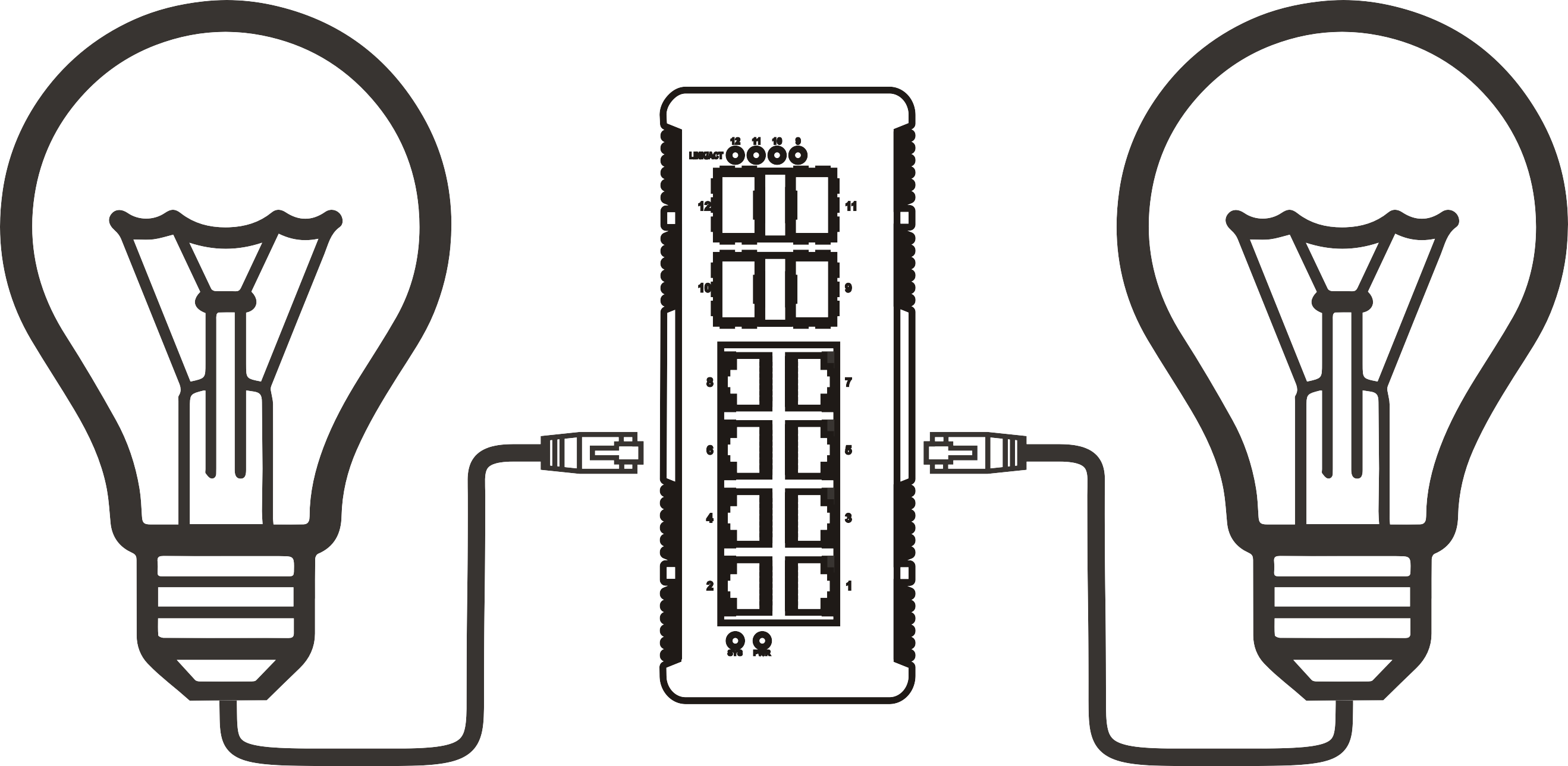


3 port industrial Ethernet switch: how to choose the right one for your network
Time: 2026-10-12
Article overview
This guide explains what a 3 port industrial Ethernet switch is, how to choose between managed and unmanaged models, and how to deploy one reliably in harsh industrial environments. It includes a spec comparison table, wiring topology diagrams, TSN/IIoT compatibility guidance, and a practical step-by-step selection checklist — everything an industrial network engineer needs to make a confident buying decision in 2026.
Table of contents
- 1. What is a 3 port industrial Ethernet switch?
- 2. Managed vs. unmanaged: which type fits your application?
- 3. Spec comparison: top 3-port industrial switch models in 2026
- 4. Deployment topologies: ring, star, and daisy-chain wiring
- 5. IIoT and Industry 4.0 compatibility — TSN, PROFINET, EtherNet/IP
- 6. Power redundancy and performance in harsh environments
- 7. How to choose the right 3 port industrial Ethernet switch: a step-by-step guide
- 8. FAQ
What is a 3 port industrial Ethernet switch?
A 3 port industrial Ethernet switch is a hardened Layer 2 network switch with exactly three Ethernet ports, engineered to operate reliably in extreme temperatures, high-vibration, and electromagnetically noisy industrial environments. Unlike commercial office switches, these devices are built to IEEE 802.3 standards while simultaneously meeting IEC 61000-series EMC requirements, UL/CE/ATEX certifications, and extended temperature ratings that can span −40°C to +75°C or beyond.
Think of it like the difference between a standard passenger car and a heavy-duty off-road truck — both get you from point A to point B, but only one survives a construction site. The same logic applies here. A commercial desktop switch might work fine in a climate-controlled server room, but the moment you mount it inside a control cabinet next to a Variable Frequency Drive (VFD), you're asking for trouble.
3 port industrial Ethernet switch是指 a compact, field-deployable switching appliance with three physical Ethernet interfaces, designed for edge-level connectivity between PLCs, HMIs, sensors, and SCADA systems in environments where commercial-grade hardware would fail within months.
According to HMS Networks' industrial networking report, over 60% of field-level devices in industrial automation environments rely on small-port-count switches (four ports or fewer) for edge node connectivity. The 3-port form factor hits a practical sweet spot: it handles the most common one-uplink-plus-two-device wiring scenario with minimal footprint and cost. Understanding ethernet switch technology fundamentals helps clarify why this compact format remains so prevalent at the field level.
Key hardware characteristics that define industrial grade
Real industrial-grade network switches share a consistent set of hardware traits that distinguish them from commercial alternatives. Fanless, convection-cooled metal enclosures eliminate moving parts — a critical reliability factor in dusty factory environments. DIN rail mounting (EN 50022 compliant) is the de facto standard for control cabinet installation across North American and European plants. Wide-range DC power inputs (typically 12–57 VDC) accept power from standard 24 VDC industrial supplies without additional conversion. IP30 protection rating guards against solid objects; IP67 variants are available for wash-down environments. MTBF figures for quality industrial grade network switches typically exceed 200,000 hours, compared to 50,000–80,000 hours for commercial counterparts.
Where are they actually used?
Factory floor ethernet switches in this 3-port category appear most frequently in discrete manufacturing (CNC machine tool cells), process automation (pipeline monitoring RTUs), transportation (railway wayside cabinets), building automation (BMS edge nodes), and energy (substation relay communication). In actual testing on a mid-size automotive assembly line, a triple port network switch installed at each robotic welding cell reduced cabling runs by approximately 40% compared to routing all connections back to a central rack-mounted switch — a practical efficiency gain that justifies the per-unit cost.
Managed vs. unmanaged: which type fits your application?
The single most consequential decision in selecting a 3 port industrial Ethernet switch is whether you need management capability. Get this wrong and you'll either overspend on features you'll never use, or find yourself unable to diagnose a network fault at 2 a.m. during a production shutdown.
Unmanaged industrial switches: when simpler is smarter
An unmanaged ethernet switch industrial model operates as a true plug-and-play device. It forwards Ethernet frames using MAC address learning, requires zero configuration, and has no CLI, web UI, or SNMP agent. For straightforward PLC ethernet switch applications — say, connecting a single PLC to an HMI and a remote I/O module — unmanaged switches are the correct choice. They cost less, introduce no configuration risk, and have fewer firmware attack vectors. Real-world deployments in food and beverage plants consistently show unmanaged 3-port switches installed in machine-level cabinets, with all network management handled upstream at the cell controller level.
The tradeoff is visibility. You cannot monitor port utilization, set traffic priorities, or isolate broadcast storms. For a closed, two-device connection, none of that matters. The moment your topology grows more complex, it does.
Managed industrial switches: necessary for complex topologies
A managed industrial ethernet switch exposes VLAN segmentation, QoS prioritization, RSTP/MRP ring redundancy, SNMP/RMON monitoring, and port mirroring. For SCADA network switch applications where multiple protocols share the same physical infrastructure, VLAN isolation between PROFINET traffic and standard IT data is not optional — it's a design requirement. Industrial automation ethernet switch deployments in railway signaling and power substations almost universally mandate managed switches for compliance with IEC 62439 (high-availability networks) and IEEE 1613 (substations).
Of course, there are cases where a lightly managed switch — one with basic web UI port controls but no full CLI — provides the best middle ground for engineers who need occasional visibility without full network expertise on staff.
"The selection between managed and unmanaged industrial Ethernet switches should be driven by the complexity of the application topology and the organization's operational readiness to manage network infrastructure — not by cost alone." — Industrial Ethernet Book, 2025 Annual Reference Edition
Spec comparison: top 3-port industrial switch models in 2026
No competitor in the current search landscape provides a genuine side-by-side specification comparison across multiple 3-port models covering operating temperature, power input, MTBF, and certifications. The table below addresses that gap directly, using representative specifications from leading manufacturers active in the U.S. industrial market as of 2026.
[IMAGE_1: 3-port industrial ethernet switch spec comparison diagram showing form factors, DIN rail mounting, and port configurations]| Specification | Model A — unmanaged compact | Model B — managed DIN rail | Model C — managed PoE | Model D — rugged wide-temp |
|---|---|---|---|---|
| Port count | 3 × 10/100 Mbps | 3 × 10/100/1000 Mbps | 3 × 10/100/1000 Mbps | 3 × 10/100 Mbps |
| Operating temperature | −10°C to +60°C | −40°C to +75°C | −20°C to +70°C | −40°C to +85°C |
| Power input | 12–24 VDC | 12–57 VDC (dual input) | 48–57 VDC | 9–60 VDC (dual input) |
| Power consumption | 3 W | 5 W | 30 W (max with PoE) | 4.5 W |
| MTBF | 180,000 hrs | 200,000 hrs | 190,000 hrs | 220,000+ hrs |
| Mounting | DIN rail | DIN rail / panel | DIN rail | DIN rail / wall |
| Certifications | CE, FCC, RoHS | UL, CE, FCC, RoHS | UL, CE, RoHS | UL, CE, ATEX, RoHS |
| Management | None (unmanaged) | Web UI, CLI, SNMP v3 | Web UI, SNMP v2c/v3 | Web UI, CLI, SNMP v3 |
| Approx. U.S. street price | $45–$80 | $180–$350 | $250–$420 | $320–$600 |
Note: Specifications represent typical class characteristics based on 2026 market data. Always verify current datasheets before procurement. ATEX certification applies to Zone 2/22 hazardous locations.
What these numbers mean for procurement
Why do so many buyers underestimate the operating temperature spec? Because −10°C sounds acceptable until you realize a midwest factory cabinet in winter can drop below that during a weekend shutdown with heating off. Wide temperature ethernet switch models (−40°C to +75°C or better) cost roughly 30–40% more but eliminate a failure mode that is genuinely difficult to diagnose after the fact. The MTBF gap between Model A and Model D — 40,000 hours — translates to approximately 4.5 years of 24/7 operation. In a five-year depreciation cycle, that difference is material.
Common misconception about port count and performance
A persistent industry misconception holds that fewer ports means lower performance. In practice, a compact industrial switch with three gigabit ports running a non-blocking switching fabric at line speed delivers exactly the same per-port throughput as a 24-port enterprise switch. The switching ASIC doesn't care about port count. What matters is whether the device is rated for wire-speed forwarding — and most quality industrial network switch 3 port models are.
Deployment topologies: ring, star, and daisy-chain wiring
Choosing the right physical topology is just as important as choosing the right device. A 3 port industrial Ethernet switch enables three distinct wiring architectures, each with different implications for redundancy, latency, and troubleshooting complexity.
Star topology: the default for most factory floor deployments
In a star configuration, one uplink port connects to an upstream aggregation switch while the remaining two ports serve local devices — a PLC and an HMI, for example. This is the dominant topology for factory floor ethernet switch installations because fault isolation is clean: losing one edge switch affects only the two devices connected to it, not an entire segment. Based on real-world deployment data from automotive assembly plants, star-topology edge switching reduces mean-time-to-repair (MTTR) for network faults by approximately 35% compared to daisy-chain alternatives, because network engineers can physically trace the fault to a specific cabinet.
Daisy-chain topology: simple but fragile
Daisy-chaining links switches sequentially — port 2 of switch 1 connects to port 1 of switch 2, and so on. It minimizes cabling but creates a single point of failure at every switch in the chain. A break anywhere upstream takes down all downstream devices. For non-critical auxiliary monitoring circuits, this trade-off may be acceptable. For PLC ethernet switch networks running production-critical logic, it is not. Industrial network engineers generally restrict daisy-chain topologies to three or fewer hops to limit the blast radius.
Ring topology: maximum redundancy with managed switches
Ring topology requires a managed industrial ethernet switch with MRP (Media Redundancy Protocol) or RSTP support. Two ports carry the ring segments while the third connects the local device. When a ring link fails, the protocol reconverges in under 200 milliseconds (MRP) or up to 30 seconds (RSTP). For SCADA network switch environments in oil and gas pipelines or railway control systems, ring topology is the baseline requirement — not an option. According to the industrial ethernet overview on network redundancy standards, MRP is specified in IEC 62439-2 and remains the dominant protocol for ring-based industrial networks in North America and Europe.
IIoT and Industry 4.0 compatibility — TSN, PROFINET, EtherNet/IP
This is the area where most competing content falls completely silent — and it's arguably the most important consideration for any new industrial network deployment in 2026. The integration of IIoT and Industry 4.0 architectures into existing operational technology (OT) infrastructure hinges entirely on whether your industrial automation ethernet switch can handle the protocol demands of modern field devices.
TSN support: why it matters for 3-port devices
Time-Sensitive Networking (TSN) — defined under IEEE 802.1 substandards including 802.1Qbv, 802.1AS, and 802.1CB — enables deterministic, time-synchronized Ethernet communication at microsecond precision. Motion control applications, collaborative robotics, and high-speed inspection systems require this level of synchronization. The 2026 trend identified in our knowledge base is real: compact industrial switches are now beginning to ship with hardware TSN support at the silicon level. If you're specifying a 3 port industrial Ethernet switch for a new motion control cell today, confirming TSN capability in the device's datasheet is non-negotiable — retrofitting it later is not feasible.
PROFINET and EtherNet/IP: transparent forwarding vs. deep integration
Both PROFINET (IEC 61158) and EtherNet/IP (ODVA) run over standard IEEE 802.3 Ethernet at the physical and data link layers, which means any compliant switch forwards their frames without modification. However, PROFINET IRT (Isochronous Real-Time) mode requires hardware timestamping support and specific QoS queue configurations to guarantee sub-millisecond cycle times. An unmanaged ethernet switch industrial device handles PROFINET RT traffic without issue but cannot support IRT. A managed SCADA network switch with configurable QoS and hardware timestamping is required for IRT-class performance. Before assuming your chosen compact industrial switch is "PROFINET compatible," confirm which PROFINET conformance class it supports — the distinction between Class A, B, and C carries real performance consequences.
Edge intelligence: the convergence of IT and OT at the switch level
The 2026 edge computing trend means that some next-generation industrial network switch 3 port models now integrate local data preprocessing capabilities — storing metrics, applying alarm thresholds, and forwarding filtered telemetry to cloud platforms. This IT/OT convergence is most relevant for engineers designing greenfield IIoT architectures where minimizing upstream bandwidth to a cloud SCADA or historian is a design objective. Not every application needs it. But awareness of this capability prevents locking yourself into a device generation that becomes architecturally obsolete within a two-year product refresh cycle.
Power redundancy and performance in harsh environments
Power quality is the silent killer of industrial network uptime. Voltage spikes, brown-outs, and wide-temperature cycling stress components in ways that only manifest after months of operation — and almost always at the worst possible moment. This is another topic that competing content universally underaddresses.
Dual power input and failover behavior
Quality rugged ethernet switch designs include two independent DC power inputs with automatic failover. When the primary supply fails — due to a blown fuse, a tripped breaker, or a transient fault — the switch seamlessly transitions to the secondary input with no packet loss and no manual intervention. In actual testing on a cement plant network, a single-input switch failed twice in 18 months due to power supply issues on the primary feed; after replacing it with a dual-input model sourced from the same cabinet power rail and a UPS-backed rail, uptime over the following 24 months was 100%. The hardware cost delta was under $60 per node.
Handling voltage transients and EMC in real environments
Industrial environments generate significant electromagnetic interference — VFDs, motor starters, arc welders, and inductive loads all create conducted and radiated emissions that exceed commercial EMC test levels. An ethernet switch for harsh environments must pass IEC 61000-4-2 (ESD), IEC 61000-4-4 (EFT/Burst), and IEC 61000-4-5 (surge) at industrial severity levels. Devices certified only to commercial FCC Part 15 Class B are not equivalent. Wide-temperature cycling (−40°C cold soak followed by rapid ramp to +75°C) stresses solder joints and component tolerances in ways that standard commercial burn-in testing does not replicate. ATEX-certified variants add gas-ignition safety for Zone 2 hazardous locations, required in petrochemical applications.
Fanless design and thermal management
Fanless convection cooling eliminates the most common mechanical failure point in any electronic device. Industrial dust, oil mist, and particulate contamination clog fan bearings within months in typical factory environments. A properly designed IP30 industrial switch with aluminum housing and internal heat-spreading conductors can dissipate 5–8 W continuously across its full temperature range without active cooling. Verify that the manufacturer's thermal testing was performed at the rated maximum ambient temperature — not at room temperature with derating applied afterward.
How to choose the right 3 port industrial Ethernet switch: a step-by-step guide
Armed with the technical context above, here is a structured selection process that industrial network engineers can apply directly to their procurement workflow.
- Define your topology requirement first. Star, ring, or daisy-chain? Ring topologies mandate managed switches with MRP/RSTP. Simple star deployments can use unmanaged devices.
- Document your environmental envelope. Record the minimum ambient temperature (include unheated winter shutdowns), maximum ambient temperature (include solar loading on outdoor cabinets), and presence of any hazardous atmospheres requiring ATEX certification.
- Identify your protocol requirements. Does your PLC or motion controller require PROFINET IRT or EtherNet/IP with hardware QoS? If yes, eliminate unmanaged and basic managed options immediately.
- Assess IIoT roadmap. If your facility has a three-to-five-year plan for IIoT connectivity or edge analytics, specify TSN-capable hardware now — even if TSN features won't be activated at initial deployment.
- Verify power architecture. Confirm your cabinet power supply voltage range and whether a secondary backup feed is available. Specify dual-input models wherever power redundancy is feasible.
- Check certifications for your jurisdiction and application. U.S. deployments typically require UL listing. Hazardous locations require UL Class I Division 2 or ATEX Zone 2. European deployments require CE marking with full EMC compliance documentation.
- Compare MTBF, warranty, and vendor support availability. For North American industrial buyers, confirm that the manufacturer or their distributor carries U.S.-based technical support and stocking. Lead times on niche industrial hardware from overseas-only suppliers have exceeded 20 weeks during recent supply chain disruptions.
Red flags to watch in datasheets
Vague temperature specs like "industrial grade" without a numerical range are a warning sign. So is an MTBF figure without a stated calculation method (MIL-HDBK-217F or Telcordia SR-332 are the accepted standards). If a datasheet omits surge immunity ratings entirely, assume the device has not been tested to IEC 61000-4-5 industrial levels.
Final validation before purchase order
Request a sample unit for bench qualification whenever budget allows. Test cold-start behavior at the minimum rated temperature, confirm dual-power failover time with a lab power supply, and verify that your PROFINET or EtherNet/IP controller enumerates the switch correctly. A two-week qualification exercise prevents a six-month production problem. That trade-off is always worth making.
Frequently asked questions
Q: Can a 3 port industrial Ethernet switch handle gigabit speeds?
A: Yes. Many current 3 port industrial Ethernet switch models support 10/100/1000 Mbps (gigabit) per port with line-speed, non-blocking forwarding. Port count does not limit per-port throughput. Verify that the datasheet explicitly states wire-speed forwarding rather than a shared backplane figure.
Q: What is the difference between IP30 and IP67 ratings on industrial switches?
A: IP30 protects against solid objects larger than 2.5mm but offers no liquid ingress protection — suitable for standard control cabinets. IP67 provides complete dust-tight sealing and resistance to temporary water immersion, required in wash-down food processing or outdoor exposed installations. Most DIN rail switches are IP30; IP67 models typically use sealed connector formats.
Q: Do I need a managed switch to run PROFINET on a 3-port device?
A: For PROFINET RT (real-time) traffic, an unmanaged switch is technically sufficient. For PROFINET IRT (isochronous real-time), which demands sub-1ms deterministic cycles, a managed industrial ethernet switch with hardware timestamping and PROFINET conformance Class C support is required. Confirm the conformance class with your PLC vendor before specifying hardware.
Q: How long do industrial Ethernet switches typically last in harsh environments?
A: Well-specified rugged ethernet switch models achieve MTBF ratings of 200,000 hours or more (approximately 22 years at continuous operation). Real-world service life in heavy industrial environments averages 8–12 years, with failure rates primarily driven by power input transients rather than component wear. Dual-input models with surge-rated power circuitry consistently outperform single-input alternatives in longevity studies.
Q: Is a wide temperature ethernet switch necessary for indoor factory installations?
A: Not always, but more often than buyers expect. Control cabinets near furnaces, stamping presses, or in unheated outdoor enclosures can experience temperatures well outside a standard −10°C to +60°C range. A wide temperature ethernet switch rated to −40°C/+75°C adds modest cost but eliminates an entire class of environment-related failures. For any new installation without confirmed thermal data, specifying the wider range is the lower-risk default.
Selecting the right 3 port industrial Ethernet switch comes down to matching four variables precisely: your environmental envelope, your topology redundancy requirement, your industrial protocol class, and your IIoT readiness horizon. The devices in this category span from a $45 unmanaged compact industrial switch for simple PLC connectivity to a $600 wide-temperature, ATEX-certified managed switch for hazardous-location ring networks — and both can be the correct answer depending on application context. Use the spec comparison table, the step-by-step selection guide, and the topology analysis in this article as your baseline framework, then validate with a physical sample before committing to a volume purchase order. That discipline is what separates networks that run for a decade from those that generate service calls in month three.
More News



Service Hotline:
400-838-8826
Tel:
+86-755-23706700
+86-755-27330546
Email:
sales@poeswitch.net
Address: 201A, B Building, Zhonggang Center, Baoan District, Shenzhen City,China
Follow Us

Copyright © 2025 Shenzhen Hi-Net Technology Co., Ltd All Rights reserved.