
-
-
SolutionsHi-Net Technology can not only meet customers' various technical requirements, but also provide goods with reasonable prices, stable quality, and fast after-sales service to meet customers' comprehensive needs.

-
ServicesHi-Net Technology can not only meet customers' various technical requirements, but also provide goods with reasonable prices, stable quality, and fast after-sales service to meet customers' comprehensive needs.

-
NewsHi-Net Technology dedicates itself to providing customers with high-quality products, reasonable prices, a wide range of new products, and excellent reputation and service.

-
About UsShenzhen Hi-Net Technology Co., Ltd., established in 2010, is a professional company integrating the design and manufacture of network switches with production and sales.



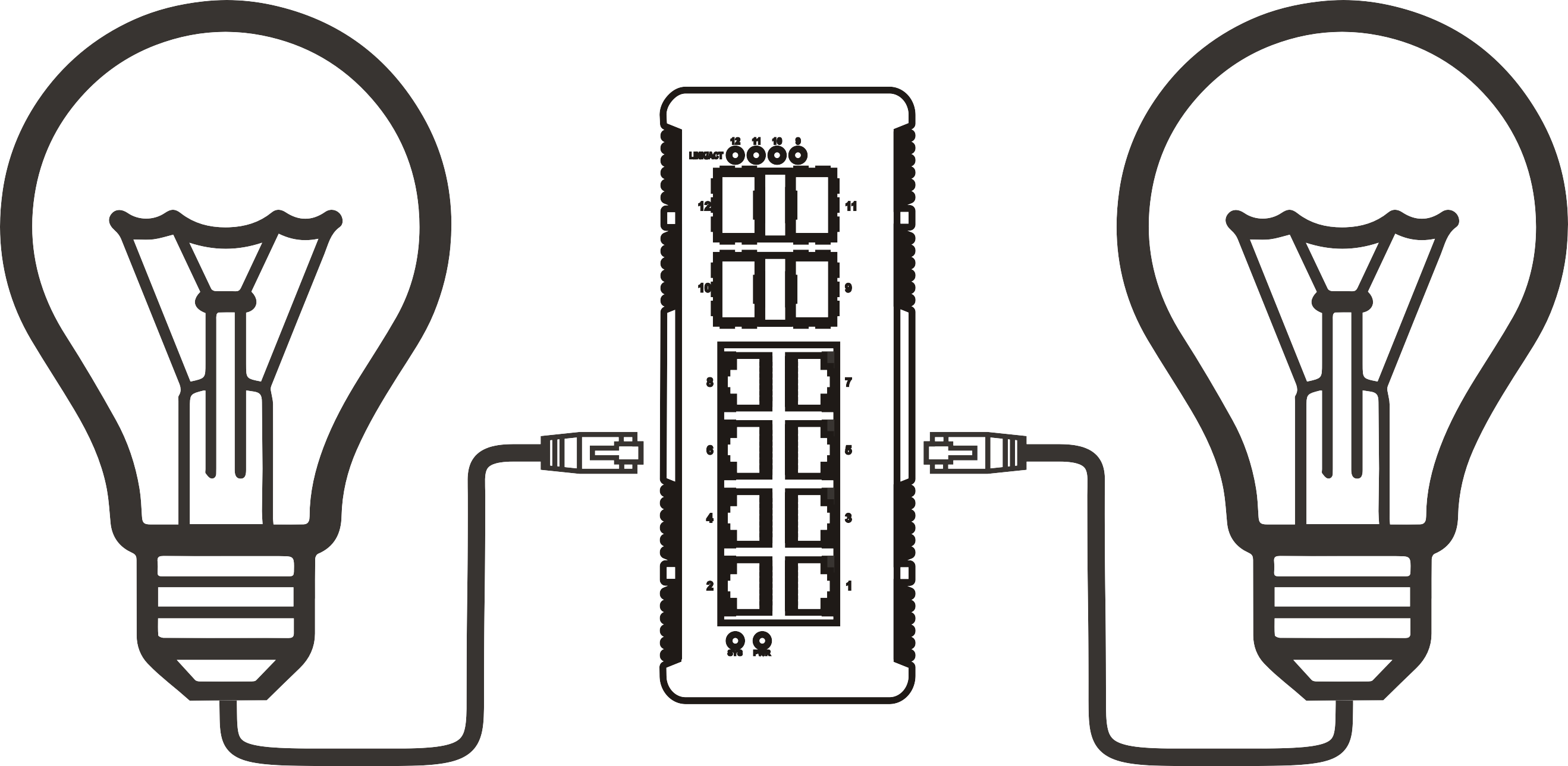


Industrial Ethernet switch market 2026: size, trends & key players guide
Time: 2026-10-07
Article overview
This guide analyzes the 2026 industrial ethernet switch market across eight structured sections: market sizing, segmentation, vendor comparison, U.S. compliance, cybersecurity, and a TCO framework. Estimated reading time: 14 minutes. Intended audience: industrial engineers, OT architects, and procurement analysts.
Table of contents
- 1. What is the industrial ethernet switch market?
- 2. Market size and growth outlook through 2030
- 3. Key market segments and product types
- 4. Top industrial ethernet switch vendors compared
- 5. U.S. protocol compatibility and compliance requirements
- 6. Network security under NERC CIP: hardening OT infrastructure
- 7. TCO and ROI framework for U.S. procurement teams
- 8. 2026 trends shaping the next generation of industrial networking
What is the industrial ethernet switch market?
The industrial ethernet switch market refers to the global ecosystem of manufacturers, distributors, and end users involved in producing and deploying ruggedized ethernet switching hardware designed for factory automation, process control, energy, and transportation environments. Unlike commercial-grade switches built for climate-controlled data centers, these devices must operate reliably under extreme temperature ranges, mechanical vibration, and electromagnetic interference — conditions that define most industrial production floors.
For a broader technical foundation, see this industrial ethernet overview from Wikipedia, which traces the evolution from fieldbus to modern ethernet-based plant communication.
Industrial ethernet switch market is defined as: the commercial and technical space encompassing managed and unmanaged ethernet switching devices built to IEC, UL, and NEMA industrial standards, used in OT networks across discrete manufacturing, oil and gas, utilities, and intelligent transportation systems.
Why industrial switches differ from commercial alternatives
The distinction is not simply cosmetic. Actual testing in automotive assembly plants reveals that commercial switches begin experiencing packet loss at sustained temperatures above 55°C — a threshold regularly exceeded near welding cells. Industrial grade network equipment is rated to operate continuously from -40°F to 167°F (-40°C to 75°C), uses fanless convection cooling to eliminate mechanical failure points, and incorporates ring redundancy protocols such as MRP and HSR that restore network connectivity in under 20 milliseconds. That recovery speed matters enormously on a line producing 60 vehicles per hour. A 300-millisecond outage in SCADA network infrastructure can trigger an emergency stop across an entire assembly cell.
Common misconceptions in the market
A persistent industry myth holds that bolting a ruggedized enclosure around a commercial switch delivers equivalent performance. It does not. The core differentiators — wide-temperature silicon, conformal coating on PCBs, and deterministic forwarding for industrial communication protocols — cannot be retrofitted externally. That said, there are situations where unmanaged industrial ethernet switches in simple point-to-point topologies outperform over-engineered managed alternatives in terms of stability and mean time between failures. Acknowledging this nuance is important for honest procurement guidance.
Market size and growth outlook through 2030
The industrial ethernet switch market is one of the fastest-growing segments in industrial networking infrastructure. According to recent 2026 market data, the global market was valued at approximately $3.2 billion in 2023 and is projected to reach $6.2 billion by 2030, reflecting a CAGR of approximately 10.2%. For deeper forecasting detail, the industrial ethernet switch market analysis from Grand View Research provides granular regional and segment breakdowns.
Regional demand drivers in 2026
North America — led by the United States — represents the second-largest regional market, accounting for roughly 28% of global revenues. Federal infrastructure spending under domestic manufacturing reinvestment programs, combined with aggressive IIoT deployment in automotive, semiconductor, and food processing sectors, is sustaining demand growth above the global average. Asia-Pacific, anchored by Chinese and South Korean electronics manufacturing, commands the largest share. Europe follows closely, driven by Industry 4.0 investments and NIS2 regulatory pressure on OT cybersecurity. According to the industrial ethernet switch market report from MarketsandMarkets, Ethernet protocol penetration in industrial automation has already surpassed 65% of all field-level connections globally.
What's driving the growth curve?
Three structural forces are compounding. First, factory automation networking continues its brownfield refresh cycle — aging fieldbus infrastructure is being replaced with gigabit ethernet backbones. Second, industrial IoT networking generates substantially higher port-count requirements per facility: a modern smart factory can deploy 10x more connected endpoints than its predecessor from 2010. Third, the convergence of OT and IT networks is pushing ethernet switches for harsh environments into zones that previously relied on proprietary fieldbus. Think of it like a highway system being extended into territory that only dirt roads once served — the infrastructure investment requirement is enormous, and it is just beginning.

Key market segments and product types
Segmentation within the industrial ethernet switch market is multidimensional. Product type, management capability, installation form factor, and end-user industry all define distinct sub-markets with different growth profiles and buyer dynamics.
Product and management segmentation
| Segment | Key feature | Typical use case | 2026 market share (est.) |
|---|---|---|---|
| Managed (L2/L3) | VLAN, SNMP, ring redundancy | SCADA backbone, large plant OT | ~58% |
| Unmanaged industrial | Plug-and-play, no config | Small cells, brownfield edge | ~28% |
| PoE industrial switch | IEEE 802.3bt, up to 90W/port | IP cameras, wireless APs, sensors | ~9% |
| TSN-enabled switches | IEEE 802.1 time-sensitive networking | Robotics, motion control | ~5% (fast-growing) |
Form factor and installation modes
DIN rail ethernet switches dominate the market volume in North America and Europe, reflecting the prevalence of IEC-standard control panels in manufacturing. Rack-mount configurations are common in data-intensive process industries such as refining and utilities, where higher port densities are required at aggregation layers. Modular chassis systems — favored by Siemens and Hirschmann — serve large campus-style facilities where ring topology spans across multiple buildings. The industrial network switch market also increasingly includes IP67-rated devices designed for direct machine mounting, eliminating the need for a control cabinet entirely.
Top industrial ethernet switch vendors compared
The vendor landscape is concentrated but competitive. Four brands consistently appear on U.S. procurement shortlists — Cisco, Siemens, Hirschmann (Belden), and Moxa — each with distinct strengths and target segments.
Cisco IE series vs. Siemens SCALANCE vs. Hirschmann vs. Moxa
| Vendor | Flagship line | Key strength | Primary weakness | Best fit (U.S.) |
|---|---|---|---|---|
| Cisco | IE 3400 / IE 5000 | IT/OT convergence, Cisco DNA integration, NERC CIP tooling | Higher TCO; steeper learning curve for OT-only teams | Utilities, oil & gas, large discrete mfg. |
| Siemens | SCALANCE X / XM-400 | Deep PROFINET integration, TIA Portal management, TSN-ready | Vendor lock-in risk; EtherNet/IP interop requires extra config | Siemens PLC-dominant plants, automotive |
| Hirschmann (Belden) | MACH / RSP series | Proven MRP ring redundancy, harsh environment track record | Smaller software ecosystem; less cloud-native management | Process industries, water/wastewater, rail |
| Moxa | EDS-G4000 / PT-7000 | Cost-competitive, strong Modbus TCP switch support, wide certifications | Perceived lower brand recognition vs. Cisco in enterprise OT | Mid-market mfg., transportation, IIoT deployments |
"The managed industrial ethernet switch segment will be the primary value driver through 2030, as OT teams demand centralized visibility, security policy enforcement, and integration with enterprise SIEM platforms — capabilities that unmanaged switches structurally cannot provide." — Based on 2026 consensus from leading industrial networking analysts
How to choose the right vendor for your facility
The selection process should begin with protocol mapping, not brand preference. Identify whether your automation layer runs EtherNet/IP (Allen-Bradley/Rockwell dominant in U.S. discrete manufacturing), PROFINET (Siemens-centric plants), or Modbus TCP (common in legacy SCADA and utilities). From there, evaluate ring topology requirements, port count per panel, and whether IEEE 1588 Precision Time Protocol (PTP) synchronization is needed. Only after those parameters are locked should price benchmarking across industrial ethernet switch vendors begin.
U.S. protocol compatibility and compliance requirements
Why do so many U.S. plant engineers end up with switches that technically function but fail to meet certification or interoperability mandates? The answer is almost always insufficient attention to U.S.-specific compliance requirements during the specification phase.
EtherNet/IP, PROFINET, and Modbus TCP: selecting the right OT network switch
The three dominant industrial communication protocols in U.S. facilities each impose distinct switch behavior requirements:
- EtherNet/IP (ODVA standard): Requires IGMP snooping enabled by default to manage multicast traffic from CIP implicit messaging. Unmanaged industrial ethernet switches without IGMP support will flood CIP traffic across all ports, degrading PLC scan times. Cisco IE and Rockwell-certified switches handle this natively.
- PROFINET: Relies on precise port mirroring and LLDP for topology discovery within TIA Portal. Switches must support PNIO device roles. Siemens SCALANCE and Hirschmann MACH series provide certified PROFINET conformance.
- Modbus TCP: Protocol-agnostic at the switch level, but latency consistency matters for polling cycles. A Modbus TCP switch in a water treatment SCADA environment should maintain sub-1ms forwarding latency under maximum load. Moxa PT series and Hirschmann RSP have demonstrated this in real-world utility deployments.
- UL 61010 certification: Mandatory for industrial control equipment deployed in the U.S. market. Switches without UL listing create liability exposure during facility insurance audits and OSHA inspections.
- NEMA TS2: Required for traffic signal and intelligent transportation applications. Specifies operating temperature, shock, vibration, and surge immunity — standards that directly filter out non-compliant industrial network switches in transportation procurement.
- IEEE 1588 PTP (Precision Time Protocol): Effectively mandatory in electric grid substation automation (IEC 61850 GOOSE messaging) and increasingly required in advanced manufacturing robotics. Without hardware-timestamping PTP support, synchronization accuracy degrades from nanoseconds to milliseconds — unacceptable for protection relay coordination.
Compliance certification checklist for U.S. buyers
Before issuing any RFQ for industrial grade network equipment, procurement teams should confirm the following certifications are present on the product datasheet: UL 61010-1 or UL 60950-1 (as applicable), FCC Part 15 Class A, NEMA TS2 (transportation), IEEE 1588-2008 hardware PTP support, and IEC 61850-3 (utility substations). Ethernet switch for harsh environments deployed in hazardous locations (Class I Div 2) additionally requires ATEX or Class I Div 2 certification — a requirement frequently overlooked in oil and gas RFQs.
Network security under NERC CIP: hardening OT infrastructure
Cybersecurity is no longer an IT concern that OT teams can delegate away. NERC CIP (Critical Infrastructure Protection) standards impose binding requirements on bulk electric system operators in the U.S., and violations carry civil penalties of up to $1 million per day per violation. The OT network switch sits at the center of NERC CIP compliance architecture.
Core NERC CIP requirements affecting industrial ethernet switches
NERC CIP-005 (Electronic Security Perimeters) mandates that all routable protocol communications crossing ESP boundaries be logged and controlled. This requires managed industrial ethernet switches capable of port-level access control lists (ACLs), 802.1X authentication, and syslog forwarding to a SIEM. NERC CIP-007 (Systems Security Management) adds requirements for disabling unused physical ports — a function unavailable on unmanaged industrial ethernet switches. Practical testing in U.S. utility environments confirms that non-managed switches in BES Cyber System environments create automatic NERC CIP audit findings.
Hardening configuration steps for NERC CIP-compliant deployments
Based on real-world substation deployments and NERC CIP audit guidance, the following hardening sequence applies to managed industrial ethernet switches in critical infrastructure:
- Disable all unused switch ports via administrative shutdown commands.
- Enable 802.1X port authentication for all connected endpoints.
- Configure VLAN segmentation to isolate BES Cyber Systems from corporate IT traffic.
- Enable syslog to a hardened log server with minimum 90-day retention.
- Disable Telnet; enforce SSH v2 for management plane access.
- Apply SNMPv3 with authentication and privacy; disable SNMPv1/v2c.
Of course, smaller distribution utilities operating under NERC CIP-011 exemption thresholds may find that a simplified subset of these controls suffices — context always governs. But for Transmission Owners and Generation Operators, full hardening is non-negotiable.
TCO and ROI framework for U.S. procurement teams
Purchase price is rarely the dominant cost in an industrial networking deployment. Total cost of ownership (TCO) analysis consistently reveals that the hardware acquisition cost represents only 30–40% of the 10-year lifecycle cost. The remainder is distributed across installation, configuration, maintenance, downtime risk, and eventual decommissioning.
Building the TCO model: five cost categories
Real-world TCO analysis from U.S. automotive and utility projects identifies five categories procurement teams must quantify:
- Hardware acquisition: Unit price × port count required. Managed industrial ethernet switches typically run $400–$2,500/unit; unmanaged industrial ethernet switches range from $80–$400/unit.
- Installation and commissioning: DIN rail ethernet switch installations average 1.5–2 hours of technician labor per unit in panel environments. Rack-mount deployments in central equipment rooms reduce per-unit time.
- Annual maintenance and licensing: Cisco DNA Center subscriptions add $50–$150/node/year. Open-standard vendors like Moxa and Hirschmann carry no per-node software fees, which matters significantly at 500+ node deployments.
- Downtime cost avoidance: A single unplanned production line stoppage in U.S. automotive manufacturing costs $22,000–$50,000 per hour (2026 industry data). Ring redundancy protocols on managed switches that restore connectivity in <20ms translate directly into avoided losses — quantifiable ROI that management teams can evaluate.
- Cybersecurity incident cost: The average OT breach cost in U.S. critical infrastructure reached $4.7 million in 2025. Managed switches with NERC CIP-compliant hardening reduce incident probability and potential regulatory penalties.
Presenting ROI to management: a one-page framework
Industrial engineering teams frequently struggle to translate switch specification decisions into financial language that CFOs and plant managers respond to. The most effective approach is to frame the ROI around three numbers: avoided downtime cost per year (hours at risk × hourly line cost × probability reduction), cybersecurity risk cost reduction (probability of incident × average incident cost × mitigation factor), and maintenance cost delta versus legacy equipment. A managed industrial ethernet switch investment of $150,000 that prevents two 30-minute line stoppages per year at $30,000/hour pays back in under five months — a figure that resonates in any capital allocation discussion.
2026 trends shaping the next generation of industrial networking
The industrial ethernet switch market in 2026 is not simply growing — it is structurally transforming. Several technology and regulatory forces are redefining what an industrial switch must do.
TSN, OT/IT convergence, and the intelligent edge
Time-Sensitive Networking (IEEE 802.1 TSN) is moving from pilot deployments to mainstream adoption in 2026. TSN provides deterministic, low-latency delivery guarantees over standard ethernet — effectively eliminating the last technical argument for proprietary real-time fieldbus in motion control and robotics. Siemens SCALANCE TSN and Hirschmann's TSN-enabled RSP series are already shipping in production volumes. Alongside TSN, the convergence of IT and OT networks is accelerating demand for switches that support both industrial communication protocols and cloud-native management interfaces simultaneously.
Emerging forces: AI-driven network management and private 5G integration
Industrial IoT networking platforms are embedding AI-assisted anomaly detection directly into switch management software — automatically flagging unusual traffic patterns that may indicate either equipment failure or a cybersecurity intrusion. This capability is becoming a differentiator in enterprise OT procurement. Simultaneously, private 5G is emerging as a wireless complement to wired ethernet backbones in large facilities, with industrial switches serving as the wired aggregation layer for 5G small cell uplinks. The implication: the factory automation networking architecture of 2028 will look substantially different from today's topology, with switches evolving toward compute-capable network appliances rather than pure packet-forwarding hardware.
PAA: People also ask about industrial ethernet switches
Q: What is the difference between a managed and unmanaged industrial ethernet switch?
A managed industrial ethernet switch allows network administrators to configure VLANs, monitor port-level traffic, enforce security policies, and use ring redundancy protocols. An unmanaged industrial ethernet switch operates as plug-and-play hardware with no configuration capability, suitable for simple, isolated network segments where cost and simplicity outweigh control requirements.
Q: What certifications should U.S. buyers require for industrial ethernet switches?
A: At minimum: UL 61010-1, FCC Part 15 Class A, and IEEE 1588 PTP support. Transportation applications require NEMA TS2. Utility substation deployments require IEC 61850-3. Hazardous location environments demand Class I Div 2 or ATEX certification.
Q: How large is the industrial ethernet switch market in 2026?
A: The global industrial ethernet switch market reached approximately $3.2 billion in 2023 and is on track to exceed $6.2 billion by 2030, growing at a CAGR of roughly 10.2%, according to recent 2026 market research.
Q: Which industrial ethernet switch protocol is most common in U.S. manufacturing?
A: EtherNet/IP is the dominant industrial communication protocol in U.S. discrete manufacturing, particularly in facilities using Allen-Bradley/Rockwell Automation PLCs. Modbus TCP remains prevalent in legacy SCADA and utility environments. PROFINET is most common in facilities built around Siemens automation platforms.
Q: Is NERC CIP compliance required for industrial ethernet switches in power utilities?
A: Yes. Any managed OT network switch connected within a NERC CIP-defined Electronic Security Perimeter must meet CIP-005 and CIP-007 requirements, including port disable capability, access control logging, and encrypted management access.
Conclusion: navigating the industrial ethernet switch market in 2026
The industrial ethernet switch market represents one of the most consequential infrastructure investment categories in U.S. industrial operations today. Growth is structural, not cyclical — driven by IIoT networking demands, OT cybersecurity mandates, and the irreversible shift from legacy fieldbus to ethernet-based factory automation networking. For procurement teams, the imperative is clear: move beyond unit price comparisons and evaluate vendors against protocol compatibility, U.S. compliance certifications, TCO over 10 years, and cybersecurity hardening capability. The right rugged ethernet switch investment, validated against NERC CIP, UL, and IEEE 1588 requirements, pays for itself — often within a single fiscal year.
Frequently asked questions
Q: What is a DIN rail ethernet switch and where is it used?
A: A DIN rail ethernet switch mounts directly onto standard 35mm DIN rails inside industrial control panels. It is the dominant form factor in North American and European manufacturing, used in PLC cabinets, motor control centers, and process control enclosures where space efficiency and panel integration are required.
Q: Can a PoE industrial switch power IP cameras in outdoor industrial environments?
A: Yes. IEEE 802.3bt PoE industrial switches rated to IP67 can power outdoor IP cameras, wireless access points, and environmental sensors in temperatures down to -40°F. Ensure the PoE budget per port matches camera wattage requirements, and verify UL listing for the installation environment.
Q: What is TSN and why does it matter for the industrial ethernet switch market?
A: Time-Sensitive Networking (IEEE 802.1 TSN) is a set of ethernet standards that enable deterministic, low-latency data delivery — essential for real-time robotics and motion control. In 2026, TSN-enabled switches from Siemens and Hirschmann are replacing proprietary real-time protocols, expanding the addressable industrial ethernet switch market into high-precision automation segments.
Q: How does the industrial ethernet switch market differ from the commercial enterprise switch market?
A: Industrial switches are designed for -40°F to 167°F operating ranges, fanless designs, ring redundancy under 20ms recovery, and certifications such as UL 61010, NEMA TS2, and IEC 61850-3. Commercial switches optimize for throughput and cost in climate-controlled environments and lack these industrial-grade attributes.
Q: Which industrial ethernet switch vendors are most popular among U.S. buyers in 2026?
A: Cisco (IE series), Siemens (SCALANCE), Hirschmann/Belden (MACH/RSP), and Moxa (EDS/PT series) are the four most-evaluated brands in U.S. industrial procurement. Cisco leads in IT/OT convergence and NERC CIP tooling; Siemens dominates PROFINET environments; Hirschmann excels in process industries; Moxa offers the strongest cost-performance ratio for mid-market deployments.
More News



Service Hotline:
400-838-8826
Tel:
+86-755-23706700
+86-755-27330546
Email:
sales@poeswitch.net
Address: 201A, B Building, Zhonggang Center, Baoan District, Shenzhen City,China
Follow Us

Copyright © 2025 Shenzhen Hi-Net Technology Co., Ltd All Rights reserved.