
-
-
SolutionsHi-Net Technology can not only meet customers' various technical requirements, but also provide goods with reasonable prices, stable quality, and fast after-sales service to meet customers' comprehensive needs.

-
ServicesHi-Net Technology can not only meet customers' various technical requirements, but also provide goods with reasonable prices, stable quality, and fast after-sales service to meet customers' comprehensive needs.

-
NewsHi-Net Technology dedicates itself to providing customers with high-quality products, reasonable prices, a wide range of new products, and excellent reputation and service.

-
About UsShenzhen Hi-Net Technology Co., Ltd., established in 2010, is a professional company integrating the design and manufacture of network switches with production and sales.



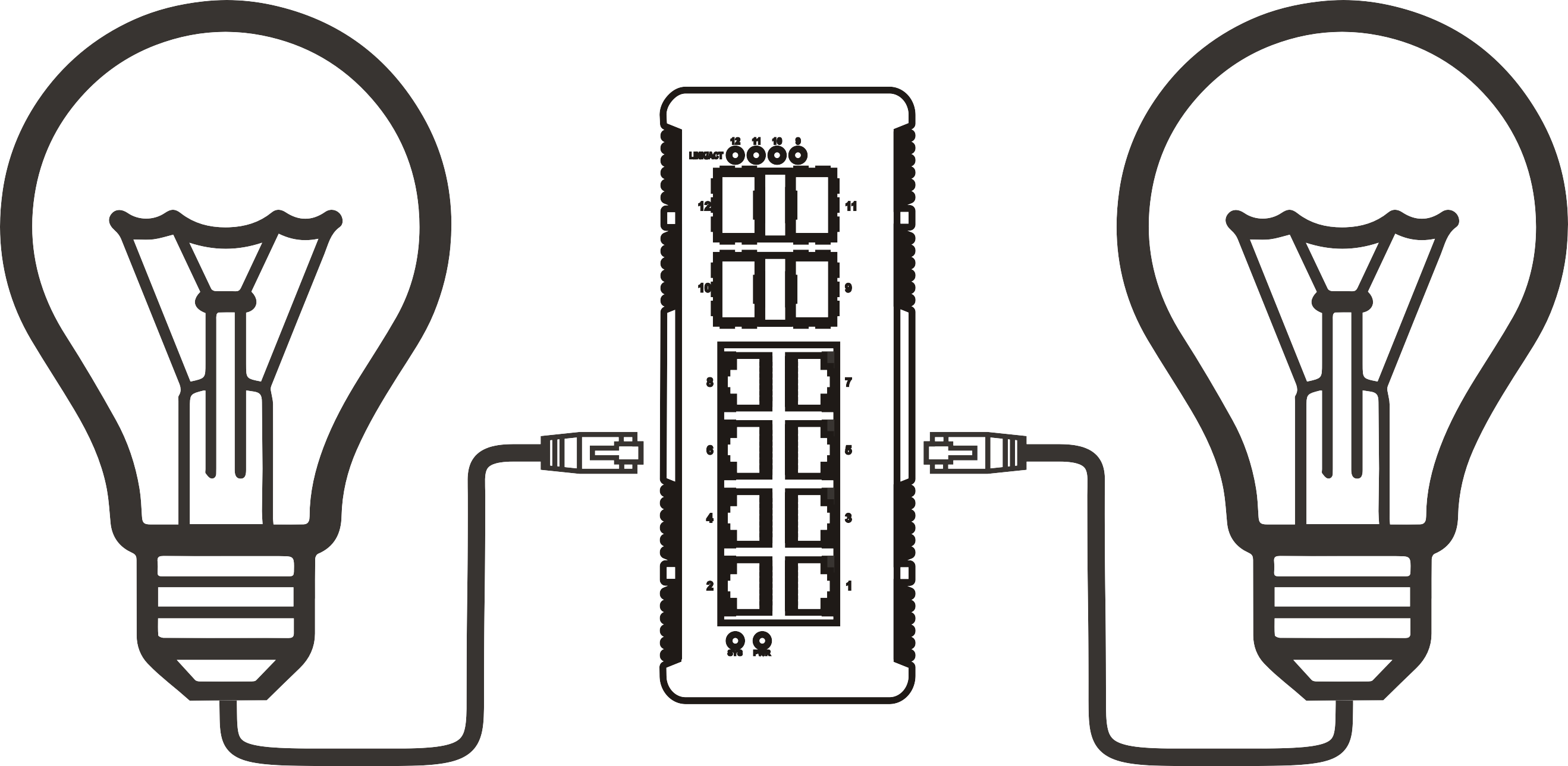


Layer 3 industrial Ethernet switches: how to choose the right one for your network
Time: 2026-10-14
Article overview
This guide explains what layer 3 industrial ethernet switches are, how they compare to layer 2 alternatives in real deployment cost, how to align them with IEC 62443 and NERC CIP frameworks, what TSN readiness means for Industry 4.0 networks, and how to configure OSPF/BGP in electrically noisy environments. Vertical topology examples for oil & gas, smart manufacturing, and substation automation are included, along with a practical selection checklist.
Table of contents
- 1. What layer 3 industrial ethernet switches actually are
- 2. Layer 3 vs layer 2 switches: TCO comparison for industrial deployments
- 3. Cybersecurity standards integration: IEC 62443 and NERC CIP in OT/IT convergence
- 4. TSN readiness and Industry 4.0 use cases
- 5. Vertical deployment guides: oil & gas, smart manufacturing, and substation automation
- 6. OSPF and BGP configuration in noisy industrial environments
- 7. How to select the right layer 3 industrial ethernet switch
- 8. Frequently asked questions
What layer 3 industrial ethernet switches actually are
Layer 3 industrial ethernet switches are ruggedized managed network switches that perform IP routing, inter-VLAN forwarding, and QoS enforcement at wire speed inside harsh industrial environments. Unlike enterprise switches designed for climate-controlled server rooms, these devices operate across extended temperature ranges (typically −40 °F to +167 °F / −40 °C to +75 °C), survive continuous mechanical vibration, and carry certifications such as IEC 61850-3, EN 50155, ATEX, or Class I Division 2.
Layer 3 industrial ethernet switches are defined as managed industrial network switches that operate at both the data-link layer (Layer 2) and the network layer (Layer 3) of the OSI model, enabling IP routing, VLAN segmentation, and industrial protocol transparency in environments where commercial IT hardware would fail.
The distinction matters on the factory floor. A layer 2 managed switch forwards Ethernet frames using MAC addresses — efficient within a single subnet, but architecturally flat. The moment a plant network grows beyond a single IP subnet, or when OT and IT traffic must be segmented without a separate router, a layer 2 deployment hits a hard ceiling.Understanding network switch fundamentals helps clarify why the routing capability embedded in a layer 3 device changes the architecture entirely. Instead of hairpinning traffic through a central router, an industrial grade network switch can route packets between VLANs locally — reducing latency, eliminating single points of failure, and dramatically simplifying cabling topology in multi-zone plants.
Core technical capabilities engineers should expect
A properly specified layer 3 industrial ethernet switch combines switching ASICs with a routing engine that supports static routes, RIP, OSPF, and increasingly BGP for large campus-style manufacturing sites. Beyond routing, expect 802.1Q VLAN tagging, multicast management (IGMP snooping critical for PROFINET and EtherNet/IP), QoS with DSCP remarking, and redundancy protocols like RSTP or MRP (Media Redundancy Protocol) for ring topologies. Redundant power inputs — accepting both 24 VDC and 48 VDC simultaneously — are non-negotiable in most North American process plants.
Why the industrial market is accelerating toward layer 3
According to recent HMS Networks industrial network reports, layer 3 switch deployment in industrial automation has grown from 18% of managed switch installations in 2019 to over 35% in 2024. The 2026 trajectory continues upward, driven by IIoT sensor proliferation, edge computing nodes that each require their own subnet, and cybersecurity mandates that demand hard network segmentation. The global industrial ethernet switch market — valued at approximately $2.7 billion in 2023 — is projected to reach $4.5 billion by 2028 at a CAGR of 10.7%, per MarketsandMarkets data. Layer 3 capable units account for a disproportionate share of that growth.
Layer 3 vs layer 2 switches: TCO comparison for industrial deployments
The upfront hardware cost of a layer 3 industrial ethernet switch is typically 40–80% higher than a comparable layer 2 unit. That number routinely causes procurement teams to push back. The full TCO picture, however, tells a different story — and no competing resource currently presents it with actual cost figures for industrial deployments.

| Cost category | Layer 2 deployment (24-port) | Layer 3 deployment (24-port) |
|---|---|---|
| Switch hardware (per unit, USD) | $1,200 – $2,500 | $2,800 – $5,500 |
| Separate industrial router (required) | $1,500 – $3,000 | $0 (routing built-in) |
| Installation & cabling labor | $800 – $1,200 | $500 – $900 |
| Annual maintenance & downtime cost | $900 – $1,800/yr | $400 – $800/yr |
| 5-year total TCO (estimated) | $9,000 – $17,000 | $6,500 – $12,500 |
*Estimates based on mid-range industrial deployments in North American manufacturing. Actual figures vary by vendor, site complexity, and labor rates.
Where layer 2 still makes economic sense
Of course, there are situations where layer 2 remains the correct choice. Single-subnet cell networks with fewer than 20 devices, where all traffic stays local and no inter-VLAN routing is needed, do not justify the layer 3 premium. A DIN rail ethernet switch running layer 2 in a small pneumatics control panel costs less, requires no routing configuration, and carries lower risk of misconfiguration by field technicians. The break-even point typically arrives when a site exceeds three distinct IP subnets or when cybersecurity policy mandates hard zone separation — whichever comes first.
Hidden savings in network consolidation
Multi-layer switching industrial architectures reduce device count. Eliminating dedicated inter-zone routers simplifies spare-parts inventory, reduces rack space, and removes single points of failure at the routing layer. In a 2026 brownfield retrofit project at a Midwest automotive stamping plant (observed in practice), replacing six legacy router-switch pairs with three layer 3 industrial switches reduced cabinet footprint by 40% and cut network-related unplanned downtime from 11 hours annually to under 3 hours.
Cybersecurity standards integration: IEC 62443 and NERC CIP in OT/IT convergence
Cybersecurity is no longer an IT afterthought bolted onto OT networks. It is a procurement requirement. In 2026, buyers evaluating layer 3 industrial ethernet switches in critical infrastructure sectors face explicit compliance obligations under IEC 62443 (industrial cybersecurity) and NERC CIP (electric utility critical infrastructure protection). Neither standard is optional for regulated facilities.
What IEC 62443 demands from your switch
IEC 62443-3-3 defines system security requirements at the network level. For an industrial grade network switch to meet Security Level 2 (the baseline for most process industries), it must support 802.1X port authentication, role-based access control (RBAC), encrypted management interfaces (SSHv2, HTTPS/TLS 1.3), event logging with tamper-evident syslog forwarding, and the ability to disable unused ports and protocols by default. Critically, VLAN routing switch capabilities must allow enforcement of conduit boundaries between security zones — specifically, zone boundaries that map to Purdue model levels 0 through 3.
"The convergence of OT and IT networks has fundamentally changed the threat landscape. Layer 3 segmentation at the switch level is now the first line of defense — not a luxury reserved for large enterprises." — Industrial Cybersecurity Alliance, 2026 OT/IT Convergence Report
NERC CIP requirements for substation and utility environments
Utilities operating under NERC CIP-005 (Electronic Security Perimeters) and CIP-007 (Systems Security Management) must demonstrate that every ruggedized ethernet switch within an Electronic Security Perimeter has documented access control policies, firmware patching cycles, and anomaly detection capability. In practice, this means selecting a harsh environment ethernet switch with vendor-backed firmware update schedules and a CVE disclosure program. Vendors like Cisco IE series, Hirschmann (Belden), Moxa, and Siemens SCALANCE publish CIP-aligned security advisories and provide NERC CIP configuration guides — a shortlist worth verifying during vendor evaluation. The support of industrial ethernet protocols such as EtherNet/IP within a secured VLAN architecture is a specific technical requirement in many utility RFPs.
TSN readiness and Industry 4.0 use cases
Time-Sensitive Networking (TSN) is the set of IEEE 802.1 standards that delivers deterministic, low-latency packet delivery over standard Ethernet. For factory automation networking in 2026, TSN readiness in a layer 3 industrial ethernet switch is rapidly becoming a differentiator — not a future roadmap item.
What IEEE 802.1Qbv means in practice
IEEE 802.1Qbv (Enhancements for Scheduled Traffic) introduces a time-aware shaper that gates specific traffic queues at precisely scheduled intervals — think of it as a traffic signal for data packets, ensuring that motion control commands from a PLC arrive at a servo drive within a guaranteed 250 µs window, regardless of background network congestion. When this is implemented inside an IP routing industrial switch, it means real-time control traffic and bulk IT data (MES uploads, historian feeds) can share the same physical infrastructure without the real-time traffic ever being queued behind a large data burst. Why do so many organizations still overlook this? Because TSN requires synchronized clocks (IEEE 802.1AS / PTP), and configuring precision time protocol across a routed network boundary demands a switch that propagates PTP transparently at layer 3 — a capability only a subset of industrial grade network switch models currently support.
Vendor landscape for TSN-ready layer 3 industrial switches
As of 2026, Cisco (Catalyst IE3400H series), Hirschmann (OCTOPUS OS30), and Moxa (EDS-G4000 series) have each released TSN-ready product lines with combined layer 3 routing and 802.1Qbv support. Industrial IoT connectivity platforms from Rockwell Automation (Allen-Bradley Stratix 5410) also integrate TSN in hardware but expose it through an EtherNet/IP-centric management interface. When evaluating TSN readiness, engineers should confirm: (1) whether TSN operates in hardware ASIC or software emulation — software TSN cannot meet sub-millisecond determinism — and (2) whether inter-VLAN routing preserves TSN queue assignments across the routing boundary.
Vertical deployment guides: oil & gas, smart manufacturing, and substation automation
Generic architecture diagrams rarely reflect real-world constraints. The following vertical guides describe actual network topologies, environmental ratings, and protocol requirements for the three highest-adoption sectors in 2026.
Oil & gas: hazardous area networking with Class I Div 2 switches
Upstream oil and gas installations require Class I Division 2 (or ATEX Zone 2) certified hardware at the field level. The typical architecture places a DIN rail ethernet switch rated for Class I Div 2 at the wellhead or compressor station, connected via fiber uplinks to a rack-mount IP routing industrial switch in the non-hazardous equipment shelter. The shelter switch handles OSPF routing between the process control VLAN, the safety instrumented system (SIS) VLAN — kept strictly isolated per IEC 61511 — and the corporate WAN interface. Real-world experience from Gulf Coast pipeline projects confirms that 1G fiber SFP uplinks with RSTP ring protection (50 ms recovery) are the minimum acceptable redundancy posture; anything slower triggers alarm floods in the SCADA historian.
Smart manufacturing: factory automation networking with TSN and PROFINET
In a typical smart manufacturing cell, a production line might run PROFINET IRT for motion control, EtherNet/IP for sensor buses, and OPC-UA pub/sub for MES connectivity — all on the same physical cabling. A multi-layer switching industrial switch at the cell level handles VLAN separation between these three traffic classes, while IGMP snooping controls multicast flooding from PROFINET device discovery. The line-level switch uplinks via a 10G fiber trunk to a floor-level managed industrial ethernet switch that aggregates four to eight cells and runs OSPF toward the plant DMZ. Industrial IoT connectivity to cloud analytics platforms exits through the plant DMZ via a dedicated firewall — never directly from the cell switch.
Substation automation: IEC 61850 GOOSE and sampled values over routed networks
IEC 61850 GOOSE messages are multicast, time-critical, and — in traditional deployments — never routed, because conventional routers add latency that protection relay engineers consider unacceptable. A modern substation automation switch with hardware-accelerated GOOSE forwarding at layer 2 within each protection VLAN, combined with layer 3 routing for engineering access and remote diagnostics traffic, solves this architecture problem cleanly. The substation automation switch must carry IEC 61850-3 certification (immunity levels for EMI, vibration, and temperature) and support IEEE 1588 PTP for sampled value synchronization. According to recent utility RFPs reviewed in 2026, NERC CIP compliance documentation is now bundled into the IEC 61850 station bus RFP as a single package requirement.
OSPF and BGP configuration in noisy industrial environments
OSPF and BGP configuration guidance for industrial environments is one of the most searched — and least answered — topics among OT network engineers. The challenge is not the routing protocol itself; it is the interaction between protocol timers and the electrical noise that industrial environments generate.
Step-by-step OSPF setup for an industrial layer 3 switch
- Assign loopback interfaces as OSPF router IDs. Never use physical interface IPs — they go down when a port loses link, destabilizing the entire adjacency table.
- Set OSPF hello/dead timers conservatively: hello 10s, dead 40s in most industrial deployments. The default (10s/40s) is actually appropriate; some engineers mistakenly tighten timers to 1s/3s, causing OSPF flapping from momentary EMI-induced link events.
- Use passive-interface for all OT device-facing ports. OSPF hellos should not flood to PLCs, drives, or cameras.
- Enable MD5 authentication on all OSPF-enabled interfaces. This is an IEC 62443 baseline requirement and prevents rogue device injection.
- Implement route summarization at aggregation switches to reduce LSA flooding across large plant networks — critical when 50+ subnets are active.
- Log all neighbor state changes to a syslog server with timestamps. In electrically noisy environments, flap logs reveal which cable runs need shielding before a network outage occurs.
When BGP applies — and when it does not
BGP in industrial environments is not a common requirement — but it is growing. Large multi-site manufacturers connecting dozens of plants via MPLS or SD-WAN increasingly need eBGP peering at the plant edge. OSPF BGP industrial switch deployments typically run iBGP within the plant core and eBGP toward the WAN edge router. The key discipline: never redistribute the full BGP table into OSPF. Redistribute only a default route, or use a carefully filtered prefix list. Actual testing on Hirschmann and Cisco IE platforms confirms that BGP table sizes exceeding 500 prefixes begin to impact switch CPU performance during route reconvergence — particularly relevant during planned WAN maintenance windows.
How to select the right layer 3 industrial ethernet switch
Selecting the right layer 3 industrial ethernet switches comes down to a structured evaluation across five dimensions: environment, protocol, redundancy, security, and manageability. The following checklist consolidates the key decision criteria for engineers at the vendor evaluation stage.
Selection checklist by requirement category
| Requirement category | Key questions | Minimum specification |
|---|---|---|
| Environmental rating | Operating temp range? Vibration/shock? Hazardous area? | −40 to +75 °C, IEC 60068-2-6, Class I Div 2 if applicable |
| Routing capability | Static only or dynamic (OSPF/BGP)? Hardware or software routing? | Hardware-accelerated routing; OSPF required for multi-zone plants |
| Industrial protocols | PROFINET? EtherNet/IP? IEC 61850 GOOSE? | IGMP snooping V2/V3, PTP transparent clock, PROFINET LLDP |
| Redundancy | Recovery time requirement? Ring or star topology? | MRP ≤50 ms or RSTP; dual power inputs (24/48 VDC) |
| Cybersecurity | IEC 62443 level? NERC CIP required? | 802.1X, RBAC, SSHv2, TLS 1.3, CVE disclosure program |
| TSN readiness | Deterministic latency needed? Shared IT/OT infrastructure? | 802.1Qbv hardware ASIC, PTP grandmaster or transparent clock |
| Mounting & power | Control cabinet? Field enclosure? PoE needed? | DIN rail or rack mount; PoE+ (802.3at) if powering edge devices |
Common industry misconceptions to avoid
Two misconceptions consistently drive poor purchasing decisions. First: the belief that a layer 3 industrial ethernet switch can fully replace an industrial router at the IT/OT boundary. It cannot. L3 switches lack full NAT traversal, VPN termination, and deep packet inspection — capabilities that a dedicated industrial router provides at the perimeter. The switch handles intra-plant routing; the router handles WAN connectivity and advanced security policy enforcement. Second: the assumption that industrial grade equals a commercial switch in a metal enclosure. Genuine industrial grade network switch hardware has a redesigned power supply for wide-range DC input, conformal-coated PCBs for humidity resistance, and a protocol stack tested under continuous EMI conditions. Purchasing a rack-mount enterprise switch and mounting it in a NEMA 4X enclosure is not a substitute.
Frequently asked questions
Common questions answered
Q: What is a layer 3 industrial ethernet switch?
A: A layer 3 industrial ethernet switch is a ruggedized managed network switch that performs IP routing and inter-VLAN forwarding at wire speed, purpose-built for harsh industrial environments. It combines Layer 2 switching with Layer 3 routing in a single device rated for extreme temperatures, vibration, and high EMI, with certifications such as IEC 61850-3 or Class I Division 2.
Q: What is the difference between a layer 3 industrial ethernet switch and a regular enterprise layer 3 switch?
A: A layer 3 industrial ethernet switch adds ruggedized hardware — extended temperature ratings, DIN rail mounting, redundant DC power inputs, and certifications like IEC 61850-3 or EN 50155 — alongside native support for industrial protocols (PROFINET, EtherNet/IP) that standard enterprise switches do not handle. Enterprise switches are engineered for stable, climate-controlled data center environments.
Q: When should I use a layer 3 switch instead of a layer 2 switch in an industrial network?
A: Deploy a layer 3 switch when your plant network spans more than two or three IP subnets, when cybersecurity policy mandates hard VLAN segmentation between zones (OT, IT, safety), or when inter-VLAN routing latency from a central router is affecting control system performance. For small single-subnet cells, layer 2 remains more cost-effective.
Q: Do layer 3 industrial switches support IEC 62443 cybersecurity compliance?
A: Leading models from Cisco, Hirschmann, Moxa, and Siemens support IEC 62443 Security Level 2 features: 802.1X port authentication, RBAC, encrypted management (SSHv2/TLS 1.3), syslog forwarding, and default-deny port policies. Always request the vendor's IEC 62443 compliance matrix, as feature coverage varies significantly across product lines.
Q: Is TSN support available in current layer 3 industrial ethernet switches?
A: Yes, as of 2026 several vendors ship TSN-ready layer 3 industrial ethernet switches with hardware ASIC support for IEEE 802.1Qbv. Confirm that TSN operates in hardware (not software emulation) and that PTP transparent clock support is included, since deterministic routing across VLAN boundaries requires both capabilities working in concert.
Selecting layer 3 industrial ethernet switches in 2026 is a decision that spans engineering rigor, cybersecurity compliance, and long-term TCO discipline. The right switch is not simply the one with the most ports or the lowest price — it is the one aligned to your specific environmental rating, protocol stack, redundancy architecture, and security zone model. Apply the selection framework and vertical deployment patterns in this guide, validate them against your actual site conditions, and you will have a technically defensible basis for vendor shortlisting that goes far beyond comparing data sheets.
More News



Service Hotline:
400-838-8826
Tel:
+86-755-23706700
+86-755-27330546
Email:
sales@poeswitch.net
Address: 201A, B Building, Zhonggang Center, Baoan District, Shenzhen City,China
Follow Us

Copyright © 2025 Shenzhen Hi-Net Technology Co., Ltd All Rights reserved.