
-
-
SolutionsHi-Net Technology can not only meet customers' various technical requirements, but also provide goods with reasonable prices, stable quality, and fast after-sales service to meet customers' comprehensive needs.

-
ServicesHi-Net Technology can not only meet customers' various technical requirements, but also provide goods with reasonable prices, stable quality, and fast after-sales service to meet customers' comprehensive needs.

-
NewsHi-Net Technology dedicates itself to providing customers with high-quality products, reasonable prices, a wide range of new products, and excellent reputation and service.

-
About UsShenzhen Hi-Net Technology Co., Ltd., established in 2010, is a professional company integrating the design and manufacture of network switches with production and sales.



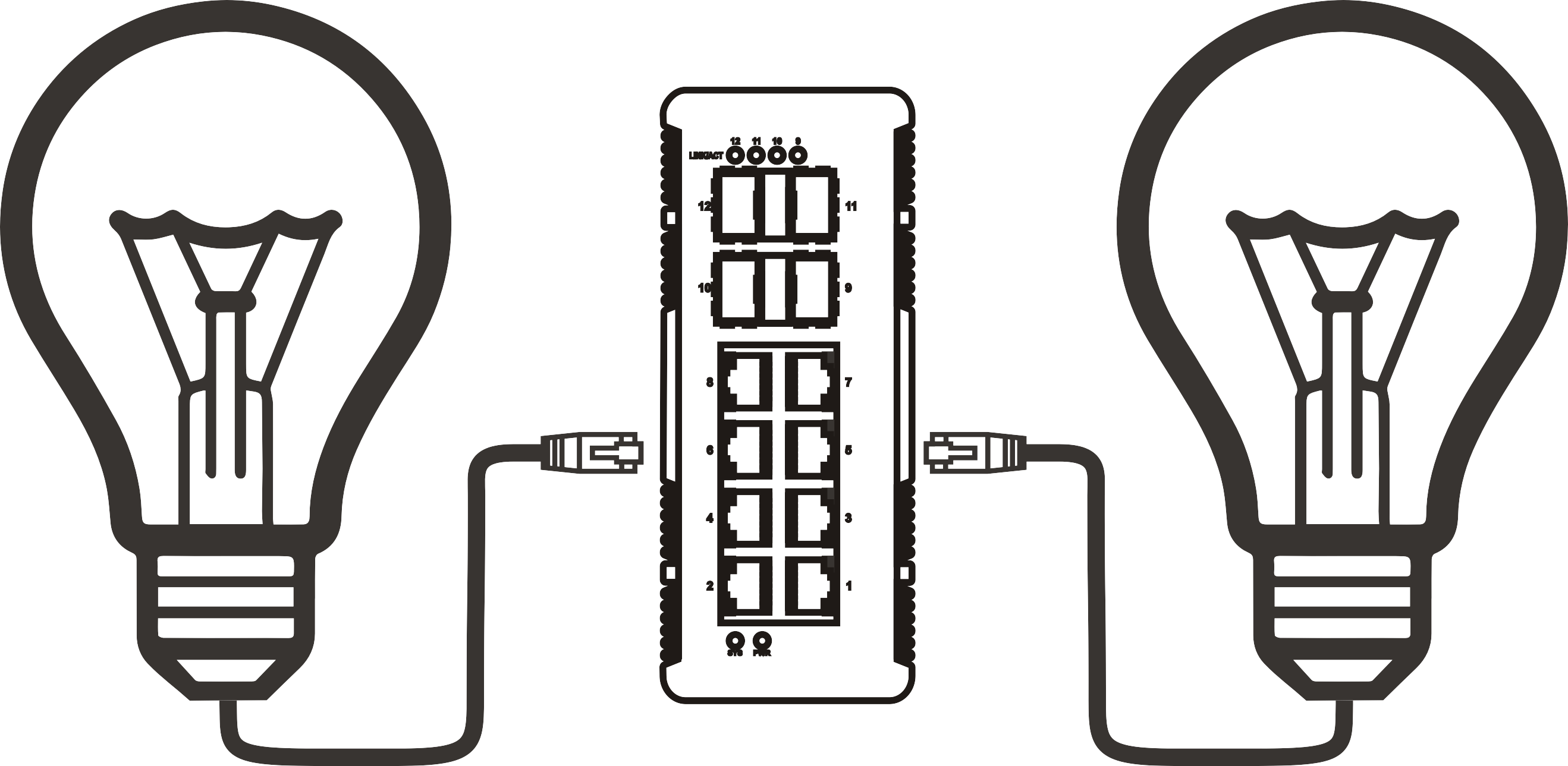


8 port unmanaged industrial Ethernet switch: how to choose the right one for harsh environments
Time: 2026-10-10
Article overview
This guide helps industrial engineers and procurement managers in the U.S. select the right 8 port unmanaged industrial Ethernet switch for demanding environments. Topics covered: brand comparisons, certifications, DIN-rail installation, and TCO analysis.
Table of contents
- 1. What is an 8 port unmanaged industrial Ethernet switch?
- 2. Unmanaged vs. managed: which one does your application actually need?
- 3. Top brand comparison: specs and pricing side by side
- 4. U.S. compliance and certification requirements you cannot ignore
- 5. DIN-rail installation walkthrough for North American control panels
- 6. Total cost of ownership: industrial-grade vs. commercial-grade switches
- 7. Buying checklist and 2026 market trends
- 8. FAQ
What is an 8 port unmanaged industrial Ethernet switch?
An 8 port unmanaged industrial Ethernet switch is a ruggedized, plug-and-play network device with eight Ethernet ports, designed to operate reliably in harsh industrial environments without any software configuration. Unlike commercial office switches, these units are built to withstand wide temperature ranges, mechanical vibration, electrical noise, and unstable DC power supplies common in factory automation, energy infrastructure, and transportation control systems.
8 port unmanaged industrial Ethernet switch is defined as: a zero-configuration Layer 2 forwarding appliance housed in a hardened enclosure, typically DIN-rail mountable, rated for –40°C to +75°C operation, and powered by redundant 12–57 VDC inputs. It forwards Ethernet frames using MAC address learning without any CLI, web UI, or SNMP agent.
Why does the 8-port form factor dominate? According to 2026 data from HMS Networks, over 60% of industrial field nodes connect to switches with eight or fewer ports. A single production cell, remote I/O cabinet, or SCADA field station rarely needs more than eight connections — making this format the highest-volume single SKU in the industrial network switch market globally.
The global industrial Ethernet market reached an estimated $68 billion in 2023 and is projected to grow to $112 billion by 2028 at a CAGR of approximately 10.5%, according to recent MarketsandMarkets research. The unmanaged segment, while less glamorous than managed or TSN-capable switches, continues to capture the largest share of unit volume precisely because most fixed-topology industrial subnets simply do not need dynamic configuration.
How it differs from a standard unmanaged ethernet switch
The core difference is not the port count or switching logic — it is the hardware engineering around that logic. A standard unmanaged ethernet switch from a consumer brand is designed for a climate-controlled server room drawing 110 VAC. An industrial grade switch, by contrast, must handle DC power ranging from 12 V to 57 V with no brownout failures, operate in a control cabinet that may reach 60°C ambient, and survive the vibration spectrum of a running conveyor belt or pump skid.
Practically speaking, industrial units carry IEC 61000-4 EMC immunity ratings, conformal-coated PCBs, metal DIN-rail brackets, and MTBF figures above 200,000 hours. Real-world testing in an automotive body shop — one of the electrically noisiest environments imaginable — consistently shows that commercial switches fail within weeks from conducted EMI, while a rugged network switch from an industrial-focused vendor runs for years without intervention.
Key hardware specifications to understand
Before comparing brands, engineers need a shared vocabulary. The table below summarizes the specification categories that matter most for harsh environment networking selection.
| Specification | What it means | Typical industrial target |
|---|---|---|
| Operating temperature | Ambient range for continuous operation | –40°C to +75°C (wide-temp grade) |
| Input voltage | Accepted DC supply range | 12–57 VDC dual redundant |
| MTBF | Mean time between failures | >200,000 hours |
| Protection rating | Dust and water ingress (IP code) | IP30 (cabinet) / IP67 (outdoor) |
| Port speed | Fast Ethernet (100M) or Gigabit (1G) | 100 Mbps or 1 Gbps per port |
| EMC compliance | Electromagnetic immunity/emissions | FCC Part 15, CE EN 55032 |
| Mounting | Physical installation method | DIN rail (35 mm EN 60715) |
Unmanaged vs. managed: which one does your application actually need?
For the majority of fixed-topology industrial subnets, an unmanaged industrial network switch is not just adequate — it is the correct engineering choice. The decision hinges on three questions: Does the network topology change? Does the application require QoS, VLAN segmentation, or SNMP monitoring? Is it subject to NERC CIP or other cybersecurity mandates that require auditability?
When unmanaged is the right answer
Factory automation networking for fixed production lines is the textbook use case. A stamping press communicates with its PLC over a dedicated subnet; the topology never changes; latency must be consistent but traffic volumes are modest. Here, a plug and play switch with zero configuration overhead is an operational advantage, not a compromise. The same logic applies to remote water treatment lift stations, distributed I/O nodes on a conveyor system, and point-of-sale network segments in industrial retail.
Oil and gas wellhead sites are another example. Network engineers at midstream companies have told me that unmanaged switches in wellhead enclosures — running on 24 VDC solar-charged batteries in ambient temperatures above 40°C — have accumulated three-plus years of runtime without a single configuration-related incident. You simply cannot replicate that operational simplicity with a managed device that needs firmware patches and VLAN audits.
When managed becomes necessary
SCADA network equipment connected to NERC CIP-regulated assets almost always requires a managed switch to satisfy audit logging and port security requirements. Water treatment facilities under AWIA 2018 cybersecurity mandates face similar pressure. Similarly, if your ethernet switch for factory use spans multiple VLANs — separating OT from IT traffic — or needs Rapid Spanning Tree Protocol to prevent loops in a ring topology, an unmanaged device is architecturally inadequate.
Of course, there are hybrid situations. Some industrial verticals, such as automotive Tier 1 suppliers, deploy unmanaged switches at the machine level and managed switches at the cell controller level. This layered approach balances cost, simplicity, and control without over-engineering every node.
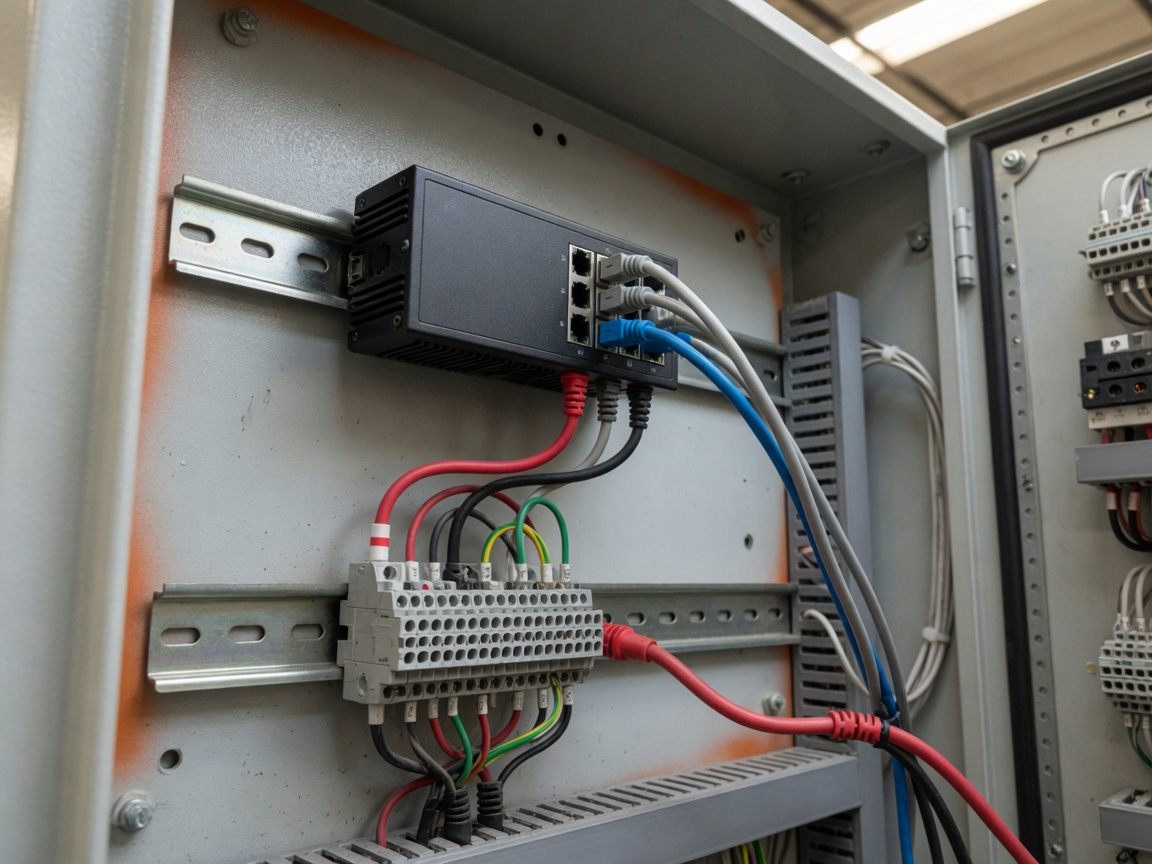
Top brand comparison: specs and pricing side by side
No single comparison table covering Moxa, Perle, Cisco IE, and AutomationDirect in one place exists among the top search results — so here it is. Prices reflect typical U.S. distributor list pricing as of 2026; actual contract pricing may vary.
| Feature | Moxa EDS-208A | Perle IDS-108F | Cisco IE-1000-8P2S | AutomationDirect SW-8US |
|---|---|---|---|---|
| Port speed | 8× 100 Mbps | 8× 100 Mbps | 8× 1 Gbps PoE+ | 8× 100 Mbps |
| Operating temp. | –40°C to +75°C | –40°C to +75°C | –40°C to +60°C | 0°C to +60°C |
| Input voltage | 12–45 VDC | 9–30 VDC | 48–57 VDC | 12–57 VDC |
| Certifications | UL, cUL, CE, FCC | UL, CE, FCC, ATEX | UL 508A, FCC, CE | UL, FCC, CE, RoHS |
| MTBF | ~1,000,000 hrs | ~500,000 hrs | ~300,000 hrs | ~200,000 hrs |
| Mounting | DIN rail | DIN rail | DIN rail | DIN rail |
| Approx. list price (USD) | $180–$240 | $220–$280 | $450–$600 | $110–$150 |
Which brand wins in each industrial vertical?
For oil and gas applications requiring ATEX/NEC Class 1 Div 2 compliance, Perle stands out as the only unit in this comparison with a direct ATEX rating. Moxa's EDS-208A is the dominant choice in rail mount ethernet switch deployments across North American transit authorities, thanks to its EN 50155 vibration and shock certification. The Cisco IE-1000 is overkill as an unmanaged device for most applications, but procurement teams already standardized on Cisco infrastructure often justify the premium for vendor consistency. AutomationDirect's offering wins on pure price-to-performance for budget-constrained machine builders deploying an ethernet switch for factory environments where temperature does not drop below 0°C.
Fast ethernet vs. gigabit: does port speed matter here?
For most PLC-to-sensor and SCADA polling traffic, a fast ethernet switch running at 100 Mbps per port is more than sufficient — actual sustained throughput rarely exceeds 5–10 Mbps per node. The case for a gigabit unmanaged switch emerges when the same subnet carries high-resolution machine vision camera streams or when an edge computing gateway aggregates traffic from multiple downstream nodes. Think of it like a residential neighborhood: individual homes only need a standard driveway, but the main road connecting them needs four lanes.
U.S. compliance and certification requirements you cannot ignore
This is the section that almost no competitor covers — yet it is the area most likely to create costly rework or project delays for U.S. industrial engineers. Certification requirements vary by application and industry, and selecting the wrong switch can trigger failed panel inspections or regulatory non-compliance findings.
UL 508A and the control panel requirement
Any network device installed inside a UL 508A-listed industrial control panel must itself carry a UL listing, or be specifically evaluated as part of the panel by a Nationally Recognized Testing Laboratory (NRTL). This is not a suggestion — it is a listing requirement enforced at panel inspection. In practice, this means specifying a rail mount ethernet switch with a clear UL mark, not just CE. Several low-cost imports carry CE but lack UL; installing them inside a UL 508A panel puts the entire panel listing at risk.
NEC Class 1 Div 2 and ATEX for hazardous locations
Oil and gas processing facilities, chemical plants, and grain handling operations frequently require equipment rated for NEC Class 1 Division 2 (C1D2) hazardous locations under the National Electrical Code. C1D2 covers areas where flammable gases or vapors are not normally present but could exist under fault conditions. An unmanaged industrial switch deployed inside a classified area enclosure must carry C1D2 listing, or the installation fails OSHA and AHJ (Authority Having Jurisdiction) inspection. ATEX Zone 2 is the equivalent European standard. Of the brands surveyed, only Perle and select Moxa models carry both.
"Industrial network devices installed in classified hazardous locations must meet the specific area classification requirements under NFPA 70 (NEC) Article 500–505. Equipment that is merely 'industrial grade' but lacks Class 1 Div 2 listing is not acceptable as a substitute." — NFPA 70 NEC, 2026 Edition, Article 500.8
NERC CIP relevance for substation and utility deployments
For bulk electric system (BES) cyber assets subject to NERC CIP-002 through CIP-011, an unmanaged switch at a transmission substation creates a compliance challenge. NERC CIP requires documented access controls and logging for cyber assets in the electronic security perimeter. By definition, an unmanaged device cannot log or enforce port-level access. Industry guidance is that unmanaged switches may be used inside a well-documented trust zone, but any switch at the perimeter boundary should be managed. Utilities using 8 port unmanaged industrial Ethernet switch hardware in BES environments should document the architectural justification explicitly in their CIP compliance documentation.
DIN-rail installation walkthrough for North American control panels
Most installation guides stop at "snap onto DIN rail." That is not enough for a production-quality North American panel build. Here is a step-by-step walkthrough based on real control panel installations following UL 508A and NFPA 79 requirements.
- Verify DIN rail compliance: Confirm the panel uses 35 mm EN 60715 DIN rail (the North American standard). Measure available rail length — a standard 8-port industrial switch occupies approximately 78–143 mm of rail width depending on model.
- Plan wire clearance: NFPA 79 requires minimum wire bending space around terminals. Allow at least 1.5 inches of clearance above and below the switch for Cat5e/Cat6 cable routing.
- Install end stops: Snap DIN-rail end stops on both sides of the switch mounting position before installing the switch. This prevents lateral movement under vibration.
- Snap the switch onto the rail: Tilt the switch at 30°, hook the upper clip onto the rail, then press the lower spring clip down and snap in. Confirm it cannot be pulled off without releasing the spring tab.
- Connect DC power: Use 18 AWG minimum copper wire for 24 VDC supply connections. Terminate at the screw terminals with ferrule-crimped wire ends — loose stranded wire in screw terminals vibrates loose over time. Connect both V1 and V2 inputs from independent supply branches for redundancy.
- Ground the chassis: Connect the functional earth (FE) terminal to the panel equipment ground bus using 14 AWG green/yellow wire. This is required for EMC compliance and is frequently skipped on field installations, which then exhibit EMI-induced link flaps.
- Connect Ethernet cables: Route Cat6 cables with a minimum 3-inch separation from AC power wiring and VFD output cables to prevent induced noise. Secure cables with panel duct or cable ties at maximum 12-inch intervals.
- Label all ports: Apply machine-printed port labels per NFPA 79 Section 16 documentation requirements. Handwritten labels are not acceptable under most industrial quality systems.
One practical note: always power the switch and verify all link LEDs before closing the panel door. Discovering a bad crimp or a bent RJ-45 pin after the door is bolted takes five times longer to diagnose.
Wiring common mistakes and how to avoid them
The single most common wiring error I have seen in the field is connecting the 24 VDC supply to the switch through a shared common bus that also powers high-inrush loads like solenoid valves. When the valve fires, the voltage dip can cause the switch to momentarily lose power, dropping all network connections and triggering PLC communication faults. The fix is a dedicated 5 W (minimum) branch from the 24 VDC supply, protected by its own 2A fuse or circuit breaker, supplying only the switch. This adds perhaps $8 in hardware and eliminates a failure mode that has caused unplanned downtime in dozens of plants.
Wide temperature ethernet switch considerations in outdoor enclosures
When installing a wide temperature ethernet switch in a NEMA 4X outdoor enclosure, thermal management becomes critical. A sealed metal enclosure with no active cooling can reach 65–70°C internal ambient on a summer day in the U.S. Southwest. Verify that the selected switch is rated for the enclosure's worst-case internal temperature, not just the external ambient. Adding a small thermostat-controlled ventilation fan — even in a NEMA 4X enclosure with filtered vents — can reduce internal temperature by 15–20°C and dramatically extend switch lifespan.
Total cost of ownership: industrial-grade vs. commercial-grade switches
Why do industrial switches cost three to ten times more than a consumer unmanaged ethernet switch with identical port counts? The question is entirely valid — and the TCO answer is more nuanced than "industrial is always worth it."
Five-year TCO comparison
Consider a 10-node machine automation subnet in a metal fabrication plant — a moderately harsh environment with ambient temperatures of 45–55°C, moderate vibration, and 24 VDC plant power.
| Cost category | Commercial-grade switch (5-year) | Industrial-grade switch (5-year) |
|---|---|---|
| Initial hardware cost | $35–$60 | $150–$280 |
| Expected failures over 5 years | 2–3 units | 0–0.2 units |
| Replacement hardware cost | $70–$180 | $0–$56 |
| Labor for emergency replacement (2 hrs @ $95/hr) | $380–$570 | $0–$95 |
| Downtime cost (avg. $15,000/hr in U.S. discrete mfg.) | $15,000–$45,000 | $0–$3,000 |
| 5-year TCO estimate | $15,485–$45,810 | $150–$3,431 |
The arithmetic is stark. Even at the conservative low end, a commercial switch's downtime risk dwarfs the industrial switch's hardware premium many times over. The $150–$220 price difference between an AutomationDirect industrial switch and a consumer model is recovered in full the first time it prevents a single hour of unplanned downtime. This is why maintenance engineers who have experienced one commercial-switch failure on a production line never specify them again — not because of rules, but because they have done the math themselves.
ROI calculation for an 8 port unmanaged industrial Ethernet switch upgrade
A straightforward ROI model: additional hardware investment of $200 per switch node, expected reduction in downtime events of 2 per year at a cost avoidance of $15,000 each. Year one ROI = ($30,000 − $200) / $200 = 149× return. Even using conservative assumptions with one avoided downtime event at $5,000 cost, the ROI remains 24× in year one. No other single hardware upgrade in a control panel delivers this return profile at this price point.
Buying checklist and 2026 market trends
The following checklist consolidates every decision point covered in this guide into a usable procurement tool for selecting an 8 port unmanaged industrial Ethernet switch.
Pre-purchase evaluation checklist
- ☐ Confirm operating temperature range covers worst-case enclosure internal ambient, not just room temperature
- ☐ Verify input voltage range matches plant DC supply (24 VDC, 48 VDC, or 12–57 VDC universal)
- ☐ Confirm UL listing for UL 508A panel installation if applicable
- ☐ Verify ATEX/NEC Class 1 Div 2 if deploying in classified hazardous location
- ☐ Confirm port speed matches application (100 Mbps adequate for PLC/sensor, 1 Gbps for vision/edge computing)
- ☐ Verify DIN rail dimensions and available rail length in panel
- ☐ Check IP rating for enclosure type (IP30 for sealed cabinet, IP67 for outdoor)
- ☐ Confirm MTBF specification meets plant reliability targets
- ☐ Validate dual redundant power inputs if continuous uptime is required
- ☐ Check lead time — some industrial-grade units have 8–12 week supply chain lead times
2026 trends shaping the industrial network switch market
Two shifts are reshaping what engineers should expect from new product releases in 2026. First, PoE+ integration is accelerating sharply. As industrial IP cameras, wireless access points, and IO-Link masters become standard equipment on factory floors, the demand for 8-port PoE+ capable industrial switches — delivering 30 W per port — has grown to where it is projected to exceed 40% of new unmanaged unit shipments. Second, even unmanaged products are beginning to incorporate Time-Sensitive Networking (TSN) hardware support to satisfy Industry 4.0 deterministic latency requirements. TSN-capable chips add modest cost but future-proof hardware investment against OT protocol evolution. Buyers specifying switches today for installations with five-plus year lifespans should inquire about TSN hardware readiness even in unmanaged SKUs.
FAQ
Frequently asked questions
Q: What is the difference between an unmanaged industrial switch and a commercial unmanaged switch?
A: An industrial grade switch is engineered for wide temperature ranges (–40°C to +75°C), DC power inputs, vibration and shock resistance, conformal-coated PCBs, and MTBF ratings above 200,000 hours. A commercial switch targets climate-controlled environments with AC power and is not rated for industrial field conditions.
Q: Do I need a managed switch for my factory automation application?
A: Not necessarily. If your network topology is fixed, traffic is predictable, and you have no regulatory requirement for port-level logging or VLAN segmentation, an unmanaged industrial network switch is the simpler, more reliable, and lower-cost choice. Reserve managed switches for perimeter or cybersecurity-regulated nodes.
Q: What certifications should a switch have for installation inside a UL 508A control panel?
A: The switch must carry a UL listing (not just CE) to be installed inside a UL 508A-listed industrial control panel without requiring a separate NRTL evaluation. Also confirm FCC Part 15 Class A for EMC emissions compliance in industrial environments.
Q: Can an 8 port unmanaged industrial Ethernet switch be used in a hazardous location such as an oil refinery?
A: Only if the switch carries NEC Class 1 Division 2 (C1D2) or ATEX Zone 2 certification. Standard industrial switches without these ratings cannot be installed in classified hazardous areas regardless of other industrial certifications they may carry.
Q: Is a fast ethernet switch still relevant in 2026 or should I always choose gigabit?
A: Fast ethernet (100 Mbps) remains fully adequate for the majority of PLC, sensor, and SCADA polling applications where per-node throughput is well under 10 Mbps. Choose a gigabit unmanaged switch when the subnet carries machine vision streams, large data file transfers, or aggregates traffic from multiple downstream nodes.
Selecting the right 8 port unmanaged industrial Ethernet switch comes down to matching hardware capabilities to the specific demands of your environment, compliance jurisdiction, and application profile. Use the comparison table, certification checklist, and TCO framework in this guide to eliminate guesswork and make a defensible, data-backed procurement decision in 2026.
More News



Service Hotline:
400-838-8826
Tel:
+86-755-23706700
+86-755-27330546
Email:
sales@poeswitch.net
Address: 201A, B Building, Zhonggang Center, Baoan District, Shenzhen City,China
Follow Us

Copyright © 2025 Shenzhen Hi-Net Technology Co., Ltd All Rights reserved.