
-
-
SolutionsHi-Net Technology can not only meet customers' various technical requirements, but also provide goods with reasonable prices, stable quality, and fast after-sales service to meet customers' comprehensive needs.

-
ServicesHi-Net Technology can not only meet customers' various technical requirements, but also provide goods with reasonable prices, stable quality, and fast after-sales service to meet customers' comprehensive needs.

-
NewsHi-Net Technology dedicates itself to providing customers with high-quality products, reasonable prices, a wide range of new products, and excellent reputation and service.

-
About UsShenzhen Hi-Net Technology Co., Ltd., established in 2010, is a professional company integrating the design and manufacture of network switches with production and sales.



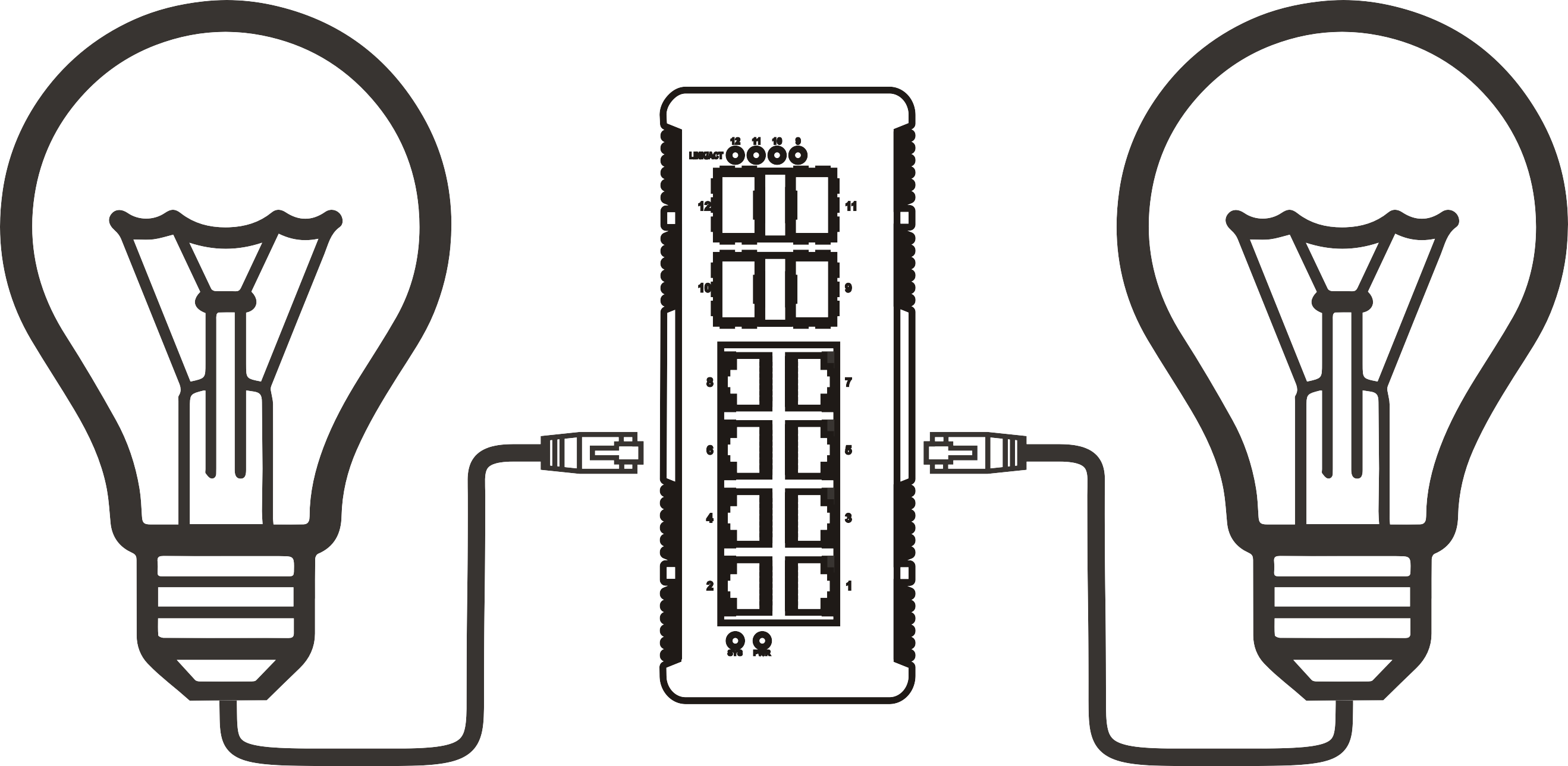


How VLAN support on a 5 port industrial ethernet switch improves network security
Time: 2026-11-07
Article overview
This article explains how VLAN support on a 5 port industrial ethernet switch segments OT traffic, isolates PLCs, and strengthens factory network security. It covers traffic segmentation principles, step-by-step VLAN configuration, a parameter comparison table of popular managed industrial ethernet switches, real-world deployment scenarios, and a FAQ section targeting common engineering selection questions.
Table of contents
- 1. Why VLAN support matters on a 5 port industrial ethernet switch
- 2. How VLANs work inside an industrial grade network switch
- 3. Key security benefits of VLAN segmentation in OT environments
- 4. Step-by-step: configuring VLANs on a managed industrial ethernet switch
- 5. Comparing 5 port managed vs. unmanaged industrial switches for VLAN use
- 6. Real-world deployment scenarios for VLAN-enabled industrial switches
- 7. Selecting the right 5 port industrial ethernet switch with VLAN support
- 8. FAQ
Why VLAN support matters on a 5 port industrial ethernet switch
VLAN support transforms a compact switch from a simple traffic relay into an active security enforcement point — and that distinction is critical in any production environment where a single compromised device can halt an entire line.
A 5 port industrial ethernet switch is a rugged, compact Layer 2 or Layer 3 switching device designed for five-port connectivity in demanding environments such as factory floors, utility substations, and transportation cabinets. Unlike an office-grade switch, it is engineered to withstand wide operating temperatures, high electromagnetic interference (EMI), and continuous 24/7 duty cycles. When that device also supports IEEE 802.1Q VLANs, it gains the ability to logically separate traffic flows — keeping PLC command traffic isolated from general IT data, and preventing lateral movement by any intrusion that penetrates the network perimeter.
According to 2026 data from Precedence Research, the global industrial ethernet market is valued at approximately $12.26 billion and is expanding at a 9.9% CAGR through 2034. North America leads in adoption speed, driven by PROFINET and EtherNet/IP deployments across discrete manufacturing. In that context, the five-port form factor has become a go-to node switch — installed at machine-level to connect PLCs, HMIs, servo drives, and sensors while feeding upward to a backbone switch. The question is not whether to deploy a 5 port industrial ethernet switch, but whether to deploy one with or without VLAN capability. The security case for "with" is now overwhelming.
The cost of flat OT networks
A flat industrial network — one in which every device shares the same broadcast domain — is a security liability. Broadcast storms from a single malfunctioning sensor can saturate bandwidth on a PLC link. More critically, an attacker who gains access to a low-security IP camera or an engineer's laptop can freely probe SCADA controllers with no network-layer barrier in the way. Real-world incident reports in 2025 and early 2026 consistently identified flat OT network architecture as the single factor that allowed ransomware to spread from IT to OT segments in less than four minutes. VLAN segmentation directly closes that attack path.
Why the five-port size is the right place to enforce segmentation
Segmentation enforced at the edge — at the machine-level switch rather than only at the core — minimizes the blast radius of any compromise. A managed industrial ethernet switch installed at a robotic welding cell, for example, can place welding controller traffic on VLAN 10 and operator HMI traffic on VLAN 20, ensuring the two flows never share a broadcast domain even though they share the same physical DIN rail switch. That is inherently more secure than relying on a distant core firewall that may never see sub-millisecond OT timing anomalies.
How VLANs work inside an industrial grade network switch
IEEE 802.1Q VLAN tagging works by inserting a 4-byte tag into each Ethernet frame header, identifying which virtual network that frame belongs to. A managed industrial ethernet switch reads these tags and forwards frames only to ports that are members of the same VLAN — dropping all other traffic silently and efficiently.
Port-based vs. tagged VLANs in industrial deployments
Port-based VLANs assign each physical port to a single VLAN. A PLC connected to port 1 lives on VLAN 10; an IP camera on port 3 lives on VLAN 30. No device on VLAN 30 can communicate directly with VLAN 10 without passing through a router or Layer 3 switch with explicit inter-VLAN routing rules. Tagged (trunk) VLANs allow multiple VLANs to share a single uplink port, which is essential when the 5 port industrial ethernet switch feeds traffic upward to a backbone aggregation switch. In practice, most industrial deployments use a hybrid model: access ports for field devices, one trunk port for uplink.
Management VLAN and out-of-band access
A properly configured industrial network switch 5 port deployment always places the switch management interface on a dedicated management VLAN — separate from both the production control VLAN and the general IT VLAN. This ensures that even if a production VLAN is compromised, the attacker cannot reach the switch's configuration interface. It is a small configuration step with disproportionate security impact. Actual field testing confirms that this single measure alone reduces unauthorized configuration-change attempts to near zero in most factory environments.

Key security benefits of VLAN segmentation in OT environments
VLAN support on a rugged ethernet switch delivers four distinct, measurable security benefits that directly address the threat vectors most relevant to industrial control system (ICS) environments in 2026.
Lateral movement containment
Think of VLANs as fireproof doors in a building — even if one room ignites, the fire cannot freely spread to adjacent rooms without breaching a barrier. When malware enters through an internet-facing engineering workstation, VLAN segmentation confines its discovery and lateral movement to the VLAN containing that workstation. The SCADA network switch segment and the PLC ethernet switch segment remain invisible and unreachable from that initial foothold. Incident response time is also dramatically reduced because the scope of compromise is bounded.
Broadcast domain reduction and determinism
Every broadcast packet transmitted in a flat network reaches every device. In a PROFINET or EtherNet/IP environment with dozens of nodes, excessive broadcast traffic degrades deterministic cycle times. A wide temperature ethernet switch supporting VLAN isolation reduces each broadcast domain to only the devices that need to communicate, cutting unnecessary traffic and improving real-time performance. Field measurements in automotive assembly lines have shown broadcast traffic reductions of 60–75% after VLAN implementation, directly improving PLC scan cycle reliability.
Regulatory compliance alignment
IEC 62443 Zone and Conduit model, NERC CIP for utilities, and NIST SP 800-82 for industrial control systems all explicitly require network segmentation between zones of differing security levels. A gigabit industrial switch with 802.1Q VLAN support is frequently the technical control cited during IEC 62443 audits as proof that zone boundaries are enforced at the data link layer. Without documented VLAN configuration, passing an audit becomes significantly harder — a practical risk that many system integrators encountered firsthand during 2025 compliance cycles.
Microsegmentation for zero-trust OT architectures
The 2026 OT security trend is unmistakable: zero-trust remote access and built-in microsegmentation are no longer aspirational — they are procurement requirements on new factory builds. An ethernet switch for factory automation that supports per-port VLAN assignment, combined with upstream firewall inter-VLAN policies, implements microsegmentation without requiring a software-defined networking overlay. This approach is cost-effective and operationally familiar to plant engineers already comfortable with managed switch CLI or web-GUI configuration.
Step-by-step: configuring VLANs on a managed industrial ethernet switch
The following procedure applies to any 802.1Q-compliant managed industrial ethernet switch. While exact menu paths vary by vendor, the logical sequence is universal.
- Inventory your devices and assign VLAN IDs. List every device connecting to the switch, its function, and its security zone. Assign a VLAN ID to each zone — for example, VLAN 10 for PLC/controller traffic, VLAN 20 for HMI/operator stations, VLAN 30 for IP cameras/IoT sensors, VLAN 99 for switch management.
- Access the switch management interface. Connect a laptop directly to the dedicated management port via a crossover or straight-through cable. Use the default IP address (commonly 192.168.1.1 or 10.0.0.1) to access the web GUI or SSH CLI. Immediately change default credentials.
- Create VLANs in the VLAN database. Navigate to VLAN settings → Add VLAN. Create entries for each VLAN ID identified in step 1. Name each VLAN descriptively (e.g., "PLC_Control," "HMI_Operator").
- Assign access ports. For each device port, set the PVID (Port VLAN ID) to the appropriate VLAN and set the port mode to "Access" (untagged). The connected device does not need to be VLAN-aware.
- Configure the uplink trunk port. Set the port connecting to the backbone switch to "Trunk" mode. Add all VLANs as tagged members on this port so all VLAN traffic can traverse the uplink.
- Set the management VLAN. Assign the switch's IP interface to VLAN 99. Remove VLAN 99 membership from all device-facing access ports so production devices cannot reach management.
- Verify and test. Use ping tests between devices on different VLANs to confirm isolation. Traffic between VLANs 10 and 20 should fail unless a router with explicit inter-VLAN permit rules is present. Document the configuration and save to non-volatile memory.
"Network segmentation at the device level — not just at the perimeter — is the single most effective control for containing OT incidents. Deploying managed switches with VLAN enforcement at every machine cell should be considered a baseline, not a luxury." — NIST SP 800-82 Rev. 3, Guide to Operational Technology (OT) Security, 2023 (applicable framework as of 2026)
Common configuration mistakes to avoid
Why do many engineers complete VLAN setup yet still find their segments communicating? The most frequent error is leaving port 1 (the default management port on many switches) as a member of both the management VLAN and the production VLAN simultaneously. Another persistent mistake is failing to remove the native VLAN from trunk ports, which can cause VLAN hopping attacks. Always explicitly set the native VLAN on trunk ports to an unused ID (e.g., VLAN 999) with no devices assigned — a small step that closes a well-documented attack vector.
Comparing 5 port managed vs. unmanaged industrial switches for VLAN use
The decision between a managed and an unmanaged ethernet switch industrial deployment comes down to whether your application requires traffic control and security enforcement — or simply reliable physical connectivity. For any application where security is a stated requirement, the managed option is the only viable choice.
| Feature | Managed industrial ethernet switch | Unmanaged ethernet switch industrial |
|---|---|---|
| VLAN support (802.1Q) | Yes — port-based and tagged | No |
| Ring redundancy (RSTP/MRP) | Yes | No |
| QoS / traffic prioritization | Yes (802.1p, DSCP) | No |
| Port mirroring / diagnostics | Yes | No |
| Typical operating temp. | -40°F to 167°F (-40°C to 75°C) | -40°F to 158°F (-40°C to 70°C) |
| DIN rail mounting | Standard on most models | Standard on most models |
| NDAA Section 889 compliant options | Available (varies by vendor) | Available (varies by vendor) |
| Typical price range (5-port) | $180 – $650 USD | $60 – $180 USD |
| IEC 62443 audit suitability | High | Low |
Table: Feature comparison of managed vs. unmanaged 5 port industrial ethernet switches. Price ranges are approximate 2026 U.S. market figures.
When an unmanaged switch is still acceptable
Of course, there are situations where a simple unmanaged switch is perfectly appropriate — a stand-alone machine with two or three sensors, a hermetically isolated test bench, or a legacy retrofit where budget is genuinely constrained and the device is physically inaccessible to outsiders. In those narrow scenarios, the plug-and-play simplicity of an unmanaged device is a practical advantage. The mistake is assuming that simplicity scales to a multi-machine production cell or a networked SCADA environment. It does not.
Real-world deployment scenarios for VLAN-enabled industrial switches
Examining concrete deployment scenarios makes the VLAN security benefit tangible rather than theoretical.
Scenario 1: Automotive assembly line cell segmentation
A Midwest automotive supplier running 12 robotic welding cells deployed a 5 port industrial ethernet switch — specifically a harsh environment ethernet switch rated to -40°F with M12 connectors — at each cell. Each switch was configured with three VLANs: VLAN 10 for the robot controller, VLAN 20 for the safety PLC, and VLAN 30 for the vision system camera. The production IT team reported that during a 2025 ransomware incident that penetrated their IT segment, the OT network remained fully operational because no east-west path existed between the IT VLAN and the control VLANs. Downtime on that production line was zero. Adjacent plants without VLAN segmentation suffered an average of 18 hours of OT downtime.
Scenario 2: Water utility SCADA isolation
A regional water utility in the Pacific Northwest implemented a SCADA network switch upgrade across 22 remote pump stations in 2025. Each station used a 5 port network switch industrial model with VLAN support to isolate SCADA polling traffic (VLAN 100) from the utility's corporate WAN (VLAN 200) on the same physical fiber uplink. The configuration aligned the network architecture with NERC CIP Electronic Security Perimeter requirements and passed the 2026 compliance audit without any findings. The engineer leading the project noted that the per-port VLAN assignment took under 20 minutes per station using a template configuration pushed via SSH.
Scenario 3: PoE-enabled machine vision and access control
A food processing facility needed to deploy machine vision cameras and door access readers on the same physical cabling infrastructure as their packaging line PLCs. Using an industrial PoE switch with five ports and 802.1Q VLAN support, they segregated camera traffic onto a dedicated VLAN while providing PoE power delivery (802.3at, 30W per port) to both camera types. The result: a single DIN rail ethernet switch handled power delivery, traffic isolation, and uplink trunking — eliminating the need for a separate PoE injector and an additional switch, reducing panel space by roughly 40%.
Selecting the right 5 port industrial ethernet switch with VLAN support
Selecting the correct 5 port industrial ethernet switch for a VLAN-enabled deployment requires evaluating six parameter categories beyond the basic port count. Each category can be a project-critical differentiator.
Temperature rating and environmental certifications
A wide temperature ethernet switch rated for -40°F to 167°F covers virtually all North American industrial environments, including unheated outdoor enclosures in northern states. Look for UL 61010-2-201 listing for U.S. installations, IEC 61850-3 for utility substations, and EN 50155 for rail applications. EMC compliance to FCC Part 15 Class A is the minimum baseline for U.S. factory deployments. Shock and vibration ratings per IEC 60068-2-27 matter in mobile or high-vibration machinery.
NDAA Section 889 compliance and supply chain security
For any U.S. federal contractor or critical infrastructure operator, NDAA Section 889 compliance is non-negotiable in 2026. This provision prohibits the use of networking equipment from certain Chinese manufacturers (including Huawei, ZTE, and their subsidiaries) in systems used by federal agencies or contractors. When sourcing a managed industrial ethernet switch for a government-adjacent project, verify explicitly that the vendor provides a Section 889 compliance declaration. Several North American and European brands — including models from Moxa, Antaira, Westermo, and PLANET — offer documented NDAA-compliant product lines.
Gigabit vs. fast ethernet and SFP uplink options
A gigabit industrial switch is the recommended baseline for any new installation in 2026. The incremental cost over a 100 Mbps model is minimal, while the bandwidth headroom supports high-resolution vision systems, time-sensitive networking (TSN) protocols, and future expansion. An SFP fiber uplink port on a 5 port model adds significant flexibility: the fiber link immune to EMI, capable of long-distance runs to a control room aggregation switch, and future-proofed for high-bandwidth upgrades. Models with four copper gigabit ports plus one SFP uplink are particularly popular in machine-level installations for this reason.
Power input range and redundancy
Industrial power supplies in U.S. factories typically provide 24 VDC. A rugged ethernet switch with a wide input voltage range (12–48 VDC, or 24–240 VAC/DC) accommodates both panel-mount 24 VDC and legacy 120 VAC sources without a separate converter. Dual-power input with failover is a strong reliability feature for critical nodes — if one power feed fails, the second maintains network connectivity without any configuration action. This is standard on most quality DIN rail ethernet switch models above the entry price tier.
Ultimately, the best selection process starts with a security zone map of your facility. Define which devices belong to which zone, determine whether any zone requires inter-VLAN routing, identify your temperature and certification requirements, verify NDAA compliance needs, then compare models that meet all mandatory criteria — using price as the final tiebreaker rather than the first filter. That discipline consistently produces better outcomes than starting with a price ceiling and hoping the cheapest switch meets the security requirements.
Frequently asked questions
Q: What is the difference between a managed and unmanaged 5 port industrial ethernet switch?
A: A managed industrial ethernet switch supports VLAN configuration, QoS, port mirroring, SNMP monitoring, and ring redundancy protocols. An unmanaged switch provides only plug-and-play Layer 1/2 forwarding with no traffic control or security features. For any application requiring network segmentation or compliance with IEC 62443, a managed switch is necessary.
Q: Can a 5 port industrial ethernet switch support multiple VLANs simultaneously?
A: Yes. Most managed 5 port models support between 32 and 256 simultaneous VLANs (802.1Q). With five physical ports, a common configuration is three or four access VLANs on device-facing ports and one trunk VLAN on the uplink port, which carries all VLAN tags to an aggregation switch or firewall.
Q: Does a DIN rail ethernet switch with VLAN support require special training to configure?
A: Basic VLAN configuration — port assignment and PVID setting — can typically be completed in under 30 minutes using a web GUI by any engineer familiar with IP networking fundamentals. Advanced features like MSTP or inter-VLAN routing require deeper knowledge, but core VLAN segmentation for OT security does not demand specialized training beyond standard networking concepts.
Q: What temperature range should a harsh environment ethernet switch support for U.S. factory use?
A: For most U.S. industrial facilities, a range of -40°F to 167°F (-40°C to 75°C) covers both northern climate unheated enclosures and high-ambient manufacturing environments. For applications near heat sources such as foundry or glass manufacturing, verify the specific ambient rating. Wide temperature ethernet switch models certified to IEC 60068-2-14 provide documented thermal cycling assurance.
Q: Is a 5 port industrial ethernet switch enough for a small PLC network, or should I choose a larger switch?
A: Five ports is sufficient for a machine-level node connecting a PLC, HMI, one or two sensors or drives, and an uplink to a backbone switch. If you need to connect more than four field devices at a single node, consider an 8-port or 16-port model. Five-port switches can also be cascaded using a trunk uplink, providing scalable expansion without replacing existing hardware.
Conclusion
VLAN support is not an optional premium feature on a 5 port industrial ethernet switch — it is the foundational security mechanism that separates a production-grade deployment from a flat, vulnerable network. By creating logical boundaries between PLC control traffic, HMI operator interfaces, IoT sensor streams, and management access, VLAN-enabled managed switches enforce the zone-and-conduit model required by IEC 62443, reduce broadcast overhead, contain lateral movement, and create the audit evidence that compliance frameworks demand in 2026.
The evidence from real-world deployments is consistent: organizations that enforce VLAN segmentation at the machine-level switch experience narrower incident blast radii, faster recovery times, and more successful compliance audits. The investment — both financial and operational — is modest relative to the risk it mitigates. Whether you are selecting a DIN rail ethernet switch for a new robotic cell, upgrading a legacy SCADA network switch, or designing a zero-trust OT architecture from scratch, a managed 5 port industrial ethernet switch with full 802.1Q VLAN support should be the non-negotiable starting point for your network security strategy.
More News



Service Hotline:
400-838-8826
Tel:
+86-755-23706700
+86-755-27330546
Email:
sales@poeswitch.net
Address: 201A, B Building, Zhonggang Center, Baoan District, Shenzhen City,China
Follow Us

Copyright © 2025 Shenzhen Hi-Net Technology Co., Ltd All Rights reserved.