
-
-
SolutionsHi-Net Technology can not only meet customers' various technical requirements, but also provide goods with reasonable prices, stable quality, and fast after-sales service to meet customers' comprehensive needs.

-
ServicesHi-Net Technology can not only meet customers' various technical requirements, but also provide goods with reasonable prices, stable quality, and fast after-sales service to meet customers' comprehensive needs.

-
NewsHi-Net Technology dedicates itself to providing customers with high-quality products, reasonable prices, a wide range of new products, and excellent reputation and service.

-
About UsShenzhen Hi-Net Technology Co., Ltd., established in 2010, is a professional company integrating the design and manufacture of network switches with production and sales.



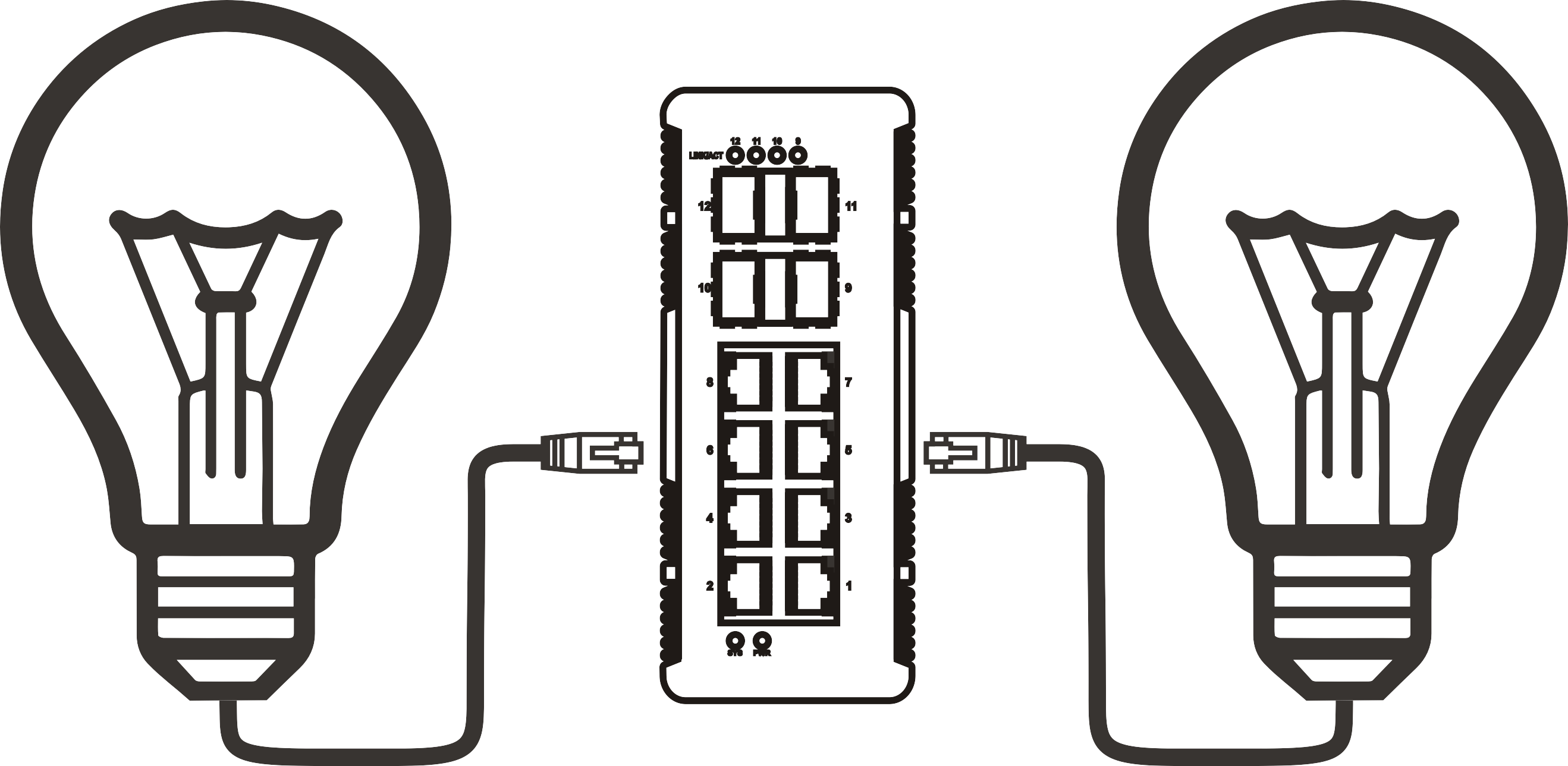


Industrial ethernet switch DIN rail: how to choose the right one for your application
Time: 2026-10-09
Article overview
This guide is written for industrial automation engineers, system integrators, and procurement teams evaluating DIN rail-mounted industrial ethernet switches. It covers the full selection journey — from core definitions and managed vs. unmanaged trade-offs, through brand comparisons, installation best practices, emerging standards, and long-term cost analysis. Estimated read time: 14 minutes.
Table of contents
- 1. What is an industrial ethernet switch DIN rail?
- 2. Managed vs. unmanaged: a real-world decision framework
- 3. Brand specification comparison: top switches side by side
- 4. DIN rail installation guide: mounting, grounding, and cable management
- 5. Emerging standards in 2026: TSN, SPE, and NERC CIP
- 6. Total cost of ownership analysis for US procurement teams
- 7. Common applications and industry use cases
- 8. FAQ
What is an industrial ethernet switch DIN rail?
An industrial ethernet switch DIN rail is a hardened network switch designed to mount on a standard 35 mm DIN rail inside control cabinets, offering deterministic data switching for factory automation, process control, and critical infrastructure environments.
Unlike commercial off-the-shelf switches, these devices are purpose-built to survive wide temperature swings (typically –40 °F to 167 °F / –40 °C to 75 °C), high-frequency electromagnetic interference, mechanical vibration, and continuous 24/7 operation. The DIN rail form factor is not merely a mounting convenience — it also dictates heat dissipation layout, pluggable terminal block wiring, and space efficiency inside densely packed control panels.
Industrial ethernet switch DIN rail是指 a category of panel mount ethernet switch that combines hardened hardware design with support for industrial protocols such as PROFINET, EtherNet/IP, and Modbus TCP, making it the backbone of modern OT (Operational Technology) networks alongside PLCs, HMIs, and SCADA systems.
According to recent 2026 data, the global industrial ethernet switch market is valued at approximately $2.8 billion USD, growing at a compound annual rate of 11.5%. Industrial ethernet now accounts for more than 65% of factory network protocol deployments, steadily displacing legacy fieldbus architectures. That trajectory is not slowing down — if anything, the rise of IIoT and edge computing is accelerating it.
Why do so many engineers still underestimate the difference between a rugged ethernet switch rail mount and a standard commercial switch bolted into a panel? The answer usually comes down to procurement pressure. Cost-per-port looks attractive until the first unplanned downtime event on a production line.
[IMAGE_1: DIN rail-mounted industrial ethernet switches installed inside a control cabinet with labeled wiring terminals and grounding straps]Managed vs. unmanaged: a real-world decision framework
The single most impactful selection decision is whether you need a managed industrial ethernet switch or an unmanaged industrial switch DIN rail. The right answer depends on where the switch sits in your network hierarchy — machine level, cell level, or plant level.
Machine-level networking: when unmanaged is enough
At the machine level, you are typically connecting a PLC, a servo drive, a vision camera, and maybe a local HMI. Traffic is predictable. Topology is simple — often a linear or star with fewer than eight nodes. In this context, an unmanaged industrial switch DIN rail delivers exactly what you need: instant plug-and-play operation, zero configuration overhead, and a lower per-unit cost that makes sense across dozens of identical machine cells. Real-world testing on automotive assembly lines confirms that unmanaged switches perform flawlessly here, provided EMI shielding and power supply filtering are correctly specified.
Of course, there are exceptions. If even a single node at machine level streams high-bandwidth video for AI-based quality inspection, QoS prioritization becomes necessary — which immediately pushes you toward a managed device.
Cell and plant level: where managed switches earn their cost
Step up to cell-level or plant-level industrial automation ethernet switch deployments and the calculus changes completely. You need VLAN segmentation to isolate OT traffic from IT traffic. You need RSTP or MRP ring redundancy to guarantee sub-50 ms failover if a cable is cut. SCADA network switch integration requires port mirroring for traffic analysis and SNMPv3 for secure remote monitoring. A PLC ethernet switch DIN rail at the cell level that cannot support ring redundancy is a single point of failure waiting to happen.
The decision framework is straightforward:
- Map your network topology — identify each switch's position (machine, cell, or plant backbone).
- Assess redundancy requirements — any ring topology or mission-critical segment requires RSTP/MRP/HSR support.
- Evaluate protocol mix — mixed PROFINET + EtherNet/IP environments need VLAN isolation; a managed switch is mandatory.
- Check bandwidth demand — DIN rail gigabit switch hardware is the baseline for cell-level and above in 2026.
- Confirm security posture — NERC CIP-regulated utilities or IEC 62443-compliant plants must deploy managed switches with 802.1X port authentication.
- Validate power budget — if powering IP cameras or wireless APs via industrial PoE switch DIN rail, calculate per-port PoE wattage against your 24 VDC power supply capacity.
"Deterministic latency is no longer optional in modern industrial networks. As IT and OT converge, the switch must enforce traffic prioritization natively — not as an afterthought." — ARC Advisory Group, Industrial Network Infrastructure Report, 2025
Brand specification comparison: top switches side by side
Choosing between Moxa, Cisco IE, Siemens SCALANCE, Phoenix Contact, and Advantech is rarely straightforward. Each brand has genuine strengths tied to specific use cases. The table below presents 2026 representative models across the criteria that matter most to US industrial buyers: port count, PoE wattage, operating temperature, key certifications, and approximate list price.
| Brand / model | Ports | PoE budget | Temp range | Key certs | Managed | Approx. list price |
|---|---|---|---|---|---|---|
| Moxa EDS-G516E | 16× GbE | N/A | –40 to 167 °F | IEC 61850, UL, ATEX | Yes | ~$1,800 |
| Cisco IE-3400H-8T | 8× GbE | N/A | –40 to 167 °F | UL, NERC CIP ready, IEC 62443 | Yes | ~$2,400 |
| Siemens SCALANCE XC216 | 16× 100M + 2× GbE uplink | N/A | –40 to 149 °F | PROFINET, IEC 61850, UL | Yes | ~$1,600 |
| Phoenix Contact FL SWITCH 2208 | 8× GbE | N/A | –13 to 140 °F | UL, IEC 61000, PROFINET | Yes | ~$950 |
| Advantech EKI-2728I | 8× GbE | N/A | –40 to 167 °F | UL, EN61000, IEC 61850 | Yes | ~$780 |
| Generic unmanaged 5-port GbE DIN rail | 5× GbE | N/A | –40 to 167 °F | CE, UL | No | ~$120–$200 |
A few observations from actual deployment experience: Cisco IE delivers the strongest IEC 62443 and NERC CIP compliance story for utilities and defense contractors. Siemens SCALANCE integrates most seamlessly into existing Siemens TIA Portal environments — not a surprise, but worth stating plainly. Moxa consistently earns high marks for MTBF documentation and long-term part availability. Advantech offers compelling price-to-performance for budget-conscious OEMs building machine-level cells. Phoenix Contact narrows the temperature tolerance compared to its competitors at the upper end, so verify your cabinet thermal model before specifying it in outdoor enclosures above 113 °F / 45 °C.
PoE-capable options worth noting
If your design includes IP cameras, wireless access points, or IO-Link masters powered over ethernet, an industrial PoE switch DIN rail becomes necessary. The Moxa EDS-P510A series delivers 240 W total PoE budget across eight ports — sufficient for most machine-vision deployments. Cisco's IE-3400 PoE variants support 802.3bt (90 W per port) for high-draw devices. Always verify that your 24 VDC to PoE conversion efficiency is accounted for in the panel power budget; this is a step that gets skipped more often than engineers care to admit.
DIN rail installation guide: mounting, grounding, and cable management
Correct physical installation of a panel mount ethernet switch is as important as the device specification itself. A poorly grounded or thermally compromised switch will fail prematurely regardless of its rated MTBF. Here is a step-by-step process validated across multiple control cabinet builds in US manufacturing facilities.
Step-by-step DIN rail mounting procedure
- Verify rail dimensions. Confirm the installed rail is a standard 35 mm × 7.5 mm DIN rail per EN 60715. Thinner or non-standard rails void most manufacturer warranties and can cause the latch mechanism to fail under vibration.
- Plan thermal spacing. Leave a minimum 1.5 inches (38 mm) of vertical clearance above and below the switch body. Industrial grade network switch devices are fanless by design — convection cooling is the only mechanism, and adjacent devices will reduce airflow if spaced too tightly.
- Snap the switch onto the rail. Tilt the switch at approximately 45° to engage the top clip, then press downward until the bottom latch clicks. Apply a gentle lateral pull to confirm it is locked.
- Connect the functional earth ground. Use the dedicated PE (protective earth) terminal — typically marked with a ground symbol — and run a minimum 14 AWG wire directly to the cabinet's ground bus bar. Do not daisy-chain ground connections through multiple devices.
- Wire power terminals. Most industrial network switch 24V devices accept 12–48 VDC input via pluggable screw terminals. Torque to the manufacturer's specification (typically 0.5–0.6 N·m). Use ferrule-terminated wire ends to prevent loose strands from bridging adjacent terminals.
- Dress ethernet cables. Route Cat 6A shielded cables (STP) away from high-voltage wiring by a minimum of 4 inches (100 mm). Use cable ties and saddle clamps rated for vibration environments. Label each port at both ends using heat-shrink markers.
- Verify power-up and LED status. On first power application, confirm the power LED is solid and all connected port LEDs reflect link status. Use a laptop running a free LLDP discovery tool to verify each connected device appears on the switch's neighbor table.
Grounding best practices that most installers overlook
Grounding is where a significant number of field failures originate. The chassis ground of a rugged ethernet switch rail mount must be bonded to the cabinet's equipotential bonding network — not simply to a nearby DIN rail. The DIN rail itself may or may not be bonded to ground depending on the panel builder's design. Verify continuity with a low-resistance ohmmeter between the switch's PE terminal and the main earth stud. Resistance should be below 0.1 Ω. Anything higher indicates a bonding deficiency that will manifest as EMI-induced data errors under heavy motor drive loading.
Emerging standards in 2026: TSN, SPE, and NERC CIP
Three standards are reshaping how US industrial buyers specify and deploy an industrial ethernet switch DIN rail in 2026. Ignoring them during procurement means a potential expensive forklift upgrade within three to five years.
TSN: Time-Sensitive Networking changes the rules
IEEE 802.1 Time-Sensitive Networking (TSN) delivers deterministic, sub-microsecond latency over standard ethernet infrastructure. PROFINET over TSN and EtherNet/IP with CIP Sync are both production-ready in 2026, with Siemens industrial ethernet switch (SCALANCE TSN line) and Moxa's TSN-G5008 among the first DIN rail-mountable TSN switches shipping at scale in North America. The practical implication: motion control applications that previously required dedicated fieldbus wiring can now share ethernet infrastructure without jeopardizing cycle time. That reduces panel wiring cost and simplifies cabinet architecture.
SPE: Single Pair Ethernet opens new topology options
Single Pair Ethernet (SPE) per IEC 63171-6 uses a single twisted pair to deliver 10 Mbps up to 1,000 meters — far beyond Cat 6A's practical 330 ft (100 m) limit. For large-footprint facilities like oil refineries or automotive stamping plants, SPE dramatically reduces cabling cost and conduit fill. Several DIN rail gigabit switch manufacturers are integrating SPE uplink ports into their 2026 product lines. It is not yet a mainstream specification requirement, but forward-looking procurement teams are beginning to flag SPE compatibility as a preferred attribute.
NERC CIP compliance for utilities and critical infrastructure
For US electric utilities, NERC CIP (Critical Infrastructure Protection) standards mandate specific network security controls that directly affect switch selection. NERC CIP-007 requires port-level access control, logging of all network activity, and documented patch management. This means only a fully managed industrial grade network switch with 802.1X authentication, SNMPv3, and syslog export capabilities can legally operate within a NERC CIP Electronic Security Perimeter. Cisco IE and Moxa both publish detailed NERC CIP compliance guides for their DIN rail product lines — a resource worth requesting before finalizing a spec.
Total cost of ownership analysis for US procurement teams
Purchase price is the least informative number in an industrial ethernet switch procurement decision. True TCO over a five-year horizon tells a very different story.
MTBF, warranty, and lifecycle: what the numbers actually mean
Published MTBF figures for leading industrial automation ethernet switch products range from 500,000 hours (Moxa EDS series) to over 1,000,000 hours (Siemens SCALANCE X-200 line). Think of MTBF like a car's reliability rating — it does not tell you when your specific unit will fail, but it tells you how many units in a fleet will fail over a given period. For a plant running 200 DIN rail switches, the difference between 500K and 1M hour MTBF translates to a meaningful difference in expected annual replacements and associated labor.
Warranty terms matter equally. Moxa offers a five-year warranty on most managed switch lines. Cisco IE provides a limited lifetime warranty on hardware. Siemens offers three years standard with extended contracts available. Evaluate warranty terms against your plant's scheduled maintenance windows — a warranty that requires factory return adds hidden logistics cost.
Five-year TCO scenario: managed vs. unmanaged
Consider a 20-node cell-level deployment. An unmanaged industrial switch DIN rail at $150 per unit totals $3,000 upfront. A managed industrial ethernet switch at $900 per unit totals $18,000. On the surface, the gap is $15,000. Over five years, however, the managed deployment typically delivers: zero unplanned downtime events due to ring redundancy (avoiding $5,000–$50,000 per incident in lost production), reduced IT labor for troubleshooting via remote SNMP monitoring, and VLAN-enforced security that avoids potential compliance fines. The actual five-year TCO advantage of managed over unmanaged is often positive for any cell-level or above deployment running more than 16 hours per day.
Long-term vendor support lifecycle is a factor that US procurement teams frequently underweight. Confirm that the manufacturer commits to at least ten years of spare parts availability and security firmware updates. Both Moxa and Siemens publish formal product lifecycle documents — request these before signing a purchase order.
Common applications and industry use cases
Understanding where an industrial ethernet switch DIN rail performs best — and where alternative topologies make more sense — sharpens specification accuracy.
Automotive manufacturing and discrete automation
Automotive body shops are among the harshest environments for network hardware: resistance welding generates transient EMC pulses that can reset or corrupt commercial switches within weeks. Real-world case experience from a Midwest automotive stamping plant found that replacing commercial switches with IEC 61000-certified industrial grade network switch devices eliminated 14 network-related line stoppages per quarter. The industrial ethernet switch 8 port form factor is the most common choice here — enough ports for a robot controller, safety PLC, servo drives, and a local HMI, all within a compact control cabinet footprint.
Oil, gas, and utility substations
Substation automation under IEC 61850 demands both the protocol support and the environmental hardening that only a certified IEC 61850 ethernet switch can provide. Substations frequently operate at temperature extremes and require GOOSE message timing below 4 ms. A managed switch with IEC 61850 GOOSE forwarding and IEEE 1588 PTP hardware timestamping is mandatory in this context. SCADA network switch deployments here must also satisfy NERC CIP-007 logging requirements, as described earlier.
Food and beverage processing
Washdown environments introduce both humidity and aggressive cleaning chemicals. IP30-rated DIN rail switches in sealed control cabinets with positive-pressure purge systems handle these conditions reliably. The industrial PoE switch DIN rail variant is increasingly specified here to power hygienic IP cameras feeding AI-based quality inspection systems — a 2026 trend driven by FDA traceability requirements in food processing lines.
Across all these verticals, the common thread is this: an industrial ethernet switch DIN rail chosen with care for its deployment context, properly installed, and actively managed delivers a network foundation that production teams can forget about — and that is exactly the goal.
Frequently asked questions
Common questions answered
Q: What is the difference between a managed and unmanaged industrial ethernet switch DIN rail?
A: An unmanaged industrial switch DIN rail operates plug-and-play with no configuration capability, suited for simple machine-level star topologies. A managed industrial ethernet switch supports VLAN, QoS, RSTP/MRP ring redundancy, SNMP monitoring, and port security — required for cell-level and plant-level deployments where uptime, segmentation, and remote diagnostics are priorities.
Q: Can I use a standard commercial switch instead of an industrial grade network switch on a DIN rail?
A: Technically possible with an adapter bracket, but strongly inadvisable. Commercial switches lack wide-temperature ratings, IEC 61000 EMC certification, conformal coating, and fanless design. In industrial environments with variable temperature and high EMI loads, commercial hardware typically fails within 12–18 months, voiding warranties and generating unplanned downtime costs that dwarf the initial hardware savings.
Q: What certifications should I require when specifying a DIN rail mount network switch for US applications?
A: At minimum, look for UL 508A (industrial control equipment), CE marking with EN 61000 EMC compliance, and cUL or CSA for Canadian border installations. For utility substations, IEC 61850 and NERC CIP readiness are mandatory. Hazardous location deployments require ATEX or Class I Division 2 (UL/cUL) certification. Always request the actual certificate documents — not just marketing claims — before final approval.
Q: How many ports do I typically need for a machine-level industrial automation ethernet switch deployment?
A: A standard machine cell — PLC, servo drives (2–4 axes), safety controller, local HMI, and one uplink to the cell-level ring — typically requires 6–8 ports. An industrial ethernet switch 8 port model in an unmanaged DIN rail configuration covers the majority of machine-level use cases while leaving one or two spare ports for future device additions without requiring a panel redesign.
Q: Is TSN support necessary for a new industrial ethernet switch DIN rail purchase in 2026?
A: For motion control or robotics applications requiring sub-millisecond synchronization, TSN is increasingly the right choice and several DIN rail gigabit switch models from Moxa and Siemens now support it natively. For general I/O, SCADA, or non-time-critical sensor networks, standard gigabit managed switches remain fully adequate. Specify TSN selectively based on confirmed latency requirements rather than as a blanket upgrade — it carries a 30–50% price premium over equivalent non-TSN hardware.
Selecting the right industrial ethernet switch DIN rail requires aligning network hierarchy position, redundancy needs, protocol mix, certification requirements, and long-term TCO — not just port count and price. Apply the decision framework in this guide, cross-reference the brand comparison table against your specific environmental and compliance constraints, and you will have a specification that stands up to both engineering review and procurement scrutiny in 2026 and beyond.
More News



Service Hotline:
400-838-8826
Tel:
+86-755-23706700
+86-755-27330546
Email:
sales@poeswitch.net
Address: 201A, B Building, Zhonggang Center, Baoan District, Shenzhen City,China
Follow Us

Copyright © 2025 Shenzhen Hi-Net Technology Co., Ltd All Rights reserved.