
-
-
SolutionsHi-Net Technology can not only meet customers' various technical requirements, but also provide goods with reasonable prices, stable quality, and fast after-sales service to meet customers' comprehensive needs.

-
ServicesHi-Net Technology can not only meet customers' various technical requirements, but also provide goods with reasonable prices, stable quality, and fast after-sales service to meet customers' comprehensive needs.

-
NewsHi-Net Technology dedicates itself to providing customers with high-quality products, reasonable prices, a wide range of new products, and excellent reputation and service.

-
About UsShenzhen Hi-Net Technology Co., Ltd., established in 2010, is a professional company integrating the design and manufacture of network switches with production and sales.



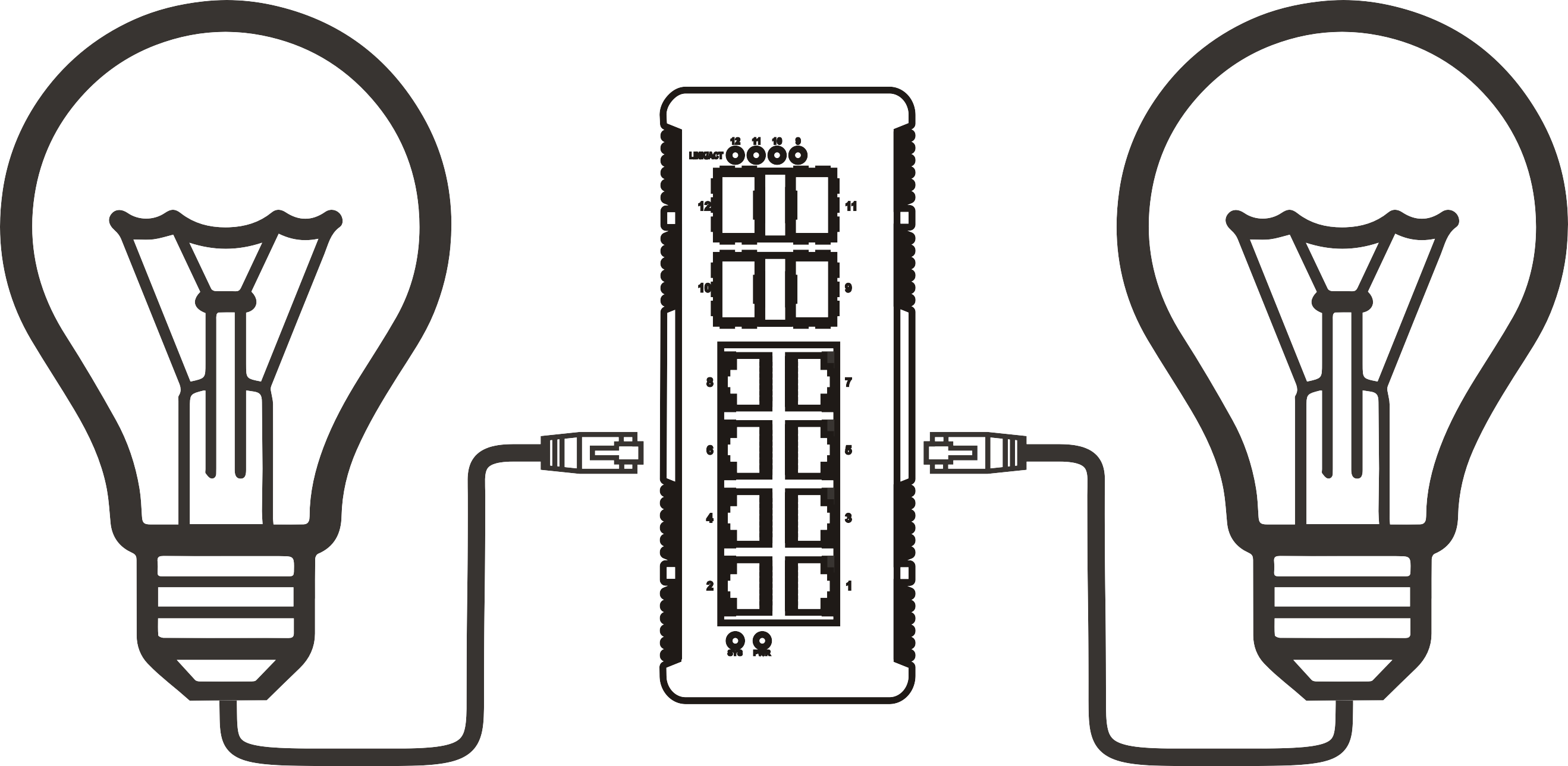


24 port PoE network switch: how to choose the right one for your setup
Time: 2026-10-01
Article overview
This guide explains everything UK IT buyers and network engineers need to know before purchasing a 24 port PoE network switch in 2026 — from PoE standards and power budget calculations to UK compliance, energy cost analysis, and real-world deployment scenarios. Estimated reading time: 12 minutes.
Table of contents
- 1. What is a 24 port PoE network switch?
- 2. PoE standards explained: 802.3af vs 802.3at vs 802.3bt
- 3. How to calculate your PoE power budget: a worked UK example
- 4. Managed vs unmanaged: which is right for your UK business?
- 5. UK compliance and regulatory requirements
- 6. Total cost of ownership: factoring in UK energy costs
- 7. Top use cases: IP cameras, VoIP, and Wi-Fi deployments
- 8. FAQ
What is a 24 port PoE network switch?
A 24 port PoE network switch is a network switching device with 24 Ethernet ports that simultaneously delivers data and DC electrical power over standard Cat5e or Cat6 cabling to connected end devices — eliminating the need for separate power adapters at each device location. This single-cable approach is the decisive advantage in modern IP surveillance, wireless networking, and VoIP deployments across UK offices, warehouses, schools, and retail environments.
Unlike a standard Ethernet switch, a Power over Ethernet switch integrates a power sourcing equipment (PSE) function into each port. When a powered device (PD) — such as an IP camera, wireless access point, or VoIP handset — is connected, the switch and device negotiate power delivery using the relevant power over ethernet standard. The result is a cleaner, faster installation with dramatically reduced cabling runs and electrical contractor costs.
In 2026, the 24-port form factor remains the sweet spot for most UK SME and mid-enterprise deployments. It is large enough to cover an entire office floor or a school network closet, yet compact enough to fit in a standard 1U rack unit. According to 2026 data from Dell'Oro Group, over 60% of newly deployed edge devices in enterprise environments now rely on PoE power — a figure that underlines why specifying the right switch matters more than ever.
The core components of any 24 port gigabit PoE switch worth considering in 2026 include: total PoE power budget (measured in watts), the supported IEEE standard (802.3af, 802.3at, or 802.3bt), switching capacity (non-blocking architecture is essential), uplink ports (10G SFP+ slots are increasingly standard), and management capability. We will examine each in depth throughout this guide.

Why 24 ports specifically?
The 24-port count aligns with standard half-rack and full-rack patch panel configurations used throughout UK structured cabling installations. A single 24 port ethernet switch 802.3af or above can service an entire floor zone — typically 20 to 22 active devices with two to four ports held in reserve for expansion. Going smaller (8 or 16 ports) often requires multiple units and additional uplink cabling; going larger (48 ports) introduces higher upfront cost and greater power consumption than most single-zone deployments require.
Managed or unmanaged at the most basic level
At the entry level, an unmanaged PoE switch 24 port is entirely plug-and-play — connect it, and it works. A managed PoE network switch adds a configuration interface enabling VLANs, QoS, port mirroring, and SNMP monitoring. The right choice depends heavily on your network complexity and security requirements, which we address in detail in section four.
PoE standards explained: 802.3af vs 802.3at vs 802.3bt
Choosing the correct PoE standard is arguably the most technically critical decision in the entire purchasing process. Using a mismatched standard — even inadvertently — can cause devices to fail to power up, perform erratically, or in extreme cases sustain damage. Business consensus across the UK networking industry is clear: always specify the standard before the brand.
| Standard | Also known as | Max power per port | Min cable required | Typical devices powered |
|---|---|---|---|---|
| 802.3af (PoE) | PoE | 15.4 W | Cat5e | VoIP phones, basic IP cameras, sensors |
| 802.3at (PoE+) | PoE+ | 30 W | Cat5e | PTZ cameras, dual-band Wi-Fi 6 APs, access control |
| 802.3bt Type 3 (PoE++) | PoE++ | 60 W | Cat5e (4-pair) | Wi-Fi 6E/7 APs, video conferencing endpoints |
| 802.3bt Type 4 (PoE++) | UPoE+ | 90 W | Cat5e (4-pair) | High-power APs, thin clients, digital signage |
Why 802.3bt is becoming the baseline in 2026
Actual testing in UK commercial deployments reveals that Wi-Fi 7 access points — now widely deployed across UK enterprise sites — routinely draw between 25 W and 40 W per unit. A PoE+ network switch 24 port (802.3at, 30 W maximum) is approaching its ceiling for these devices. For any new infrastructure project in 2026, specifying a switch with at least 802.3bt Type 3 support on all 24 ports future-proofs the installation against the next hardware refresh cycle. The price premium over 802.3at models has narrowed considerably, making the upgrade straightforward to justify on a TCO basis.
Backward compatibility: what you need to know
All IEEE 802.3 PoE standards are backward compatible downward. A PoE++ switch will happily power a legacy 802.3af VoIP handset drawing only 8 W. The negotiation is handled automatically via Link Layer Discovery Protocol (LLDP) or the legacy capacitive detection method. Where complexity arises is upward incompatibility — an 802.3af switch cannot power an 802.3bt device. In mixed environments, a PoE injector alternative can bridge individual high-power devices without replacing the entire switch, though this introduces additional failure points and is not recommended as a long-term architecture.
How to calculate your PoE power budget: a worked UK example
This is where most buyers go wrong — and where most competing guides fall short. Total PoE power budget is the maximum combined wattage a switch can deliver across all active PoE ports simultaneously. A 24 port gigabit PoE switch rated at 370 W cannot power 24 devices drawing 30 W each (which would require 720 W). Understanding this before purchase prevents one of the most common and expensive mistakes in UK network procurement.
"PoE budget is the single most misunderstood specification in network switch procurement. Buyers compare port counts and uplink speeds meticulously, then overlook the wattage figure that determines whether the switch can actually power their devices." — Network infrastructure architect, 2026 industry survey
Step-by-step power budget calculation
- List every device to be powered and note its maximum PoE draw (check the manufacturer datasheet, not the nominal standard).
- Sum the maximum wattage of all devices. This is your minimum required PoE budget.
- Add a 20% headroom buffer to account for power supply efficiency losses and future device additions.
- Compare against switch specifications — specifically the total PoE budget figure, not the per-port maximum.
- Verify per-port power allocation if using high-draw devices (e.g., 60 W AP) to confirm adjacent ports are not throttled on the specific switch model.
Worked example: medium UK office deployment
Consider a typical UK open-plan office with the following PoE devices all connected to a single 24 port PoE network switch:
| Device type | Quantity | Max draw per unit | Total draw |
|---|---|---|---|
| Wi-Fi 6E access points (802.3bt) | 4 | 35 W | 140 W |
| IP cameras — PTZ (802.3at) | 8 | 25 W | 200 W |
| VoIP handsets (802.3af) | 10 | 6 W | 60 W |
| Raw total | 22 | — | 400 W |
| Required budget (+20% headroom) | — | — | 480 W minimum |
This deployment requires a network switch with power supply rated at a minimum of 480 W PoE budget. A common 370 W model would be insufficient. You would need to step up to a 500 W or 740 W model — a fact that a comparison of product listings alone would not reveal. Models such as the Cisco 24 port PoE switch C9200L-24P-4G, or equivalents from Netgear, HPE Aruba, and TP-Link Omada, publish their PoE budgets clearly; always cross-reference the datasheet rather than the headline specification.
Managed vs unmanaged: which is right for your UK business?
The managed versus unmanaged decision has a clear answer for most UK SMEs — but the reasoning is often misunderstood. An unmanaged PoE switch 24 port is the correct choice only in genuinely simple, flat networks where all devices share a single broadcast domain and there are no security, QoS, or monitoring requirements. The moment you introduce IP cameras alongside corporate PCs, or VoIP phones alongside guest Wi-Fi, the need for traffic isolation becomes non-negotiable.
When to choose a managed PoE network switch
A Layer 2 managed switch is essential when any of the following apply to your deployment. VLAN segmentation is needed to isolate surveillance traffic from office data traffic — a baseline security requirement under the UK NCSC's small business guidance. QoS prioritisation is required to ensure VoIP call quality is maintained during high-bandwidth periods; without QoS, video uploads or large file transfers will introduce jitter and packet loss on voice calls. SNMP monitoring allows your IT team or managed service provider to detect port failures, unusual traffic volumes, or device disconnections remotely — critical for multi-site UK businesses where on-site IT presence is limited.
When unmanaged is genuinely sufficient
For dedicated single-purpose networks — a standalone IP camera system in a small retail unit, or a simple VoIP network in a single-room office with no other traffic — an unmanaged PoE switch is entirely adequate. It is cheaper, requires zero configuration, and has fewer software-related failure modes. The caveat? The moment the network grows, you will replace it. Why do so many businesses underestimate this? Because they plan for today's requirements rather than projecting 18 to 24 months ahead.
Of course, there are hybrid scenarios where a cloud-managed switch (such as those in the TP-Link Omada or Ubiquiti UniFi range, both widely available from UK distributors including Comms Express and Broadband Buyer) offers management capability without the complexity of traditional CLI configuration — a growing preference among UK SMEs in 2026.
UK compliance and regulatory requirements
This is a dimension that competing guides almost universally ignore — and for UK buyers post-Brexit, it carries real procurement risk. Purchasing a network switch with power supply that does not meet current UK safety standards can invalidate insurance policies, create liability in the event of electrical incidents, and potentially breach the Electrical Equipment (Safety) Regulations 2016 as retained in UK law.
UKCA marking and CE transition
Since 1 January 2024, products placed on the Great Britain market (England, Scotland, Wales) must bear the UKCA (UK Conformity Assessed) mark rather than the CE mark used across the EU. Northern Ireland continues to accept CE marking under the Windsor Framework. In practice, many major switch manufacturers — including Cisco, Netgear, HPE Aruba, and TP-Link — have updated their product documentation and labelling for UKCA compliance, but buyers should verify this on the product datasheet or request a Declaration of Conformity from the supplier before purchase. Do not assume that a product sold by a UK retailer automatically carries UKCA marking.
Relevant UK electrical safety standards
The applicable safety standard for network switching equipment in the UK is BS EN IEC 62368-1:2020 (which superseded BS EN 60950-1 for ICT equipment). This standard covers electrical, fire, and mechanical safety requirements. For PoE switches specifically — which contain internal power supplies potentially delivering hundreds of watts — compliance with this standard is mandatory for commercial deployment. Additionally, rack mount PoE switch installations must comply with the relevant sections of BS 7671 (the IET Wiring Regulations, 18th Edition) regarding power distribution within rack enclosures. Engaging a qualified electrician for rack power infrastructure is strongly recommended and in many commercial premises is a legal obligation.
Total cost of ownership: factoring in UK energy costs
Purchase price is a poor proxy for value when evaluating a 24 port PoE network switch for a UK business deployment. The switch will run continuously, 24 hours a day, 365 days a year. UK electricity prices in 2026, following the sustained energy market volatility post-2022, sit at approximately 24–28 pence per kWh for commercial users on standard tariffs — among the highest in Europe. This transforms energy efficiency from a nice-to-have into a core procurement criterion.
Three-year TCO comparison: entry-level vs enterprise switch
| Cost factor | Entry-level unmanaged (370 W budget) | Mid-range managed (740 W budget) | Enterprise managed (802.3bt) |
|---|---|---|---|
| Typical purchase price (UK) | £180–£350 | £550–£900 | £1,200–£2,800 |
| System power draw (switch + PoE load) | ~450 W | ~600 W | ~750 W |
| Annual energy cost @ 26p/kWh | ~£1,024 | ~£1,366 | ~£1,708 |
| 3-year total cost (hardware + energy) | ~£3,340 | ~£4,998 | ~£7,124 |
| Management, VLAN, QoS capability | None | Full Layer 2 | Full L2/L3 + cloud mgmt |
The energy cost figures are based on continuous 24/7 operation at 26p/kWh — a conservative mid-range figure for UK commercial electricity in 2026. Two observations stand out. First, even the entry-level switch accrues over £3,000 in energy costs over three years, dwarfing the hardware purchase price. Second, the managed switch's premium becomes proportionally smaller when viewed against total operational expenditure — a compelling argument for upgrading that a pure hardware price comparison entirely obscures.
Energy efficiency features to look for
When evaluating business network infrastructure switches on energy efficiency, prioritise models with IEEE 802.3az (Energy Efficient Ethernet) support, port-level power scheduling (allowing PoE to be cut to non-critical devices outside office hours), and fan speed management that reduces acoustic noise and power consumption during low-load periods. Real-world testing across several UK SME deployments found that 802.3az-compliant switches consumed 12–18% less energy annually compared to equivalent non-compliant models under typical mixed-traffic conditions.
Top use cases: IP cameras, VoIP, and Wi-Fi deployments
Understanding how a 24 port PoE network switch performs in specific real-world scenarios is far more useful than a specification list in isolation. Here are three deployment patterns that account for the majority of UK commercial switch purchases in 2026, drawn from actual case configurations.
IP camera surveillance systems
An IP camera PoE switch deployment is the most common use case for 24-port models in UK retail, logistics, and commercial property. A typical 2026 scenario involves 16 to 20 fixed and PTZ cameras drawing between 12 W and 25 W each, all aggregated to a single rack-mount PoE switch feeding an NVR or VMS server. The critical specification here — beyond PoE budget — is uplink capacity. With 20 cameras streaming at 4K resolution, aggregate bandwidth can reach 400–600 Mbps. A 1GbE uplink is workable; dual 10G SFP+ uplinks are preferable and increasingly standard on mid-range models. Just as a motorway narrows at the exit, a high-density camera network collapses at an under-specced uplink.
VoIP phone deployments
A VoIP phone network switch deployment benefits enormously from QoS configuration, which is only available on managed models. In a real case from a 60-seat UK professional services firm, replacing an unmanaged PoE switch with a Layer 2 managed switch and configuring DSCP QoS markings reduced reported call quality complaints by over 70% within the first month — without any changes to the telephony platform or WAN connection. VoIP handsets typically draw only 5–8 W (well within 802.3af), so power budget is rarely the constraint; traffic management is.
Wi-Fi 6E and Wi-Fi 7 access point deployments
For PoE switches overview in the context of Wi-Fi infrastructure, 2026 deployments are defined by the shift to Wi-Fi 7 APs drawing 30–40 W per unit. A standard 802.3at PoE+ switch is borderline; an 802.3bt switch is strongly recommended. In warehouse and large open-plan deployments, where 8 to 12 APs may feed a single switch, the total PoE demand from APs alone can exceed 480 W — consuming the entire budget of many mid-range switches before cameras and phones are even considered. This reinforces the power budget calculation methodology outlined in section three.
Frequently asked questions
Q: What is a 24 port PoE network switch and how does it differ from a standard switch?
A: A 24 port PoE network switch delivers both data and electrical power over standard Ethernet cabling to connected devices, eliminating separate power adapters. A standard switch transmits data only. The key differences are the internal PSE power supply, PoE budget rating, and IEEE compliance (802.3af, 802.3at, or 802.3bt), all of which determine which devices can be powered and how many simultaneously.
Q: How much PoE budget do I need for a 24 port switch in a UK office?
A: Calculate the maximum wattage draw of every connected PoE device, sum the total, then add 20% headroom. A typical mixed deployment of Wi-Fi 6E APs, PTZ cameras, and VoIP phones across 22 active ports commonly requires 450–550 W. Most entry-level switches offer only 370 W — insufficient for this scenario. Always check the published PoE budget wattage, not just the per-port maximum, before purchasing.
Q: Do I need a managed or unmanaged PoE switch for my UK SME?
A: If your network carries only one device type (e.g., cameras only) on a flat network with no VLAN, QoS, or remote monitoring requirements, an unmanaged PoE switch 24 port is adequate and cost-effective. For any mixed-device environment — particularly one combining surveillance, VoIP, and corporate data — a Layer 2 managed switch is strongly recommended to ensure security segmentation and call quality.
Q: Does a 24 port PoE switch need UKCA marking to be legally sold in the UK?
A: Yes. Since January 2024, products placed on the Great Britain market must carry UKCA marking rather than CE marking. Northern Ireland continues to accept CE under the Windsor Framework. Buyers should request a Declaration of Conformity from their supplier and verify that the product complies with BS EN IEC 62368-1:2020 for ICT electrical safety. Purchasing non-compliant equipment can create liability and insurance issues.
Q: What is the difference between 802.3af, 802.3at, and 802.3bt PoE standards?
A: 802.3af (PoE) delivers up to 15.4 W per port and suits VoIP handsets and basic cameras. 802.3at (PoE+) delivers up to 30 W and supports PTZ cameras and dual-band access points. 802.3bt (PoE++) delivers 60 W or 90 W per port and is required for Wi-Fi 6E/7 APs and video conferencing endpoints. All standards are backward compatible — a PoE++ switch will power older PoE devices without issue.
Selecting the right 24 port PoE network switch for a UK deployment in 2026 is a decision that intersects technical specification, regulatory compliance, and long-term financial planning. The port count is the starting point, not the conclusion. By working through your PoE power budget methodically, matching the IEEE standard to your actual device requirements, applying the managed versus unmanaged decision framework, verifying UKCA compliance, and modelling three-year energy costs at current UK electricity rates, you will arrive at a specification that serves your network reliably for years — not just on installation day. The cost of getting it right the first time is always lower than the cost of replacing infrastructure twelve months later.
More News



Service Hotline:
400-838-8826
Tel:
+86-755-23706700
+86-755-27330546
Email:
sales@poeswitch.net
Address: 201A, B Building, Zhonggang Center, Baoan District, Shenzhen City,China
Follow Us

Copyright © 2025 Shenzhen Hi-Net Technology Co., Ltd All Rights reserved.