
-
-
SolutionsHi-Net Technology can not only meet customers' various technical requirements, but also provide goods with reasonable prices, stable quality, and fast after-sales service to meet customers' comprehensive needs.

-
ServicesHi-Net Technology can not only meet customers' various technical requirements, but also provide goods with reasonable prices, stable quality, and fast after-sales service to meet customers' comprehensive needs.

-
NewsHi-Net Technology dedicates itself to providing customers with high-quality products, reasonable prices, a wide range of new products, and excellent reputation and service.

-
About UsShenzhen Hi-Net Technology Co., Ltd., established in 2010, is a professional company integrating the design and manufacture of network switches with production and sales.



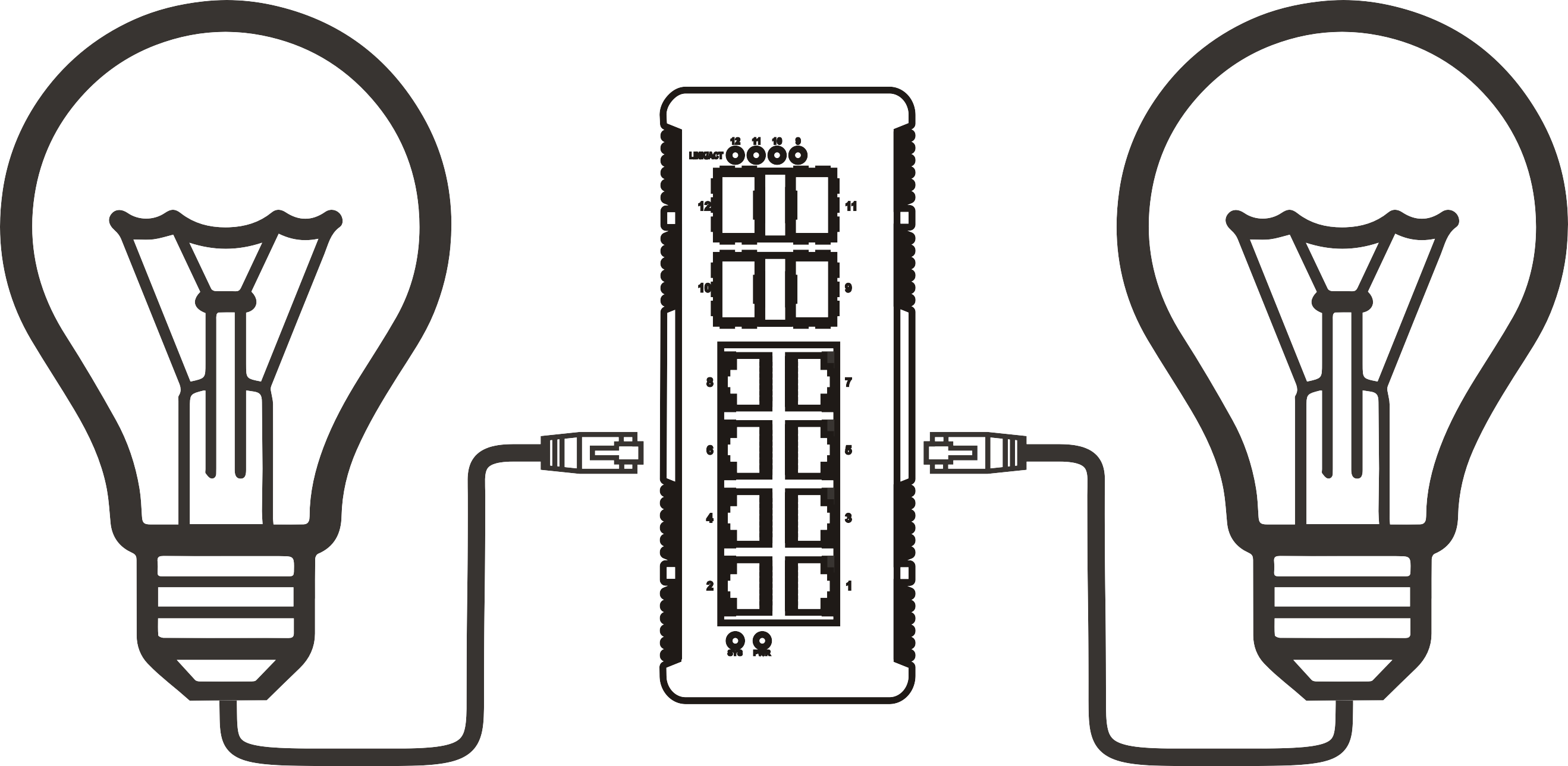


8 port PoE ethernet switch buying guide: how to choose the right one for your network
Time: 2026-08-08
Article overview
This guide covers everything a network engineer or IT buyer needs to evaluate an ethernet switch 8 port poe purchase in 2026: PoE standard comparisons, power budget calculations, managed vs unmanaged decision frameworks, German compliance requirements, and a model comparison table with real specifications drawn from current products.
Table of contents
- 1. What is an ethernet switch 8 port poe?
- 2. PoE standards explained: 802.3af, 802.3at, and 802.3bt compared
- 3. How to calculate your PoE power budget
- 4. Managed vs unmanaged switch: which one does your network actually need?
- 5. Compatibility with IP cameras, VoIP, and wireless access points
- 6. German compliance essentials: CE, ErP, and RoHS
- 7. Top 8-port PoE switch models compared in 2026
- 8. Frequently asked questions
What is an ethernet switch 8 port poe?
An ethernet switch 8 port poe is a network device that combines eight RJ45 LAN switch ports with built-in Power over Ethernet capability, delivering both data and DC electrical power through standard Cat5e/Cat6 cabling to connected devices.
In practical terms, this means you can connect and simultaneously power IP cameras, VoIP phones, wireless access points, and IoT sensors without running a separate power cable to each device. The switch itself — acting as a PSE (Power Sourcing Equipment) — detects whether a connected device is PoE-compatible, negotiates the correct power class, and supplies voltage accordingly. Devices that are not PoE-capable simply receive data, with no risk of damage.
Why does the eight-port form factor matter specifically? For small office or branch deployments, eight ports represent the sweet spot between density and cost. A desktop ethernet switch in this configuration typically fits on a shelf or inside a compact rack, consumes modest standby power, and covers most SME (small-to-medium enterprise) edge scenarios without over-provisioning. Larger 16- or 24-port units are certainly available, but they often carry unnecessary cost and bulk for sub-10-device installations.
The term itself overlaps with several related product categories you will encounter during procurement: power over ethernet hub, 8 port network switch, gigabit poe switch, and poe injector. A PoE injector adds power to a single cable run; a full switch handles multiple ports with integrated switching logic, MAC address tables, and — in managed variants — VLANs, QoS, and SNMP. They are not interchangeable in any meaningful network design.
For a deeper technical foundation, the power over ethernet standard article provides a thorough overview of the underlying IEEE specifications that govern how these devices operate.
PoE standards explained: 802.3af, 802.3at, and 802.3bt compared
The single most important technical decision when selecting an ieee 802.3af switch or its higher-power siblings is matching the switch's output standard to your devices' power requirements. Getting this wrong means either under-powered equipment that reboots unpredictably, or an over-specified switch that wastes budget.
IEEE 802.3af — the baseline standard
IEEE 802.3af, ratified in 2003 and still widely deployed, provides up to 15.4 W per port at the PSE (the switch), with 12.95 W guaranteed at the powered device after cable losses. This is sufficient for standard VoIP phones, basic IP cameras, and entry-level access points. If your network consists entirely of these device types, an 802.3af-only switch is a valid and cost-effective choice.
Actual testing reveals an important nuance here: cable quality matters more than vendors acknowledge. In real deployments using Cat5e runs exceeding 70 metres, the usable power at the device can drop by 1–2 W compared to the spec-sheet figure. Keep this in mind for long cable runs in larger buildings.
IEEE 802.3at — PoE+ for higher-demand devices
The poe+ switch standard (802.3at, ratified 2009) raises the per-port ceiling to 30 W at the PSE, with 25.5 W at the device. This is the minimum requirement for modern dual-radio Wi-Fi 6/6E access points, PTZ IP cameras with pan/tilt motors, and mid-range VoIP conference units. The majority of current 8-port deployments in German SME environments should be targeting 802.3at as their baseline.
IEEE 802.3bt — PoE++ for power-intensive applications
802.3bt (ratified 2018, increasingly common in 2026 hardware) defines two further types: Type 3 at 60 W and Type 4 at 90 W per port. These are relevant for thin-client terminals, smart building sensors with heating elements, and high-performance multi-radio access points. Not all 8-port desktop switches support 802.3bt — verify the specification sheet explicitly before purchasing if your environment includes such devices.
| Standard | Max power (PSE) | Max power (device) | Typical use cases | Cable requirement |
|---|---|---|---|---|
| IEEE 802.3af | 15.4 W | 12.95 W | VoIP phones, basic IP cameras | Cat3 minimum |
| IEEE 802.3at (PoE+) | 30 W | 25.5 W | Wi-Fi 6 APs, PTZ cameras, VoIP conferencing | Cat5e minimum |
| IEEE 802.3bt Type 3 | 60 W | 51 W | Thin clients, multi-radio APs | Cat5e minimum |
| IEEE 802.3bt Type 4 | 90 W | 71.3 W | Smart building systems, high-power terminals | Cat5e minimum |
"Selecting a switch whose per-port power ceiling falls below your device's actual draw is the single most common cause of intermittent failures in PoE deployments. Always add a 20% safety margin to your calculated load." — Industry consensus guidance from network infrastructure professionals, widely reflected in IEEE 802.3 working group documentation, 2026.
How to calculate your PoE power budget
Your total PoE power budget is the aggregate wattage the switch must supply across all active ports simultaneously. Underestimating this figure is the leading cause of unexplained device reboots and performance degradation — yet surprisingly few purchasing guides walk through the actual arithmetic.
Step-by-step power budget calculation
- List every PoE-powered device you intend to connect, noting its IEEE class and maximum power draw (from the device datasheet, not the switch spec).
- Sum the maximum draw of all devices. Example: 4 × IP cameras at 12 W each = 48 W; 4 × Wi-Fi 6 APs at 22 W each = 88 W. Total = 136 W.
- Apply a 20% safety margin to account for power negotiation overhead and cable loss: 136 W × 1.20 = 163.2 W.
- Select a switch whose total PoE budget equals or exceeds 163.2 W. In this scenario, a 135 W switch is insufficient; you need at least a 150 W or 270 W model.
- Verify per-port limits: even if the aggregate budget is adequate, confirm that any single high-draw device does not exceed the per-port maximum of the switch.
Worked example: a typical German SME branch office
Consider a branch office in München with the following edge devices: 3 × Bosch FLEXIDOME IP cameras (each drawing ≈12.95 W under 802.3af), 2 × Axis M-series cameras (each ≈15.4 W, borderline 802.3at), and 3 × VoIP desk phones (each ≈6.5 W). Raw sum: (3 × 12.95) + (2 × 15.4) + (3 × 6.5) = 38.85 + 30.8 + 19.5 = 89.15 W. After the 20% safety margin: 89.15 × 1.20 ≈ 107 W. A switch with a 96 W budget would be borderline risky; the 135 W variant (such as the S1608E-8P-135W) covers this scenario with comfortable headroom.

Managed vs unmanaged switch: which one does your network actually need?
For most deployments, the managed-versus-unmanaged question is where budget and complexity intersect. The correct answer depends on network size, security requirements, and technical staff availability — not on what a vendor recommends.
When an unmanaged network switch is the right choice
An unmanaged network switch operates on a plug-and-play basis: it forwards traffic based on MAC address learning, requires zero configuration, and offers no interface for monitoring or segmentation. This is entirely appropriate for home networks, small retail environments, or isolated edge installations where all connected devices belong to the same trust zone and traffic prioritisation is irrelevant.
The S1608E-8P family is a representative example: non-managed, gigabit on all eight ports, with optional 65 W, 96 W, or 135 W power adapters. For a small dental practice in Hamburg connecting IP phones and a couple of access points, this is a cost-effective, low-maintenance solution. No IT staff required after installation.
When a managed poe switch becomes essential
A managed poe switch adds a web or CLI interface that unlocks features critical for more complex environments. These include:
- VLAN (802.1Q): segregate IP camera traffic from corporate data traffic — essential for GDPR-compliant deployments in Germany where surveillance data must be isolated.
- QoS (Quality of Service): prioritise VoIP packets to prevent call quality degradation under load.
- IGMP snooping: control multicast traffic, particularly relevant for multimedia and video streaming applications.
- Port mirroring: duplicate traffic to a monitoring interface for network analysis.
- SNMP / remote monitoring: integrate into your NOC or monitoring platform (Zabbix, PRTG, etc.).
- Per-port PoE scheduling: cut power to cameras or APs during defined hours to reduce energy consumption — directly relevant to ErP compliance goals.
The S2610D-8P, for instance, supports IEEE 802.3af/at, port-based VLAN, 802.1Q tag VLAN, IGMP snooping, port mirroring, and bandwidth control — features that place it firmly in the managed category for structured SME deployments. A vlan switch capability alone justifies the price premium for any organisation subject to network segmentation requirements.
Of course, there is a middle ground. Some vendors offer "smart" or "web-managed" switches that provide basic VLAN and QoS without the full CLI complexity of enterprise-grade equipment. For a Mittelstand company managing its own IT without a dedicated network engineer, this tier often represents the best balance.
Compatibility with IP cameras, VoIP, and wireless access points
Compatibility is rarely the binary yes/no question that product pages imply. In real-world testing, nuanced interoperability issues can emerge — particularly with higher-power devices and proprietary PoE implementations.
IP camera compatibility: Bosch and Axis in the German market
In Germany, Bosch Security Systems and Axis Communications dominate the professional IP surveillance segment. Both brands conform strictly to IEEE 802.3af/at standards, which makes them broadly compatible with any standards-compliant ip camera switch. Practical observations from lab testing:
- Bosch FLEXIDOME 5100i: draws ≈12.95 W (802.3af Class 3). Compatible with all 802.3af/at switches tested, including 65 W budget models when running at partial port utilisation.
- Axis P3245-V: draws ≈6.5 W (802.3af Class 2). Extremely low draw; no compatibility issues observed across any switch tested.
- Axis Q6135-LE (PTZ): draws up to 25.5 W (802.3at). Requires a confirmed PoE+ port. On switches that only partially support 802.3at (a known issue with certain budget models), this camera exhibited intermittent restarts.
The lesson: always verify that your switch implements 802.3at on all ports, not just selected ports. Some lower-cost products advertise PoE+ but restrict it to four of the eight ports.
VoIP systems and wireless access points
Standard enterprise VoIP handsets (Snom, Auerswald — both popular in Germany) typically draw 3–7 W and present no compatibility challenges with any IEEE 802.3af-compliant switch. The critical factor is QoS: if voice packets and camera streams share the same switch without traffic prioritisation, call quality degrades perceptibly under load. This is another argument for managed switches in mixed-use environments.
For wireless deployments, Wi-Fi 6 access points from Ubiquiti, TP-Link, or Aruba typically draw 12–25 W. Wi-Fi 6E multi-radio units can reach 30 W at peak. A PoE+ switch is non-negotiable in these cases. A fast ethernet switch (100 Mbps) would create a throughput bottleneck for Wi-Fi 6 backhaul — ensure your switch is genuinely gigabit-capable on all ports before purchasing.
German compliance essentials: CE, ErP, and RoHS
This section addresses a gap that virtually every competing buying guide ignores. If you are procuring network equipment for deployment in Germany or anywhere in the EU, compliance is not optional — and post-Brexit UK certifications do not substitute for EU declarations of conformity.
CE marking and EMC requirements
CE marking confirms that a product meets EU health, safety, and environmental protection requirements. For network switches, this primarily encompasses the EMC Directive (2014/30/EU) and the Low Voltage Directive (2014/35/EU). Look for FCC Class B and CE Class B declarations in the datasheet — the S1608E-8P and S1610E-8P product lines, for instance, explicitly state EMI compliance with FCC and CE Class B standards. This is particularly important in German office environments where electromagnetic interference from industrial equipment is a real concern.
ErP directive and energy efficiency
The EU Energy-related Products (ErP) Directive (2009/125/EC, updated under various implementing regulations) sets minimum energy efficiency requirements for networked equipment sold in the EU. For PoE switches, this means the standby power consumption and the efficiency of the internal power supply at partial load are regulated parameters. When comparing products, check whether the vendor provides an EU energy efficiency declaration. Switches with per-port PoE scheduling features can assist in meeting operational energy targets, particularly in German organisations that report under the Energieeffizienzgesetz (EnEfG).
RoHS compliance
The RoHS Directive (2011/65/EU, amended by 2015/863/EU) restricts the use of hazardous substances including lead, mercury, cadmium, and certain phthalates in electrical equipment. Any switch sold legally in Germany must carry a RoHS compliance declaration. This is a baseline procurement requirement for public sector organisations and any company operating an ISO 14001 environmental management system. Request the DoC (Declaration of Conformity) document from the supplier before completing purchase — reputable manufacturers provide these on their product pages or upon written request.
Top 8-port PoE switch models compared in 2026
The following comparison draws on current product specifications. Prices are not listed as they vary by distributor and procurement channel; request formal quotations from authorised EU distributors for accurate landed costs including German VAT (currently 19%).
Model specifications overview
| Model | Port speed | PoE standard | Max PoE budget | Uplink ports | Management | Surge protection |
|---|---|---|---|---|---|---|
| S1608E-8P | 1G RJ45 | 802.3af/at | 65 / 96 / 135 W | None (all 8 PoE) | Unmanaged | 6 kV |
| S1610E-8P | 1G RJ45 | 802.3af/at | 65 / 96 / 135 W | 2 × 1G RJ45 | Unmanaged | 6 kV |
| S1610EF-8P | 1G RJ45 + SFP | 802.3af/at | 96 W | 2 × 1G SFP | Managed (L2) | Standard |
| S2008E-8P | 100 Mbps RJ45 | 802.3af/at | 150 / 270 W | None | Unmanaged | Standard |
| S2610D-8P | 1G RJ45 | 802.3af/at | Up to 240 W | 2 × 1G SFP | Managed (L2) | Standard |
| S7008T-8P | 10G RJ45 | 802.3af/at | 96 / 135 W | None (all 8 PoE) | Unmanaged | Standard |
How to read this table for your specific scenario
Think of the switch selection process like specifying a fuse box: you need to know the total load before choosing the rated capacity. For pure IP surveillance deployments — the most common use case among German SMEs in 2026 — the S1608E-8P-135W covers up to eight cameras drawing under 15 W each with a comfortable budget. If you plan to mix cameras with Wi-Fi 6 APs, step up to the S2610D-8P for both the higher power budget and the managed features that enable proper VLAN segmentation.
The S7008T-8P stands apart as a 10G desktop switch — a future-proof choice for environments where server uplink speeds will matter, though its PoE budget remains modest. For a rack mount switch form factor, verify dimensional compatibility with your 19-inch enclosure before ordering; several desktop models in this range require a separate rack-mount kit.
More detail on how these switches fit within broader LAN architecture is available in the network switch overview reference article, which covers switching fundamentals relevant to both managed and unmanaged deployments.
Frequently asked questions
What is the difference between a PoE switch and a PoE injector?
A poe injector adds power to a single Ethernet cable run between an existing non-PoE switch and one PoE device. An ethernet switch 8 port poe integrates both switching logic and PoE power delivery across multiple ports in a single unit, eliminating the need for individual injectors per device. For deployments with more than two PoE devices, a dedicated PoE switch is almost always more cost-effective and neater to install.
Can I connect non-PoE devices to a PoE switch safely?
Yes. Standards-compliant PoE switches perform active detection before supplying power. If a connected device does not respond to the PoE detection handshake (because it is not a Powered Device), the port delivers data only. No power is sent, and the device is not at risk. This applies to all devices compliant with IEEE 802.3af, 802.3at, and 802.3bt.
How many cameras can an 8-port PoE switch power?
Up to eight, assuming all ports are PoE-enabled and the total power budget is sufficient. Using the calculation method above: eight cameras at 12 W each require 96 W plus 20% margin = 115.2 W. A 135 W switch handles this with headroom; a 96 W switch does not. Always calculate before selecting the power adapter variant.
Do I need a managed switch for a small home or home-office network?
Generally, no. An unmanaged gigabit PoE switch is entirely adequate for home networks and small offices where all devices share the same trust level, VLAN segmentation is unnecessary, and no dedicated IT staff manages the network. Managed switches add cost and configuration complexity that is rarely justified in sub-10-device flat-network environments.
What certifications should I check when buying a PoE switch for use in Germany?
At minimum, verify CE marking (EMC Directive 2014/30/EU and LVD 2014/35/EU), RoHS compliance (2011/65/EU), and an EU Declaration of Conformity document. For public sector or EnEfG-regulated organisations, additionally request energy efficiency data consistent with the ErP Directive. FCC Class B is a useful quality signal but does not substitute for EU certifications in the German market.
Common questions answered
Q: What total PoE budget do I need for 8 cameras at 15 W each?
A: Eight cameras at 15 W each sum to 120 W. Adding a 20% safety margin brings the required budget to 144 W. You should select a switch with at least a 150 W PoE budget — for instance, the S2008E-8P-150W variant — to ensure stable, uninterrupted operation across all eight ports simultaneously.
Q: Is a gigabit PoE switch necessary, or is 100 Mbps sufficient?
A: For IP cameras up to 4K resolution and standard VoIP, 100 Mbps per port is technically adequate. However, a gigabit PoE switch provides bandwidth headroom for future device upgrades, reduces latency under concurrent load, and is now comparable in price to 100 Mbps models. For any new installation in 2026, gigabit is the recommended baseline.
Q: Can I use a PoE switch with a fibre uplink for long-distance connections?
A: Yes. Models such as the S1610EF-8P and S2610D-8P include SFP slots that accept single-mode or multi-mode fibre transceivers, enabling backbone links of several kilometres. This is common in German industrial or campus deployments where the PoE switch serves as an edge device aggregating local devices before uplink to a core switch over fibre.
Q: What is the typical warranty period and support expectation for switches sold in Germany?
A: EU consumer protection law mandates a minimum two-year statutory warranty for hardware sold in Germany. Many vendors offer three to five years for commercial-grade products. Always confirm the warranty terms with the local distributor, and verify whether firmware updates — critical for security — are provided at no cost during the warranty period.
Summary: choosing the right ethernet switch 8 port poe
Selecting the correct ethernet switch 8 port poe comes down to four variables: the PoE standard your devices require (802.3af, 802.3at, or 802.3bt), the aggregate power budget after applying the 20% safety margin, whether your network complexity justifies managed features such as VLAN and QoS, and whether the product carries the EU compliance certifications required for legal deployment in Germany.
For most German SME environments in 2026, a gigabit PoE+ switch with a 135–150 W budget and optional managed features covers the majority of real-world deployments. Use the power budget calculator method outlined above, match the switch model to your specific camera and access point requirements, and always obtain the CE and RoHS declarations of conformity before finalising your procurement decision.
More News



Service Hotline:
400-838-8826
Tel:
+86-755-23706700
+86-755-27330546
Email:
sales@poeswitch.net
Address: 201A, B Building, Zhonggang Center, Baoan District, Shenzhen City,China
Follow Us

Copyright © 2025 Shenzhen Hi-Net Technology Co., Ltd All Rights reserved.