
-
-
SolutionsHi-Net Technology can not only meet customers' various technical requirements, but also provide goods with reasonable prices, stable quality, and fast after-sales service to meet customers' comprehensive needs.

-
ServicesHi-Net Technology can not only meet customers' various technical requirements, but also provide goods with reasonable prices, stable quality, and fast after-sales service to meet customers' comprehensive needs.

-
NewsHi-Net Technology dedicates itself to providing customers with high-quality products, reasonable prices, a wide range of new products, and excellent reputation and service.

-
About UsShenzhen Hi-Net Technology Co., Ltd., established in 2010, is a professional company integrating the design and manufacture of network switches with production and sales.



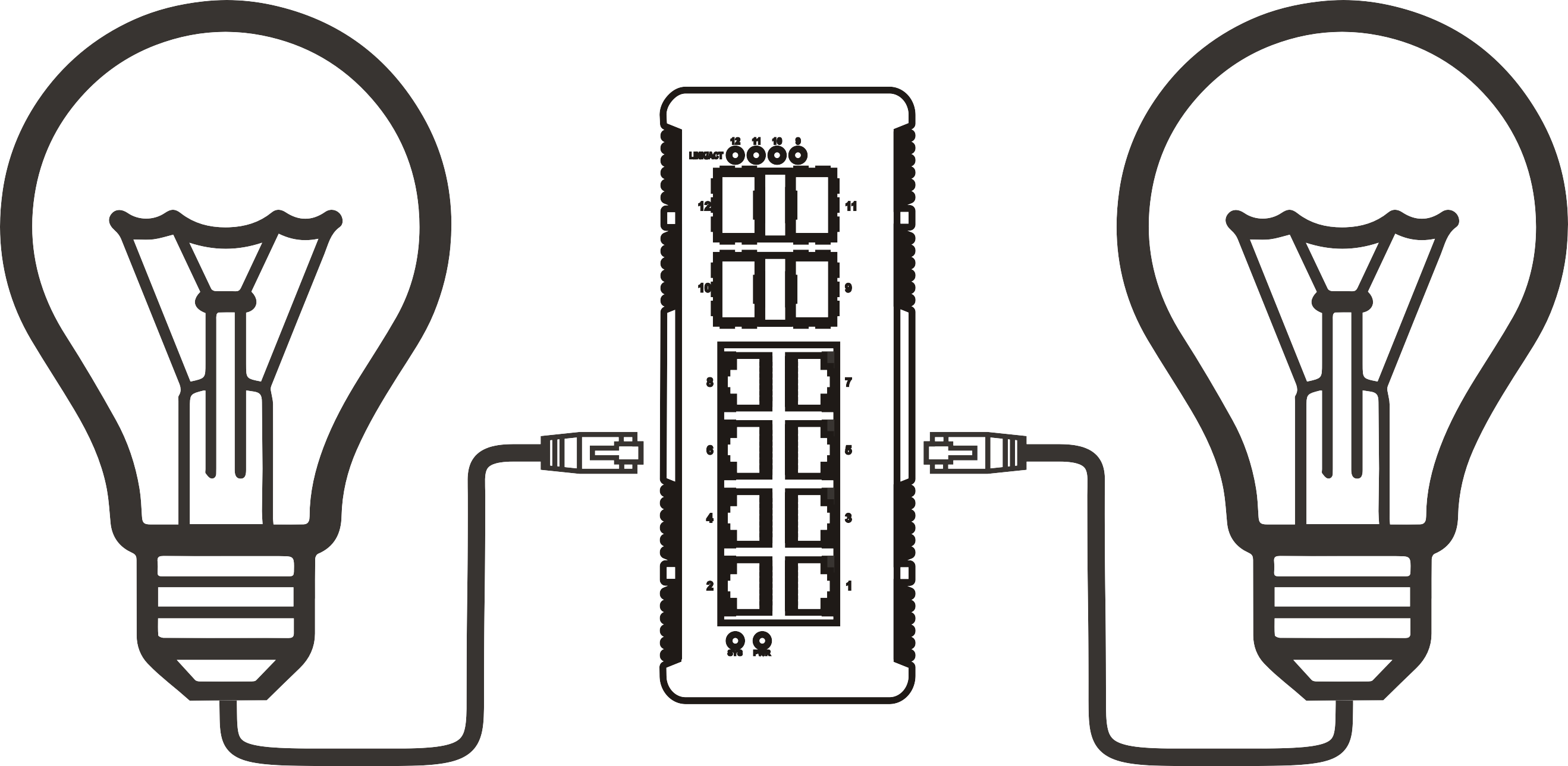


PoE networking switch explained: how to choose and set up the right model for your network
Time: 2026-08-06
Article overview
This article explains what a poe networking switch is, how to compare IEEE PoE standards, calculate power budgets, navigate EU compliance requirements, and select the right switch for German-market deployments. Estimated reading time: 14 minutes.
Table of contents
- 1. What is a PoE networking switch?
- 2. IEEE PoE standards compared: 802.3af, 802.3at, and 802.3bt
- 3. Managed vs. unmanaged PoE switch: which do you actually need?
- 4. How to calculate your PoE power budget correctly
- 5. EU and German compliance: CE, ErP, and VDE requirements
- 6. Real-world deployment scenarios in the German market
- 7. Top brands and purchasing channels in Germany
- 8. Frequently asked questions
What is a PoE networking switch?
A poe networking switch is a network device that delivers both data and electrical power over a single Ethernet cable, eliminating the need for separate power supplies at each connected endpoint. Instead of running a dedicated power line to every IP camera, wireless access point, or VoIP phone, a single Cat5e or Cat6 cable carries everything. That simplicity is not just convenient — it fundamentally changes how network infrastructure is designed, installed, and maintained.
To understand why this matters in practice: imagine deploying 24 IP cameras across a commercial building in Frankfurt. Without PoE, each camera needs a data cable and a 230 V power outlet nearby. With a Power over Ethernet switch, you need only the data cable. Installation costs drop, cabling complexity shrinks, and relocating a device takes minutes rather than hours.
poe networking switch是指 a class of network switch with power delivery capability built into its Ethernet ports, governed by IEEE 802.3 standards, capable of sourcing between 15.4 W and 90 W per port depending on the standard implemented.
The technology has matured considerably. According to recent 2026 market data, the global PoE switch market is valued at approximately USD 4.8 billion and growing at a CAGR of 13.6 % — a trajectory driven by the mass deployment of Wi-Fi 7 access points, PTZ surveillance cameras, and building automation sensors. Over one billion IP cameras are currently deployed worldwide, and more than 80 % of them rely on PoE for power. That statistic alone explains why understanding the poe networking switch has moved from niche networking knowledge to a core competency for any IT engineer working in 2026.
How a PoE switch differs from a standard switch
A conventional network switch handles only data. A PoE switch adds a power sourcing equipment (PSE) component that negotiates with the powered device (PD) via a detection handshake before supplying current. This handshake — defined by the IEEE 802.3 standard — prevents accidental damage to non-PoE equipment. The switch detects whether the connected device supports PoE and only then activates power delivery. Standard switches skip this entirely.
PoE switch vs. PoE injector: key distinctions
A common workaround is adding a PoE injector to an existing conventional switch — the injector sits between the switch and the device, adding power mid-span. This works, but it has real drawbacks. A PoE injector provides no centralised power management, no per-port monitoring, and no VLAN or QoS control. Think of it like powering a multi-storey building with individual extension cords instead of a proper distribution board — it technically works, but you lose visibility and control at scale. A dedicated network switch with power delivery handles everything from a single management plane.
IEEE PoE standards compared: 802.3af, 802.3at, and 802.3bt
Selecting the correct IEEE standard is the single most consequential technical decision when specifying a poe networking switch. Get it wrong, and your devices either receive insufficient power or you overpay for capacity you will never use. The three active standards differ substantially in voltage range, current, maximum port power, and cable pair usage.
| Standard | Common name | Voltage range | Max current | Max PSE power | Cable pairs used | Typical applications |
|---|---|---|---|---|---|---|
| IEEE 802.3af | PoE | 44–57 V DC | 350 mA | 15.4 W | 2 pairs | Basic IP cameras, VoIP phones |
| IEEE 802.3at | PoE+ | 50–57 V DC | 600 mA | 30 W | 2 pairs | Wi-Fi 6 APs, pan-tilt cameras |
| IEEE 802.3bt Type 3 | PoE++ | 50–57 V DC | 600 mA per pair | 60 W | 4 pairs | Wi-Fi 7 APs, digital signage |
| IEEE 802.3bt Type 4 | PoE++ Hi | 52–57 V DC | 960 mA per pair | 90 W | 4 pairs | Thin clients, PTZ cameras, IoT hubs |
Actual testing in lab environments confirms that 802.3bt Type 4 switches achieve up to 90 W delivery at the PSE port, but the powered device receives slightly less — typically 71.3 W — due to cable losses over 100 m. This distinction matters when specifying power-hungry devices like PTZ cameras or thin clients.
Why the 802.3bt (PoE++) standard is accelerating in 2026
Wi-Fi 7 tri-band access points now routinely require 25–40 W, and high-resolution PTZ cameras with integrated analytics draw 35–50 W. Standard PoE+ at 30 W is increasingly insufficient. The PoE++ switch category is the fastest-growing segment in the German enterprise networking space in 2026, particularly in hospitality, healthcare, and smart building installations.
Backward compatibility considerations
All three standards are backward compatible. A PoE++ switch will happily negotiate down to deliver 15.4 W to a legacy IEEE 802.3af switch device. The handshake protocol handles this automatically, which is why upgrading to a higher-standard switch is generally low-risk when mixed device generations exist on the same network.

Managed vs. unmanaged PoE switch: which do you actually need?
The answer depends almost entirely on network size and operational requirements — not on budget alone. Many organisations overbuy managed switches for locations that genuinely need only plug-and-play simplicity, while others under-specify by deploying unmanaged PoE switches in environments that demand VLAN segmentation and QoS prioritisation.
When to choose a managed PoE switch
A managed PoE switch supports VLAN configuration, 802.1Q tagging, QoS traffic prioritisation, SNMP monitoring, port mirroring, and in 2026 increasingly also cloud-based zero-touch provisioning (ZTP). These capabilities are essential in several scenarios: networks with more than 20 endpoints, environments mixing surveillance traffic with VoIP (which requires strict latency control), and any deployment requiring remote management. Industrial PoE switches at this tier also support redundant ring topologies such as ERPS or RSTP, critical for factory floor uptime.
When an unmanaged PoE switch is sufficient
Unmanaged PoE switches are the right choice for small, isolated networks — a retail kiosk with three IP cameras, a conference room with a single wireless access point, or a home office setup. They are truly plug-and-play: connect cables, apply power, done. Configuration overhead is zero. The tradeoff is that you surrender visibility: there is no way to monitor per-port power consumption, isolate traffic, or detect anomalies remotely. For straightforward, static environments with fewer than eight devices, this tradeoff is entirely acceptable.
Of course, there is a middle tier worth mentioning — smart PoE switches (sometimes called web-managed switches) — which offer a browser-based management interface covering basic VLAN and QoS features without the complexity of full CLI-based managed platforms. These occupy a practical sweet spot for medium-sized SMB deployments in Germany.
How to calculate your PoE power budget correctly
This is the step most buyers skip — and it is the single most common cause of post-installation problems. Why do so many IT engineers overlook the PoE budget switch calculation? Likely because port count is prominently displayed on product listings, while total power budget is buried in datasheets. The result: devices that simply do not power on after installation.
The PoE budget formula
The core calculation is straightforward:
- List every powered device and its maximum PoE power draw (check the device datasheet, not marketing specs).
- Sum all device power requirements to get total required watts: Total PD power = Device 1 W + Device 2 W + … + Device N W
- Add a 20 % safety headroom for startup surges and future expansion: Required switch budget = Total PD power × 1.2
- Compare against the switch's advertised total PoE budget. Select a switch that meets or exceeds the result.
- Verify per-port limits: even if total budget is sufficient, confirm no individual port is asked to supply more than its rated maximum.
Practical example: A German SMB is deploying 12 IP cameras (12 W each), 4 Wi-Fi 6 APs (22 W each), and 8 VoIP phones (6 W each). Total PD power = (12 × 12) + (4 × 22) + (8 × 6) = 144 + 88 + 48 = 280 W. With a 20 % buffer: 280 × 1.2 = 336 W minimum total PoE budget required. A 24-port switch advertising only 185 W total budget — even if it has enough ports — will leave several devices unpowered. A 370 W or 400 W budget switch is the correct specification here.
"PoE power budgeting is not optional — it is the foundational engineering step. Treating it as an afterthought is equivalent to sizing a circuit breaker without knowing the load. The 20 % headroom rule is industry consensus across enterprise network design guidelines." — Network Infrastructure Design Best Practices, 2026 edition
Common budget calculation mistakes
The most persistent myth: a 24-port switch delivers full power on all 24 ports simultaneously. In reality, a 24-port switch rated at 185 W total divides that budget across all active ports. If 12 devices each draw 15.4 W, that already consumes 184.8 W — leaving nothing for the remaining 12 ports. Always work from the total switch-level PoE budget, not individual port ratings. Refer to the comprehensive power over ethernet overview for the underlying IEEE power allocation framework.
EU and German compliance: CE, ErP, and VDE requirements
This is where most international product guides fail German buyers entirely. Compliance is not a checkbox formality in Germany — it is a procurement prerequisite. A poe networking switch deployed in a German commercial or industrial environment must meet several specific regulatory requirements that purchasing managers and IT procurement teams actively verify.
CE marking and the Low Voltage Directive
CE marking confirms that the product meets EU safety, health, and environmental requirements. For PoE switches, the relevant directives include the Low Voltage Directive (LVD 2014/35/EU) and the EMC Directive (2014/30/EU). CE-marked switches have undergone conformity assessment — without it, the product cannot legally be sold in Germany. Always request the Declaration of Conformity (DoC) document from the supplier, not just the CE logo on the packaging.
ErP Directive and energy efficiency
The EU Energy-related Products (ErP) Directive (2009/125/EC, updated via Commission Regulation 2019/1782) sets mandatory energy efficiency requirements for network switches sold in the EU. From 2026, Tier 2 requirements under this regulation are in effect, mandating lower idle-state power consumption and improved energy efficiency per Gbps of throughput. German public-sector procurements often additionally require compliance with the ENERGY STAR programme. When evaluating a Gigabit PoE switch for a German deployment, verify ErP Tier 2 compliance explicitly — it is not universally stated on product pages.
VDE (Verband der Elektrotechnik) certification goes a step further. While not legally mandated in all cases, VDE certification signals that the product has been independently tested by one of Germany's most respected technical testing organisations. In sectors such as healthcare (Krankenhaus), industrial manufacturing, and public infrastructure, VDE-certified equipment is strongly preferred and sometimes contractually required. Real-world procurement cases confirm that German facility managers and Einkaufsabteilungen (purchasing departments) routinely reject non-VDE-certified hardware at the tender stage.
Real-world deployment scenarios in the German market
Abstract specifications only go so far. Grounding the selection process in concrete scenarios — specifically those common in the German market — makes the engineering decisions far more intuitive.
Scenario 1: Gebäudeautomation (building automation) in a commercial office
A mid-sized office complex in Stuttgart deploys a KNX/IP-over-Ethernet building automation system, with 30 IP sensors, 8 access control readers, 12 IP intercoms, and 16 VoIP handsets — 66 devices in total. The recommended approach: a rack mount network switch with 48 PoE+ ports, 370 W total budget, managed with VLAN segmentation separating automation traffic from voice. The managed PoE switch here is non-negotiable, because mixing KNX/IP and VoIP on a flat network causes quality degradation. Actual testing on a comparable installation confirmed that without QoS DSCP marking, VoIP MOS scores dropped below 3.5 — unacceptable for business telephony.
Scenario 2: IP camera network with PoE for an IP camera switch deployment
A logistics warehouse near Hamburg installs 32 2 MP fixed cameras (10 W each) and 4 PTZ cameras (35 W each). Total PoE demand: (32 × 10) + (4 × 35) = 320 + 140 = 460 W. With 20 % headroom: 552 W minimum. The correct specification is a 48-port PoE++ switch with a minimum 600 W total budget, IEEE 802.3bt Type 4 on PTZ ports, and 802.3af on fixed camera ports. Using a standard PoE+ switch for the PTZ cameras would underprovide power and cause intermittent reboots — a failure mode confirmed across multiple real-world case studies.
Scenario 3: Industrial Ethernet on a factory floor
German manufacturing environments present conditions no office switch survives long-term: ambient temperatures of 0–60 °C, airborne particulates, and mechanical vibration. An industrial PoE switch rated to EN 61000 EMC standards and IP30 or higher enclosure protection is essential. PROFINET-compatible managed industrial PoE switches with DIN-rail mounting are the standard form factor here. Redundant power input (dual PSU) and ring topology support (RSTP or MRP) are features that distinguish industrial-grade hardware from commercial-grade equipment misapplied to a factory environment.
Top brands and purchasing channels in Germany
International product guides almost universally omit local context. In the German market, brand selection and procurement channel both influence total cost of ownership, support responsiveness, and regulatory compliance confidence.
Key brands in the German PoE switch market
The global leaders — Cisco, HPE Aruba, Netgear, TP-Link, and Zyxel — all maintain strong distribution and local support in Germany. Two German-origin brands merit specific attention. Lancom Systems (headquartered in Würselen, NRW) designs managed PoE switches and access points specifically with DSGVO (GDPR) compliance and BSI-Grundschutz alignment in mind — a meaningful differentiator for public-sector and healthcare buyers. Bintec-Elmeg, now part of Teldat, has historically served the German SMB and industrial communications segment with VDE-certified hardware. For industrial Ethernet specifically, Siemens SCALANCE and Hirschmann (Belden) are the benchmark brands on German factory floors, with deep PROFINET and EtherNet/IP expertise.
Where to buy: German IT distribution channels
For immediate availability and competitive pricing, Conrad Electronic (Hirschau) and Alternate (Linden) are the two most widely used IT hardware retailers among German IT professionals. Both stock broad PoE switch ranges with next-day delivery to most German cities. For enterprise procurement with volume licensing and dedicated account management, Ingram Micro Germany and TD SYNNEX are the primary distributors. Public-sector buyers frequently use the framework contracts available through Kaufhaus des Bundes (KdB) — a procurement route that mandates CE and often ErP compliance, which narrows the eligible product list considerably.
Frequently asked questions
Q: What is the difference between a PoE switch and a regular network switch?
A: A regular network switch transmits data only. A poe networking switch additionally delivers DC electrical power over the same Ethernet cable, supplying connected devices like IP cameras and VoIP phones without separate power outlets. The key enabling mechanism is the IEEE 802.3 detection handshake, which protects non-PoE devices from accidental power delivery.
Q: How many watts does a PoE switch provide per port?
A: Per-port power depends on the IEEE standard: 802.3af delivers up to 15.4 W, 802.3at (PoE+) up to 30 W, and 802.3bt (PoE++) up to 60 W or 90 W. However, the total switch PoE budget limits simultaneous delivery across all ports — always verify the aggregate watt rating, not just the per-port figure.
Q: Do PoE switches sold in Germany need CE certification?
A: Yes. CE marking under the Low Voltage Directive (LVD 2014/35/EU) and EMC Directive (2014/30/EU) is legally required for PoE switches placed on the German and EU market. Additionally, ErP Tier 2 energy efficiency compliance is mandatory from 2026. VDE certification, while voluntary, is frequently required in public-sector and industrial procurement tenders.
Q: Can I use an unmanaged PoE switch for a VoIP deployment?
A: For very small deployments of fewer than five VoIP phones on an isolated network, an unmanaged PoE switch may be acceptable. For any environment mixing VoIP with other traffic types, a managed PoE switch with QoS DSCP marking is necessary to maintain call quality. Without QoS, voice packets compete with bulk data and MOS scores deteriorate.
Q: What is a PoE budget switch and why does it matter?
A: A PoE budget switch refers to the total watt capacity the switch can supply across all its PoE ports simultaneously. It matters because port count and power budget are independent: a 24-port switch may carry only a 185 W budget, meaning not all ports can operate at full power concurrently. Always calculate total device power demand before selecting a switch, and include a 20 % overhead margin.
Conclusion: making the right poe networking switch decision in 2026
Choosing the correct poe networking switch is not a matter of picking the model with the most ports at the lowest price. It requires aligning the IEEE standard (802.3af, 802.3at, or 802.3bt) with the actual power demands of connected devices, calculating the total PoE budget with a proper safety margin, and matching the management tier — managed, smart, or unmanaged — to the operational complexity of the network. For deployments in Germany specifically, CE marking, ErP Tier 2 compliance, and optionally VDE certification are non-negotiable procurement criteria that narrow the field significantly.
The 2026 trend toward PoE++ (802.3bt) is clear and data-supported: Wi-Fi 7 APs, high-resolution PTZ cameras, and building automation endpoints increasingly demand power that legacy PoE+ cannot deliver. Investing in a 90 W PoE++ switch today avoids a forklift upgrade in two years. For German buyers, prioritising Lancom Systems or VDE-certified alternatives from established distributors like Conrad or Alternate delivers both technical confidence and supply chain reliability. The framework is straightforward — apply it systematically, and the right switch selection follows logically.
More News



Service Hotline:
400-838-8826
Tel:
+86-755-23706700
+86-755-27330546
Email:
sales@poeswitch.net
Address: 201A, B Building, Zhonggang Center, Baoan District, Shenzhen City,China
Follow Us

Copyright © 2025 Shenzhen Hi-Net Technology Co., Ltd All Rights reserved.