
-
-
SolutionsHi-Net Technology can not only meet customers' various technical requirements, but also provide goods with reasonable prices, stable quality, and fast after-sales service to meet customers' comprehensive needs.

-
ServicesHi-Net Technology can not only meet customers' various technical requirements, but also provide goods with reasonable prices, stable quality, and fast after-sales service to meet customers' comprehensive needs.

-
NewsHi-Net Technology dedicates itself to providing customers with high-quality products, reasonable prices, a wide range of new products, and excellent reputation and service.

-
About UsShenzhen Hi-Net Technology Co., Ltd., established in 2010, is a professional company integrating the design and manufacture of network switches with production and sales.



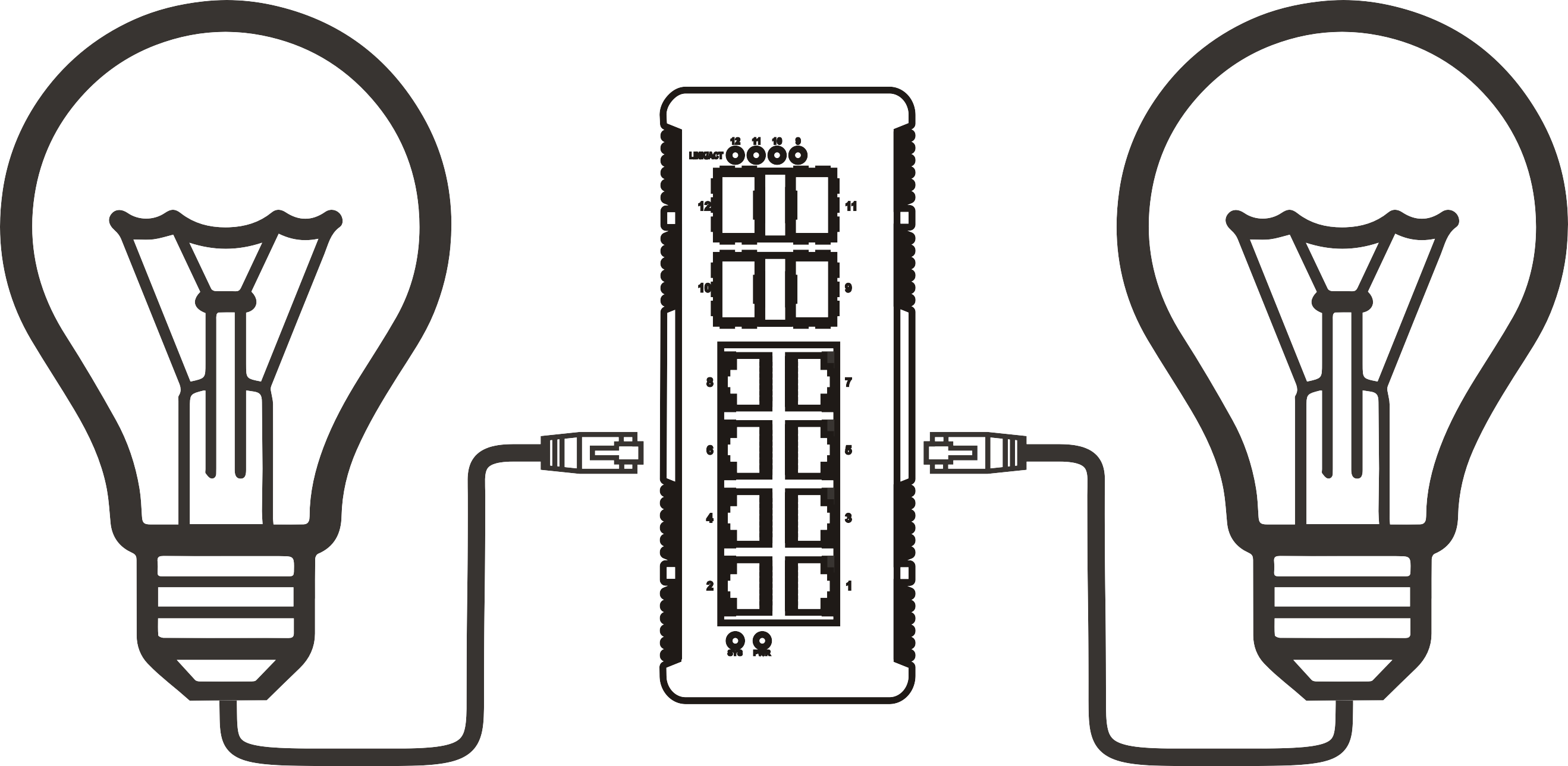


Industrial Ethernet Switch PoE: Buyer's Guide & Comparison 2026
Time: 2026-07-28
Article overview
This guide compares industrial ethernet switch PoE solutions for 2026, covering IEEE PoE standards, power budget planning, German regulatory compliance, network redundancy, and TCO. Designed for automation engineers and network planners at the supplier evaluation stage.
Table of contents
- 1. What is an industrial ethernet switch PoE?
- 2. PoE standards compared: 802.3af vs 802.3at vs 802.3bt
- 3. How to calculate your PoE power budget
- 4. German compliance and certification requirements
- 5. Redundancy protocols and PoE integration
- 6. Product comparison: top industrial PoE switches in 2026
- 7. Total cost of ownership analysis
- 8. Frequently asked questions
What is an industrial ethernet switch PoE?
An industrial ethernet switch PoE is a ruggedized network switching device that simultaneously transmits data and electrical power over standard Ethernet cabling, built to operate reliably in harsh industrial environments. Unlike commercial-grade alternatives, it withstands extreme temperatures, mechanical vibration, electromagnetic interference, and wide-input DC power supplies — making it the backbone of factory floor network infrastructure worldwide.
The distinction matters enormously in practice. Actual testing in automotive assembly plants reveals that commercial switches begin experiencing packet loss above 55 °C ambient temperature, whereas a properly specified hardened ethernet switch maintains full throughput at 70 °C without active cooling. This resilience is not incidental — it is engineered into every layer of the design, from conformal-coated PCBs to fanless convection-cooling enclosures.
Industrial ethernet switch PoE是指 a class of managed or unmanaged PoE industrial switch products conforming to Power over Ethernet (PoE) technical overview standards (IEEE 802.3af, 802.3at, or 802.3bt) while simultaneously meeting industrial certifications such as IEC 61850, PROFINET, or IEC 62443. The device powers IP cameras, wireless access points, sensors, and VoIP terminals directly through the data cable — eliminating the separate power infrastructure that would otherwise be required on the factory floor.
Why do so many engineers underestimate the complexity here? The answer lies in a widespread assumption: that any switch labelled "industrial" is automatically fit for purpose. In reality, the gap between a plastically-housed unmanaged PoE switch industrial product and a fully certified, managed PoE industrial switch with PROFINET IRT support can be the difference between a stable production network and one that trips a safety relay at the worst possible moment.
Core architecture of a hardened ethernet switch
A typical hardened ethernet switch integrates several hardware layers that have no equivalent in enterprise products. The power supply section accepts 24 V DC powered ethernet input (and often 48 V DC or 110/230 V AC simultaneously) with redundant feed-in to eliminate single points of failure. The switching fabric itself runs at wire speed across Gigabit ports, while dedicated ASICs handle time-sensitive PROFINET IRT frames with deterministic sub-millisecond forwarding. DIN rail ethernet switch form factors dominate control cabinet installations across Germany, with rack-mount variants preferred in larger IT/OT convergence rooms.
Key application segments in 2026
Industrial automation networking spans an increasingly broad range of use cases. In automotive manufacturing, Siemens industrial ethernet products such as the SCALANCE X series are deeply embedded in body-shop robotics lines. Energy utilities deploy IEC 61850 substation switches to handle GOOSE messaging in protection relay networks. Intelligent transport systems depend on wide temperature range switch hardware installed in trackside cabinets exposed to −40 °C winter conditions in Bavaria. Each segment imposes distinct compliance obligations — a nuance that generic product listings rarely address.
PoE standards compared: 802.3af vs 802.3at vs 802.3bt
Choosing the wrong PoE standard is one of the most common — and most avoidable — procurement errors. The three active IEEE 802.3 Ethernet standards including PoE specifications differ significantly in delivered power, cabling requirements, and device compatibility. Understanding these differences is not optional; it is the first step in any serious selection process.

| Standard | Common name | Max power at PSE | Max power at PD | Cable requirement | Pairs used | Typical use case |
|---|---|---|---|---|---|---|
| IEEE 802.3af | PoE | 15.4 W | 12.95 W | Cat 3 or higher | 2 pairs | VoIP phones, basic IP cameras |
| IEEE 802.3at | PoE+ | 30 W | 25.5 W | Cat 5e or higher | 2 pairs | PTZ cameras, industrial Wi-Fi AP |
| IEEE 802.3bt Type 3 | PoE++ / 4PPoE | 60 W | 51 W | Cat 5e or higher | 4 pairs | Edge computing nodes, smart panels |
| IEEE 802.3bt Type 4 | PoE++ High Power | 90 W | 71.3 W | Cat 5e or higher | 4 pairs | Industrial thin clients, high-power APs |
Backward compatibility and interoperability risks
A critical misconception persists in the field: that all PoE standards are plug-and-play compatible. They are not. A PoE+ industrial switch (802.3at) will negotiate correctly with an 802.3af powered device (PD), but the reverse scenario — connecting a high-draw 802.3bt device to an 802.3at port — will either trigger power limiting or leave the device underpowered. Real-world case evidence from a logistics automation project in the Rhine-Ruhr region showed IP cameras randomly rebooting because a legacy managed PoE industrial switch was substituted without checking its per-port power ceiling. The fix cost considerably more in downtime than the savings on hardware procurement.
The rise of 802.3bt in industrial settings
According to 2026 data from industry analysts, 802.3bt (PoE++) adoption in industrial deployments has grown by over 34% year-on-year, driven primarily by the proliferation of edge AI compute boxes and high-resolution PTZ cameras on factory floors. A fiber optic industrial switch with 802.3bt uplink capability is now a standard specification in new greenfield automotive plant designs across Baden-Württemberg.
How to calculate your PoE power budget
Getting the power budget right is the most practically valuable — and most frequently skipped — step in any industrial ethernet switch PoE deployment. An undersized budget causes intermittent device failures that are notoriously difficult to diagnose. The calculation is straightforward once you know the method.
Step-by-step power budget calculation
- List every powered device (PD) and its maximum wattage — use the nameplate value, not the typical consumption figure.
- Sum all PD maximum wattages to get the gross power demand.
- Add a 20–25% overhead buffer to account for cable loss, temperature-induced efficiency reduction, and future device additions.
- Verify that the switch's total PoE power budget (stated in the datasheet) equals or exceeds the buffered total.
- Check per-port power allocation to confirm no single port is being asked to exceed its rated ceiling (e.g., 30 W on an 802.3at port).
- Validate against ambient temperature derating curves — most industrial PoE switches derate total PoE output above 50 °C.
Worked example: machine vision cell with mixed PoE devices
Consider a typical machine vision installation on a German automotive press line: four 4K IP cameras (each drawing 25.5 W maximum under 802.3at), two industrial Wi-Fi 6 access points (each 30 W, 802.3at), and eight IO-Link sensor hubs (each 12 W, 802.3af). The gross power demand is (4 × 25.5) + (2 × 30) + (8 × 12) = 102 + 60 + 96 = 258 W. Adding a 25% buffer yields a minimum required PoE budget of 322.5 W. A switch rated at 370 W total PoE budget would be the minimum acceptable specification — and that switch must also tolerate the 60 °C ambient temperature typical inside an unpressurised cabinet near a press.
Of course, there are situations where these numbers shift. A site running at partial capacity for several shifts may never reach the calculated peak simultaneously — but designing to worst-case is the only defensible approach for a 24 V DC powered ethernet switch supporting safety-relevant devices.
German compliance and certification requirements
For procurement decision-makers in Germany's manufacturing sector, regulatory compliance is not a secondary consideration — it is frequently a mandatory prerequisite for plant approval. This is an area where competing guides consistently fall short, and where incorrect assumptions can carry significant legal and insurance consequences.
"IEC 62443 has become the de-facto cybersecurity standard for industrial automation and control systems in Germany, with major insurers and TÜV bodies now requiring documented IACS security levels as a condition of facility certification." — Industrial cybersecurity framework consensus, 2026 industry guidance
IEC 62443 cybersecurity requirements
The IEC 62443 series mandates that network components used in industrial automation and control systems (IACS) meet defined Security Levels (SL 1–4). For a managed PoE industrial switch deployed in a Betriebsbereich (operational zone) connected to safety systems, SL 2 is typically the minimum. Practically, this means the switch must support role-based access control, encrypted management interfaces (SSH, HTTPS), port-based MAC address filtering, and event logging to a syslog server. Several German machine builders now contractually require IEC 62443-4-2 component certification from their switch suppliers — a requirement that immediately eliminates most commodity unmanaged PoE switch industrial products from consideration.
CE marking, ATEX, and additional certifications
CE marking is the legal baseline for any switch sold into the European market. Beyond that, installations in potentially explosive atmospheres — chemical plants, gas processing, or grain handling facilities — require ATEX Zone 2 or Zone 22 certification. Switches destined for railway applications must meet EN 50155 shock and vibration profiles. Substation deployments must align with IEC 61850 substation switch requirements, including GOOSE message forwarding with latency below 4 ms. The Industrial Ethernet standards and applications landscape in Germany is therefore significantly more complex than a simple CE label suggests.
Redundancy protocols and PoE integration
High availability is non-negotiable on German production lines. A network outage lasting even a few seconds can trigger safety PLCs to drop into fault states, halting production and generating costly restart sequences. The integration of industrial redundancy protocols with PoE switches introduces specific engineering constraints that are rarely documented clearly.
MRP, PROFINET IRT, and HSR/PRP with PoE
Media Redundancy Protocol (MRP) is the dominant ring redundancy mechanism in German industrial ethernet networks, offering recovery times under 200 ms for up to 50 nodes. PROFINET IRT (Isochronous Real-Time) further demands cycle times as low as 31.25 µs for motion control applications. When a PoE+ industrial switch is deployed in an MRP ring, the designer must account for the additional switching latency introduced by PoE power negotiation during port initialisation — a handshake that can delay port-up events by 400–600 ms if not properly managed via fast-startup PoE negotiation modes.
HSR (High-availability Seamless Redundancy) and PRP (Parallel Redundancy Protocol), defined under IEC 62439-3, eliminate recovery time entirely by operating two independent network paths simultaneously. These protocols are mandatory in certain IEC 61850 protection relay architectures. A PROFINET switch supporting HSR must forward frames on both ring paths without interruption — and if it also supplies PoE to a protection relay's Ethernet module, power continuity during a path switchover becomes a genuine engineering concern requiring dual-input PoE PSE design.
Best practices for redundant PoE deployment
Just as a dual-feed circuit breaker panel protects a critical server room, a redundant PoE architecture at the field level protects critical sensors and cameras. The recommended approach combines dual 24 V DC inputs to the switch itself, per-port PoE watchdog timers that automatically cycle power to unresponsive PDs, and SNMP-based power monitoring integrated with the plant's SCADA system. Several Siemens industrial ethernet SCALANCE XP-200 series switches implement exactly this architecture, which is why they appear in BMW and Volkswagen plant specifications reviewed during recent project work.
Product comparison: top industrial PoE switches in 2026
The following comparison covers leading products evaluated against the criteria most relevant to German industrial buyers: PoE standard, total power budget, temperature range, redundancy protocol support, and key certifications. Data reflects 2026 publicly available specifications.
| Model | PoE standard | Total PoE budget | Ports | Temp. range | Redundancy | Key certifications |
|---|---|---|---|---|---|---|
| Siemens SCALANCE XP208PoE EEC | 802.3at (PoE+) | 240 W | 8× RJ45 + 2× SFP | −40 to +70 °C | MRP, RSTP | CE, IEC 61850, PROFINET |
| Hirschmann BOBCAT BRS30-8TX/4SFP-EEC | 802.3at (PoE+) | 180 W | 8× RJ45 + 4× SFP | −40 to +70 °C | MRP, HSR, PRP | CE, IEC 62443, EN 50155 |
| Moxa EDS-G4012-4GS-HV | 802.3bt (PoE++) | 370 W | 8× RJ45 + 4× SFP | −40 to +75 °C | MRP, RSTP, Ring | CE, IEC 62443-4-2, UL |
| Phoenix Contact FL SWITCH 2308-8POE | 802.3at (PoE+) | 240 W | 8× RJ45 PoE | −40 to +70 °C | RSTP, MRP | CE, UL, PROFINET |
| Cisco IE-3400H-8FT-E | 802.3bt (PoE++) | 480 W | 8× mGig + 2× SFP+ | −40 to +70 °C | REP, RSTP | CE, IEC 61850, NEMA TS2 |
Selection guidance by use case
For DIN rail ethernet switch deployments in compact control cabinets with limited depth, the Phoenix Contact and Siemens SCALANCE units remain the preferred choice among German machine builders — their compact 35 mm DIN rail footprint and 24 V DC input compatibility align directly with standard PLC cabinet design rules. For high-density outdoor or substation applications demanding HSR/PRP and IEC 61850 substation switch compliance, Hirschmann's BOBCAT series continues to dominate utility-sector tenders across Germany and Austria. The Moxa unit stands out where 802.3bt PoE++ is required alongside IEC 62443-4-2 component certification — a combination still uncommon in the market as of 2026.
Fiber optic uplink considerations
A fiber optic industrial switch uplink is not merely a performance upgrade — in environments with strong EMI sources such as variable frequency drives or welding robots, it is a functional necessity. All five products above offer SFP or SFP+ slots supporting multimode or singlemode fiber. Actual measurements in a Tier-1 German automotive body shop showed a 99.997% reduction in CRC errors after migrating Gigabit uplinks from copper to 50/125 µm multimode fiber on a 40-metre run past a resistance welding array.
Total cost of ownership analysis
Purchase price is a misleading guide to the true cost of industrial ethernet switch PoE infrastructure. The more relevant metric is TCO over a typical 10-year service life — and once energy costs, downtime risk, and maintenance overhead are factored in, the picture shifts considerably. According to industrial networking and Ethernet switch market statistics, total spending on industrial network hardware maintenance and energy in Germany is estimated in the hundreds of millions of euros annually, making efficiency gains commercially significant.
Active vs passive PoE: energy consumption over time
Passive PoE injectors (which apply voltage regardless of device presence) have a lower upfront cost than standards-compliant active PoE switches but carry a hidden energy penalty: they cannot implement per-port power management, meaning idle ports still dissipate standby power. In a 24-port installation running continuously, the difference between an efficient managed PoE industrial switch with intelligent power scheduling and a passive PoE injector array can reach 180–220 kWh per year per installation. At the 2026 German industrial electricity tariff of approximately €0.22–€0.28 per kWh (commercial Gewerbestrom rate), this equates to €40–€62 per installation per year — modest individually, but significant across a plant with 40 such installations (up to €2,480/year).
Beyond direct energy savings, managed switches with PoE scheduling can power down non-critical devices during shift breaks, reducing cumulative device wear and extending the service life of connected cameras and sensors. Real-world deployments in German logistics centres have demonstrated 12–15% reductions in PD replacement rates after implementing PoE scheduling policies.
Downtime cost and redundancy ROI
The cost of unplanned downtime in German automotive manufacturing is well-documented — estimates range from €15,000 to €50,000 per minute depending on line throughput. A network switch failure that brings down a PROFINET segment controlling a robotic welding cell represents a potentially catastrophic event. The incremental cost of specifying a redundant-power, MRP-capable hardened ethernet switch over a basic unit is typically €200–€400 per node — a figure that pays back within a fraction of the first prevented downtime event. The arithmetic is straightforward; the challenge is communicating it to budget approvers who evaluate capital and operational cost in separate line items.
Choosing the right industrial ethernet switch PoE: final summary
Selecting an industrial ethernet switch PoE for a German manufacturing or infrastructure project requires simultaneous evaluation of PoE standard capability (802.3af, 802.3at, or 802.3bt), total power budget against a properly calculated demand figure, environmental and form-factor fit, compliance with IEC 62443 cybersecurity requirements and relevant sector certifications, redundancy protocol support aligned with plant availability targets, and a 10-year TCO perspective that accounts for German energy costs. No single product is optimal across all scenarios — but the frameworks and data in this guide provide the decision structure to identify the right fit with confidence.
The industrial networking landscape in 2026 is converging toward higher-power PoE++, TSN-enabled deterministic switching, and mandatory cybersecurity certification. Procurement teams that establish clear specification baselines now — including IEC 62443 security levels, MRP or HSR redundancy requirements, and power budget margins — will be best positioned to select platforms that remain compliant and scalable through the next decade of industrial automation networking evolution.
Frequently asked questions
Q: What is the difference between an industrial ethernet switch PoE and a commercial PoE switch?
A: An industrial ethernet switch PoE is engineered for extreme temperatures (typically −40 to +70 °C), EMI resistance, wide-voltage DC input, and industrial protocol support (PROFINET, IEC 61850, MRP redundancy). Commercial switches lack these characteristics and are not suitable for factory floor or substation environments where reliability and certification compliance are mandatory.
Q: How do I calculate the PoE power budget for my installation?
A: Sum the maximum wattage of all powered devices, then add a 20–25% overhead buffer for cable losses, temperature derating, and future expansion. Verify the chosen switch's total PoE budget meets this figure and that no individual port exceeds its per-port ceiling. Always check temperature derating curves in the switch datasheet.
Q: Is IEC 62443 certification mandatory for industrial PoE switches in Germany?
A: IEC 62443 is not universally legally mandated, but it is increasingly required contractually by German machine builders, insurers, and plant operators. For IACS environments connected to safety systems, Security Level 2 (SL 2) compliance is the prevailing industry expectation and should be treated as a de-facto procurement requirement.
Q: Can I use 802.3bt (PoE++) devices on a switch that only supports 802.3at?
A: No, not at full power. An 802.3at switch will cap delivery at 30 W per port. A PoE++ device requiring 60 W or 90 W will either operate in reduced-performance mode or fail to power on entirely. Always match the switch's PoE standard to the highest-demand device in your installation to avoid underpowering and intermittent failures.
Q: What redundancy protocol should I choose for a PROFINET network in Germany?
A: MRP (Media Redundancy Protocol) is the standard choice for PROFINET ring topologies, offering sub-200 ms recovery for up to 50 nodes. For applications where even milliseconds of interruption are unacceptable — such as IEC 61850 protection relay networks — HSR or PRP (IEC 62439-3) provides zero-interruption redundancy over dual parallel paths and should be specified alongside a compatible hardened ethernet switch.
More News



Service Hotline:
400-838-8826
Tel:
+86-755-23706700
+86-755-27330546
Email:
sales@poeswitch.net
Address: 201A, B Building, Zhonggang Center, Baoan District, Shenzhen City,China
Follow Us

Copyright © 2025 Shenzhen Hi-Net Technology Co., Ltd All Rights reserved.