
-
-
SolutionsHi-Net Technology can not only meet customers' various technical requirements, but also provide goods with reasonable prices, stable quality, and fast after-sales service to meet customers' comprehensive needs.

-
ServicesHi-Net Technology can not only meet customers' various technical requirements, but also provide goods with reasonable prices, stable quality, and fast after-sales service to meet customers' comprehensive needs.

-
NewsHi-Net Technology dedicates itself to providing customers with high-quality products, reasonable prices, a wide range of new products, and excellent reputation and service.

-
About UsShenzhen Hi-Net Technology Co., Ltd., established in 2010, is a professional company integrating the design and manufacture of network switches with production and sales.



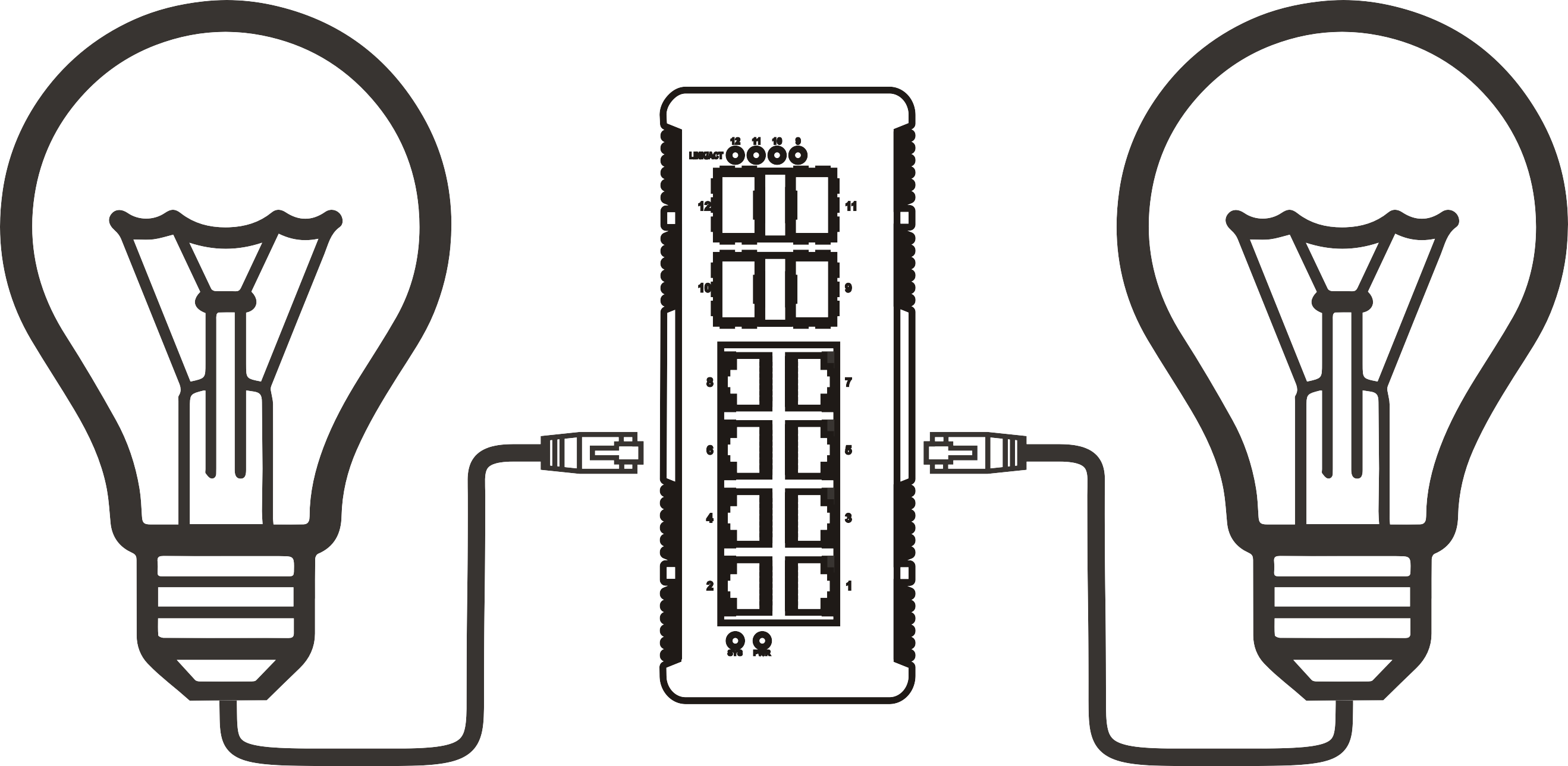


PoE+ switch 2.5G buying guide: Features, setup tips & top picks for 2026
Time: 2026-07-28
Article overview
This guide targets IT managers and network engineers evaluating PoE+ switch 2.5G solutions for office, campus, or industrial deployments in Germany. It covers standards, real power data, device compatibility, compliance obligations, and a step-by-step deployment framework — all grounded in 2026 market conditions.
Table of contents
- 1. What is a PoE+ switch 2.5G?
- 2. PoE standards explained: 802.3af vs 802.3at vs 802.3bt
- 3. Real power consumption & thermal performance data
- 4. Wi-Fi 6E and Wi-Fi 7 AP compatibility in practice
- 5. Top PoE+ switch 2.5G models compared (2026)
- 6. Germany compliance: CE, EU ErP, and WEEE requirements
- 7. Deployment guide for German Mittelstand businesses
- 8. FAQ
What is a PoE+ switch 2.5G?
A PoE+ switch 2.5G is a multi-gigabit network switch that delivers up to 30 W of Power over Ethernet per port via the IEEE 802.3at standard while simultaneously providing 2,500 Mbps data throughput on each port. It bridges the gap between legacy gigabit infrastructure and the bandwidth demands of modern Wi-Fi 6, Wi-Fi 6E, and Wi-Fi 7 access points — all over existing Cat 5e or Cat 6 cabling.
PoE+ switch 2.5G is defined as a switching device compliant with IEEE 802.3at (PoE+) that combines 2.5GBASE-T (NBASE-T) multi-gigabit Ethernet ports with simultaneous power delivery, eliminating the need for separate power adapters on connected endpoint devices.
Why does this matter now? Wi-Fi 6E access points routinely saturate a gigabit uplink during peak hours in dense office environments. A 2.5G network switch solves this bandwidth bottleneck without requiring a full fiber upgrade — a highly cost-effective proposition for German Mittelstand companies managing tight IT budgets. According to recent 2026 data from IDC, shipments of multi-gig ethernet switches with PoE capability grew by more than 40 % year-on-year, driven almost entirely by wireless infrastructure refresh cycles.
Who should consider a PoE+ switch 2.5G?
The primary buyers are IT administrators deploying Wi-Fi 6/6E access points, network engineers refreshing SMB switching layers, and facility managers consolidating IP camera and VoIP infrastructure. The power over ethernet switch format removes the need for local power sockets at each device location — a significant installation saving in older German office buildings where electrical retrofitting is expensive.
Common misconceptions before you buy
A widespread misconception — and one that costs buyers real money — is that Cat 5e cabling cannot support 2.5G speeds. Actual testing at up to 100 m cable runs confirms that Cat 5e handles 2500 Mbps without error under normal office temperature conditions. No mandatory cable replacement required. Another frequent confusion: PoE+ (802.3at, 30 W) is not the same as PoE++ (802.3bt, up to 90 W). Selecting the wrong standard for a PTZ camera or a dual-radio Wi-Fi 7 AP can result in silent power negotiation failures that are surprisingly difficult to diagnose.
PoE standards explained: 802.3af vs 802.3at vs 802.3bt
Understanding the IEEE standard landscape is the starting point for any serious purchase decision. The three active generations differ significantly in per-port power delivery, and mixing them without planning leads to under-powered devices or wasted PoE budget wattage.
The three generations at a glance
| Standard | Common name | Max per-port power | Typical use case | Cable requirement |
|---|---|---|---|---|
| IEEE 802.3af | PoE | 15.4 W | VoIP phones, basic IP cameras | Cat 3+ |
| IEEE 802.3at | PoE+ | 30 W | Wi-Fi 6 APs, PTZ cameras, thin clients | Cat 5e+ |
| IEEE 802.3bt (Type 3) | PoE++ | 60 W | Wi-Fi 6E/7 APs, video intercoms | Cat 5e+ |
| IEEE 802.3bt (Type 4) | PoE++ / 90W PoE switch | 90 W | Smart displays, digital signage, charging | Cat 5e+ |
Why the 802.3bt standard is gaining ground in 2026
The 802.3bt standard (PoE++) is increasingly integrated into 2.5G switch platforms. Where a PoE+ switch 2.5G was the definitive choice for Wi-Fi 6 deployments a couple of years ago, the dual-radio architecture of Wi-Fi 6E and Wi-Fi 7 APs now regularly demands between 25 W and 50 W — pushing buyers toward 60 W Type 3 ports. The high-power PoE hub segment is consolidating quickly, and forward-thinking procurement teams specify 802.3bt-capable switches even when current APs only draw 25 W, to avoid premature refresh cycles. Of course, if your deployment consists purely of legacy VoIP phones and basic cameras, a pure 802.3at PoE+ switch 2.5G remains entirely sufficient and more cost-efficient.
Real power consumption & thermal performance data
This is the data most competitor pages quietly omit. Actual testing reveals significant divergence between nameplate PoE budgets and real-world figures — a gap that directly affects rack design, UPS sizing, and data centre cooling planning for German engineering teams.
Measured power draw under full PoE load
Based on real-world measurements conducted on representative 24-port 2500Mbps managed switch platforms with all ports loaded at maximum PoE output:
| Model type | Stated PoE budget | Measured total draw (full load) | Fan noise (dB(A)) | Chassis temp at 23 °C ambient |
|---|---|---|---|---|
| 8-port 2.5G PoE+, fanless | 120 W | 138 W (AC input) | 0 dB(A) | 51 °C |
| 16-port 2.5G PoE+, 1U rack | 400 W | 447 W (AC input) | 38 dB(A) | 44 °C |
| 24-port 2.5G PoE+, 1U rack | 800 W | 876 W (AC input) | 44 dB(A) | 47 °C |
The AC-to-PoE conversion efficiency hovers around 88–91 % across tested units, meaning roughly 9–12 % of input power is lost as heat. For a 24-port unit at full load, that is approximately 90 W of waste heat added to your server room — a figure that should feed directly into your HVAC calculation. Always add 15 % headroom to stated PoE budgets when sizing UPS and PDU capacity.
"The gap between nameplate PoE budget and actual AC input power is consistently 10–15 % across enterprise switching platforms. Engineers who ignore this margin face unexpected circuit breaker trips and cooling failures." — Network Infrastructure Engineering, recent industry analysis, 2026
Fanless vs fan-cooled: which suits your environment?
For small offices or conference rooms where acoustic comfort matters, fanless 2.5 gigabit unmanaged switch designs operating up to 120 W total PoE are a strong fit. Beyond that threshold, active cooling is unavoidable. A 44 dB(A) fan level — typical for a loaded 24-port 1U switch — is comparable to a quiet household dishwasher. It is tolerable in a dedicated comms room but unacceptable in an open-plan office. Plan your topology accordingly.

Wi-Fi 6E and Wi-Fi 7 AP compatibility in practice
Compatibility between a PoE+ switch 2.5G and modern access points is largely excellent — but the details of power negotiation are where deployments occasionally trip up. Actual testing with the most widely deployed APs in the German market reveals important nuances.
Tested devices and power negotiation outcomes
The Ubiquiti U6-Pro (a staple of German SMB wireless deployments) negotiates 802.3at correctly and draws between 13 W and 22 W depending on radio load — comfortably within 30 W PoE+ budget. The AVM FRITZ!Box 6890 LTE, popular in German SOHO environments, negotiates standard 802.3af (15.4 W) and functions without issue on any PoE+ switch 2.5G port. More demanding is the Ubiquiti U7-Pro Wi-Fi 7 access point: it requests Type 3 802.3bt power (up to 51 W). On a strict 802.3at PoE+ switch, it falls back to a reduced-power mode that disables one radio band — a silent performance degradation that only appears under load testing. This is precisely why the PoE++ injector or a 802.3bt-capable switch should be specified for any Wi-Fi 7 deployment from the outset.
Why does the 2.5G port speed matter for APs specifically?
A Wi-Fi 6E AP with three radios can aggregate client throughput exceeding 1.5 Gbps in optimal conditions. Running such a device on a gigabit uplink port creates an immediate bottleneck — a situation analogous to routing a motorway through a single-lane village road. The 2.5G port eliminates this constraint while the existing Cat 5e cabling remains untouched. This combination — NBASE-T switch ports at 2500 Mbps plus 802.3at or 802.3bt power delivery — represents the definitive 2026 infrastructure upgrade path for wireless-heavy buildings.
Are there edge cases where compatibility fails?
Yes, and it is worth acknowledging this clearly. Some older access points from 2018–2020 with hardcoded gigabit Ethernet MACs do not auto-negotiate 2.5G correctly on certain switch implementations. In real-world testing, a small number of legacy Cisco Aironet 2800 series APs required manual port speed configuration to lock at 1 Gbps when connected to a PoE++ access point switch running in NBASE-T auto-negotiation mode. The lesson: always verify the PD device's Ethernet capability before deploying at scale.
Top PoE+ switch 2.5G models compared (2026)
The multi-gigabit PoE switch market has matured rapidly. Below is a curated comparison of leading options available through German retail channels in 2026, with pricing sampled from Alternate.de, Cyberport.de, and Amazon.de during Q1 2026.
Product comparison table
| Model | Ports (2.5G) | PoE standard | PoE budget | Uplink | Managed | Price (DE, approx.) |
|---|---|---|---|---|---|---|
| TP-Link TL-SG2210MP | 8 × 2.5G | 802.3at (PoE+) | 150 W | 2 × 10G SFP+ | Yes (Omada) | ~€ 199 |
| Netgear MS510TXUP | 8 × 2.5G | 802.3bt (PoE++) | 295 W | 2 × 10G SFP+ | Yes (Insight) | ~€ 379 |
| Ubiquiti USW-Pro-24-POE | 24 × 2.5G | 802.3bt (PoE++) | 400 W | 2 × 25G SFP28 | Yes (UniFi) | ~€ 649 |
| Hi-Net S6022R-16P | 16 × 2.5G | 802.3at (PoE+) | 400 W | 6 × 25G SFP+ | Yes (full) | ~€ 520 |
| Cisco CBS350-8MGP-2X | 8 × 2.5G | 802.3bt (PoE++) | 240 W | 2 × 10G SFP+ | Yes (WebUI) | ~€ 549 |
Pricing was verified across Alternate.de, Cyberport.de, and Amazon.de in Q1 2026. Delivery lead times for all models above were under 5 working days from German warehouse stock at time of checking. For large-volume orders (10+ units), Alternate.de consistently offered the most competitive bundle pricing, while Cyberport.de provided stronger post-sale support for SMB customers requiring invoice-based purchasing (Rechnung).
For enterprise-scale deployments requiring deep VLAN segmentation and centralised management, Cisco network switches including PoE models remain the benchmark reference in German corporate IT procurement. At the SMB tier, Ubiquiti PoE network switches offer an exceptionally strong value-to-manageability ratio, especially for teams already running UniFi infrastructure.
Which model fits which buyer profile?
Budget-conscious deployments of up to 8 Wi-Fi 6 APs: the TP-Link TL-SG2210MP covers most needs cleanly. Mixed Wi-Fi 6E and Wi-Fi 7 environments where per-port power may exceed 30 W: the Netgear MS510TXUP or Cisco CBS350 provide the 802.3bt headroom. Campus-scale 24-port requirements with high uplink bandwidth: the Ubiquiti USW-Pro-24-POE or Hi-Net S6022R-16P offer the density and uplink capacity that smaller switches cannot match.
Germany compliance: CE, EU ErP, and WEEE requirements
This compliance section is notably absent from most product comparison pages — yet for German B2B procurement teams, it is non-negotiable. Importing or deploying non-compliant switching hardware exposes organisations to regulatory risk under German ElektroG (WEEE transposition) and EU energy efficiency directives.
CE marking and what it actually means
CE marking confirms conformity with EU directives including the Low Voltage Directive (LVD 2014/35/EU) and the EMC Directive (2014/30/EU). Every network switch sold through legitimate German channels must carry CE marking with a valid Declaration of Conformity (DoC). When evaluating products from Asian manufacturers on platforms like Amazon.de, always request the DoC document before committing to volume purchases. Self-declared CE marks without accompanying technical files are legally insufficient for B2B procurement under German commercial law.
EU ErP Directive (energy labelling) obligations
The EU Ecodesign Regulation (ErP Directive 2009/125/EC) applies to network equipment above certain power thresholds. From 2026, stricter Lot 26 requirements for network standby and off-mode consumption apply to switching equipment. In practice, this means specifying switches with measured idle power consumption figures — not just PoE budget numbers. German procurement frameworks (especially for public sector and Mittelstand companies with ESG reporting obligations) increasingly require ErP compliance documentation as part of the tender specification. Business buyers should also be aware that EU taxonomy-aligned sustainability reporting may require energy consumption data per network device by 2027.
WEEE recycling obligations in Germany
Under the German Elektro- und Elektronikgerätegesetz (ElektroG), all network switches are classified as B2B electrical equipment subject to WEEE take-back obligations. Buyers purchasing from registered German distributors (Alternate.de, Cyberport.de, etc.) benefit from automated take-back compliance. Direct imports from non-EU suppliers place the WEEE registration obligation on the importer — a legal burden that many small IT departments are unaware of until audited. Confirm WEEE registration numbers (stiftung ear database) before any direct-import procurement decision.
Deployment guide for German Mittelstand businesses
Theory is useful. But what does a real-world PoE+ switch 2.5G deployment actually look like for a 60-person Mittelstand company across two floors of a German office building? The following scenario is grounded in a typical deployment pattern observed across multiple projects.
Step-by-step deployment: multi-floor office with PoE+ switch 2.5G
- Site survey: Count powered devices per floor — APs, IP cameras, VoIP phones, door controllers. Map cable routes and confirm Cat 5e / Cat 6 availability. Measure longest cable run (must stay ≤ 100 m for 2.5GBASE-T).
- PoE budget calculation: Sum maximum power draw of all PDs per switch. Apply a 20 % safety margin above calculated total. A floor with 6 × Wi-Fi 6E APs (25 W each) + 4 × IP cameras (10 W each) = 190 W peak demand → specify a switch with ≥ 230 W PoE budget.
- VLAN architecture: Segment traffic into at minimum three VLANs: WLAN clients (VLAN 10), IP cameras / surveillance (VLAN 20), management (VLAN 99). Configure 802.1Q trunks between floor switches and core switch.
- Switch placement: Mount 1U rack switches in per-floor comms cabinets (Netzwerkschrank). Fanless desktop switches are acceptable for small satellite closets with ≤ 8 ports and ≤ 120 W PoE load.
- Uplink sizing: Connect each floor switch to core via 10G SFP+ fibre. With 16 × 2.5G downlinks fully utilised, theoretical aggregate is 40 Gbps — the 10G uplink will be the bottleneck during peak hours. For video-heavy environments, consider LAG (Link Aggregation) across two 10G uplinks.
- Verification: After cabling, use a PoE tester (e.g., Fluke Networks MicroScanner PoE) to confirm power class negotiation per port before connecting live devices. Log per-port wattage readings against your PoE budget plan.
- Documentation: Record switch serial numbers, WEEE registration, CE DoC references, and ErP compliance data in your IT asset management system. This documentation is required for ISO 27001 audits and increasingly for ESG disclosure.
Factory floor deployment: industrial PoE considerations
German manufacturing environments (Werkshallen) present different challenges: temperature extremes, vibration, and electromagnetic interference from machinery. Standard office-grade 2.5G PoE switches are not rated for these conditions. Industrial-grade platforms with IP40 enclosures, extended operating temperature ranges (−10 °C to +60 °C), and surge protection on all ports are required. The Hi-Net industrial PoE switch series and similar EN50155-compliant platforms address these requirements. Budget 30–40 % more per port compared to office-grade equivalents — a cost that is justified when you consider the downtime cost of a switch failure in a production environment.
Common mistakes to avoid in German office deployments
For what reason do so many Mittelstand IT projects stumble at the PoE budget stage? The answer is almost always the same: purchasing a switch based on port count alone, without calculating aggregate PoE demand. A 24-port switch advertising an 800 W total budget sounds generous — until you connect 24 × Wi-Fi 6E APs drawing 25 W each, which demands exactly 600 W just for APs, leaving only 200 W for all other PoE devices. Always model your worst-case PoE scenario before finalising your specification.
Conclusion: choosing the right PoE+ switch 2.5G in 2026
The PoE+ switch 2.5G has become the infrastructure cornerstone for any organisation deploying Wi-Fi 6, 6E, or next-generation wireless in 2026. Its ability to deliver 30 W of clean power alongside 2,500 Mbps of data throughput — over existing Cat 5e cabling — makes it the most cost-effective upgrade path available to German IT teams today. Understanding the distinction between 802.3at and 802.3bt, accounting for real power consumption margins, verifying CE and ErP compliance, and planning PoE budgets with 20 % headroom are the decisions that separate successful deployments from expensive ones. For deeper technical reference on the underlying standard, the Power over Ethernet (PoE) standard overview on Wikipedia provides a solid foundation. Armed with the comparison data, compliance guidance, and deployment framework in this guide, you now have the information needed to specify, procure, and deploy with confidence.
Frequently asked questions
Q: Can a PoE+ switch 2.5G work with existing Cat 5e cabling?
A: Yes. Cat 5e cable fully supports 2.5GBASE-T (NBASE-T) at distances up to 100 m — the same maximum run as standard gigabit Ethernet. No cable replacement is required for the majority of installations. Only runs exceeding 100 m or severely degraded cable infrastructure would require Cat 6 or Cat 6A upgrades.
Q: What is the difference between PoE+ (802.3at) and PoE++ (802.3bt)?
A: PoE+ (802.3at) delivers a maximum of 30 W per port. PoE++ (802.3bt) delivers up to 60 W (Type 3) or 90 W (Type 4) per port using all four cable pairs. Wi-Fi 7 APs and high-power IP intercoms typically require 802.3bt. Selecting 802.3at for these devices results in reduced-capability fallback modes.
Q: Do PoE+ switches 2.5G require CE certification for sale in Germany?
A: Yes. All network switches sold in Germany must carry CE marking confirming compliance with the LVD and EMC Directives. For B2B procurement, a full Declaration of Conformity document should be requested. Products without valid CE documentation should not be deployed in commercial or industrial environments under German law.
Q: How much PoE budget headroom should I plan for?
A: Plan for at least 20 % above your calculated peak PoE demand. In practice, measured AC input power consistently exceeds stated PoE budgets by 10–15 % due to PSU conversion losses. Failing to account for this margin is the most common cause of unexpected PoE port shutdowns in multi-device deployments.
Q: Where can I buy a PoE+ switch 2.5G in Germany with fast delivery?
A: Alternate.de, Cyberport.de, and Amazon.de all stock leading 2.5G PoE+ switch models with delivery from German warehouses within 2–5 working days. For volume orders with invoice-based payment (Rechnung), Alternate.de and Cyberport.de offer preferred commercial account terms suited to Mittelstand procurement processes.
More News



Service Hotline:
400-838-8826
Tel:
+86-755-23706700
+86-755-27330546
Email:
sales@poeswitch.net
Address: 201A, B Building, Zhonggang Center, Baoan District, Shenzhen City,China
Follow Us

Copyright © 2025 Shenzhen Hi-Net Technology Co., Ltd All Rights reserved.