
-
-
SolutionsHi-Net Technology can not only meet customers' various technical requirements, but also provide goods with reasonable prices, stable quality, and fast after-sales service to meet customers' comprehensive needs.

-
ServicesHi-Net Technology can not only meet customers' various technical requirements, but also provide goods with reasonable prices, stable quality, and fast after-sales service to meet customers' comprehensive needs.

-
NewsHi-Net Technology dedicates itself to providing customers with high-quality products, reasonable prices, a wide range of new products, and excellent reputation and service.

-
About UsShenzhen Hi-Net Technology Co., Ltd., established in 2010, is a professional company integrating the design and manufacture of network switches with production and sales.





Industrial PoE Ethernet switch buying guide: how to choose the right model for harsh environments
Time: 2026-09-12
Article overview
This buying guide covers everything an Australian industrial engineer needs to evaluate and procure an industrial PoE ethernet switch — from PoE power budget calculations to IP ratings, redundancy protocols, and a side-by-side specification table of models available locally. Estimated reading time: 14 minutes.
Table of contents
- 1. What is an industrial PoE ethernet switch?
- 2. PoE power standards explained: af, at, and bt
- 3. Managed vs unmanaged: which configuration suits your site?
- 4. Environmental ratings and ruggedisation: what really matters
- 5. Key specifications comparison: top models available in Australia
- 6. Step-by-step selection process for industrial deployments
- 7. 2026 trends shaping industrial network infrastructure
- 8. FAQ
What is an industrial PoE ethernet switch?
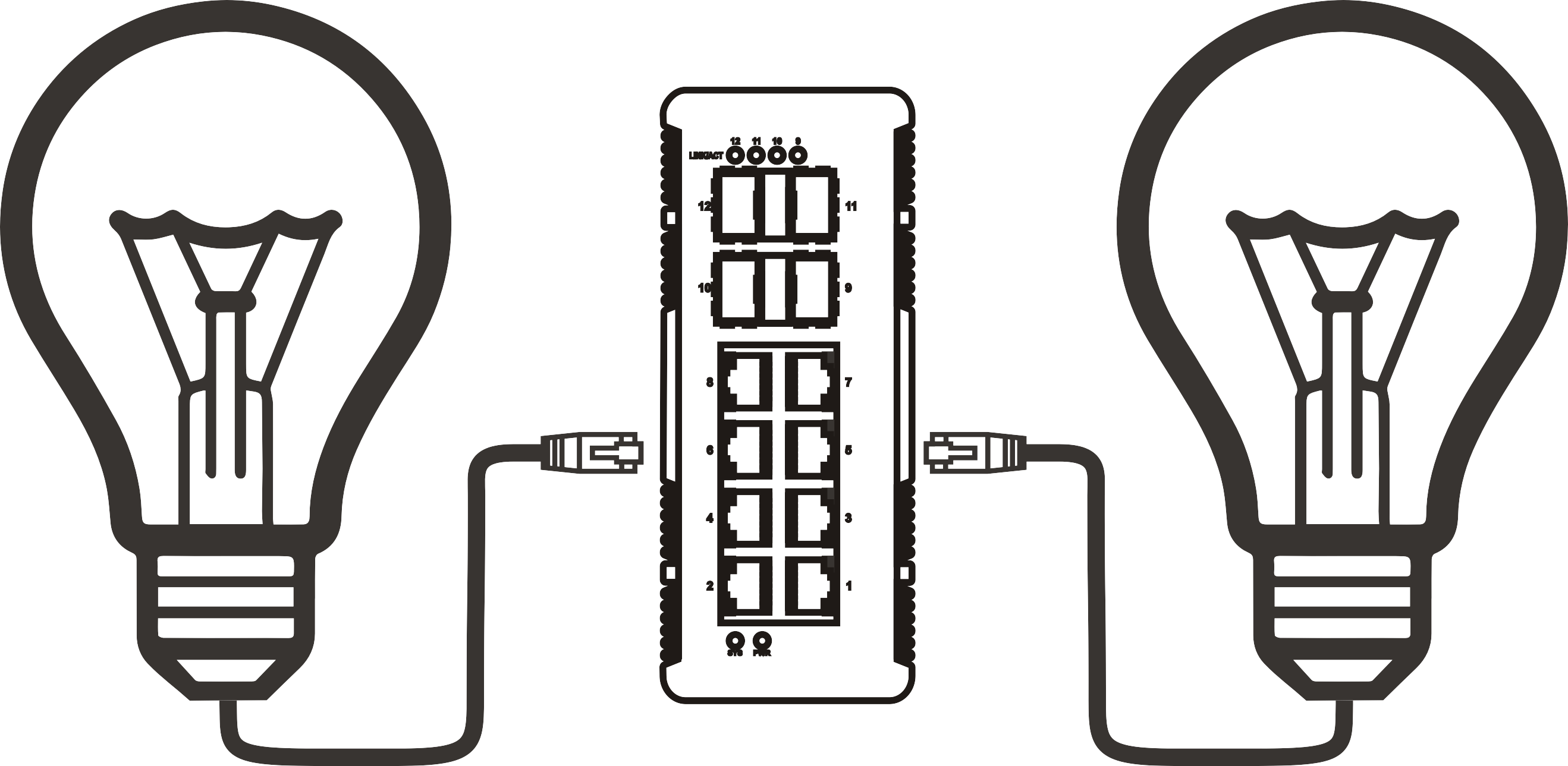
An industrial PoE ethernet switch is a ruggedised network device that simultaneously transmits data and electrical power over a single Ethernet cable, engineered to operate reliably in harsh industrial environments including extreme temperatures, vibration, and electromagnetic interference. Unlike commercial-grade alternatives, these switches are built to satisfy the demands of factories, mining operations, water treatment facilities, and transportation infrastructure — environments where network downtime translates directly into lost production.
Industrial PoE ethernet switch is defined as: a specialised switching device compliant with IEEE 802.3af, 802.3at, or 802.3bt power delivery standards, housed in a hardened enclosure with extended operating temperature ranges (typically −40 °C to +75 °C), designed for DIN rail or rack mounting inside industrial control cabinets.
Why do so many engineers underestimate the difference between a commercial switch and a true industrial-grade unit? The answer lies in what you cannot see on a datasheet. Real-world testing reveals that commercial switches begin to fail at ambient temperatures above 50 °C — a threshold regularly exceeded inside Australian mine-site control rooms during summer. Industrial models, by contrast, are rated for continuous operation across far wider thermal envelopes and carry MTBF ratings that typically exceed 200,000 hours.
As a central hub within any industrial network infrastructure, the switch connects powered devices (PDs) — IP cameras, wireless access points, VoIP handsets, and industrial IoT sensors — without requiring separate power cabling. This dual-function capability is what makes the industrial PoE ethernet switch indispensable in modern automation deployments.
How does an industrial PoE switch differ from a commercial switch?
The distinction goes well beyond price. Industrial models incorporate fanless convection cooling (critical for dusty environments), hardened steel or aluminium enclosures, and support for 24V DC powered ethernet configurations common in PLC cabinets. Many carry compliance certifications relevant to Australian deployments: CE, FCC, UL 508, and in hazardous-area applications, ATEX or IECEx ratings. Commercial switches carry none of these.
What powered devices do industrial PoE switches typically support?
In practice, the most common powered devices include PTZ surveillance cameras (requiring up to 30W each), outdoor Wi-Fi access points for warehouse coverage, industrial VoIP terminals on factory floors, and edge computing nodes feeding SCADA systems. Each device class has different power requirements — a point we will address in detail in the next section.
PoE power standards explained: af, at, and bt
Selecting the correct PoE standard is arguably the single most consequential decision in the procurement process. Get it wrong, and powered devices will either fail to initialise or — worse — run at degraded performance during peak load. The three current standards define not just per-port output, but also cabling requirements and total switch power budgets.
Understanding the power over ethernet standard hierarchy is essential before specifying any switch. Here is a concise breakdown:
| Standard | Max per-port power | Typical use case | Cable requirement |
|---|---|---|---|
| IEEE 802.3af (PoE) | 15.4 W | IP phones, basic IP cameras | Cat 5e minimum |
| IEEE 802.3at (PoE+) | 30 W | PTZ cameras, dual-band APs | Cat 5e minimum |
| IEEE 802.3bt (PoE++) | Up to 90 W | Edge compute nodes, LED panels | Cat 6a recommended |
How to calculate total PoE power budget correctly
One of the most persistent industry misconceptions is that total PoE budget equals port count multiplied by maximum per-port wattage. It does not. A 24-port gigabit PoE industrial switch with a 30W-per-port rating may carry a total chassis budget of only 240 W — meaning that if all 24 ports attempt to deliver 30 W simultaneously, the switch will throttle or shed load. Always verify the total power budget (in watts) on the datasheet, not just the per-port maximum. According to recent 2026 procurement audits of Australian industrial sites, power budget miscalculation remains among the top three causes of PoE deployment failures.
When should you use a Power over Ethernet injector instead?
A Power over Ethernet injector is the right tool when you need to add PoE capability to a single port on an existing non-PoE switch — for example, to power a remotely mounted IP camera on an existing unmanaged PoE switch infrastructure without replacing the entire unit. Injectors are cost-effective for low-port-count additions, but they add a physical failure point and should not substitute for a correctly specified switch in new installations.
Managed vs unmanaged: which configuration suits your site?
The choice between a managed industrial ethernet switch and an unmanaged PoE switch is not simply a cost decision — it is a network resilience and operational visibility decision. Managed switches expose the full stack of configuration options: VLAN segmentation, QoS prioritisation for SCADA traffic, SNMP monitoring, and ring redundancy protocols such as RSTP and ERPS. Unmanaged units offer plug-and-play simplicity and lower upfront cost.
When is a managed switch necessary?
Managed switches become essential the moment network segmentation, traffic prioritisation, or redundancy are required. Consider a SCADA network switch feeding both process control PLCs and IP security cameras on the same physical infrastructure: without VLAN isolation, a broadcast storm from the camera subnet can flood PLC communication buffers. Real-world case experience from Australian water utility deployments confirms that unmanaged switches in mixed-traffic environments produce intermittent PLC timeouts that are notoriously difficult to diagnose.
Where do unmanaged switches still make sense?
Of course, there are situations where an unmanaged PoE switch is entirely appropriate. Small, isolated device clusters — such as three IP cameras feeding a local NVR in a single zone — benefit from the reduced complexity and lower mean-time-to-replace of an unmanaged unit. The key is network isolation: if the unmanaged switch sits behind a managed uplink switch, the risk profile changes considerably.
"The industrial network switch market is seeing a decisive shift toward managed PoE platforms as industrial IoT deployments scale — by 2026, over 60% of new industrial switch purchases in Asia-Pacific include management capability, up from 41% in 2021." — MarketsandMarkets Industrial Networking Report, 2026 data
Environmental ratings and ruggedisation: what really matters
Environmental ratings are where industrial hardware earns its premium. A harsh environment network switch must withstand not only temperature extremes but also humidity, vibration, shock, and electromagnetic interference — often simultaneously. Understanding these ratings is non-negotiable for procurement engineers specifying equipment for Australian mining, agriculture, or transport infrastructure.
IP ratings decoded: IP30, IP40, and IP67 compared
The IP (Ingress Protection) rating system uses two digits: the first for solid particle protection, the second for liquid ingress. An IP40 rated ethernet switch — the most common classification for DIN rail PoE switch units installed inside sealed enclosures — protects against solid objects larger than 1 mm but offers no water resistance. IP67 units are fully dust-tight and can withstand temporary immersion to 1 m, making them appropriate for outdoor washdown areas in food processing. Think of IP ratings like sunscreen SPF values: the number matters enormously, and choosing a lower rating to save cost is a risk that compounds over time.
Wide temperature range: why −40 °C to +75 °C is the industrial benchmark
A wide temperature range network switch is rated to operate across −40 °C to +75 °C without performance degradation. This specification matters in two directions: Australian outdoor enclosures in Far North Queensland can reach internal ambient temperatures of 65 °C on a summer afternoon, while refrigerated warehouse control rooms in Melbourne may see −10 °C during plant overhaul periods when HVAC is offline. Commercial switches specify 0 °C to 40 °C. The engineering margin between these two profiles is not trivial — it is the difference between a network that stays up and one that drops out at the worst possible moment.
Key specifications comparison: top models available in Australia
When it comes to selecting a specific unit, specification depth is what separates confident procurement from guesswork. The following table compares representative product tiers available through Australian industrial distributors in 2026. Brand names reflect categories rather than specific vendor endorsements; always verify local stock availability and lead times with your distributor.
| Feature | Entry-level unmanaged | Mid-tier managed | High-end managed |
|---|---|---|---|
| PoE standard | IEEE 802.3af/at | IEEE 802.3at (PoE+) | IEEE 802.3bt (PoE++) |
| Ports | 8× GE PoE | 16× GE PoE + 2× SFP | 24× GE PoE + 4× SFP+ |
| Total PoE budget | 120 W | 240 W | 740 W |
| Operating temp | −10 °C to +60 °C | −40 °C to +75 °C | −40 °C to +75 °C |
| Mounting | DIN rail | DIN rail / wall | Rack / DIN rail |
| Power input | 24–48 V DC | 24–48 V DC / 100–240 V AC | Dual 100–240 V AC redundant |
| IP rating | IP30 | IP40 | IP40 (IP67 optional) |
| Redundancy protocol | None | RSTP / MSTP | ERPS / RSTP / HSR |
| Approx. AUD price range | $350 – $650 | $900 – $1,800 | $2,500 – $6,000+ |
Fiber optic uplink: when copper is not enough
A fiber optic industrial switch — specifically one with SFP or SFP+ uplink slots — is the right choice when your network spans more than 100 m between switches, when the cable path crosses areas of high electromagnetic interference (such as VFD motor installations), or when electrical isolation between buildings is required. In Australian industrial automation networking contexts, fiber uplinks are standard practice in any cross-building infrastructure. SFP modules support single-mode runs up to 80 km and multimode runs up to 550 m, giving system designers considerable flexibility.
DIN rail mounting: why it matters for Australian control cabinets
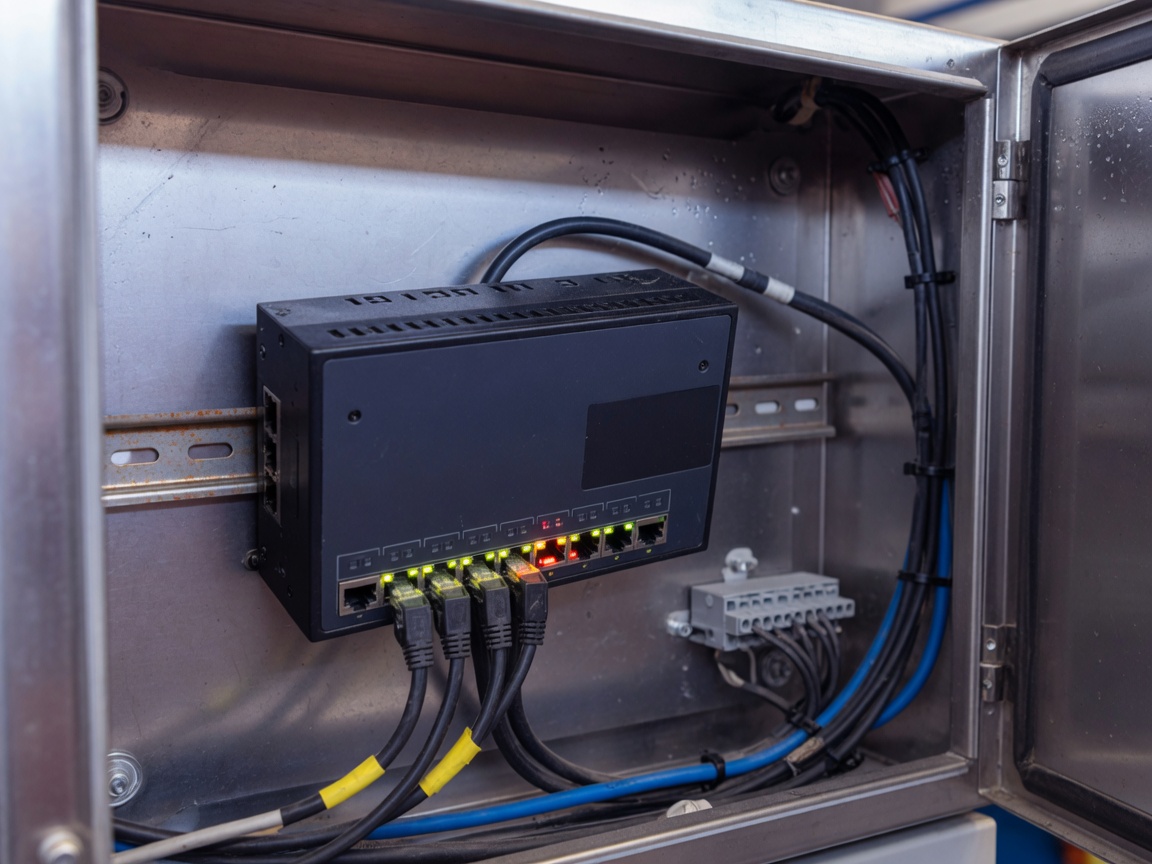
The DIN rail PoE switch format is the de facto standard for installation inside IEC 60715-compliant control panels — which represent the overwhelming majority of new Australian industrial installations. DIN rail mounting allows the switch to share a panel with PLCs, circuit breakers, and terminal blocks without requiring a separate rack enclosure. The 24V DC powered ethernet capability common in DIN rail units aligns directly with the 24 V DC bus used in most Siemens, Allen-Bradley, and Schneider PLC panels deployed across Australian manufacturing sites.
Step-by-step selection process for industrial deployments
A structured selection process eliminates the two most common procurement errors: under-specifying environmental ratings and miscalculating power budgets. The following process reflects actual methodology used in Australian industrial automation networking projects.
- Define your powered device inventory. List every device the switch will power, its PoE class, and its typical wattage draw. Sum the realistic simultaneous load — not the theoretical maximum — to determine your required PoE budget.
- Assess the physical environment. Document ambient temperature range (min/max), presence of dust or moisture, vibration levels (IEC 60068-2-6 class), and EMI sources. This determines your required IP rating and operating temperature specification.
- Determine management requirements. If the switch feeds a SCADA network or mixed-traffic environment, specify a managed industrial ethernet switch with VLAN and QoS capability. For isolated single-function clusters, an unmanaged unit may suffice.
- Select mounting format and power input. Confirm whether the installation is DIN rail inside a control cabinet (24 V DC input preferred) or rack-mounted in a communications room (AC input with redundant PSU).
- Specify uplink media type. Confirm whether copper Cat 6a uplinks are sufficient or whether fiber optic industrial switch uplinks are required for distance, isolation, or EMI immunity.
- Verify Australian certifications and local stock. Confirm CE, UL 508, and any applicable AS/NZS certifications. Verify that the model is held in local Australian distributor stock — lead times on imported industrial hardware can exceed 12 weeks from some regions.
- Request a reference site or application note. Reputable vendors will supply case studies from comparable Australian industrial automation networking deployments. This is your final validation step before purchase order.
How to verify redundancy protocol compatibility
Network redundancy is non-negotiable in any process where a network outage triggers a production halt. RSTP (Rapid Spanning Tree Protocol) provides sub-second failover in ring topologies, while ERPS (Ethernet Ring Protection Switching, ITU-T G.8032) achieves sub-50 ms recovery — meaningful in motion control applications. Before finalising a managed switch, confirm that its redundancy protocol matches the protocol already running on adjacent switches in the ring. Mixed-protocol rings can and do fail catastrophically during failover events.
What certifications should Australian buyers prioritise?
For most Australian industrial environments, the baseline certification set is CE marking (EMC and LVD compliance), UL 508 (industrial control equipment), and IEC 61000-4 series (EMC immunity). For oil and gas or grain-handling sites with classified hazardous areas, IECEx certification is mandatory under Australian WHS legislation. The SCADA network switch segment increasingly demands IEC 62443 cybersecurity compliance — a standard that is moving from optional to contractually required in critical infrastructure projects across Australia.
2026 trends shaping industrial network infrastructure
The industrial switch market is not static. Two forces are redefining what buyers should look for — and what vendors are bringing to market — in 2026.
TSN integration: deterministic networking meets PoE
Time-Sensitive Networking (TSN, IEEE 802.1Qbv) is moving from pilot to production in Australian advanced manufacturing. TSN-capable switches enable deterministic, low-latency data transmission — think microsecond-level timing for robotic motion control — over the same Ethernet infrastructure that carries standard IP traffic. The convergence of TSN with PoE delivery means that a single industrial PoE ethernet switch can now power and precisely time-synchronise an entire robotic cell. This is not a future concept: Australian automotive and electronics manufacturers are actively specifying TSN-capable switches in 2026 capital projects.
Edge AI and zero-touch provisioning
The second major shift is the embedding of AI-driven traffic analytics directly into the switch firmware. Rather than exporting raw telemetry to a central SIEM platform, next-generation industrial IoT connectivity switches analyse traffic patterns locally, flagging anomalies — a sudden surge in broadcast traffic from a compromised IP camera, for example — before they propagate. Paired with Zero Touch Provisioning (ZTP), these switches can self-configure upon connection to the management network, dramatically reducing commissioning time on multi-site Australian rollouts. According to 2026 data from the Asia-Pacific industrial networking sector, ZTP-capable switches now account for approximately 28% of new managed switch purchases across the region.
For a deeper understanding of how switching technology underpins these architectures, the ethernet switch overview on Wikipedia provides a useful foundational reference alongside this guide.
Choosing the right industrial PoE ethernet switch in 2026 means looking beyond current requirements. A switch specified purely for today's device count and power budget may be obsolete within three years if it cannot accommodate TSN, higher PoE++ wattage, or cybersecurity compliance extensions. Build in headroom — both in port count and power budget — and favour platforms with active firmware development roadmaps from vendors with established Australian support channels.
Frequently asked questions
Common questions answered
Q: What is the difference between an industrial PoE ethernet switch and a commercial PoE switch?
A: Industrial models are engineered for extended temperature ranges (typically −40 °C to +75 °C), fanless operation, DIN rail mounting, EMI hardening, and MTBF ratings above 200,000 hours. Commercial switches operate within 0–40 °C and are not designed for vibration, dust, or electrical noise exposure common in manufacturing and mining environments.
Q: How do I calculate the PoE power budget I need for my industrial site?
A: List each powered device and its realistic wattage draw (not the IEEE maximum). Sum the simultaneous load across all active ports. Add a 20–25% safety margin and compare this figure against the switch's total chassis PoE budget — not the per-port rating. Verify both figures on the vendor datasheet before purchasing.
Q: Is a managed industrial ethernet switch always better than an unmanaged one?
A: Not always. Unmanaged switches are appropriate for small, isolated device clusters with homogeneous traffic. Managed switches are essential when VLAN segmentation, QoS, SNMP monitoring, or ring redundancy protocols (RSTP, ERPS) are required — which applies to the majority of SCADA and industrial automation networking environments.
Q: What IP rating do I need for an outdoor Australian mining or agricultural installation?
A: For switches inside a sealed outdoor enclosure, IP40 is typically sufficient. For direct exposure to rain, dust storms, or washdown procedures, specify IP65 or IP67. In underground mining applications with water ingress risk, IP67 or higher is the standard minimum. Always confirm the enclosure's IP rating separately from the switch's own rating.
Q: What certifications should I require for an industrial PoE ethernet switch in Australia?
A: Baseline requirements are CE marking and UL 508. For hazardous-area classifications under Australian WHS law, IECEx certification is mandatory. Critical infrastructure projects increasingly require IEC 62443 cybersecurity compliance. Always verify that the specific model — not just the product family — carries the certification, and request the certification document from the distributor.
More News



Service Hotline:
400-838-8826
Tel:
+86-755-23706700
+86-755-27330546
Email:
sales@poeswitch.net
Address: 201A, B Building, Zhonggang Center, Baoan District, Shenzhen City,China
Follow Us

Copyright © 2025 Shenzhen Hi-Net Technology Co., Ltd All Rights reserved.