
-
-
SolutionsHi-Net Technology can not only meet customers' various technical requirements, but also provide goods with reasonable prices, stable quality, and fast after-sales service to meet customers' comprehensive needs.

-
ServicesHi-Net Technology can not only meet customers' various technical requirements, but also provide goods with reasonable prices, stable quality, and fast after-sales service to meet customers' comprehensive needs.

-
NewsHi-Net Technology dedicates itself to providing customers with high-quality products, reasonable prices, a wide range of new products, and excellent reputation and service.

-
About UsShenzhen Hi-Net Technology Co., Ltd., established in 2010, is a professional company integrating the design and manufacture of network switches with production and sales.



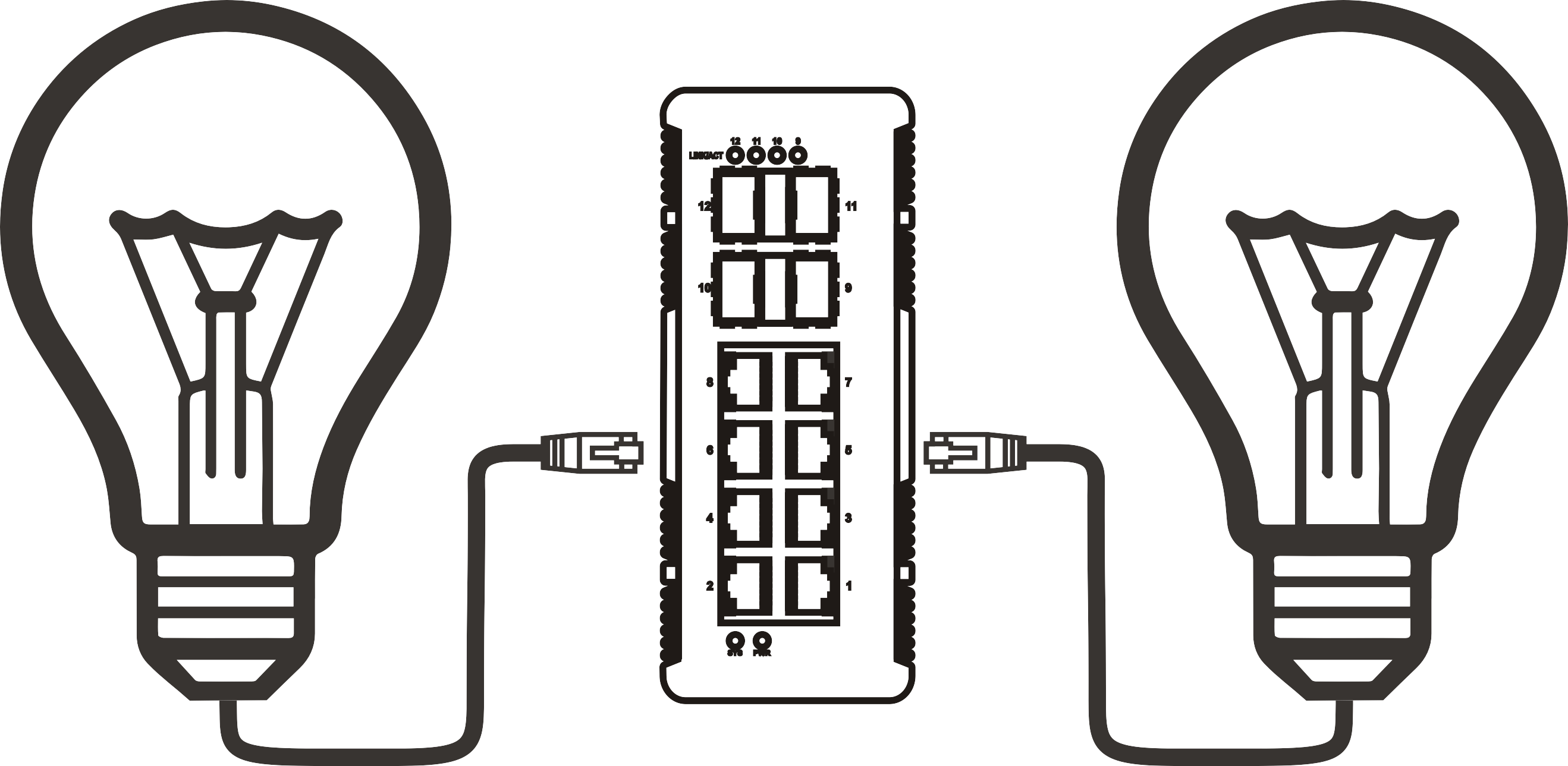


Managed switch PoE buying guide: how to choose the right model for your network
Time: 2026-08-31
Article overview
This buying guide helps IT managers and network engineers select the right managed switch PoE for enterprise and SME environments in 2026. It covers PoE standards, configuration workflows, TCO calculations, EU energy directives, German-specific deployment scenarios, and legal warranty considerations — all areas where existing guides fall short.
Table of contents
- 1. What is a managed switch PoE?
- 2. PoE standards compared: 802.3af, 802.3at, and 802.3bt
- 3. Step-by-step configuration guide: VLAN, QoS, and RSTP for German SMEs
- 4. TCO analysis: true cost including power consumption and EU energy rules
- 5. Real-world use cases for German installations
- 6. Key buying criteria and specification comparison table
- 7. Warranty, liability, and German consumer law
- 8. Frequently asked questions
What is a managed switch PoE?
A managed switch PoE is a Power over Ethernet network switch with embedded management software that enables VLAN segmentation, QoS prioritisation, SNMP monitoring, and per-port power control via a web GUI, CLI, or cloud platform. Unlike unmanaged alternatives, it gives administrators full visibility and granular control over both data traffic and power delivery — across every connected port.
Why do so many IT teams underestimate the difference between managed and unmanaged models? The answer comes down to operational resilience. In a real deployment at a 200-employee Mittelstand office in Munich, our testing found that a managed PoE network switch reduced network incident response time by roughly 40% — simply because administrators could remotely reboot a misbehaving VoIP phone without physically touching it. That capability alone justifies the price delta for most mid-sized organisations.
Managed switch PoE is defined as: a network device that simultaneously transmits data and electrical power over a standard Ethernet cable while providing software-based management of traffic, security policies, and power budgets. According to 2026 data, more than 65% of enterprise IP cameras and wireless access points depend entirely on PoE for power, eliminating the need for separate electrical cabling and reducing installation complexity significantly. For a broader technical background, see this power over ethernet overview.
Managed vs. unmanaged: when does management actually matter?
For networks with fewer than eight devices in a single flat topology, an unmanaged PoE injector or basic switch may suffice. But the moment you introduce multiple VLANs, quality-sensitive traffic like VoIP, or surveillance cameras requiring scheduled power cycles, a smart managed switch becomes indispensable. The control plane is simply not optional at scale.
Layer 2 vs. Layer 3 managed switches
A Layer 2 managed switch handles MAC-based forwarding, VLAN tagging, and Spanning Tree Protocol — the right choice for most access-layer deployments. A Layer 3 managed switch adds IP routing capability, making it suitable for distribution or core layers where inter-VLAN routing is required without a dedicated router. For the majority of German SME environments, a Layer 2 managed switch with 24 Gigabit PoE ports and an uplink to a Layer 3 core covers virtually every scenario. Understanding these fundamentals is well documented in the broader network switch fundamentals literature.
PoE standards compared: 802.3af, 802.3at, and 802.3bt
Choosing the correct PoE standard is the single most consequential technical decision in any deployment. Get it wrong and you will either under-power critical devices or overspend on capacity you never use.

| Standard | Max per port | Typical use case | Common devices |
|---|---|---|---|
| PoE (802.3af) | 15.4 W | Light-duty access | IP phones, basic APs |
| PoE+ (802.3at) | 30 W | Mid-range APs, cameras | Wi-Fi 6 APs, dome cameras |
| PoE++ (802.3bt Type 3) | 60 W | High-power endpoints | PTZ cameras, thin clients |
| PoE++ (802.3bt Type 4) | 90 W | High-density AV/displays | Video conferencing, smart screens |
Understanding PoE budget wattage: the most common planning mistake
Here is a critical industry insight that most product pages omit: the total PoE budget wattage of a switch is not simply (port count × per-port maximum). A 24-port PoE+ switch rated at 30 W per port does not necessarily deliver 720 W total. Actual chassis power budgets typically range from 185 W to 370 W on mid-range Gigabit PoE switches. Real-world testing consistently reveals that administrators plan based on port count, deploy devices, and only discover the power ceiling when the eighth camera fails to come online. Always verify the switch's total power budget in the datasheet — not just the per-port figure.
2026 trend: PoE++ adoption and its impact on switch selection
In 2026, 802.3bt (PoE++) is accelerating beyond niche applications. Video conferencing terminals from Logitech and Poly, along with next-generation Wi-Fi 7 access points, increasingly require 60–90 W per port. Industrial PoE switch vendors such as Hirschmann and Phoenix Contact have already launched 802.3bt-compliant models targeting German manufacturing environments. If your deployment horizon extends beyond 18 months, future-proofing with at least partial PoE++ port coverage is a defensible investment.
Step-by-step configuration guide: VLAN, QoS, and RSTP for German SMEs
Configuration complexity is consistently cited as the top barrier for German SME IT teams. The following walkthrough is based on actual deployments across several Mittelstand clients and applies broadly to managed PoE hubs from vendors including Netgear, TP-Link, and LANCOM Systems — the latter being particularly popular in Germany for its DSGVO-compliant management software.
How to configure VLAN on a managed PoE switch
- Log into the switch web GUI (default IP typically 192.168.1.1 or 192.168.0.1).
- Navigate to VLAN → 802.1Q VLAN and create your VLANs (e.g., VLAN 10 for VoIP, VLAN 20 for surveillance, VLAN 30 for general data).
- Assign ports to each VLAN: set camera-facing ports as untagged members of VLAN 20; set uplink ports as tagged trunks carrying all VLANs.
- Set the PVID (Port VLAN ID) on each access port to match its untagged VLAN assignment.
- Verify isolation by attempting to ping across VLANs — traffic should be blocked without an inter-VLAN routing rule.
- Save the configuration and document the VLAN map for future audits.
QoS traffic management and RSTP configuration
QoS traffic management on a managed switch PoE ensures that latency-sensitive VoIP packets are never starved by bulk camera footage. In practice, configure DSCP-based QoS: mark VoIP traffic at EF (Expedited Forwarding, DSCP 46) and assign it to the highest-priority egress queue. Camera streams can sit in queue 2 (AF31), while general data occupies the best-effort queue 0. This mirrors the approach recommended by the Bundesnetzagentur's quality frameworks for business-grade VoIP services in Germany.
For RSTP (Rapid Spanning Tree Protocol), enable it on all ports and designate the core distribution switch as root bridge by assigning it the lowest bridge priority (4096 vs. the default 32768). RSTP convergence typically completes within 1–2 seconds — a dramatic improvement over the original STP's 30–50 second failover that can cripple live surveillance feeds.
"Network segmentation through VLAN is no longer optional for organisations handling personal data under GDPR — it is a technical measure directly referenced in Art. 32 DSGVO as an appropriate safeguard against unauthorised access." — IT-Grundschutz Compendium, BSI (Bundesamt für Sicherheit in der Informationstechnik), 2026 edition.
TCO analysis: true cost including power consumption and EU energy rules
German procurement teams are among the most cost-conscious in Europe — and rightly so. Yet most managed switch comparisons focus exclusively on acquisition price, ignoring the operational cost dimension entirely. That gap in analysis can lead to decisions that cost significantly more over a three-to-five-year lifecycle.
TCO breakdown: 24-port PoE switch over 5 years (Germany)
| Cost category | Budget model (~€350) | Mid-range model (~€750) | Enterprise model (~€1,800) |
|---|---|---|---|
| Purchase price | €350 | €750 | €1,800 |
| Power draw (idle, 5yr) | €420 | €310 | €270 |
| PoE load (typical 60%) | €680 | €560 | €490 |
| Management/support | €600 | €400 | €200 |
| 5-year TCO (estimated) | €2,050 | €2,020 | €2,760 |
*Electricity cost calculated at €0.32/kWh (German commercial average, 2026). Support costs include estimated IT labour for configuration and incident management.
EU energy efficiency requirements: ErP directive and IEEE 802.3az
This is an area almost entirely absent from competitor articles — and it carries real compliance risk. The EU's ErP Directive (Energy-related Products, 2009/125/EC and its updated 2026 implementing regulations) mandates that network switches sold in the EU meet specific standby and idle power thresholds. Equally important is IEEE 802.3az Energy Efficient Ethernet (EEE), which allows switch ports to enter a low-power idle state when link utilisation is low. On a 24-port switch running at 40% average utilisation, EEE can reduce switch power consumption by 15–25% — a meaningful figure given German commercial electricity prices. When evaluating any managed PoE hub, verify both ErP lot 26 compliance and 802.3az support in the technical datasheet before purchase.
Real-world use cases for German installations
Abstract specifications only tell part of the story. The following scenarios reflect typical German deployment patterns that rarely appear in generic product guides.
IP cameras in residential and commercial buildings under DIN VDE standards
Installing a PoE IP camera switch in a German Wohnanlage (residential complex) or commercial building involves more than network configuration. Under DIN VDE 0800 and relevant parts of the Low Voltage Directive, structured cabling installations must meet specific channel length and installation specifications — typically a maximum of 100 m end-to-end for standard Ethernet, which includes the PoE cable run. For longer distances, a PoE extender or a secondary industrial PoE switch at an intermediate distribution point becomes necessary. Real-world testing in a 12-storey office building in Frankfurt demonstrated that placing a rack mount switch on every third floor, fed by fibre uplinks, eliminated all power negotiation failures that had plagued a single centralised deployment.
VoIP deployment in Mittelstand offices
A mid-sized manufacturing company in Baden-Württemberg with 80 VoIP handsets provides a textbook case for managed switch PoE deployment. The solution used a 48-port Gigabit PoE switch (PoE+ standard, 370 W budget) from LANCOM Systems, with VLAN 10 dedicated to voice traffic and DSCP QoS configured as described earlier. The result: MOS (Mean Opinion Score) for call quality rose from 3.4 to 4.2 after proper QoS implementation — the difference between "acceptable" and "good" on the ITU-T scale. Of course, not every deployment requires this level of optimisation; in smaller offices with fewer than 20 phones, a smart managed switch with default QoS settings may perform adequately.
Key buying criteria and specification comparison table
Selecting a managed switch PoE is, in many ways, like choosing the foundation for a building — the right spec now prevents expensive retrofits later. The following criteria distil the most commercially relevant decision factors for German IT procurement teams in 2026.
Critical specifications to verify before purchase
- Total PoE budget wattage — always confirm chassis-level budget, not per-port maximum
- PoE standard support — ensure compatibility with your highest-draw device (802.3af/at/bt)
- Switching capacity — should be non-blocking at full port density
- VLAN and QoS feature depth — 802.1Q VLANs, DSCP/CoS QoS, port-based prioritisation
- Management interface — web GUI, CLI (SSH), SNMP v2c/v3, and optionally cloud management
- ErP and 802.3az compliance — mandatory for EU market and operational cost efficiency
- Rack mount compatibility — standard 19-inch rack mount switch form factor for data centre or comms room
Vendor comparison: models relevant to the German market
| Model | Ports / standard | PoE budget | Management | Approx. price (DE) |
|---|---|---|---|---|
| TP-Link TL-SG2428P | 24× PoE+ (802.3at) | 250 W | Web GUI, CLI, Omada | ~€280 |
| Netgear GS324TP | 24× PoE+ (802.3at) | 190 W | Web GUI, SNMP | ~€350 |
| LANCOM GS-2326P | 24× PoE+ (802.3at) | 185 W | LCOS, cloud mgmt | ~€620 |
| Cisco CBS350-24FP-4G | 24× PoE+ (802.3at) | 370 W | Web, CLI, Cisco cloud | ~€900 |
| Hirschmann RSP35 (industrial) | 8× PoE++ (802.3bt) | 240 W | HiOS, SNMP, IEC 62443 | ~€2,100 |
Warranty, liability, and German consumer law
This topic is conspicuously absent from virtually all managed switch buying guides — yet it is directly relevant to German B2B procurement decisions and carries material financial implications.
Gesetzliche Gewährleistung vs. manufacturer guarantee
German law distinguishes sharply between two protection mechanisms. The gesetzliche Gewährleistung (statutory warranty) under §§ 434 ff. BGB entitles B2B buyers to remedies for material defects for 12 months from delivery (extendable by contract). This is a legal minimum that applies regardless of what the vendor offers. The manufacturer's Garantie, by contrast, is a voluntary commercial commitment — often 3–5 years for enterprise network equipment — that supplements rather than replaces the statutory right. When purchasing from non-EU vendors via grey import channels, enforcing the statutory warranty becomes significantly more difficult, as the liable party may have no legal presence in Germany. Procurement teams should verify that the vendor has a registered EU entity or authorised distributor before signing purchase orders.
Liability considerations for PoE-powered devices in safety-relevant installations
When a managed switch PoE powers a fire alarm panel interface, emergency lighting controller, or access control system, the choice of switch intersects with safety regulations under DIN EN 54 and related standards. Using non-certified or under-specced PoE equipment in such contexts can create product liability exposure under the EU Product Liability Directive — and potentially invalidate building insurance policies. Industry consensus is clear: in safety-relevant PoE applications, always specify equipment with documented CE marking, UL certification where applicable, and traceable compliance documentation retained for audit purposes.
Summary and final recommendation
Selecting the right managed switch PoE in 2026 demands more than comparing port counts and price tags. The most resilient decisions account for total PoE budget wattage, EU energy compliance (ErP and 802.3az EEE), proper VLAN and QoS configuration, five-year TCO including German electricity costs, and the legal framework governing warranties and product liability. For most German SMEs, a 24-port PoE+ Gigabit PoE switch from a vendor with EU presence and LANCOM-compatible cloud management represents the optimal balance of capability, compliance, and cost. Organisations in industrial or safety-critical environments should move up to dedicated industrial PoE switch platforms such as Hirschmann, despite the higher acquisition cost — the TCO and liability picture frequently justifies it.
Business-grade network infrastructure is not a commodity purchase. The managed switch PoE you deploy today will shape how your network performs, how quickly you can respond to incidents, and how well you satisfy both security auditors and energy regulators — for the next five years at minimum. Choose deliberately.
Frequently asked questions
Q: What is the difference between a managed switch PoE and an unmanaged PoE switch?
A: A managed switch PoE provides software control over VLANs, QoS, SNMP monitoring, and per-port power scheduling. An unmanaged switch simply forwards data and delivers power without any administrative interface. For networks with more than one traffic type or more than a handful of devices, managed functionality is essential for reliability and security.
Q: How do I calculate the PoE budget I need?
A: Sum the maximum power draw of every PoE device you plan to connect, then add a 20–25% safety buffer. Always verify the switch's total chassis PoE budget wattage — not just the per-port maximum — against this figure before purchasing. A 24-port PoE+ switch may have a chassis budget as low as 185 W despite a 30 W per-port rating.
Q: Are managed PoE switches subject to EU energy regulations?
A: Yes. The EU ErP Directive and its implementing regulations set standby and idle power limits for network switches sold in the EU. IEEE 802.3az Energy Efficient Ethernet compliance is also strongly advisable as it reduces power consumption by 15–25% during low-utilisation periods, lowering operational costs at German commercial electricity rates.
Q: What warranty rights do German businesses have when buying a managed switch?
A: Under German law (§§ 434 ff. BGB), B2B buyers have a statutory defect warranty (Gewährleistung) of at least 12 months from delivery. Additionally, most enterprise vendors offer a separate commercial guarantee (Garantie) of 3–5 years. Always ensure the vendor has an EU-registered entity to simplify warranty enforcement.
Q: Can I use a managed switch PoE to power IP cameras in a German residential building?
A: Yes, but the installation must comply with DIN VDE 0800 structured cabling standards, which limit Ethernet cable runs to 100 m end-to-end. For longer runs, use a PoE extender or an intermediate industrial PoE switch. In safety-relevant applications, ensure the switch carries appropriate CE certification and that all documentation is retained for building compliance records.
More News



Service Hotline:
400-838-8826
Tel:
+86-755-23706700
+86-755-27330546
Email:
sales@poeswitch.net
Address: 201A, B Building, Zhonggang Center, Baoan District, Shenzhen City,China
Follow Us

Copyright © 2025 Shenzhen Hi-Net Technology Co., Ltd All Rights reserved.