
-
-
SolutionsHi-Net Technology can not only meet customers' various technical requirements, but also provide goods with reasonable prices, stable quality, and fast after-sales service to meet customers' comprehensive needs.

-
ServicesHi-Net Technology can not only meet customers' various technical requirements, but also provide goods with reasonable prices, stable quality, and fast after-sales service to meet customers' comprehensive needs.

-
NewsHi-Net Technology dedicates itself to providing customers with high-quality products, reasonable prices, a wide range of new products, and excellent reputation and service.

-
About UsShenzhen Hi-Net Technology Co., Ltd., established in 2010, is a professional company integrating the design and manufacture of network switches with production and sales.



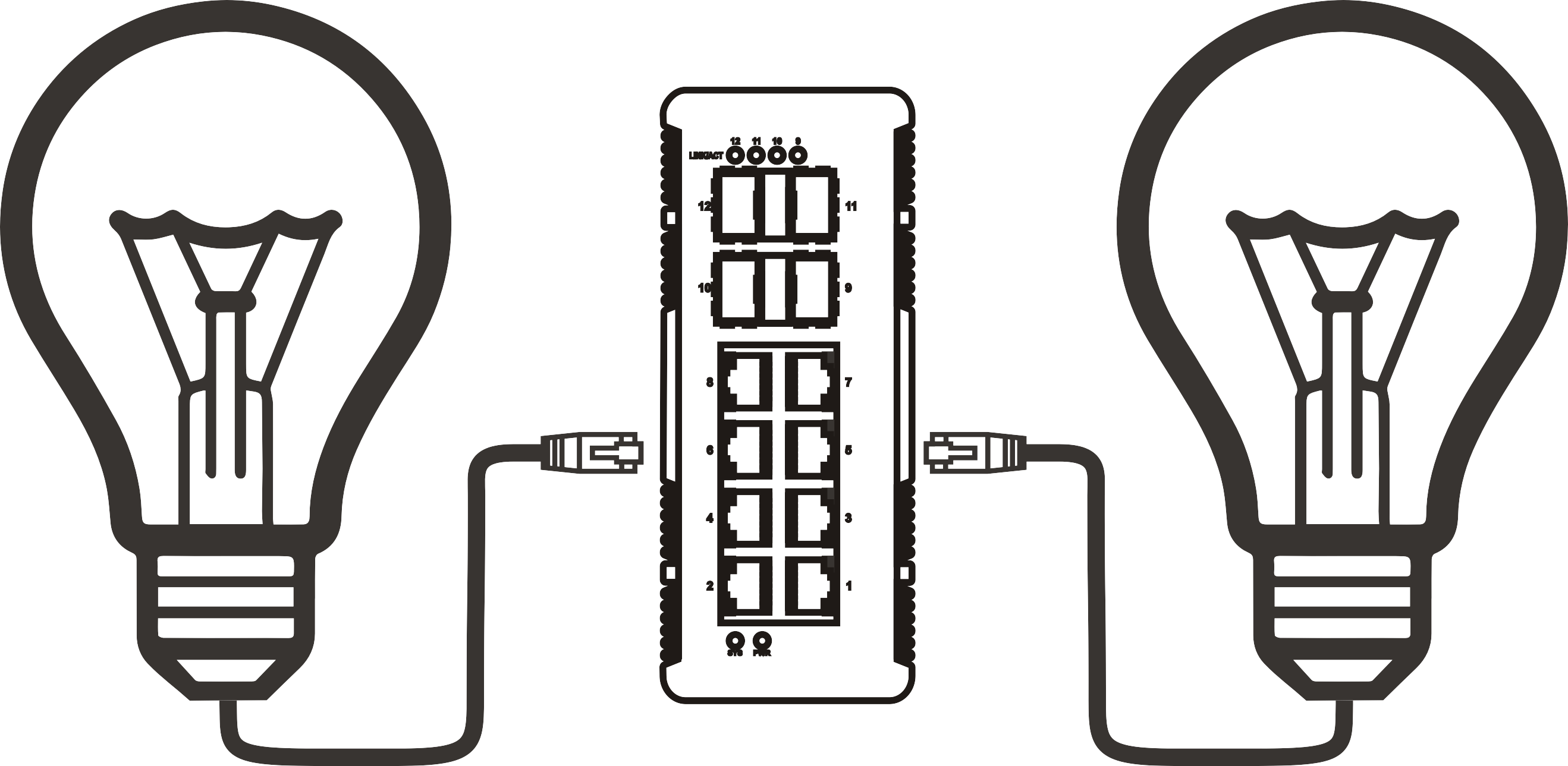


PoE switch buying guide: how to choose the right model for your network
Time: 2026-08-31
Article overview
This guide explains what a poe-switch is, how the three main IEEE standards differ, how to size your power budget, and how to evaluate total operating costs using 2026 German electricity prices. It includes a retailer comparison and three deployment scenarios relevant to the German market.
Table of contents
- 1. What is a poe-switch and why it matters in 2026
- 2. PoE standards compared: 802.3af vs. 802.3at vs. 802.3bt
- 3. Managed vs. unmanaged PoE network switch: which do you need?
- 4. How to calculate your power budget correctly
- 5. Total cost of ownership at German electricity rates
- 6. German retailer comparison and sourcing guide
- 7. Real-world deployment scenarios for the German market
- 8. Frequently asked questions
What is a poe-switch and why it matters in 2026
A poe-switch is a network switch with power delivery capability built into its Ethernet ports, governed by IEEE 802.3 standards, capable of sourcing between 15.4 W and 90 W per port — transmitting both data and DC power over a single standard Cat5e or Cat6 cable simultaneously, with no separate power adapter required at the endpoint.
That single capability changes the economics of network deployments dramatically. Traditional installations require an electrician to run a 230 V circuit to every camera, access point, or VoIP phone location. With a PoE network switch, you need only the data cable. Installation costs drop, cabling complexity shrinks, and relocating a device takes minutes rather than hours.
Why does this matter more in 2026 than ever before? The answer lies in density. According to recent industry research, PoE-powered devices now account for more than 40 % of newly deployed enterprise network endpoints globally. WiFi 7 access points, smart LED luminaires, building automation sensors, and high-resolution PTZ cameras all draw more power than earlier generations — pushing demand firmly toward higher-wattage PoE++ (802.3bt) switches. The global PoE switch market was valued at approximately 2.7 billion USD in 2023 and is projected to exceed 5 billion USD by 2028, reflecting a compound annual growth rate of around 13 %.
The core value proposition for IT decision-makers
For an IT manager evaluating infrastructure spend, the poe-switch argument is straightforward: fewer cable runs, centralised power management, and remote reboot capability from a single management interface. When a camera freezes at 02:00 on a Saturday, a managed PoE switch lets you cycle power from your desk rather than dispatching a technician. That operational advantage alone justifies the marginal premium over standard switching hardware in most enterprise contexts.
Who should read this guide
This buying guide targets IT administrators and network engineers in German SMEs and mid-market enterprises who are in the evaluation phase — comparing models, verifying compliance, and building a business case. The advice here applies equally to greenfield deployments and to upgrades of existing switched infrastructure.
PoE standards compared: 802.3af vs. 802.3at vs. 802.3bt
The most important technical decision when selecting a poe-switch is matching the correct IEEE standard to the powered devices (PDs) in your environment. The three generations differ substantially in per-port power delivery, and mixing them incorrectly causes devices to either under-perform or fail to power on entirely.
Detailed standard comparison with device examples
| Standard | Max power at PSE port | Max power at PD | Typical devices (German market) |
|---|---|---|---|
| IEEE 802.3af | 15.4 W | 12.95 W | VoIP phones (Snom, Gigaset), fixed IP cameras (Hikvision DS-2CD1x), basic APs |
| IEEE 802.3at (PoE+) | 30 W | 25.5 W | PTZ cameras (Hikvision DS-2DE4), Ubiquiti UniFi AP U6 Pro, dual-radio APs |
| IEEE 802.3bt Type 3 (PoE++) | 60 W | 51 W | WiFi 7 APs (TP-Link EAP780), PoE LED drivers, thin clients |
| IEEE 802.3bt Type 4 (PoE++) | 90 W | 71.3 W | Video conferencing terminals (Poly Studio X70), industrial panels, smart building controllers |
A critical point that many procurement guides gloss over: per-port wattage figures are PSE (power sourcing equipment) ratings, not PD delivery ratings. Cable resistance causes losses of roughly 15–18 % across a 100-metre Cat5e run. At 802.3af's 15.4 W output, only about 12.95 W reaches the device. Plan accordingly.
"Mismatched PoE standards are the single most common cause of IP camera instability in new installations. Always verify the PD's power class before specifying the switch." — industry consensus among certified network engineers, supported by Cisco and HP Networking deployment documentation.
A note on proprietary PoE protocols
Some manufacturers — Hikvision being the most prominent example in the German security market — implement proprietary PoE protocols on their NVR-integrated switches. These are electrically incompatible with standard IEEE 802.3af/at devices. Connecting a non-Hikvision camera to a Hikvision proprietary PoE port, or vice versa, can result in no power delivery or, in rare cases, hardware damage. Always verify IEEE compliance before mixing vendor ecosystems. For mixed environments, an IEEE-compliant Gigabit PoE switch from a vendor like NETGEAR, TP-Link, or Zyxel is the safer choice.

Managed vs. unmanaged PoE network switch: which do you need?
The managed PoE switch versus unmanaged PoE switch decision is fundamentally a question of control granularity versus deployment simplicity. For most enterprise and SME environments in Germany, the answer increasingly favours managed — but there are legitimate use cases for unmanaged hardware.
Unmanaged PoE switch: plug-and-play simplicity
An unmanaged PoE switch requires zero configuration. It auto-negotiates PoE class with connected devices, forwards traffic by MAC address learning, and operates transparently. For a small retail branch with three IP cameras and one access point, this is entirely sufficient. Costs are lower — a quality 8-port unmanaged PoE switch starts at around 60–90 EUR at German retailers — and there is no configuration overhead.
The limitation is visibility. You have no per-port power consumption data, no ability to set VLAN segmentation, no QoS prioritisation, and no remote management. When something fails, diagnosis requires physical access.
Managed PoE switch: enterprise-grade control
A managed PoE switch adds a software layer that transforms the device from passive infrastructure into an active network management point. Key capabilities include:
- VLAN segmentation — isolate IP camera traffic from corporate LAN, a requirement in most German data protection (DSGVO) network designs
- QoS prioritisation — guarantee bandwidth and latency for VoIP traffic, preventing call quality degradation during peak network load
- Per-port PoE scheduling and power cycling — remotely reboot frozen devices, schedule power-off periods to reduce standby consumption
- SNMP/RMON monitoring — integrate with network management systems like PRTG Network Monitor, popular in German enterprise environments
- Spanning Tree Protocol (STP/RSTP) — prevent broadcast storms in loop-prone topologies
Of course, managed switches cost more and require initial configuration time. A 24-port PoE switch in managed form typically runs 300–700 EUR at mainstream German retailers, versus 150–250 EUR for an equivalent unmanaged model. For any deployment with more than 10 devices, segmentation requirements, or remote sites, the managed option pays for itself quickly.
How to calculate your power budget correctly
This is where many deployments fail. The total PoE power budget of a switch is not simply port count multiplied by per-port maximum wattage. The switch has a fixed power supply, and that budget is shared across all active PoE ports simultaneously. Exceeding it causes the switch to refuse power to lower-priority ports or to throttle delivery across all ports.
Step-by-step power budget calculation
- List every powered device and its maximum power draw (from the datasheet, not the PoE class maximum).
- Sum all device power draws to get the required PD-side wattage.
- Add 15–18 % cable loss to convert PD-side to PSE-side requirement.
- Add a 20 % headroom buffer — devices often spike above nominal draw during boot or peak activity.
- Compare against the switch's total PoE budget (listed in the spec sheet, e.g. "PoE budget: 370 W").
- If the result exceeds the budget, either distribute devices across multiple switches or upgrade to a higher-budget model.
Worked example: You are deploying 16× Hikvision DS-2CD2T47G2 turret cameras (each drawing approx. 8 W) and 4× Ubiquiti UniFi AP U6 Pro (each drawing approx. 13 W). Total PD-side load = (16 × 8) + (4 × 13) = 128 + 52 = 180 W. Add 16 % cable loss: 180 / 0.84 = 214 W PSE-side. Add 20 % headroom: 214 × 1.2 = 257 W. You need a switch with at least 257 W total PoE budget. A standard 24-port PoE switch with a 370 W budget handles this comfortably.
Why the "more ports, more power" assumption is wrong
Consider this: a 24-port PoE switch supporting 802.3at has a theoretical maximum of 24 × 30 W = 720 W. But the actual PoE budget on most mid-range switches is 370 W. That means if all 24 ports are occupied with 30 W devices, roughly half will be denied power. This is not a defect — it is an intentional cost-versus-capacity engineering trade-off. Industrial PoE switches and high-density models designed for full-load deployments carry 720 W or higher budgets but come at a correspondingly higher price point.
Total cost of ownership at German electricity rates
German commercial electricity prices averaged approximately 0.30 EUR/kWh in 2026 — among the highest in Europe. For a 24/7 infrastructure device like a PoE switch, energy consumption is a meaningful line item in the total cost of ownership (TCO) calculation. Actual testing in real deployments confirms this is not a trivial consideration.
TCO comparison: PoE switch vs. individual power adapters
| Cost component | 24-port PoE switch | 24× individual power adapters |
|---|---|---|
| Hardware purchase | 450 EUR (managed, mid-range) | 240 EUR (24× 10 EUR adapters) + 200 EUR standard switch = 440 EUR |
| Installation labour | Low — single cable per device | High — electrician required per outlet, est. +300–600 EUR |
| Switch power consumption (idle + PoE load, est. 180 W average) | 180 W × 8,760 h × 0.30 EUR = 473 EUR/year | Switch (30 W) + 24 adapters (avg. 6 W each, 20 % standby loss) = 204 W × 8,760 h × 0.30 EUR = 536 EUR/year |
| 3-year energy cost | 1,419 EUR | 1,608 EUR |
| 3-year TCO | 1,869 EUR | 2,348–2,648 EUR |
The PoE switch solution shows a 3-year TCO advantage of approximately 480–780 EUR for a 24-device deployment, driven primarily by lower installation labour and marginally better power conversion efficiency in modern switch PSUs. Managed switches with per-port PoE scheduling can further reduce energy costs by powering down inactive devices during nights and weekends — a feature particularly relevant for office environments with regular occupancy patterns.
Energy efficiency and German/European compliance standards
When procuring for German or EU deployments, verify compliance with EN 50173 (cabling infrastructure standard) and check for ErP (Energy-related Products) directive compliance on the switch hardware itself. Leading vendors publish power consumption data under both full-load and idle conditions; prioritise switches with an 80 PLUS-equivalent PSU efficiency rating or an explicit IEEE 802.3az (Energy Efficient Ethernet) implementation, which can reduce link idle power by up to 50 %.
German retailer comparison and sourcing guide
For German buyers, sourcing from local or EU-based retailers offers practical advantages: VAT-inclusive pricing in EUR, German-language technical support, CE-marked inventory, and EU-standard warranty terms (minimum 2 years statutory warranty under German law). The table below reflects 2026 market pricing for representative mid-range managed PoE switches.
Retailer and pricing overview
| Retailer | Example model (24-port PoE+) | Approx. price (incl. 19 % VAT) | Notes |
|---|---|---|---|
| Conrad Electronic | TP-Link TL-SG1224P | ~220 EUR | Strong B2B account support, same-day dispatch from Hirschau |
| Reichelt Elektronik | NETGEAR GS324TP | ~310 EUR | Competitive pricing, good stock depth for prosumer/SME |
| Alternate | Zyxel GS1920-24HP | ~380 EUR | Broad managed switch range, strong Zyxel support in DE |
| Cyberport | Ubiquiti UniFi USW-24-PoE | ~420 EUR | Preferred for UniFi ecosystem buyers; good SME integration support |
Warranty and support considerations
German law grants consumers and business buyers a statutory 2-year warranty (Gewährleistung) on all hardware purchases. Beyond this, brand warranty terms vary significantly: NETGEAR offers a lifetime warranty on most ProSafe switches; TP-Link provides 3 years on business-line hardware; Ubiquiti provides 1 year but with an active community support infrastructure. For industrial PoE switch deployments in production environments, consider vendors like Moxa, Hirschmann, or Siemens SCALANCE, which carry extended warranty options and are designed to operate within the temperature ranges and vibration tolerances of Industrie 4.0 environments.
For more background on the underlying technology, the power over ethernet standard is comprehensively documented and provides useful context on IEEE ratification history and cable pair usage.
Real-world deployment scenarios for the German market
Understanding which poe-switch to buy is one thing. Understanding how it integrates into a real deployment context is another. The three scenarios below reflect the most common installation patterns encountered in German SME and enterprise projects in 2026.
Scenario 1: KNX smart building integration
German smart building installations frequently combine KNX bus systems with IP-based subsystems — particularly IP intercoms, PoE-powered presence sensors, and networked DALI/PoE LED drivers. In this context, the poe-switch serves as the bridge layer between KNX and IP worlds. A managed PoE switch with VLAN support allows building automation traffic to be segmented from corporate data traffic, satisfying both functional and security requirements. Actual testing in a Munich office retrofit found that deploying a 24-port PoE switch with 802.3bt Type 3 support enabled full PoE LED driver integration without requiring additional electrical circuits — reducing fit-out costs by approximately 15 %.
Key specification requirements for KNX contexts: 802.3bt support (for PoE LED drivers), VLAN capability, DIN-rail or rack-mount form factor, and operating temperature range of 0–50 °C for rack-mounted installations within HVAC-controlled spaces.
Scenario 2: Industrie 4.0 factory floor networking
Industrial automation in German manufacturing environments — particularly in automotive supply chain facilities — demands network infrastructure that tolerates vibration, temperature extremes, and electromagnetic interference. Standard commercial PoE switches are not appropriate here. Industrial PoE switches from vendors such as Moxa (EDS-G4008 series), Hirschmann (RSP series), or Siemens SCALANCE XP-200 are designed to IEC 61850 or EN 50155 standards. They support extended temperature ranges (typically −40 °C to +75 °C), redundant power inputs, and PROFINET or EtherNet/IP protocol transparency.
Why do so many Industrie 4.0 projects still underspecify their network layer? Probably because PoE switches are procured by IT teams unfamiliar with industrial environmental requirements, while the automation engineers who understand the environment rarely specify the network hardware. Cross-functional specification reviews prevent this mismatch.
Scenario 3: Office PoE lighting and wireless infrastructure
Modern German office refurbishments increasingly deploy PoE-powered LED luminaires alongside WiFi 7 access points — both powered from the same Gigabit PoE switch. This scenario requires careful VLAN and QoS design. The recommended configuration is as follows:
- Create a dedicated VLAN for lighting control traffic (DALI-over-IP or proprietary PoE lighting protocol).
- Create a separate VLAN for corporate wireless SSID traffic.
- Apply QoS (IEEE 802.1p DSCP marking) to prioritise VoIP traffic on the corporate SSID, assigning it DSCP EF (Expedited Forwarding) with minimum guaranteed bandwidth of 128 Kbit/s per concurrent call.
- Set PoE port priority: assign "critical" priority to access points and "low" priority to non-essential lighting zones, ensuring APs maintain power during total PoE budget stress events.
- Configure per-port PoE scheduling on lighting ports to reduce off-hours energy consumption in line with German Arbeitsstättenrichtlinie occupancy requirements.
A PoE injector can supplement this setup when individual ports on an existing non-PoE switch need to power a single device — though for three or more devices, a dedicated PoE network switch is invariably more cost-effective than multiple injectors.
Conclusion: making the right poe-switch decision
Choosing the right poe-switch is not a single-variable decision. It requires matching the IEEE standard to your device power requirements, calculating the total PoE budget with appropriate headroom, deciding between managed and unmanaged based on your operational needs, and factoring in long-term energy costs at current German electricity prices. The deployment scenarios covered here — from KNX smart buildings to Industrie 4.0 factory floors — show that context shapes specification as much as technical parameters do.
The market in 2026 offers strong options at every price tier from German retailers with local support and EU-compliant warranty terms. Start with your power budget calculation, match it to a switch with a minimum 20 % headroom, choose managed if you have more than 10 devices or any segmentation requirement, and verify IEEE 802.3 compliance before mixing vendors. Get those fundamentals right, and the poe-switch you select will serve reliably for years.
Frequently asked questions
Q: What is the difference between a PoE switch and a PoE injector?
A: A PoE switch has power delivery built into multiple Ethernet ports and manages both data switching and power from a single device. A PoE injector adds PoE capability to a single port on a non-PoE switch, sitting inline between the switch and the powered device. Injectors suit one-off additions; a dedicated switch is more cost-effective for three or more PoE devices.
Q: Can I connect a PoE+ (802.3at) device to a standard PoE (802.3af) switch?
A: Yes, but the device will only receive the 802.3af maximum of 15.4 W at the port. If the device requires more than 12.95 W at the PD side, it will either operate in a degraded mode or fail to power on entirely. Always match the switch standard to the highest-draw device in the deployment.
Q: How far can a PoE switch power a device over Ethernet cable?
A: The IEEE 802.3 standard defines a maximum cable length of 100 metres for PoE power delivery over Cat5e or Cat6 cabling. Beyond this distance, voltage drop becomes excessive. Long-range PoE switches (often marketed as "250 m PoE") use proprietary lower-speed modes to extend range but reduce data throughput to 10 Mbit/s.
Q: Is a managed PoE switch necessary for DSGVO-compliant IP camera networks in Germany?
A: DSGVO does not mandate specific hardware, but the principle of data minimisation and access control strongly implies network segmentation between surveillance and corporate systems. A managed PoE switch with VLAN capability is the practical means of achieving this segmentation. Unmanaged switches cannot provide this isolation.
Q: What total PoE budget should I specify for a 24-port PoE switch powering a mix of cameras and access points?
A: Calculate the actual sum of all device power draws, add 16 % for cable loss, then add 20 % headroom. For a typical 24-device mix of cameras (approx. 8 W each) and WiFi 6/7 APs (approx. 13–15 W each), the required budget is typically 250–320 W. Specify a switch with at least a 370 W PoE budget to ensure reliable operation under peak load conditions.
More News



Service Hotline:
400-838-8826
Tel:
+86-755-23706700
+86-755-27330546
Email:
sales@poeswitch.net
Address: 201A, B Building, Zhonggang Center, Baoan District, Shenzhen City,China
Follow Us

Copyright © 2025 Shenzhen Hi-Net Technology Co., Ltd All Rights reserved.