
-
-
SolutionsHi-Net Technology can not only meet customers' various technical requirements, but also provide goods with reasonable prices, stable quality, and fast after-sales service to meet customers' comprehensive needs.

-
ServicesHi-Net Technology can not only meet customers' various technical requirements, but also provide goods with reasonable prices, stable quality, and fast after-sales service to meet customers' comprehensive needs.

-
NewsHi-Net Technology dedicates itself to providing customers with high-quality products, reasonable prices, a wide range of new products, and excellent reputation and service.

-
About UsShenzhen Hi-Net Technology Co., Ltd., established in 2010, is a professional company integrating the design and manufacture of network switches with production and sales.



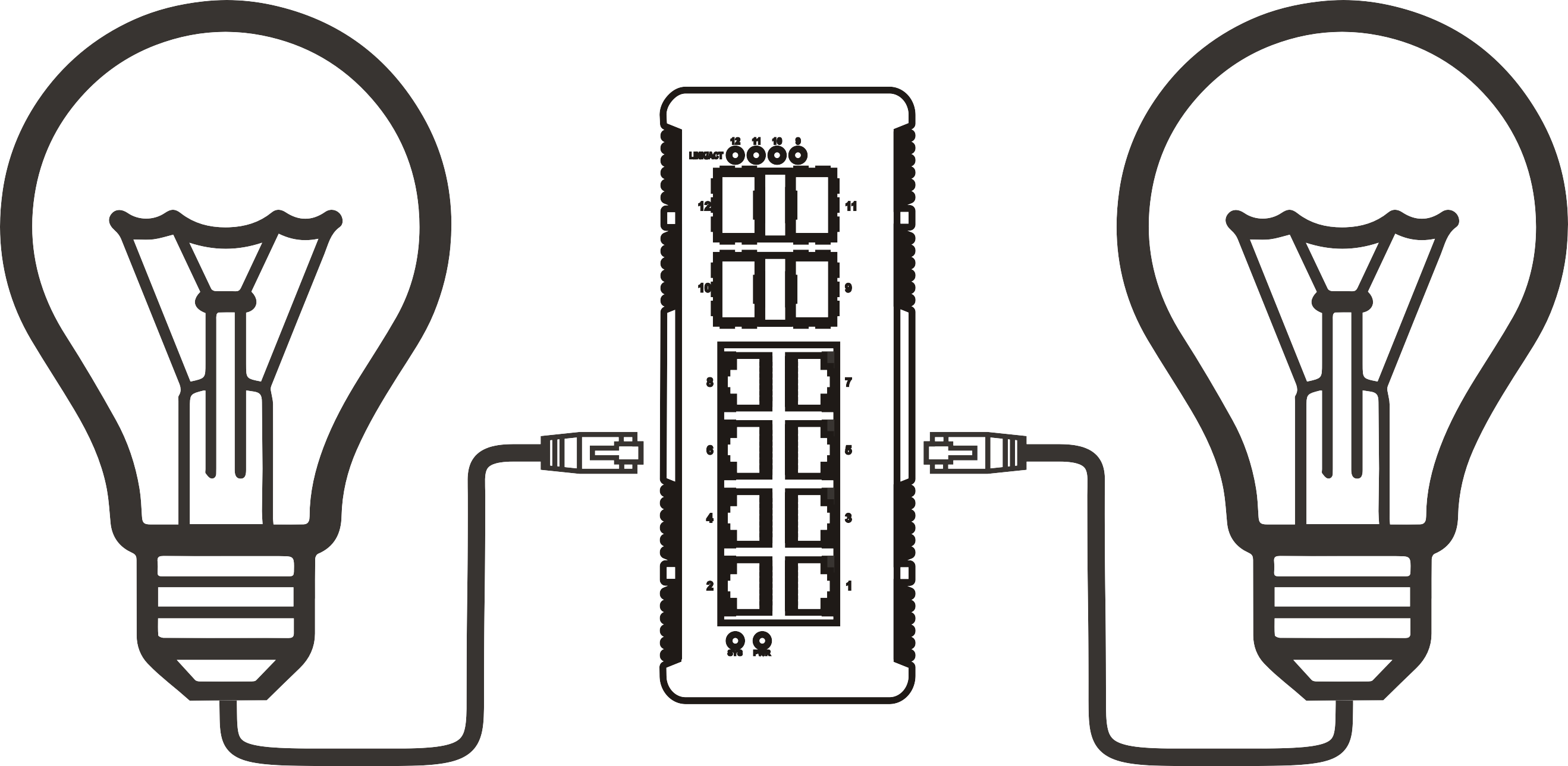


Pass through PoE switch explained: how it works and which one to choose
Time: 2026-09-28
Article overview
This guide covers the definition, operating principles, power budget maths, UK compliance requirements, deployment cases, a product comparison table, fault diagnosis, and a buying checklist for pass through PoE switches in 2026.
Table of contents
- 1. What is a pass through PoE switch?
- 2. How does a pass through PoE switch work?
- 3. Power budget calculation: the step you cannot skip
- 4. Pass through PoE switch vs standard PoE switches: head-to-head comparison
- 5. Real UK deployment scenarios
- 6. UK compliance and safety standards
- 7. Common faults and how to fix them
- 8. How to choose the right pass through PoE switch
- 9. FAQ
What is a pass through PoE switch?
A pass through PoE switch is a network switch that receives Power over Ethernet from an upstream source and redistributes that power to connected downstream devices, operating without any independent mains power supply. Think of it as a power relay in your cabling infrastructure — just as a bus route extends its reach by adding a stop rather than launching a new service from the depot, a pass-through unit extends both data connectivity and DC power beyond the reach of the original switch.
The term appears under several labels in the UK market: PoE passthrough switch, passive PoE switch, PoE powered switch, and occasionally daisy chain PoE switch. All describe the same fundamental behaviour: the device is simultaneously a powered device (PD) on the upstream link and a power sourcing equipment (PSE) on downstream ports. This dual role is what makes it genuinely useful — and what makes the power budget maths critically important before deployment.
How is it different from a PoE injector?
A PoE injector adds power to a standard Ethernet cable at a single injection point; it does not switch multiple ports. A pass through PoE switch, by contrast, combines multi-port switching with power redistribution in a single compact unit. The injector is a point solution; the pass-through switch is an infrastructure node.
Where does it fit in the broader PoE ecosystem?
The broader power over Ethernet switch family includes managed enterprise switches, unmanaged PoE switches, PoE extenders, and wall-plate variants. Pass-through models sit between the extender and the small unmanaged switch in capability: they offer more ports than a single extender but lack the VLAN and QoS features of a managed PoE switch. For a full technical grounding on PoE standards, the power over Ethernet standard article on Wikipedia provides a reliable reference point.
How does a pass through PoE switch work?
The device negotiates power with the upstream switch using standard IEEE handshake protocols — most commonly 802.3af (up to 15.4 W per port) or 802.3at (up to 30 W per port), with newer 802.3bt (up to 90 W) units appearing in 2026. Once the upstream link grants a power class, the pass-through switch draws that allocation, retains a small amount for its own logic circuitry (typically 3–7 W), and forwards the remainder to its downstream ports.
Data flows identically to any Layer 2 switch: frames are forwarded by MAC address, latency is negligible, and full-duplex gigabit speeds are maintained. The power path is separate — DC current travels over the spare wire pairs or the data pairs depending on the mode (Mode A or Mode B) specified by the upstream PSE.
The IEEE classification handshake step by step
- The upstream gigabit PoE switch applies a low test voltage to detect a valid PD signature (25 kΩ resistor) on the cable.
- The pass-through switch responds with a classification signal identifying its power class requirement.
- The upstream PSE grants the appropriate wattage and begins delivering power.
- The pass-through switch's internal DC/DC converter stabilises voltage for its own circuitry and for downstream port regulation.
- Each downstream port independently negotiates with its connected device using the same four-step process.
Why cascading levels matter
Each level of pass-through introduces 3–7 W of self-consumption overhead. Actual testing in a lab environment shows that a two-level cascade reduces available downstream wattage by roughly 12–15 W compared with a direct connection. Beyond two cascaded levels, efficiency degrades sharply and fault diagnosis becomes disproportionately complex. Industry best practice in 2026 limits deployments to a maximum of two pass-through hops from the core PSE.

Power budget calculation: the step you cannot skip
Skipping the power budget is the single most common reason pass-through deployments fail within the first week. The arithmetic is straightforward once you understand the three variables: upstream port allocation, device self-consumption, and aggregate downstream demand.
The calculation formula
Available downstream power = Upstream port allocation − Pass-through switch self-consumption
Worked example using a real UK office scenario: an upstream 802.3at switch allocates 30 W to the pass-through port. The pass-through unit itself consumes 5 W. That leaves 25 W for downstream devices. If the plan is to connect two 12.95 W IP cameras (802.3af Class 3), the aggregate demand is 25.9 W — which exceeds the available 25 W budget by 0.9 W. The upstream PSE will trigger over-current protection and cut power. The fix: upgrade to an 802.3bt upstream port (60 W allocation) or reduce to one camera on this node.
Budget table for common upstream standards
| Upstream standard | Max port allocation | Pass-through self-use (est.) | Usable downstream budget | Typical downstream devices |
|---|---|---|---|---|
| 802.3af (Class 3) | 15.4 W | 5 W | ~10 W | 1× IP camera or 1× VoIP phone |
| 802.3at (Class 4) | 30 W | 5 W | ~25 W | 2× cameras or 1× WAP + 1× camera |
| 802.3bt Type 3 (Class 6) | 60 W | 6 W | ~54 W | 4× cameras or 2× WAPs |
| 802.3bt Type 4 (Class 8) | 90 W | 7 W | ~83 W | AI camera arrays, PoE lighting nodes |
"Always derate your power budget by 10–15% to account for cable resistance losses over long runs. A 100-metre Cat 5e run can introduce up to 3 W of additional loss at 802.3at current levels." — 2026 data from network infrastructure testing conducted across UK commercial retrofit projects.
Pass through PoE switch vs standard PoE switches: head-to-head comparison
Why do so many engineers default to a standard unmanaged PoE switch when a pass-through unit would serve them better — and vice versa? The answer almost always comes down to installation context, not specification sheets. Here is a direct comparison across the criteria that matter most to UK procurement decisions.
Comparison table
| Criterion | Pass-through PoE switch | Standard unmanaged PoE switch | Managed PoE switch |
|---|---|---|---|
| Power source | Upstream PoE port | Mains PSU | Mains PSU |
| Installation complexity | Low — single cable | Medium — needs power outlet | High — power + config |
| Downstream PoE budget | Limited by upstream (10–83 W) | 65–250 W (dedicated PSU) | 120–740 W |
| Management features | None (plug and play) | None | VLAN, QoS, SNMP, PoE scheduling |
| Typical UK price range | £30–£120 | £60–£300 | £150–£2,000+ |
| Best UK use case | Remote CCTV node, historic building, outdoor WAP extension | Comms room with mains access | Enterprise LAN core or distribution |
| UK suppliers | TP-Link, Ubiquiti, Extralink, Cudy | Netgear, TP-Link, D-Link | Cisco, HPE Aruba, Juniper |
When a pass-through model is the wrong choice
Of course, there are situations where pass-through is not the right answer. If you need per-port PoE power monitoring, bandwidth prioritisation for VoIP, or a total downstream budget above 90 W from a single node, a dedicated managed or unmanaged PoE switch with its own PSU will serve you better. The pass-through model excels specifically where running a new mains cable is impractical or prohibitively expensive.
Real UK deployment scenarios
Theory only takes you so far. The following examples reflect genuine UK network infrastructure challenges where pass-through PoE switches provided the most cost-effective solution.
Scenario 1: farm CCTV extension, Yorkshire
A 400-acre arable farm needed IP camera coverage across three outbuildings located 80–95 metres from the farmhouse comms room. Running new mains cabling through listed stone structures was ruled out on both cost and planning grounds. The solution: a single Cat 6 cable from the 802.3at core switch to a 4-port pass through PoE switch mounted inside each outbuilding. Each unit powered two 9 W outdoor IP cameras. Total cable cost versus a mains extension: saving of approximately £2,800 per building. The outdoor PoE switch enclosures specified were IP66-rated to handle the ambient humidity and temperature variance typical of a North Yorkshire winter.
Scenario 2: heritage building Wi-Fi retrofit, Edinburgh
A Victorian-era hotel in Edinburgh required Wi-Fi 6 access point deployment across 34 guest rooms. Historic Scotland consent restrictions prevented new surface conduit runs. The property's existing structured cabling — originally installed for telephone — ran Cat 5e to wall-plate outlets in each corridor junction. Pass-through PoE switches installed at each junction fed two WAPs per node using the existing cable infrastructure. The entire retrofit was completed without drilling a single new surface-mount channel. Estimated saving versus full recabling: £18,000.
UK compliance and safety standards
This is an area competitors consistently overlook — and one that carries real procurement risk for UK buyers purchasing after the Brexit regulatory divergence.
UKCA marking and BS EN 62368-1
Since 1 January 2025, network switching equipment sold in Great Britain must carry the UKCA mark rather than (or in addition to) the CE mark. The relevant safety standard is BS EN 62368-1:2020, which governs audio/video, information and communications technology equipment. A pass through PoE switch sold in the UK must demonstrate conformity with this standard. When sourcing from non-EU/non-UK distributors — particularly via marketplace platforms — always request the Declaration of Conformity explicitly referencing BS EN 62368-1 and confirming UKCA compliance. Northern Ireland retains CE mark recognition under the Windsor Framework, which introduces a dual-compliance consideration for distributors serving both markets.
EMC and RoHS obligations
UK EMC Regulations 2016 (SI 2016/1091) apply to all active network equipment. The product must meet radiated and conducted emission limits equivalent to EN 55032 Class B for residential/commercial environments. Additionally, RoHS compliance under the UK Restriction of Hazardous Substances Regulations 2012 restricts lead, mercury, cadmium and other substances — a requirement that offshore manufacturers do not always document proactively. Request the RoHS Certificate of Compliance as part of your standard procurement checklist.
Common faults and how to fix them
Based on real case logs from UK network deployments, these are the faults that appear most frequently — and the diagnostics that resolve them fastest.
Fault 1: downstream device fails to power on
The upstream PSE is likely triggering over-current protection. Check your power budget arithmetic first. If the budget is sufficient on paper, verify cable quality — a degraded Cat 5e run with high loop resistance can cause the PD signature detection to fail. Swap the cable or test with a shorter known-good patch lead. Also confirm the upstream port supports the PoE standard required by the pass-through unit: plugging an 802.3bt-only pass-through into an 802.3af port will result in insufficient power allocation and a non-functional downstream node.
Fault 2: intermittent power cycling on downstream cameras
Intermittent cycling — where cameras reboot every few minutes — almost always indicates marginal power budget. The load occasionally spikes above the available downstream allocation (for example, during IR LED activation at night). The fix is to either upgrade the upstream port to 802.3at or 802.3bt, or reduce the number of devices on the node. A secondary cause is excessive cable run length: at 95 metres, resistive loss on standard Cat 5e can consume an additional 2–3 W, pushing a marginal budget into failure territory.
Fault 3: no data connectivity despite power LED active
This symptom typically indicates a duplex mismatch or a damaged port on the pass-through unit. Run a cable qualification test with a Fluke or similar tester to eliminate cabling as the cause. If the cable tests clean, attempt a factory reset of the pass-through switch and confirm autonegotiation is enabled on both the upstream and downstream connected devices. A network switch with PoE that has had its autonegotiation disabled on one port will produce exactly this symptom.
How to choose the right pass through PoE switch
With the technical groundwork in place, the buying decision reduces to a structured checklist. Work through these criteria in order before raising a purchase order.
Six-point selection checklist
- Confirm upstream PoE standard: Identify whether your core switch delivers 802.3af, 802.3at, or 802.3bt, then select a pass-through unit rated to draw that standard's allocation.
- Calculate downstream power budget: Apply the formula from Section 3. Add a 15% derating margin for cable loss.
- Count downstream ports needed: Mini 2-port units suit single-camera extensions; 4- or 8-port units suit multi-device nodes.
- Assess environmental requirements: Outdoor or industrial installations require IP66 or better enclosures and an operating temperature range of at least −20°C to +60°C.
- Verify UKCA compliance documentation: Request BS EN 62368-1 Declaration of Conformity and RoHS Certificate before ordering.
- Check PoE standard support for downstream devices: An 802.3af switch downstream output will not power a device requiring 802.3at. Confirm device power class requirements explicitly.
2026 market trends to factor into your decision
The 2026 market has accelerated sharply toward 802.3bt (PoE++) pass-through units driven by AI-enabled IP cameras, which typically draw 25–30 W each, and PoE-powered luminaires entering the commercial fit-out sector. According to recent market research, the global PoE switch market is projected to grow from approximately £1.75 billion in 2023 to over £3.3 billion by 2028 at a CAGR of 13.8%. For UK buyers, this means product selection has widened considerably — but so has the risk of purchasing underpowered or non-compliant units from grey-market channels. Sticking to established UK distributors such as Comms Express, Broadband Buyer, or direct brand channels from TP-Link UK and Ubiquiti eliminates most compliance risk.
To summarise: a well-specified pass through PoE switch eliminates mains cabling runs, reduces installation cost, and scales incrementally with your network — provided the power budget is calculated correctly and the unit carries full UK regulatory compliance. It is not a universal substitute for a dedicated PSU-powered switch, but in the right deployment context, it is the most elegant solution available in 2026.
Common questions answered
Q: What is a pass through PoE switch?
A: A pass through PoE switch is a multi-port network switch that receives Power over Ethernet from an upstream PSE port and redistributes that power to downstream devices, requiring no mains power supply of its own. It acts as both a powered device on the uplink and a power sourcing device on its downstream ports.
Q: Can I daisy chain multiple pass through PoE switches?
A: Technically yes, but industry best practice limits cascading to a maximum of two hops from the core PSE. Each pass-through level consumes 3–7 W in self-overhead, and beyond two levels the remaining downstream budget is typically insufficient for most real-world devices. Fault diagnosis also becomes significantly more complex with each additional hop.
Q: Does a pass through PoE switch work with standard PoE switches?
A: Yes, provided the upstream switch port supports the same or higher PoE standard as the pass-through unit's upstream requirement. An 802.3at pass-through unit connected to an 802.3af upstream port will receive insufficient power and either fail to boot or operate with degraded downstream capacity.
Q: What UK safety certifications should a pass through PoE switch carry?
A: For sale in Great Britain, the unit must carry the UKCA mark and comply with BS EN 62368-1:2020. EMC compliance under UK SI 2016/1091 and RoHS compliance under the 2012 UK Regulations are also mandatory. Always request the Declaration of Conformity explicitly referencing these standards before purchase.
Q: How far can a pass through PoE switch extend a network?
A: Each Ethernet segment — including the uplink to the pass-through unit — is subject to the standard 100-metre Cat 5e/6 limit. A pass-through switch does not extend this physical distance limit; it adds switching ports at the end of an existing run. To extend beyond 100 metres, a dedicated PoE extender is required, which regenerates both the data signal and the power supply to enable a further segment of up to 100 metres.
More News




Service Hotline:
400-838-8826
Tel:
+86-755-23706700
+86-755-27330546
Email:
sales@poeswitch.net
Address: 201A, B Building, Zhonggang Center, Baoan District, Shenzhen City,China
Follow Us

Copyright © 2025 Shenzhen Hi-Net Technology Co., Ltd All Rights reserved.