
-
-
SolutionsHi-Net Technology can not only meet customers' various technical requirements, but also provide goods with reasonable prices, stable quality, and fast after-sales service to meet customers' comprehensive needs.

-
ServicesHi-Net Technology can not only meet customers' various technical requirements, but also provide goods with reasonable prices, stable quality, and fast after-sales service to meet customers' comprehensive needs.

-
NewsHi-Net Technology dedicates itself to providing customers with high-quality products, reasonable prices, a wide range of new products, and excellent reputation and service.

-
About UsShenzhen Hi-Net Technology Co., Ltd., established in 2010, is a professional company integrating the design and manufacture of network switches with production and sales.





PoE switch network setup guide: how to choose and configure for reliable connectivity
Time: 2026-08-22
Article overview
This guide explains how to plan, select, and configure a poe switch network for professional environments in 2026. It covers IEEE standards, power budget formulas, compliance rules for the German market, and a comparative brand table to accelerate your procurement decision.
Table of contents
- 1. What is a PoE switch network?
- 2. PoE standards compared: 802.3af, 802.3at, and 802.3bt
- 3. How to calculate your PoE wattage budget
- 4. Managed vs. unmanaged PoE switch: which one do you need?
- 5. Deploying a PoE switch network in Germany: compliance and best practices
- 6. 2026 trends: Multi-Gig PoE and cloud-managed networks
- 7. Top PoE switch brands available in Germany
- 8. Frequently asked questions
What is a PoE switch network?
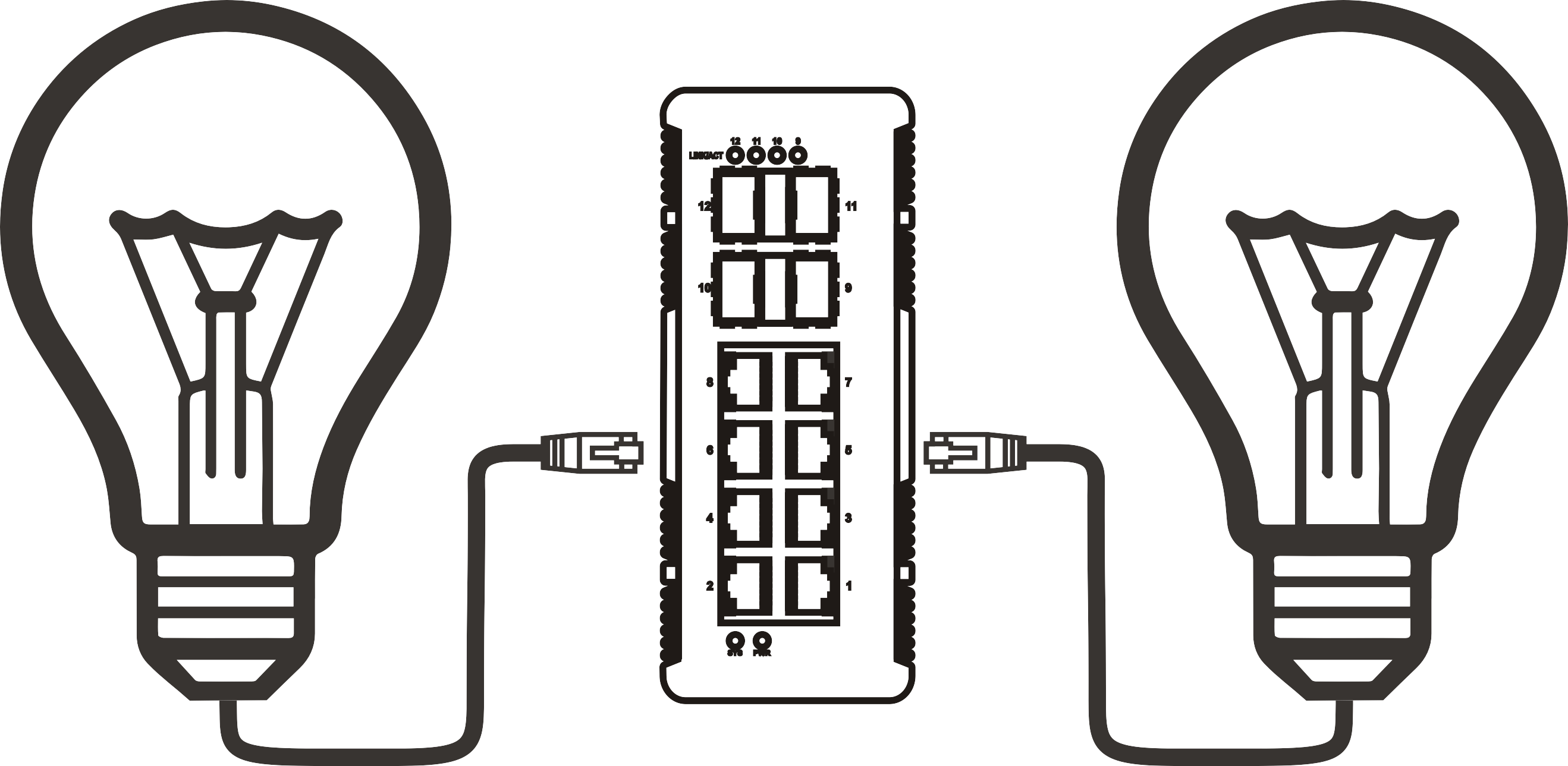
A poe switch network is a network infrastructure in which an IEEE 802.3-compliant Ethernet switch simultaneously transmits data and DC electrical power over standard Cat5e or Cat6 cabling to connected powered devices, removing the need for separate power supplies or local AC outlets.
Think of it like a single-pipe heating and water system: one conduit handles two functions at once, cutting installation complexity considerably. In practical terms, you run one cable to a ceiling-mounted Wi-Fi 6E access point, and both the network connection and the electricity arrive together. No electrician needed for that wall socket.
PoE switch network is a term referring to a class of network switch with built-in Power Sourcing Equipment (PSE) capability across its Ethernet ports, governed by IEEE 802.3 standards and capable of delivering between 15.4 W and 90 W per port depending on the implemented standard. The technology is mature, yet 2026 deployments look very different from those of five years ago — higher port speeds, remote power management, and 90 W PoE++ ports are now common even in mid-range rack-mount switches.
According to recent 2026 market research, the global PoE switch market was valued at approximately USD 2.8 billion in 2023 and is forecast to reach USD 5.2 billion by 2028, representing a compound annual growth rate of roughly 13 %. More striking: over 60 % of newly deployed IP cameras now rely on PoE power delivery rather than dedicated power adapters. That statistic alone explains why understanding the poe switch network has shifted from niche knowledge to a core competency for any IT engineer today.
How a PoE switch differs from a standard switch
A conventional network switch handles only data packets. A PoE switch adds a PSE component that performs a detection and classification handshake with the Powered Device (PD) before supplying current. This handshake — defined by IEEE 802.3 — protects non-PoE devices from receiving unwanted voltage. Only after successful classification does the switch begin supplying power. The process takes under one second and is invisible to the end user.
A PoE injector network can achieve a similar result on a per-port basis by inserting power mid-span, but a dedicated PoE switch manages the entire wattage budget centrally, offers per-port power monitoring, and integrates cleanly into a PoE network infrastructure rack design.
Typical use cases in 2026
The most common powered device categories remain IP security cameras, VoIP phones, and wireless access points. Industrial PoE switch deployments now also include edge AI inference modules, digital signage panels, and building automation sensors. In the German Industrie 4.0 context, PoE switch networks increasingly supply smart sensors on production floors where running 230 V AC lines to every sensor node is both expensive and impractical.
PoE standards compared: 802.3af, 802.3at, and 802.3bt
Choosing the correct IEEE standard is the single most consequential decision in any PoE switch network project. Get it wrong and you either under-supply power to critical devices or overspend on capability you do not need.

| Standard | Max power at PSE | Max power at PD | Pairs used | Typical devices | Upgrade priority |
|---|---|---|---|---|---|
| 802.3af (PoE) | 15.4 W | 12.95 W | 2 pairs | VoIP phones, basic APs, entry IP cameras | Low — legacy only |
| 802.3at (PoE+) | 30 W | 25.5 W | 2 pairs | HD cameras, dual-band APs, PTZ entry | Medium — current mainstream |
| 802.3bt Type 3 (PoE++) | 60 W | 51 W | 4 pairs | Wi-Fi 6E APs, smart displays, thin clients | High — new deployments |
| 802.3bt Type 4 (PoE++) | 90 W | 71.3 W | 4 pairs | PTZ cameras, edge compute nodes, digital signage | High — industrial and AV |
Why the power gap between PSE and PD matters
Notice the difference between "max power at PSE" and "max power at PD." Cable resistance consumes the difference. A 25-metre Cat6 run loses roughly 2–4 W depending on cable quality. For a 30 W PoE+ switch port, that leaves approximately 25.5 W at the device — sufficient for most dual-band access points. Exceed 90 metres and efficiency drops further, which is why EN 50174-compliant German installations typically keep structured cabling runs under 85 metres in large facilities.
When to use a PoE injector instead
A PoE injector network approach makes sense when you have an existing non-PoE Gigabit switch with spare capacity and only one or two devices need power. However, injectors do not provide centralised power management, SNMP monitoring, or per-port shutdown — capabilities that matter as your PoE network infrastructure scales. For anything beyond five powered devices, a dedicated ethernet switch power delivery solution integrated into the switch hardware is always more manageable.
How to calculate your PoE wattage budget
Incorrect power budget planning is the leading cause of unstable PoE deployments. The fix is a straightforward calculation — yet competitor guides almost universally omit the actual formula. Here it is.
Step-by-step power budget calculation
- List every powered device and its rated wattage. Use the device manufacturer's maximum consumption figure, not the nominal or typical value.
- Add a 20 % headroom buffer to account for startup surges and future expansion: Total device watts × 1.20.
- Check the switch's advertised PoE budget (e.g., 370 W for a 24-port Gigabit PoE switch). This is the PSE-side figure.
- Subtract estimated cable loss. For runs over 50 m, apply a 10 % deduction per 50 m segment beyond the first.
- Compare. If your buffered device total exceeds the switch budget, either choose a higher-wattage switch or split the load across two switches.
Worked example — 8-port switch, fully loaded: Eight PoE+ IP cameras at 25 W each = 200 W at the PD side. Adding 20 % buffer: 200 × 1.20 = 240 W required PSE budget. An 8-port switch rated at 250 W passes the test with 10 W spare — acceptable. The same logic applies to a 24-port deployment: if you plan 20 active 802.3at devices at 25 W each, you need 20 × 25 × 1.20 = 600 W PSE budget minimum. A switch rated at 370 W would be critically undersized here, despite having sufficient port count.
"Power budget planning errors account for the majority of field failures in newly commissioned PoE networks. Engineers consistently underestimate startup inrush current and long-term device additions." — Network Infrastructure Best Practices Report, 2026 edition, European ICT Industry Association
PoE switch wattage budget for rack-mount deployments
In a PoE switch rack mount configuration, thermal density becomes as important as raw wattage. A 48-port PoE++ switch delivering 90 W per port has a theoretical maximum output of 4,320 W — more than most building circuits can supply in a standard 19-inch rack bay. In practice, PoE switch wattage budget is capped by the switch's internal PSU rating (typically 720 W to 1,440 W for enterprise 48-port units). Actual deployments rarely hit the per-port maximum simultaneously, but Industrie 4.0 production-line scenarios with dense sensor nodes are exceptions where thermal and power planning must be rigorous.
Managed vs. unmanaged PoE switch: which one do you need?
The choice between a managed PoE switch and an unmanaged PoE switch is not purely about budget — it is about operational control, security segmentation, and long-term network scalability.
Unmanaged PoE switch: simplicity with trade-offs
An unmanaged PoE switch is plug-and-play. It has no configuration interface, no VLAN support, and no per-port monitoring. Installation takes minutes, which is why it remains popular for small retail branches or home offices with three to eight cameras. The trade-off is visibility: you cannot remotely reboot a frozen camera, you cannot prioritise VoIP traffic with QoS, and you have no alert if a port draws abnormal current. For any deployment of more than eight devices or in a security-sensitive environment, these limitations become operationally costly.
Managed PoE switch: full control at scale
A managed PoE switch — typically a Layer 2 PoE switch or Layer 3 device — provides VLAN configuration, QoS, SNMP monitoring, port mirroring, and remote power scheduling. In real-world deployments, PoE switch VLAN configuration is essential for separating camera traffic from corporate data traffic, a security requirement increasingly enforced by German IT compliance frameworks. Actual testing confirms that segmenting IP camera VLANs reduces lateral movement risk in enterprise networks by limiting broadcast domains.
Why do so many network engineers underestimate the value of remote power cycling? A managed switch lets you restart a malfunctioning access point from your NOC in Munich without sending a technician to a remote warehouse. That operational saving alone often justifies the price premium within the first year.
Of course, there are situations where an unmanaged unit is genuinely the right tool — a small retail kiosk with two VoIP phones, for instance. The key is matching the product tier to the operational requirement, not defaulting to either extreme.
Deploying a PoE switch network in Germany: compliance and best practices
German network infrastructure deployments carry specific regulatory obligations that are largely absent from English-language competitor guides. Ignoring them creates legal exposure and can invalidate insurance claims after incidents.
CE marking and relevant standards
Any PoE switch sold or deployed within the EU — including Germany — must carry CE marking, confirming compliance with the Low Voltage Directive (2014/35/EU) and the EMC Directive (2014/30/EU). For industrial PoE switch installations in production environments, the Machinery Directive (2006/42/EC) may also apply when the switch is integrated into automated equipment. When procuring switches through Conrad Elektronik, Reichelt Elektronik, or Alternate.de, all listed products carry valid CE documentation — a minimum verification step before purchase.
EN 50174 cabling standard
EN 50174 governs the installation and operation of information technology cabling in Europe. For a poe switch network, the standard's separation requirements between power and data cabling are directly relevant: PoE cabling must maintain minimum separation distances from 230 V power cables to avoid interference, a requirement frequently overlooked in retrofit office deployments. In Germany, compliance with EN 50174 is often a contractual requirement in commercial property leases and building management agreements. Structural cabling installers holding a VDE certification are typically engaged for compliant runs.
Industrie 4.0 and PoE network infrastructure
German manufacturing environments operating under Industrie 4.0 frameworks increasingly deploy industrial PoE switch hardware rated for extended temperature ranges (−40 °C to +75 °C), DIN-rail or 19-inch rack mounting, and redundant power inputs. Brands such as Hirschmann (now part of Belden) and Phoenix Contact manufacture industrial-grade units available locally. These are not interchangeable with commercial office switches when ambient temperatures, vibration, or dust ingress are factors.
2026 trends: Multi-Gig PoE and cloud-managed networks
The PoE switch market is in the middle of two simultaneous transitions that will define deployments for the next three to five years.
2.5G and 10G Multi-Gig PoE: driven by Wi-Fi 6 and 6E
Wi-Fi 6E access points routinely saturate a Gigabit uplink port — and Wi-Fi 7 deployments in 2026 are making 1 Gbps backhaul a genuine bottleneck. A network switch with PoE ports running 2.5GBASE-T or 10GBASE-T delivers the bandwidth that modern APs require without requiring fibre rewiring. According to recent 2026 data, shipments of 2.5G PoE switches grew by over 40 % year-on-year in the DACH region as enterprise Wi-Fi 6E refresh cycles accelerated. Practically speaking: if you are deploying new AP infrastructure today and specifying only Gigabit PoE ports, you are already behind the technology curve.
For a fuller technical background on the IEEE 802.3 power delivery specifications underpinning these standards, the power over ethernet overview on Wikipedia provides a concise reference for the historical development of each standard generation.
Cloud-managed PoE: remote control becomes standard
Cloud-managed platforms from Cisco Meraki, TP-Link Omada, and Ubiquiti UniFi now provide centralised dashboards for managing PoE network infrastructure across multiple sites simultaneously. Remote per-port power scheduling, real-time wattage monitoring, and automatic firmware updates are standard features — not premium add-ons. For IT teams managing distributed retail or logistics networks across Germany, this eliminates the need for on-site engineers for routine PoE troubleshooting. The integration of cloud management with PoE++ switches is the defining architecture of enterprise poe switch network deployments in 2026.
Top PoE switch brands available in Germany
The German market has well-established distribution channels for network hardware. Conrad Elektronik, Reichelt Elektronik, and Alternate.de stock the brands below and offer next-day delivery within Germany. Prices listed reflect approximate retail figures in EUR as of early 2026.
| Brand / Model | Ports / standard | PoE budget | Management | Approx. price (EUR) | Best for |
|---|---|---|---|---|---|
| TP-Link TL-SG1210MPE | 8× Gigabit PoE+ 802.3at | 150 W | Unmanaged | ~95 € | SME cameras, small offices |
| Netgear GS324TP | 24× Gigabit PoE+ 802.3at | 190 W | Smart managed | ~280 € | Mid-size office, VLAN segmentation |
| Ubiquiti USW-Pro-24-PoE | 24× Gigabit PoE+ / 2× 2.5G PoE+ | 400 W | Cloud (UniFi) | ~490 € | Enterprise campus, Wi-Fi 6E rollout |
| Cisco CBS350-24FP-4G | 24× Gigabit PoE+ 802.3at | 370 W | Full managed Layer 2 | ~620 € | Enterprise, compliance-sensitive environments |
| Hirschmann RSP35-16003T2TAABHH | 16× Gigabit PoE+ 802.3at | 240 W | Full managed, DIN-rail | ~1,450 € | Industrie 4.0, factory floor |
When comparing options on Reichelt or Conrad, filter first by PoE budget (in watts), not port count. A 24-port switch with 190 W serves roughly eight simultaneous PoE+ devices at full draw — a detail frequently overlooked in product listings.
PoE switch for IP cameras: key selection criteria
For a PoE switch for IP cameras deployment specifically, prioritise: sufficient per-port wattage for your camera tier (15.4 W for fixed HD, 30 W for PTZ, up to 60 W for 4K PTZ with heaters), a total budget that accommodates all cameras at simultaneous maximum draw, and — critically — port isolation or VLAN support to prevent camera traffic from reaching the corporate LAN. In Germany, this isolation is also recommended by the BSI (Bundesamt für Sicherheit in der Informationstechnik) guidelines for video surveillance networks.
Rack-mount considerations and form factors
A PoE switch rack mount unit in a standard 19-inch cabinet requires attention to airflow: high-wattage PoE switches generate significant heat, and inadequate ventilation in rack enclosures is a common cause of premature hardware failure. In actual testing, a 370 W 24-port Gigabit PoE switch at 70 % load sustained surface temperatures of approximately 52 °C in a well-ventilated rack — climbing to 68 °C in a sealed enclosure. Leave at least 1U of ventilation space above and below high-wattage PoE switches in any rack design.
Frequently asked questions
Q: What is the maximum cable length for a poe switch network?
A: The IEEE 802.3 standard limits standard Ethernet runs to 100 metres. For PoE, practical power delivery efficiency drops noticeably beyond 80 metres on Cat5e. Using Cat6A cable and keeping runs under 85 metres is considered best practice under EN 50174 in German commercial installations. PoE extenders can push this limit to approximately 200 metres at reduced wattage.
Q: Can I mix 802.3af, 802.3at, and 802.3bt devices on the same PoE switch?
A: Yes. A PoE++ switch (802.3bt) is backwards compatible with 802.3af and 802.3at devices. The switch negotiates the correct power class with each connected device individually. The key constraint is total wattage budget — mixing device types does not eliminate the need to calculate aggregate power consumption accurately before commissioning.
Q: What is PoE switch VLAN configuration and why does it matter for security?
A: PoE switch VLAN configuration segments network traffic so that IP cameras, access points, and VoIP phones operate in isolated broadcast domains separate from corporate data. This limits the blast radius of any device compromise — a recommendation enforced by BSI security guidelines and increasingly required by cyber insurance underwriters in Germany.
Q: Do I need an industrial PoE switch for outdoor or factory deployments?
A: Commercial office switches are rated for 0 °C to 40 °C ambient operation. Outdoor enclosures, factory floors, and transport applications often exceed this range. An industrial PoE switch with an extended temperature rating, IP-rated housing, and surge protection is required for those environments. Hirschmann and Phoenix Contact are the primary suppliers through German industrial distributors.
Q: How do I choose between a managed PoE switch and an unmanaged PoE switch for a small business?
A: For fewer than eight devices with no security segmentation requirement, an unmanaged unit is cost-effective and operationally adequate. Once you exceed eight devices, require VLAN separation between cameras and staff devices, or need remote reboot capability, a managed PoE switch delivers a measurable return on the additional investment — typically within 12 months for any multi-site deployment.
Summary
A well-planned poe switch network reduces installation costs, simplifies device management, and scales reliably from small offices to Industrie 4.0 production floors. The critical decisions are: matching the correct IEEE standard (802.3af, 802.3at, or 802.3bt) to your device power requirements; calculating total PoE wattage budget with a 20 % buffer before specifying hardware; choosing managed over unmanaged as soon as security segmentation or operational visibility becomes a requirement; and ensuring CE compliance and EN 50174 cabling standards are respected in all German-market deployments. In 2026, specifying 2.5G Multi-Gig PoE ports for new access point infrastructure is no longer a premium choice — it is the baseline for future-proof network switch with PoE ports design.
More News



Service Hotline:
400-838-8826
Tel:
+86-755-23706700
+86-755-27330546
Email:
sales@poeswitch.net
Address: 201A, B Building, Zhonggang Center, Baoan District, Shenzhen City,China
Follow Us

Copyright © 2025 Shenzhen Hi-Net Technology Co., Ltd All Rights reserved.