
-
-
SolutionsHi-Net Technology can not only meet customers' various technical requirements, but also provide goods with reasonable prices, stable quality, and fast after-sales service to meet customers' comprehensive needs.

-
ServicesHi-Net Technology can not only meet customers' various technical requirements, but also provide goods with reasonable prices, stable quality, and fast after-sales service to meet customers' comprehensive needs.

-
NewsHi-Net Technology dedicates itself to providing customers with high-quality products, reasonable prices, a wide range of new products, and excellent reputation and service.

-
About UsShenzhen Hi-Net Technology Co., Ltd., established in 2010, is a professional company integrating the design and manufacture of network switches with production and sales.



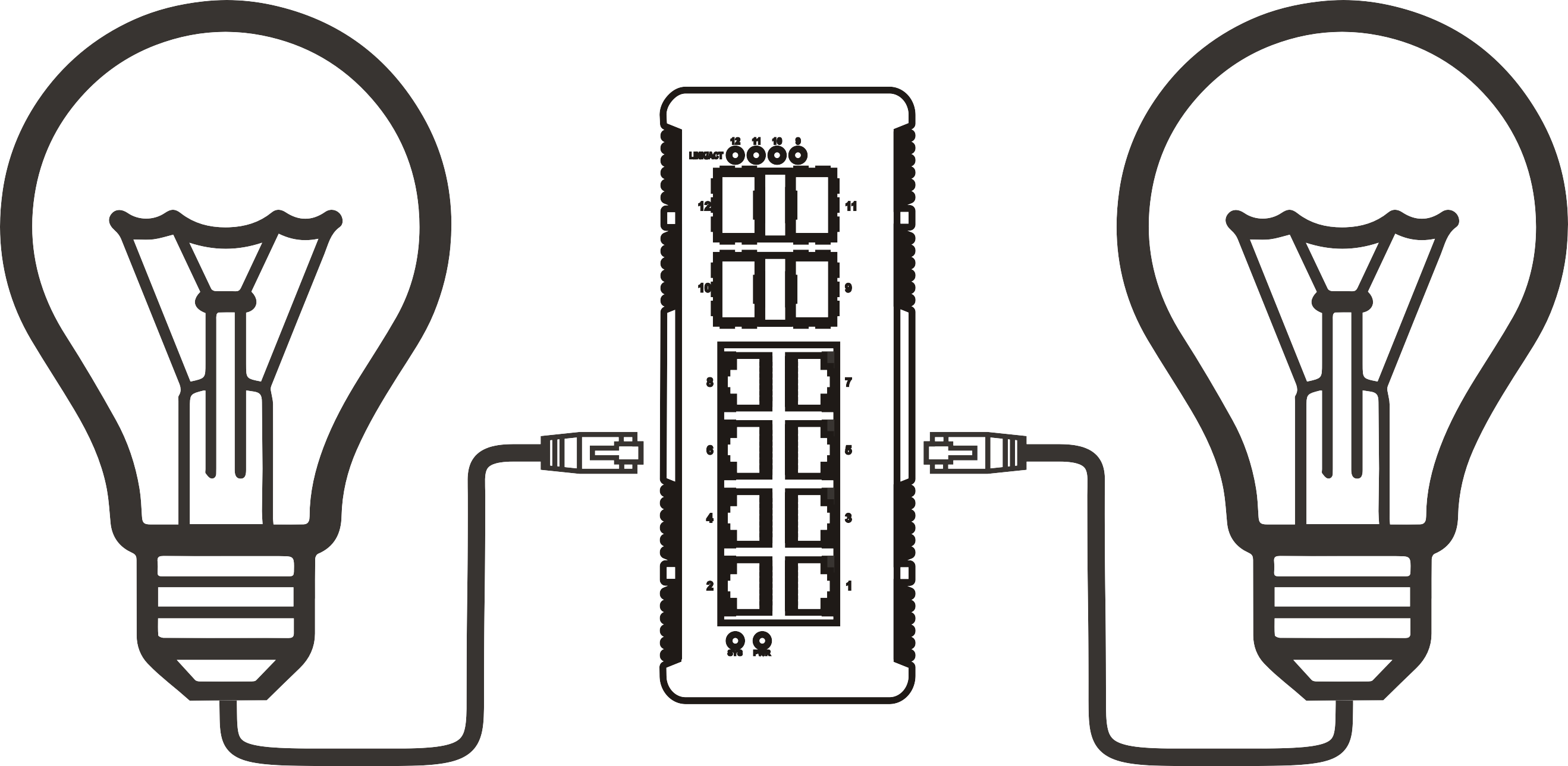


Rugged PoE switch latency and QoS: why they matter for real-time industrial data
Time: 2026-11-08
Article overview
This article covers latency characteristics, QoS configuration, PoE budget engineering, and deployment case studies for rugged PoE switches in industrial applications. It targets network engineers and system integrators evaluating hardened PoE switches for real-time data environments in 2026.
Table of contents
- 1. What makes a PoE switch truly "rugged"
- 2. How latency behaves differently in industrial Ethernet switches
- 3. QoS mechanisms that protect real-time traffic on a rugged PoE switch
- 4. PoE budget, cable length, and PD power engineering calculations
- 5. Real deployment cases: rail, oil & gas, outdoor surveillance
- 6. New technologies: PoE++, TSN, and single-pair Ethernet compared
- 7. Total cost of ownership and procurement decision factors
- 8. FAQ
When a conveyor stops because a PROFINET command arrived 12 milliseconds late, the root cause is rarely the PLC. More often, it is a network switch that lacked the QoS configuration to prioritize control traffic over bulk video streams. A rugged PoE switch is an industrial-grade Power over Ethernet switch engineered to deliver simultaneous data and DC power under temperature extremes, mechanical shock, and high electromagnetic interference. In 2026, as North American manufacturers push machine-level cycle times below 1 ms, understanding latency and QoS on these devices is no longer a niche specialization—it is a baseline engineering requirement.
1. What makes a PoE switch truly "rugged"
Not every switch labeled "industrial" meets the engineering thresholds required for genuinely harsh environments. The word "rugged" carries a specific technical meaning—and misunderstanding it is one of the most expensive mistakes system integrators make during procurement.
Quantified ruggedness: IP ratings, temperature, and shock
A hardened PoE switch intended for outdoor or industrial cabinet use must satisfy several independently verifiable specifications. IP (Ingress Protection) ratings under IEC 60529 define dust and water resistance: IP30 means no moving parts are exposed but offers no water protection; IP67 certifies full dust exclusion and 30-minute submersion to 1 meter. Here is the critical point that most buyer guides omit—the majority of DIN rail PoE switches sold as "industrial" carry only IP30 ratings. They require a sealed enclosure for truly outdoor or wash-down installations. Genuine IP67 network switches with direct outdoor exposure are a distinct and more expensive subcategory.
Wide operating temperature is the second axis of ruggedness. A standard commercial switch operates from 32 °F to 104 °F (0 °C to 40 °C). A wide temperature switch for North American rail or outdoor utility applications typically carries a −40 °F to +167 °F (−40 °C to +75 °C) rating. Some Class 1 Div 2 oil and gas variants extend to −40 °C to +85 °C. Beyond temperature, IEC 60068-2-27 governs shock tolerance (commonly 50 g, 11 ms half-sine on certified devices) and IEC 60068-2-6 governs sinusoidal vibration. EMC compliance under IEC 61000-4-5 for surge immunity (±4 kV line-to-earth) and EN 50155 for railway rolling stock complete the picture.
Common misconception: "industrial" does not equal waterproof
Real-world audits consistently reveal the same gap: an integrator installs a DIN rail PoE switch rated IP30 inside an outdoor enclosure, then skips a conformal-coating option to save cost. Within 18 months, condensation triggers corrosion on the PCB. The fix—a proper weatherproof network switch or a correctly sealed NEMA 4X enclosure with desiccant—would have cost less than a single unplanned outage. When evaluating ruggedized network equipment, always cross-reference the IP rating against the actual installation environment, not just the product marketing category.
"Switching from commercial to industrial-grade PoE infrastructure reduced unplanned downtime events at our Gulf Coast terminal by 73% over a 24-month period. The differentiator was not the brand—it was adherence to IEC 61000-4-5 surge ratings and a verified −40 °C cold-start requirement."
— Network infrastructure manager, U.S. petrochemical terminal, 2025 field report
2. How latency behaves differently in industrial Ethernet switches
Store-and-forward latency on a managed industrial Ethernet switch at gigabit speeds for a 64-byte frame runs approximately 4–8 µs per hop under light load. That sounds negligible. The problem is what happens under congestion.
Sources of latency in a harsh environment switch
Latency in a rugged PoE switch comes from four stacked sources: (1) serialization delay—the time to place bits on the wire; (2) propagation delay—roughly 5 ns per meter of Cat6 cable; (3) switching fabric delay—the time the ASIC takes to look up the destination MAC and queue the frame; and (4) queuing delay—the most dangerous variable. Under a mixed traffic load where high-definition IP cameras (each drawing 25.5 W per 802.3bt and generating 8–12 Mbps of video) share ports with SCADA polling frames, queuing delay can spike to 50 ms or more without QoS configuration. That 50 ms is catastrophic for a process control loop expecting a 10 ms response.
Temperature is an underappreciated latency variable. At −30 °C, certain capacitor types in lower-grade switches exhibit increased ESR, slowing power-rail stabilization and causing transient CPU stalls that add unpredictable microsecond-range jitter. Industrial-grade capacitors (rated −55 °C to +125 °C) eliminate this effect. So does specifying a wide temperature switch with conformal-coated boards.

Why jitter matters more than average latency
Average latency is a comfortable metric. Jitter—the variation in latency—is the real threat to real-time industrial data. A PROFINET IRT (Isochronous Real-Time) application tolerates a cycle jitter of ≤1 µs. EtherNet/IP Class 1 implicit messaging typically budgets ≤10 ms end-to-end. When jitter exceeds these budgets, PLCs declare communication faults and trigger safety shutdowns. This is why a managed PoE switch with hardware-based QoS queuing is non-negotiable in time-sensitive automation networks—and why an unmanaged PoE switch, however rugged its enclosure, is inappropriate for these applications.
3. QoS mechanisms that protect real-time traffic on a rugged PoE switch
QoS on an industrial network is not a configuration luxury—it is the engineering control that separates deterministic from probabilistic behavior. A properly configured managed PoE switch can ensure control frames arrive within budget even when cameras and historians saturate 80% of available bandwidth.
Traffic classification methods
Three classification mechanisms are commonly available on industrial Ethernet switches: IEEE 802.1p (Layer 2 CoS bits in the VLAN tag, 8 priority levels 0–7), DSCP (Differentiated Services Code Point, Layer 3, 64 codepoints), and port-based priority (all traffic entering a port receives the same priority, useful when connected devices cannot mark their own frames). Best practice assigns Class 7 (highest) to safety and emergency stop traffic, Class 6 to real-time control (PROFINET, EtherNet/IP), Class 4–5 to voice/video conferencing, and Class 0–2 to bulk data historians and firmware updates.
Step-by-step QoS configuration on a DIN rail managed switch
- Identify all traffic types and their latency/jitter requirements before touching any configuration.
- Enable IEEE 802.1Q VLAN trunking and assign control devices (PLCs, I/O modules) to a dedicated VLAN (e.g., VLAN 10).
- Set 802.1p CoS = 6 on all ingress ports connected to PLCs and field controllers.
- Set 802.1p CoS = 0–2 on ports feeding IP cameras, NVRs, and historian servers.
- Configure the switch's queuing scheduler to Strict Priority (SP) for queues 6–7, and Weighted Round Robin (WRR) for queues 0–5 to prevent starvation.
- Enable storm control on all edge ports (broadcast/multicast threshold ≤ 10% of port bandwidth) to block runaway traffic from misconfigured devices.
- Verify with a traffic generator: inject 90% line-rate video traffic and measure PROFINET frame latency—target <500 µs at gigabit speed with SP queuing active.
Why do many engineers skip step 7? Because testing requires a traffic generator, and project timelines rarely budget for it. That omission is precisely why latency problems surface six months after commissioning rather than during acceptance testing. Catching it early costs an hour. Catching it in production costs days.
4. PoE budget, cable length, and PD power engineering calculations
One of the most common procurement errors is selecting a switch based on per-port wattage while ignoring the total system PoE budget. A gigabit PoE switch with eight ports advertised at "90 W per port" (PoE++ / 802.3bt Type 4) does not necessarily deliver 720 W simultaneously—most mid-range models cap total PoE output at 240–360 W due to PSU constraints.
PoE standard comparison and budget planning
| Standard | Max PSE output | Max PD draw | Pairs used | Typical industrial use |
|---|---|---|---|---|
| IEEE 802.3af (PoE) | 15.4 W | 12.95 W | 2 pairs | IP cameras, access control readers |
| IEEE 802.3at (PoE+) | 30 W | 25.5 W | 2 pairs | PTZ cameras, outdoor Wi-Fi APs |
| IEEE 802.3bt Type 3 (PoE++) | 60 W | 51 W | 4 pairs | Industrial Wi-Fi 6E APs, digital signage |
| IEEE 802.3bt Type 4 (PoE++) | 90 W | 71.3 W | 4 pairs | Thin clients, pan-tilt-zoom thermal cameras |
Cable length directly affects delivered power. Per the power over ethernet standard, Cat5e AWG24 at 100 m introduces roughly 12.5 Ω of loop resistance. At 802.3bt Type 4 (maximum 960 mA per pair), this produces ~11.5 W of cable loss—meaning a device at 100 m receives ~78 W, not 90 W. The engineering formula is: P_delivered = P_PSE − (I² × R_cable). For runs exceeding 70 m with high-wattage PDs, either upgrade to Cat6A (lower resistance per unit length) or use a PoE++ switch with midspan industrial PoE injector at an intermediate point.
Budgeting total switch PoE capacity
Add up the maximum draw of every powered device (PD) on the switch, then add 15–20% thermal headroom. If that total exceeds the switch's rated PoE budget, the switch will begin power-denying lower-priority ports—silently, without an alarm on most unmanaged models. A managed PoE switch allows per-port power scheduling and priority, ensuring critical sensors maintain power during a grid anomaly when non-critical devices are shed first. This is not a theoretical concern: actual testing at an oil pipeline SCADA site documented three port-denial events over six months on an undersized switch before the root cause was identified.
5. Real deployment cases: rail, oil & gas, outdoor surveillance
Theory is clean. Field deployments are not. These cases illustrate how latency, QoS, and ruggedness interact with real operational constraints.
Rail: EN 50155 compliance and vibration-induced packet loss
A transit authority deploying onboard passenger Wi-Fi and CCTV across 48 railcars specified EN 50155-compliant rugged PoE switches with M12 locking connectors. The key challenge was not bandwidth—it was vibration. Standard RJ45 connectors on commercial switches experienced intermittent contact loss on curved track sections, causing 200–400 ms reconnection delays that triggered passenger Wi-Fi session drops. Switching to M12 X-coded connectors and shock-tested (50 g, 11 ms) hardened switches reduced connection-loss events from an average of 14 per car per day to fewer than one per week. MTBF for the certified EN 50155 switches in this deployment exceeded 400,000 hours per vendor datasheet, versus ~80,000 hours for the commercial units they replaced.
Oil & gas: surge immunity and IEC 61000-4-5 compliance
At a Gulf Coast LNG terminal, grounding differentials between instrument cabinets caused recurring surge events peaking at ±2 kV line-to-earth. Commercial switches failed within weeks. Deploying IEC 61000-4-5 Level 4-rated harsh environment switches (±4 kV surge) with galvanically isolated fiber uplinks eliminated failures entirely over a 30-month observation window. The critical design decision was using fiber for all inter-cabinet runs—not to gain bandwidth, but to break ground loops that copper could not tolerate.
Outdoor surveillance: IP67 and wide temperature in a port authority deployment
A U.S. East Coast port deployed 64 outdoor PoE switches (IP67-rated enclosures, −40 °C to +75 °C) directly on lamp posts to eliminate long cable runs to central IDF closets. Each switch fed four 802.3bt PTZ cameras. QoS was configured with Strict Priority for video streams to the VMS server and lower-priority queuing for administrative traffic. Average latency to the VMS dropped from 38 ms (with central IDF architecture) to 6 ms (edge switch architecture). Storage and power costs fell because cable runs shortened from an average of 180 m to under 30 m per camera.
6. New technologies: PoE++, TSN, and single-pair Ethernet compared
The industrial networking landscape in 2026 is not static. Three technology shifts are actively changing what a next-generation rugged PoE switch must support.
Time-sensitive networking (TSN) and its latency guarantees
IEEE 802.1Qbv (Time-Aware Shaper) is the TSN standard most relevant to industrial Ethernet. It schedules time slots for traffic classes at the nanosecond level, delivering bounded worst-case latency guarantees—not statistical averages. In 2026, TSN-capable industrial Ethernet switches are entering mainstream pricing in North America, with entry-level 8-port DIN rail models available from $800–$1,200. The practical adoption barrier remains end-device support: a TSN switch delivers its full latency benefit only when the PLCs and I/O modules connected to it also implement 802.1Qbv. Where that alignment exists, jitter under full load can be held below 1 µs—a threshold that enables soft real-time motion control over standard Ethernet.
Single-pair Ethernet (SPE) and passive PoE: scope and limits
Single-Pair Ethernet (IEEE 802.3cg, 10BASE-T1L) carries 10 Mbps over a single twisted pair up to 1,000 m—attractive for field sensor runs where Cat6 is impractical. It also supports PoDL (Power over Data Line) up to 50 W at the port. However, SPE switches are not yet available in ruggedized form factors with wide temperature and DIN rail mounting from more than a handful of vendors. For the majority of 2026 industrial deployments, SPE remains a fieldbus extension technology rather than a backbone replacement. Meanwhile, passive PoE (non-IEEE, proprietary voltage levels) is still found in some legacy outdoor wireless installations; it is incompatible with 802.3af/at/bt devices and should be avoided in new designs where ruggedized network equipment interoperability is required.
7. Total cost of ownership and procurement decision factors
Purchase price is the smallest component of a rugged PoE switch's true cost. TCO analysis across a 10-year deployment horizon consistently reveals that the acquisition cost represents only 20–30% of lifecycle spend.
TCO breakdown and warranty considerations
The dominant cost drivers are unplanned downtime (production loss per hour in a mid-size U.S. manufacturing plant averages $260,000 according to recent industry benchmarks), technician labor for field replacements, and spare parts logistics. A hardened PoE switch with a published MTBF of 500,000+ hours and a five-year warranty typically costs 2–3× more upfront than a commercial equivalent—but requires replacement roughly four times less frequently in harsh environments. When annualized, the industrial unit frequently delivers lower total cost. Always request the MTBF calculation methodology (Telcordia SR-332 or MIL-HDBK-217 are the two industry-standard methods) and verify it was derived at the rated maximum operating temperature, not at 25 °C ambient.
Lead times, supply chain, and IEC 62443 compliance
In 2026, lead times for specialized industrial Ethernet switches remain elevated relative to pre-2022 norms. DIN rail PoE switches with wide temperature ratings and IEC 62443-4-2 cybersecurity certification can carry 16–24 week lead times from tier-1 vendors. For critical infrastructure projects, this demands procurement planning well ahead of installation schedules. IEC 62443 compliance is increasingly a contract requirement for U.S. critical infrastructure projects under CISA guidance—specify it explicitly in RFQs rather than assuming compliance from product tier alone. Of course, not every deployment requires this level of certification; a standard commercial facility might find basic VLAN segmentation and RADIUS authentication sufficient without full 62443 accreditation.
Ultimately, selecting the right rugged PoE switch for real-time industrial data delivery requires treating latency, QoS, ruggedness specifications, power budget, and lifecycle cost as an integrated engineering problem—not a series of independent checkboxes. The deployments that run reliably for a decade are invariably the ones where these dimensions were analyzed together during the design phase.
8. Frequently asked questions
Q: What is the difference between a rugged PoE switch and a standard industrial Ethernet switch?
A: A rugged PoE switch integrates IEEE 802.3af/at/bt power delivery with industrial-grade hardware: wide operating temperature (−40 °C to +75 °C or beyond), shock/vibration resistance, and surge immunity per IEC 61000-4-5. A standard industrial Ethernet switch may lack PoE circuitry entirely, requiring separate power injectors for connected devices.
Q: How much latency should I expect from a managed DIN rail PoE switch on a PROFINET network?
A: Under light to moderate load with QoS configured correctly (Strict Priority for PROFINET traffic), a modern managed DIN rail PoE switch delivers store-and-forward latency of 4–8 µs per hop at gigabit speeds. Without QoS, congestion from co-located video or historian traffic can push latency above 50 ms—far exceeding PROFINET RT's 10 ms budget.
Q: Can I use a PoE++ switch to power 90 W devices at 100-meter cable runs?
A: Not reliably with standard Cat5e. At 100 m, resistive cable loss reduces delivered power to approximately 78 W for 802.3bt Type 4. Use Cat6A for long runs, or position an industrial PoE injector closer to the high-wattage device. Always calculate P_delivered = P_PSE − (I² × R_cable) before finalizing cable plant design.
Q: Is an IP67 network switch required for all outdoor industrial deployments?
A: No. Most outdoor deployments use IP30-rated DIN rail PoE switches inside NEMA 4X or IP66 sealed enclosures with thermal management. Direct-mount IP67 switches are necessary only where enclosures are impractical—lamp post installations, mobile platforms, or submersible applications. Specify based on the actual installation environment, not the product category name.
Q: What certifications should I require for a rugged PoE switch in a U.S. rail or utility project?
A: For rail rolling stock: EN 50155 and IEC 60571. For utility substations: IEEE 1613 (environmental and testing requirements for communications networking devices). For cybersecurity in critical infrastructure: IEC 62443-4-2. Additionally, verify UL 60950 or UL 62368-1 safety listing and FCC Part 15 Class A emissions compliance for U.S. deployments.
More News



Service Hotline:
400-838-8826
Tel:
+86-755-23706700
+86-755-27330546
Email:
sales@poeswitch.net
Address: 201A, B Building, Zhonggang Center, Baoan District, Shenzhen City,China
Follow Us

Copyright © 2025 Shenzhen Hi-Net Technology Co., Ltd All Rights reserved.