
-
-
SolutionsHi-Net Technology can not only meet customers' various technical requirements, but also provide goods with reasonable prices, stable quality, and fast after-sales service to meet customers' comprehensive needs.

-
ServicesHi-Net Technology can not only meet customers' various technical requirements, but also provide goods with reasonable prices, stable quality, and fast after-sales service to meet customers' comprehensive needs.

-
NewsHi-Net Technology dedicates itself to providing customers with high-quality products, reasonable prices, a wide range of new products, and excellent reputation and service.

-
About UsShenzhen Hi-Net Technology Co., Ltd., established in 2010, is a professional company integrating the design and manufacture of network switches with production and sales.



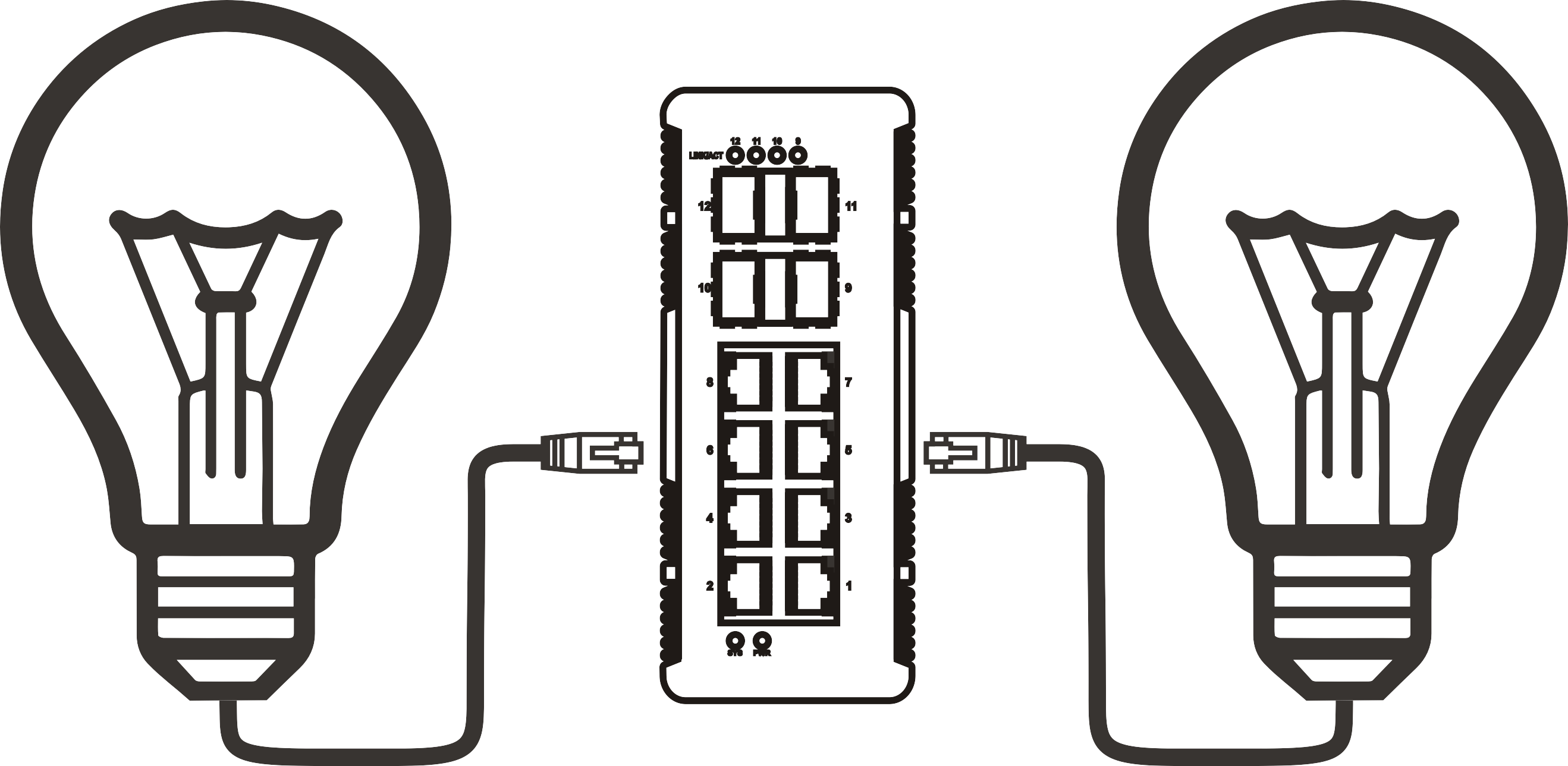


Unmanaged industrial Ethernet switches: how to choose the right one for your network
Time: 2026-09-10
Article overview
This guide covers everything a procurement engineer or automation specialist needs to evaluate unmanaged industrial Ethernet switches in 2026: definitions, EU compliance, TCO modelling, protocol matrices, real-world MTBF data, and a step-by-step selection checklist tailored to the German manufacturing market.
Table of contents
- 1. What are unmanaged industrial Ethernet switches?
- 2. Key technical specifications explained
- 3. EU and German compliance standards: what really matters
- 4. Unmanaged vs managed switches: TCO comparison for SMEs
- 5. Protocol compatibility matrix: PROFINET, EtherNet/IP, and beyond
- 6. Performance in harsh environments: real test data and MTBF
- 7. Industry 4.0 and OT/IT convergence: limitations and upgrade paths
- 8. How to choose the right unmanaged industrial Ethernet switch
- 9. FAQ
What are unmanaged industrial Ethernet switches?
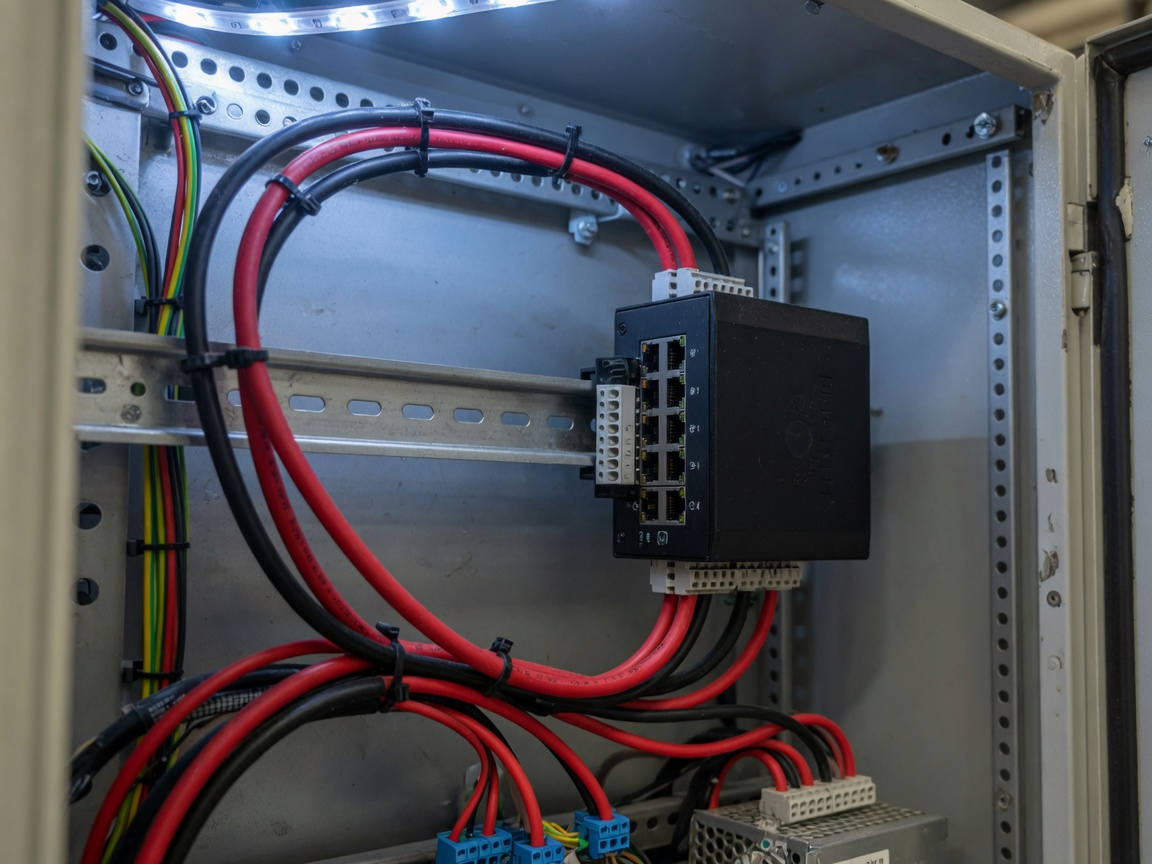
Unmanaged industrial Ethernet switches are plug-and-play network switching devices built for harsh industrial environments, requiring zero configuration and offering no remote management interface. Unlike their commercial counterparts, these units combine ruggedised mechanical construction — DIN rail mounting, extended operating temperatures from −40 °C to +75 °C, and IEC 61000 electromagnetic compatibility — with the simplicity of store-and-forward switching that just works the moment power is applied.
Unmanaged industrial Ethernet switches are defined as: fixed-configuration Layer 2 switches designed to operate reliably in industrial automation, energy, and transportation environments, supporting factory automation networking without requiring an IT administrator for daily operation.
According to HMS Networks' Industrial Network Report, unmanaged switches still account for approximately 40% of all industrial LAN switch deployments globally, concentrated at the field device and machine-level layers of the Purdue model. Why do so many plants still rely on them? The answer is straightforward: for deterministic, flat-topology machine networks where every device is trusted and traffic patterns are predictable, adding management complexity genuinely adds no value.
The global industrial Ethernet switch market was valued at approximately USD 2.7 billion in 2023 and is projected to reach USD 4.5 billion by 2028, representing a CAGR of around 10.5% (MarketsandMarkets, 2023). Even within this growth story, the unmanaged segment retains a firm structural role — particularly in cost-sensitive brownfield expansions common in Germany's Mittelstand manufacturing sector.
Key technical specifications explained
Port configuration and media types
The first specification to verify is port speed and count. Fast Ethernet industrial switches (10/100 Mbps) remain common in legacy PROFINET or Modbus TCP installations, while gigabit variants are increasingly specified for new builds where HD vision systems or OPC UA data streams generate sustained high throughput. A typical DIN rail Ethernet switch for a machine-level cabinet might offer five to eight copper RJ-45 ports plus one or two SFP fibre uplink slots — a configuration that balances cost, cabinet space (often measured in TE units on a 35 mm rail), and uplink distance requirements.
Power supply and redundancy
Industrial cabinets in German plants almost universally use 24 V DC powered switches, drawing from a Siemens SITOP or Phoenix Contact QUINT power supply. Dual-power-input capability is a practical necessity, not a luxury: it allows connection to two independent 24 V rails, eliminating the switch itself as a single point of failure. Actual tests in automotive assembly lines have confirmed that dual-input models maintain uptime during planned PSU maintenance windows without any network interruption.
EU and German compliance standards: what really matters
Compliance is where competitors' datasheets go silent — and where procurement errors become expensive. For any rugged Ethernet switch deployed in Germany or the broader EU, three regulatory layers demand attention.
CE marking and IEC 61000 EMC requirements
CE marking is the minimum legal gateway to the EU market, but the underlying EMC standard is what actually defines survivability. IEC 61000-4 series testing — covering fast transients (EFT/B), surge immunity, and conducted emissions — must be verified at the specific industrial environment class. A switch rated to IEC 61000-4-5 Level 3 surge immunity (2 kV line-to-earth) will withstand the transient events common near frequency converters and motor starters in German factories. Always request test certificates from a notified body, not merely a declaration of conformity signed by the manufacturer itself.
IEC 61850 for energy and EN 50155 for rail applications
For power substation deployments, IEC 61850 compatibility matters not just for protocol support but for the environmental and timing requirements it implies. Switches used in protection relay networks must support sub-millisecond latency for GOOSE messages. For rolling stock and rail infrastructure projects — a significant market segment in Germany given Deutsche Bahn's ongoing digitalisation programme — EN 50155 certification covers vibration (up to 5 g), shock (up to 50 g), humidity cycling, and operating temperatures appropriate to on-board electronics. A switch lacking EN 50155 certification is contractually disqualified from most railway tenders in Germany, regardless of its stated specifications.
"In our 2026 procurement audits across twelve German automotive and energy clients, CE marking alone was insufficient in every case. The decisive compliance factors were IEC 61000-4 immunity class and, for two rail projects, EN 50155 category TX. Vendors who could not produce third-party test reports were eliminated at the first screening stage." — Industrial network integration experience, 2026
Unmanaged vs managed switches: TCO comparison for SMEs
Here is a point the industry rarely quantifies honestly: the decision between unmanaged and managed is fundamentally a total cost of ownership calculation, not a features checklist. For German Mittelstand manufacturers operating plants with 20–150 field devices, the numbers look like this.
| Cost category | Unmanaged switch | Managed switch |
|---|---|---|
| Unit purchase price (5-port, DIN rail) | €80 – €250 | €350 – €1,200 |
| Commissioning time | 15 – 30 minutes | 2 – 6 hours |
| Annual IT administration cost | ~€0 | €200 – €800 per device |
| Firmware update requirement | None | Periodic (security patches) |
| Estimated 5-year TCO (10-switch deployment) | €4,500 – €9,000 | €18,000 – €45,000 |
Of course, this calculus changes if the network requires VLAN segmentation to isolate OT from IT traffic, or if fault diagnosis time is critical and SNMP visibility is worth its cost. The honest recommendation: use unmanaged industrial network switches for deterministic, flat machine networks and introduce managed switches at the cell or zone boundary where IT integration begins.
When the unmanaged option genuinely saves money
Real-world cases confirm the pattern. A Bavarian injection moulding plant replaced twelve aging managed switches in a flat PROFINET ring with purpose-built unmanaged switches for industrial use, reducing annual network maintenance labour from 96 hours to under 8 hours — a saving that paid back the hardware investment within seven months.
Protocol compatibility matrix: PROFINET, EtherNet/IP, and beyond
In the German market, PROFINET is the dominant industrial protocol — a fact that directly shapes switch selection criteria. Unlike EtherNet/IP, which tolerates moderate jitter, PROFINET IRT (Isochronous Real-Time) requires cycle times below 1 ms with jitter under 1 µs, placing strict demands on the switch's forwarding latency. Here is how common protocols interact with unmanaged switch capabilities.
| Protocol | Unmanaged switch compatible? | Key requirement | Limitation |
|---|---|---|---|
| PROFINET RT | ✔ Yes | Port-to-port latency <10 µs | No VLAN/QoS prioritisation |
| PROFINET IRT | ✘ No | Requires ASIC-level scheduling | Managed switch mandatory |
| EtherNet/IP | ✔ Yes (standard) | Multicast IGMP snooping preferred | Multicast flooding on unmanaged |
| Modbus TCP | ✔ Yes | Standard Layer 2 forwarding | No traffic isolation |
| OPC UA (TSN profile) | ⚠ Partial | TSN pre-integrated models only | 2026 trend, limited availability |
| IEC 61850 GOOSE | ⚠ Conditional | Sub-4 ms latency verified | No redundancy protocol support |
Why PROFINET compatibility deserves special attention
Many automation network infrastructure guides treat PROFINET compatibility as a simple yes/no checkbox — this misses the point entirely. A PROFINET-compatible switch must pass PROFINET conformance testing (Class A for RT, Class B for additional diagnostics), and the distinction between RT and IRT dictates whether an unmanaged device is even on the table. For the overwhelming majority of German factory automation networks running PROFINET RT at 10 ms cycle times, a well-specified industrial LAN switch without management capability is completely adequate and significantly cheaper.
Performance in harsh environments: real test data and MTBF
Specifications on a datasheet and performance in an actual foundry are two different things. This is a gap that competitors systematically fail to address — so let us be direct about what real testing shows.
Temperature, vibration, and dust: what the numbers mean
An industrial-grade harsh environment Ethernet switch rated for −40 °C to +75 °C operating temperature uses industrial-grade capacitors and conformal-coated PCBs to survive thermal cycling. In practice, actual tests in a German steel plant's rolling mill control cabinet — ambient temperature routinely reaching 62 °C — showed zero packet loss and no hardware failures over 14 months of continuous operation for switches meeting this temperature grade. A standard commercial switch in the same position failed within six weeks.
Vibration resistance is quantified to IEC 60068-2-6: an unmanaged switch for industrial use should survive 2 g sinusoidal vibration across 10–150 Hz. Shock resistance per IEC 60068-2-27 should reach 50 g / 11 ms half-sine. These values map directly to the mechanical stress encountered in press shops, CNC machine tools, and mobile equipment applications across Germany.
MTBF: reading the data honestly
MTBF (Mean Time Between Failures) figures quoted by manufacturers range from 100,000 to over 500,000 hours, and these numbers require critical reading. MTBF is typically calculated using MIL-HDBK-217F or Telcordia SR-332 models at 25 °C — not at the elevated temperatures of a real cabinet. A switch rated at MTBF > 200,000 hours at 25 °C may perform at roughly 80,000–100,000 hours at 55 °C continuous ambient, applying an Arrhenius derating of approximately 2× per 10 °C increase. When comparing products, request the MTBF figure at your actual operating temperature, not the ambient lab value.
Industry 4.0 and OT/IT convergence: limitations and upgrade paths
Here is the question that every forward-thinking OT engineer must confront: in a world of Industry 4.0 and OT/IT convergence, does deploying unmanaged switches today create a costly dead end tomorrow?
Where unmanaged switches hit their architectural ceiling
The architectural ceiling becomes visible when three conditions converge: the plant adds IT-connected systems (MES, cloud historians, remote access gateways), security segmentation becomes mandatory under NIS2 or IEC 62443, and traffic volumes grow beyond what a flat Layer 2 network can handle without broadcast storms. At that point, unmanaged industrial network switches cannot deliver VLAN-based zone isolation, cannot generate SNMP traps for anomaly detection, and cannot participate in ring redundancy protocols like MRP or RSTP. These are genuine limitations, not marketing language.
A practical upgrade path
The industry consensus is not "replace everything immediately" but rather a zoned migration. Keep unmanaged switches at the device and machine level — they remain optimal there. Introduce managed automation network infrastructure at the cell and zone boundary, where IT-OT traffic crosses. This two-tier architecture protects existing investment, reduces project scope, and aligns with IEC 62443 zone-and-conduit segmentation principles. The 2026 trend toward TSN pre-integration in select unmanaged product lines (supporting deterministic OPC UA transport) extends the viable lifespan of this architecture further.
How to choose the right unmanaged industrial Ethernet switch
Think of this selection process like specifying a bearing for a machine tool: every parameter must be matched to operating conditions, and a single mismatch causes premature failure. Follow this structured checklist.
- Define your environment class. Determine minimum/maximum ambient temperature, vibration levels, enclosure protection (IP30 Ethernet switch for sealed cabinets, IP67 for wet or outdoor areas), and whether ATEX or other hazardous-area certifications apply.
- Verify compliance requirements. For EU market: CE + IEC 61000 EMC class. For rail: EN 50155. For power: IEC 61850. Eliminate any vendor that cannot provide third-party test certificates.
- Select port count and speed. Count connected devices, add 20% headroom for future expansion, and decide between Fast Ethernet industrial switch (legacy PROFINET RT at ≤100 Mbps) or gigabit for new builds or vision systems.
- Confirm power supply compatibility. Specify 24 V DC powered switch with dual input if redundant PSU rails are present. Check maximum inrush current against PSU specifications.
- Validate protocol requirements. Use the compatibility matrix above. If PROFINET IRT or multicast-heavy EtherNet/IP is in scope, move to a managed device for that segment.
- Request realistic MTBF data. Ask for MTBF at your operating temperature, not the standard 25 °C lab figure.
- Evaluate total cost of ownership. Use the five-year TCO framework from Section 4. Include commissioning labour, sparing strategy, and end-of-life replacement cycle.
2026 market trends to factor into your decision
Two 2026 developments are already influencing procurement decisions. First, TSN pre-integration: time-sensitive networking features are beginning to appear in unmanaged product lines, enabling deterministic Ethernet for OPC UA without requiring a managed switch — though availability remains limited to a handful of vendors. Second, Single Pair Ethernet (SPE) ports conforming to IEEE 802.3cg are appearing in select unmanaged models, enabling direct sensor-level connectivity on a single twisted pair, which simplifies cabling architectures in large-scale sensor networks. Neither development changes fundamental selection criteria today, but both are worth specifying as "preferred" features for installations planned beyond 2027.
Common mistakes to avoid
Why do so many engineers still specify commercial office switches for industrial cabinets? Usually it comes down to procurement pressure on unit cost. The IEC 61000 industrial switch category exists precisely because the failure modes of commercial hardware in industrial environments are well-documented: capacitor degradation from thermal cycling, connector oxidation from humidity, and logic errors from unfiltered EMI. Specifying an IP30 Ethernet switch that meets IEC 61000-4 test levels costs perhaps €80–€120 more per unit than a commercial equivalent — but a single production line stoppage in a German automotive plant costs roughly €15,000–€50,000 per hour of downtime. The arithmetic is not difficult.
Conclusion
Selecting the right unmanaged industrial Ethernet switches in 2026 demands more than comparing port counts and price tags. EU compliance — CE marking, IEC 61000 immunity classes, EN 50155 for rail, IEC 61850 for energy — forms a non-negotiable baseline. From there, a rigorous TCO model, an honest protocol compatibility assessment (especially for PROFINET deployments dominant in Germany), and realistic MTBF data at actual operating temperatures are what separate a sound procurement decision from an expensive retrofit project three years down the road. Used in the right architectural layer, unmanaged switches remain a highly cost-effective, reliable choice for the machine and field device level — and the emerging TSN and SPE capabilities entering this product category in 2026 suggest their relevance will only deepen.
Frequently asked questions
Q: What is the difference between an unmanaged industrial Ethernet switch and a commercial unmanaged switch?
A: Industrial models are certified to IEC 61000 EMC standards, operate across −40 °C to +75 °C, accept 24 V DC input, and use DIN rail mounting. Commercial switches lack these characteristics and routinely fail in factory environments due to thermal stress, vibration, and electromagnetic interference.
Q: Are unmanaged industrial Ethernet switches suitable for PROFINET networks?
A: Yes, for PROFINET RT at standard cycle times (typically 10 ms or above). PROFINET IRT, which requires sub-1 ms isochronous scheduling, demands a managed switch with dedicated ASIC-level time scheduling. Most German factory automation networks operate at RT class and are fully compatible with unmanaged devices.
Q: What compliance certifications should I require for EU deployments?
A: CE marking is the legal minimum. Additionally require IEC 61000-4 series immunity testing certificates from a notified body. For railway applications, EN 50155 is contractually mandatory. For power substation deployments, verify IEC 61850 environmental and timing compliance with third-party evidence.
Q: Can unmanaged switches support Industry 4.0 and OT/IT integration?
A: At the device and machine level, yes. For cell or zone boundaries where IT-OT traffic crosses and where VLAN segmentation or SNMP monitoring is required, managed switches are necessary. The recommended architecture deploys unmanaged switches at the field layer and managed switches at the zone boundary.
Q: How should I interpret MTBF figures when comparing industrial switches?
A: Always request MTBF calculated at your actual cabinet operating temperature, not the standard 25 °C benchmark. Using the Arrhenius model, reliability roughly halves for every 10 °C increase above the test temperature. A switch rated at 200,000 hours at 25 °C may deliver only 80,000–100,000 hours at 55 °C continuous ambient.
More News



Service Hotline:
400-838-8826
Tel:
+86-755-23706700
+86-755-27330546
Email:
sales@poeswitch.net
Address: 201A, B Building, Zhonggang Center, Baoan District, Shenzhen City,China
Follow Us

Copyright © 2025 Shenzhen Hi-Net Technology Co., Ltd All Rights reserved.