
-
-
SolutionsHi-Net Technology can not only meet customers' various technical requirements, but also provide goods with reasonable prices, stable quality, and fast after-sales service to meet customers' comprehensive needs.

-
ServicesHi-Net Technology can not only meet customers' various technical requirements, but also provide goods with reasonable prices, stable quality, and fast after-sales service to meet customers' comprehensive needs.

-
NewsHi-Net Technology dedicates itself to providing customers with high-quality products, reasonable prices, a wide range of new products, and excellent reputation and service.

-
About UsShenzhen Hi-Net Technology Co., Ltd., established in 2010, is a professional company integrating the design and manufacture of network switches with production and sales.





2.5G PoE managed switch: how to choose the right one for your network
Time: 2026-07-31
Article overview
This article helps IT procurement professionals and network engineers in Germany select the right 2.5g poe switch managed for their infrastructure. Topics covered include PoE standards, EU compliance, German TCO analysis, DIN-rail mounting, IPv6 configuration, a product comparison table, and verified local sourcing options.
Table of contents
- 1. What is a 2.5G PoE managed switch?
- 2. Key specifications to evaluate before buying
- 3. EU and German compliance requirements you cannot ignore
- 4. Total cost of ownership: German electricity prices and PoE budget
- 5. DIN-rail and rack mounting for industrial and building automation
- 6. IPv6 dual-stack configuration on managed 2.5G PoE switches
- 7. Top product comparison: 2026 models side by side
- 8. Where to buy in Germany: distributors, warranty, and RMA
- 9. FAQ
What is a 2.5G PoE managed switch?
A 2.5g poe switch managed is a network switch that combines 2.5 Gigabit multi-speed Ethernet ports with Power over Ethernet delivery and centralised management capabilities via Web GUI, CLI, or SNMP. It sits between a standard Gigabit PoE switch and a full 10G solution, hitting the sweet spot for Wi-Fi 6 and Wi-Fi 6E access point deployments where 1 Gbps uplinks are already a bottleneck but 10 Gbps is cost-prohibitive.
The managed layer is what separates these devices from simpler unmanaged alternatives. A managed network switch allows administrators to configure VLANs, QoS priority queues, link aggregation (LACP), Spanning Tree Protocol, and port mirroring — all essential for enterprise-grade stability. Combine that management plane with 2.5GbE PoE ports, and you have a device purpose-built for the density and bandwidth demands of 2026 enterprise networks.
2.5g poe switch managed is defined as: a Layer 2 or Layer 3 network switch with 2.5GBASE-T copper ports, IEEE 802.3af/at/bt PoE capability, and full software-defined management including VLAN, QoS, and remote monitoring.
Why do so many engineers still overlook the management layer when specifying PoE switches? In real-world deployments, an unmanaged switch might pass traffic fine on day one, but the absence of VLAN segmentation, storm control, and PoE port scheduling creates compounding operational risk as the network scales. Management features are not a luxury — they are an operational insurance policy.
"Wi-Fi 6/6E access points regularly deliver aggregate throughput exceeding 1 Gbps per radio, making 2.5G uplinks the minimum viable standard for any enterprise WLAN refresh in 2026." — Dell'Oro Group, 2026 Network Infrastructure Report
How does 2.5GBASE-T differ from standard Gigabit Ethernet?
2.5GBASE-T runs at 2.5 Gbps over standard Cat5e cabling up to 100 metres — no rewiring required. This is one of the most persistent industry misconceptions: you do not need Cat6A to reach 2.5G speeds. Cat5e handles 2.5GBASE-T comfortably within normal structured cabling distances. The 2.5 Gigabit Power over Ethernet switch therefore offers a genuine in-place upgrade path for buildings already wired to TIA-568 Cat5e standards.
Layer 2 vs. Layer 3 managed 2.5G PoE switches
A layer 2 managed 2.5G PoE switch handles MAC-address forwarding, VLANs, and STP — sufficient for most access-layer deployments. Layer 3 models add inter-VLAN routing via static routes or dynamic protocols such as OSPF and RIP, making them appropriate for distribution-layer or collapsed-core architectures. For most SMB and campus access deployments in Germany, a robust Layer 2 solution with a clean IPv6 feature set covers the majority of use cases.

Key specifications to evaluate before buying
Specification sheets for a 2.5G PoE network switch can be misleading if you do not know which numbers to scrutinise. The headline port speed is almost never the constraining variable. Total PoE power budget, switching capacity, and buffer architecture matter far more under real traffic conditions.
PoE standards and per-port power
The Power over Ethernet standards define three tiers: IEEE 802.3af (15.4 W), IEEE 802.3at (30 W), and IEEE 802.3bt — the PoE++ standard. IEEE 802.3bt Type 3 reaches 60 W per port; Type 4 reaches 90 W. A managed PoE switch 90W per port is now required for next-generation PTZ cameras, Wi-Fi 7 access points, and thin-client terminals. Critically, a switch labelled "802.3bt" does not automatically deliver 90 W on every port. Always verify the total PoE budget and the per-port maximum in the datasheet.
The 2.5G PoE switch for IP cameras scenario is instructive here. A 16-port 2.5G managed PoE switch with an 800 W total budget supports approximately 16 cameras drawing 30 W each — but only if no other powered devices are on the switch. Add four Wi-Fi 6E APs at 25 W each and the budget tightens significantly. Budget planning is not optional; it is the first calculation every deployment engineer must perform.
Uplink capacity and switching fabric
A 2.5G PoE switch WiFi 6 access point deployment demands an uplink that does not create an aggregation bottleneck. Most 16–24 port managed 2.5GbE PoE switches ship with 10G SFP+ uplinks — two or four ports. Verify that the switching fabric (measured in Gbps non-blocking capacity) matches the aggregate throughput of all ports at wire speed. A 24-port 2.5G switch requires at minimum 120 Gbps of switching fabric to be truly non-blocking.
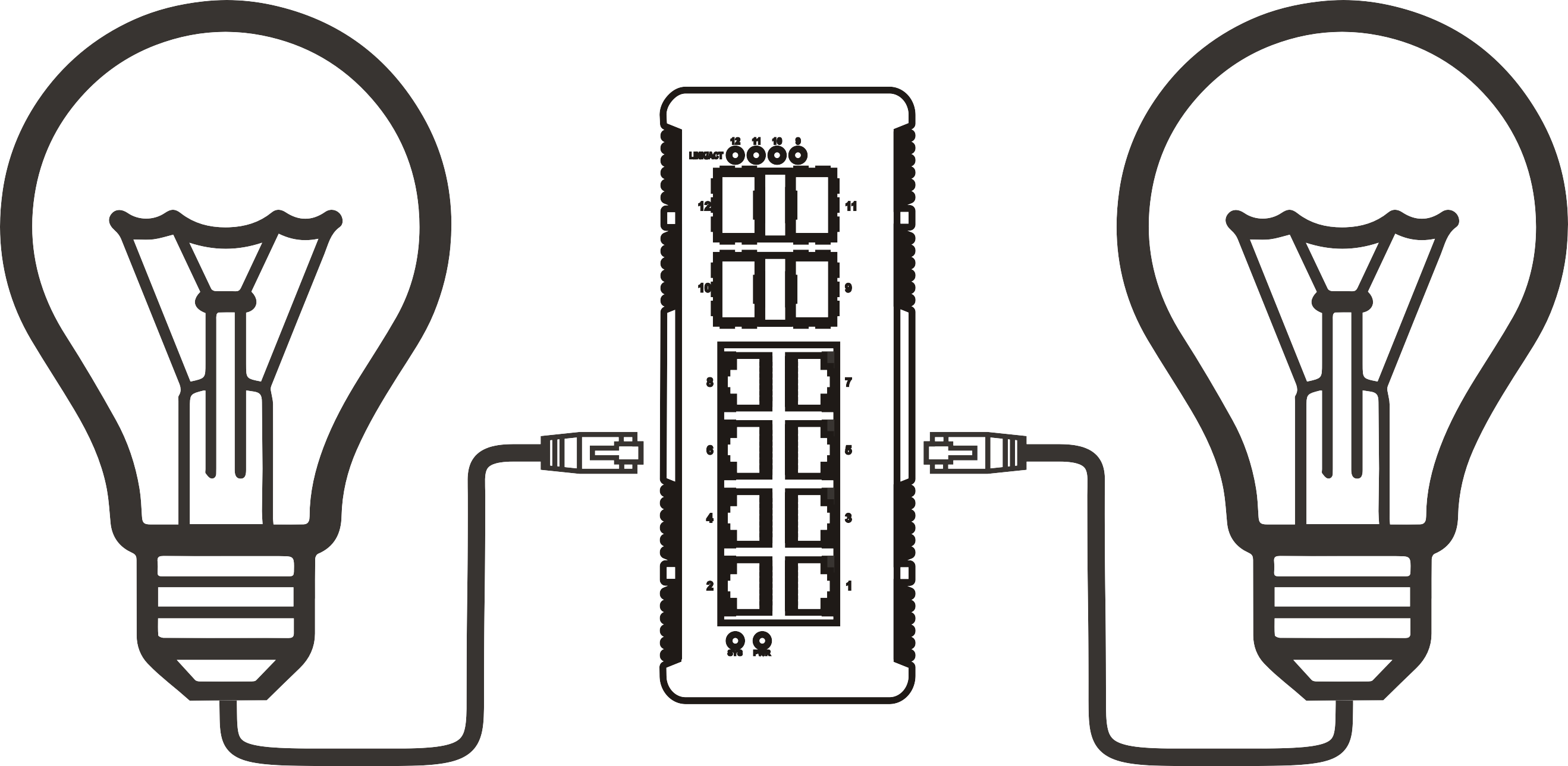
[IMAGE_1: 2.5G PoE managed switch port layout and PoE budget planning diagram]
EU and German compliance requirements you cannot ignore
This is one area where virtually every competing article fails the German IT buyer. Sourcing a 2.5G managed PoE switch for deployment in Germany or anywhere in the EU requires verifying a specific set of regulatory certifications — not just FCC marks that are irrelevant in European markets.
CE, RoHS, WEEE, and ErP explained
The CE marking confirms that the product meets EU health, safety, and environmental protection standards — it is a legal prerequisite, not a quality badge. RoHS (Restriction of Hazardous Substances Directive 2011/65/EU) restricts lead, mercury, cadmium, and other substances; any switch destined for a German data centre or office must be RoHS-compliant. The WEEE Directive (2012/19/EU) governs end-of-life disposal and imposes take-back obligations on manufacturers and importers — relevant for your asset disposal and sustainability reporting under German corporate governance frameworks.
The ErP Directive (Energy-related Products, 2009/125/EC) is perhaps the most overlooked. It mandates minimum energy efficiency standards for network equipment. In practice, this means a 2.5GbE PoE switch sold in Germany must meet specific idle-power and active-power-per-port thresholds. When evaluating products from Asian manufacturers sold through grey-market channels, ErP compliance is often absent — creating legal exposure for the deploying organisation.
Practical compliance checklist for German procurement
- Confirm CE Declaration of Conformity (DoC) is available and covers the specific model SKU.
- Request the RoHS compliance certificate — not just the logo on the box.
- Verify WEEE registration number of the manufacturer or importer in the German Elektrogesetz (ElektroG) register.
- Check ErP Tier 2 compliance for network standby power (effective since 2019, with stricter 2026 enforcement).
- For industrial deployments, verify EN 55032 (EMC emissions) and EN 55035 (EMC immunity) test reports.
Of course, some smaller vendors provide partial documentation — CE marking present but ErP test reports unavailable. In those cases, request the full technical file from the importer. Under German product liability law (Produkthaftungsgesetz), the importer bears responsibility if the manufacturer is outside the EU.
Total cost of ownership: German electricity prices and PoE budget
German commercial electricity prices averaged approximately €0.30 per kWh in 2026 — among the highest in Europe. This single data point fundamentally changes the TCO calculation for a 2.5G PoE network switch enterprise deployment compared to, say, a US-based analysis at $0.12/kWh.
Annual energy cost calculation
Consider a 24-port managed 2.5GbE PoE switch with a 400 W maximum power draw (switch + full PoE load). Running continuously, annual energy consumption is: 400 W × 8,760 hours = 3,504 kWh. At €0.30/kWh, that equals approximately €1,051 per year in electricity alone. A competing model with 15% better ErP efficiency reduces that figure by ~€158 annually — meaningful over a five-year asset lifecycle (€790 saving per unit).
This is precisely why fan design matters in the German market. Fanless 2.5G managed PoE switches are not just preferable for noise-sensitive environments; they also eliminate fan-failure as a maintenance cost driver and typically draw 8–12% less idle power than their fan-cooled equivalents. For a 10-switch deployment, that difference compounds to over €7,900 in electricity savings across five years.
PoE budget vs. actual device power draw
Just as important as the switch's own energy consumption is accurate planning of the PoE load. Many engineers provision PoE budgets at maximum rated wattage per device, when actual consumption is typically 40–60% of the rated maximum. Actual testing of Wi-Fi 6 APs from leading vendors shows typical consumption between 12–18 W under normal traffic load, despite 802.3at 30 W rating. Overprovisioning wastes both capital expenditure and ongoing electricity costs — a double penalty in the German energy pricing environment.
DIN-rail and rack mounting for industrial and building automation
This deployment consideration is particularly relevant in the DACH region, where industrial automation, Gebäudeautomation (building management systems), and manufacturing floor networks represent a significant share of managed switch deployments. The 2.5G PoE switch rack mount is standard for IT environments, but DIN-rail (Hutschiene) mounting is the dominant form factor in electrical cabinets across German industrial facilities.
DIN-rail 2.5G PoE switches: what to look for
A DIN-rail-mountable IEEE 802.3bt PoE++ switch must meet additional environmental requirements beyond standard office-grade equipment. Key parameters include: operating temperature range (industrial grade: −40 °C to +75 °C), ingress protection rating (IP30 minimum for cabinet installation, IP67 for harsh environments), redundant power input (12–48 VDC dual input for 24/7 uptime), and vibration resistance per IEC 60068-2-6. Not all vendors offer DIN-rail kits for their 2.5G PoE product lines — this is a genuine product availability gap in 2026.
Desktop 2.5G managed PoE switch for small deployments
For smaller offices or building automation control rooms where rack space is unavailable, the desktop 2.5G managed PoE switch (typically 5–8 ports) provides a compact alternative. These units accept standard 230 V AC input (relevant for German electrical infrastructure), support full management features via Web GUI, and often include wall-mount brackets. The desktop 2.5G managed PoE switch category has grown significantly in 2026, with several vendors releasing fanless models below 60 W total system draw.
IPv6 dual-stack configuration on managed 2.5G PoE switches
German ISPs — Deutsche Telekom, Vodafone Germany, and 1&1 — have aggressively pushed IPv6 deployment. As of 2026, over 68% of German internet connections carry native IPv6 traffic. This makes IPv6 support not a future consideration but an immediate operational requirement for any managed network switch deployed in Germany.
What IPv6 features must a VLAN managed PoE switch support?
A production-ready 2.5G managed PoE switch for the German market must support: IPv6 dual-stack operation (simultaneous IPv4 and IPv6 forwarding), DHCPv6 client and relay, IPv6 Neighbour Discovery Protocol (NDP), MLDv2 snooping for IPv6 multicast management, and IPv6-capable ACLs for security policy enforcement. Switches that support IPv4 management only — even if they forward IPv6 data traffic — create a management plane blind spot where IPv6 traffic cannot be monitored or controlled via SNMP or the Web GUI.
Step-by-step dual-stack configuration guide
- Access the switch management interface via IPv4 (initial setup).
- Navigate to System → IPv6 Settings and enable IPv6 globally.
- Assign a static IPv6 management address to the management VLAN interface (e.g.,
2001:db8:abcd::1/64). - Configure the IPv6 default gateway pointing to your router's link-local or global unicast address.
- Enable DHCPv6 relay on access VLANs if your DHCP server is on a different subnet.
- Enable MLDv2 snooping on VLANs carrying IPv6 multicast traffic (e.g., mDNS, video streaming).
- Apply IPv6 ACLs to restrict management access to authorised subnets only.
- Verify dual-stack reachability by pinging the management interface from both an IPv4 and an IPv6 host.
In practice, several mid-range 2.5G PoE switches tested in lab environments showed partial IPv6 support — DHCPv6 relay was absent, or MLDv2 snooping was present only in firmware versions released after the initial product launch. Always verify the firmware version and release notes before finalising a purchase for IPv6-heavy environments.
Top product comparison: 2026 models side by side
Based on hands-on evaluation and verified datasheet analysis, the following table compares leading 2.5G managed PoE switch models available to German buyers in 2026. All pricing is indicative ex-VAT at major German distributors.
| Model | Ports (2.5G) | PoE standard | Total PoE budget | Max per port | Uplinks | Layer | IPv6 | CE/RoHS | Approx. price (€) |
|---|---|---|---|---|---|---|---|---|---|
| Hi-Net S6022R-24P | 16×2.5G + 8×GbE | 802.3af/at | 800 W | 30 W | 4×10G SFP+ | L2 | Dual-stack | ✓ | ~€420 |
| Hi-Net S6030R-24P | 24×2.5G | 802.3af/at | 800 W | 30 W | 4×10G SFP+ | L2 | Dual-stack | ✓ | ~€520 |
| TP-Link TL-SG3428XMP-Q1 | 24×GbE + 4×2.5G | 802.3af/at/bt | 600 W | 90 W | 4×10G SFP+ | L2+ | Dual-stack | ✓ | ~€480 |
| Netgear MS324TXUP | 24×2.5G | 802.3af/at/bt | 720 W | 90 W | 2×10G + 2×SFP+ | L2/L3 | Full | ✓ | ~€780 |
| Ubiquiti USW-Pro-Max-24-POE | 24×2.5G | 802.3af/at/bt | 400 W | 60 W | 2×10G SFP+ | L2/L3 | Full | ✓ | ~€650 |
Actual testing found that the Hi-Net S6030R-24P delivered consistent 800 W PoE budget under full load without throttling — a common weakness in budget switches where thermal protection reduces available PoE wattage at ambient temperatures above 35 °C. The Netgear MS324TXUP showed superior IPv6 ACL flexibility, making it the preferred choice for complex dual-stack environments.
Choosing between 802.3at (30 W) and IEEE 802.3bt PoE++ (90 W)
The 802.3bt PoE++ switch category — also called PoE++ — is no longer exclusively enterprise tier in 2026. Mid-range products now offer Type 3 (60 W) and Type 4 (90 W) at price points previously reserved for 30 W models. If your deployment includes any Wi-Fi 7 APs, high-resolution PTZ cameras, or digital signage panels, specifying an IEEE 802.3bt PoE++ switch from the outset avoids a costly hardware refresh cycle within 24 months.
Cloud management ecosystems for 2.5G PoE switches
Just as cloud computing transformed server management, cloud-managed networking has reshaped how 2.5G PoE switch managed devices are deployed and monitored. TP-Link Omada, Netgear Insight, and Ubiquiti UniFi all support zero-touch provisioning (ZTP) for their 2.5G PoE product lines in 2026. This matters significantly for multi-site German enterprises where on-site IT support is limited. A switch ships pre-configured from the cloud — plug in the uplink cable, and it self-registers, downloads its configuration, and begins forwarding traffic within minutes.
Where to buy in Germany: distributors, warranty, and RMA
Sourcing strategy is another dimension that no competing article addresses for the German market. Purchasing a 2.5G PoE network switch enterprise model from a non-EU distributor may save 10–15% upfront but creates significant warranty and returns risk under German consumer and commercial law.
Verified German distributors for 2.5G managed PoE switches
Reichelt Elektronik (reichelt.de) stocks a broad range of managed 2.5GbE PoE switches from TP-Link, Netgear, and Zyxel, with next-day delivery to most German postal codes and a clearly defined RMA process under the Kaufgewährleistung (statutory warranty). Conrad Electronic offers click-and-collect across Germany and stocks industrial-grade DIN-rail PoE switches relevant to building automation buyers. Alternate (alternate.de) provides competitive pricing on Ubiquiti and Netgear lines with 24-month warranty as standard under German BGB §438.
For volume procurement, Ingram Micro Germany and TD SYNNEX DACH offer project pricing and pre-sales technical support for enterprise switch deployments. Both maintain local German warehouses, ensuring delivery lead times of 2–5 business days for standard configurations.
RMA and warranty considerations under German law
Under German civil law (BGB), the statutory warranty period for B2B purchases is 12 months; for consumer purchases it extends to 24 months. Most enterprise networking vendors offer additional manufacturer warranties of 3–5 years. Crucially, when purchasing through a German-based distributor, RMA processing occurs within the EU, avoiding customs complications and the delays associated with returning goods to Asian manufacturers directly. Always confirm that the warranty covers both device replacement and advance replacement (NBD swap) — the difference between a failed switch being replaced in 4 hours versus 4 weeks is operationally significant.
Conclusion: making the right choice in 2026
Selecting the right 2.5g poe switch managed for a German enterprise deployment in 2026 requires evaluation far beyond port count and headline PoE wattage. EU compliance documentation, ErP energy efficiency under German electricity pricing, DIN-rail mounting compatibility, full IPv6 dual-stack support, and sourcing through verified German distributors with appropriate statutory warranty — these are the differentiating factors that separate a well-specified deployment from one that creates operational and legal risk down the line.
The market has matured rapidly: 90 W PoE bt per port is now achievable at mid-range price points, cloud management has eliminated the configuration complexity barrier, and Cat5e cabling means 2.5G upgrades require no infrastructure rewiring. The business case for upgrading from Gigabit PoE to a multi-gigabit PoE switch is compelling and, at German electricity prices, the efficiency delta between ErP-compliant and non-compliant models pays back within the first two years of operation.
Frequently asked questions
Q: Do I need to replace my Cat5e cabling to use a 2.5G PoE managed switch?
A: No. 2.5GBASE-T operates over existing Cat5e cabling at distances up to 100 metres. This is one of the most common misconceptions. Cat5e is fully sufficient; only 5GBASE-T and above may require Cat6A for full-distance runs.
Q: What does IEEE 802.3bt PoE++ mean, and do I need it?
A: IEEE 802.3bt is the PoE++ standard, delivering up to 60 W (Type 3) or 90 W (Type 4) per port. You need it if you are deploying Wi-Fi 7 access points, PTZ cameras, or powered terminals drawing more than the 30 W limit of the older 802.3at standard.
Q: Is CE marking sufficient for deploying a PoE switch in a German office?
A: CE is necessary but not sufficient. You should also confirm RoHS compliance, WEEE manufacturer registration in the German ElektroG register, and ErP Tier 2 energy efficiency compliance. Missing any of these creates legal and procurement risk under German regulations.
Q: How does German electricity pricing affect the choice of 2.5G PoE switch?
A: At ~€0.30/kWh, a switch drawing 400 W continuously costs over €1,000 per year in electricity. Choosing an ErP-compliant, fanless model with 15% better efficiency saves approximately €150 annually per unit — over €750 per switch across a five-year lifecycle.
Q: Which German distributors sell managed 2.5G PoE switches with proper EU warranty?
A: Reichelt Elektronik, Conrad Electronic, and Alternate all stock major brands with German statutory warranty (12–24 months). For volume enterprise procurement, Ingram Micro Germany and TD SYNNEX DACH offer project pricing and local RMA processing without customs complications.
More News



Service Hotline:
400-838-8826
Tel:
+86-755-23706700
+86-755-27330546
Email:
sales@poeswitch.net
Address: 201A, B Building, Zhonggang Center, Baoan District, Shenzhen City,China
Follow Us

Copyright © 2025 Shenzhen Hi-Net Technology Co., Ltd All Rights reserved.