
-
-
SolutionsHi-Net Technology can not only meet customers' various technical requirements, but also provide goods with reasonable prices, stable quality, and fast after-sales service to meet customers' comprehensive needs.

-
ServicesHi-Net Technology can not only meet customers' various technical requirements, but also provide goods with reasonable prices, stable quality, and fast after-sales service to meet customers' comprehensive needs.

-
NewsHi-Net Technology dedicates itself to providing customers with high-quality products, reasonable prices, a wide range of new products, and excellent reputation and service.

-
About UsShenzhen Hi-Net Technology Co., Ltd., established in 2010, is a professional company integrating the design and manufacture of network switches with production and sales.



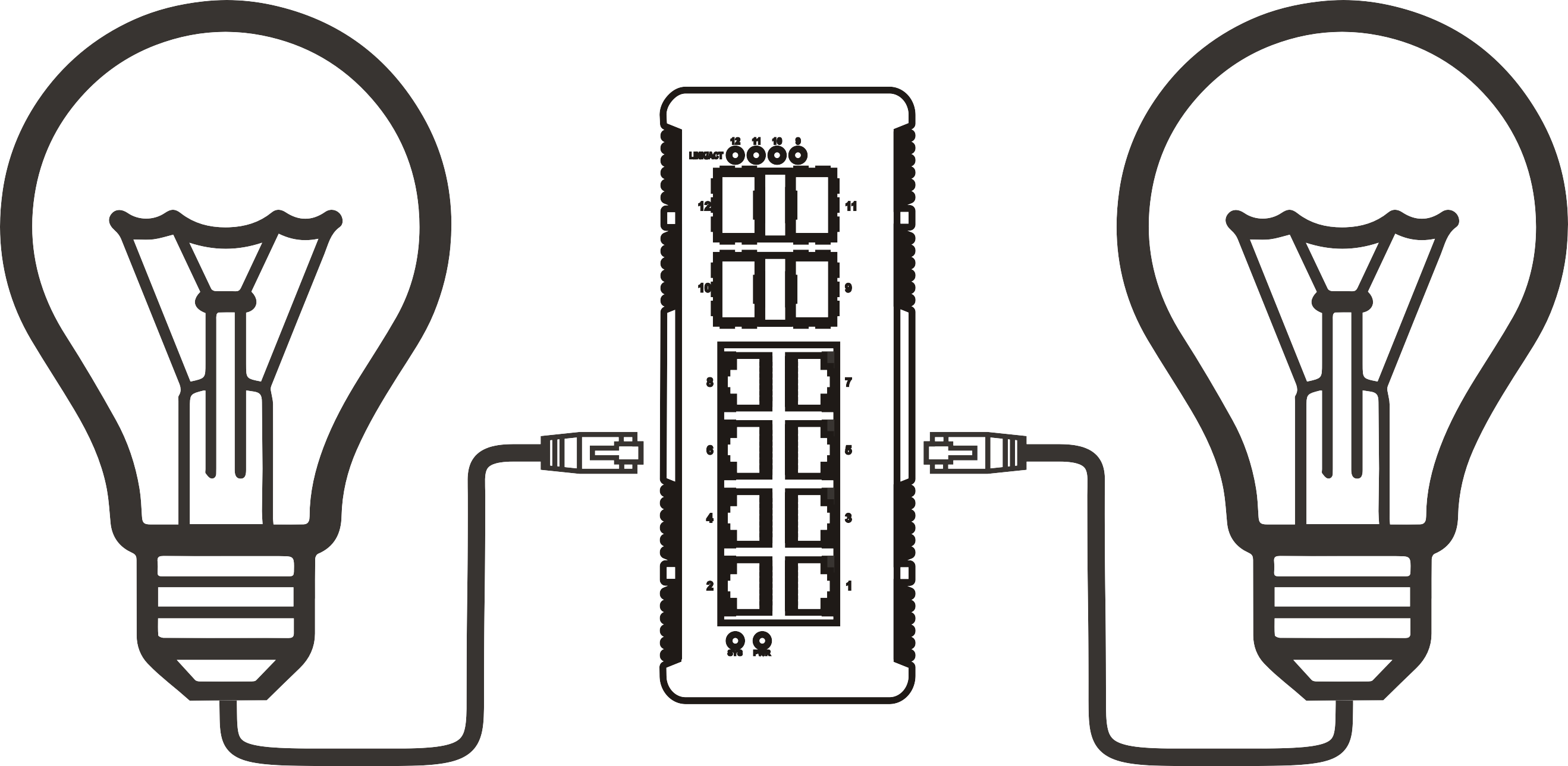


PoE switch 2.5G buying guide: how to choose the right model for your network
Time: 2026-07-30
Article overview
This 2026 buying guide for PoE switch 2.5G covers product definitions, specification comparisons, power-budget calculations, noise and thermal data, CE/ErP compliance, and German market pricing. It is written for IT managers and network engineers at the pre-purchase evaluation stage.
Table of contents
- 1. What is a PoE switch 2.5G?
- 2. Why 2.5G PoE matters in 2026
- 3. Key specifications to compare before you buy
- 4. PoE power budget: how to calculate what you actually need
- 5. Noise, thermals, and CE/ErP compliance
- 6. Top models compared: specs, prices, and performance
- 7. Integrating a 2.5G PoE switch with FRITZ!Box
- 8. FAQ
What is a PoE switch 2.5G?
A PoE switch 2.5G is a network switch that combines 2.5 Gigabit Ethernet ports (2500 Mbps per port) with Power over Ethernet capability, delivering both data and DC power over a single standard Cat5e or Cat6 cable to connected devices such as wireless access points, IP cameras, and VoIP phones.
This product category sits between traditional Gigabit PoE switches and full 10G switching infrastructure. It occupies a strategically important position: the 2.5× throughput increase over standard Gigabit is enough to feed Wi-Fi 6 and Wi-Fi 6E access points at near-maximum capacity, yet the hardware cost premium over 1G is far more modest than stepping up to 10GbE. In practical terms, a 2.5 Gigabit Ethernet switch with PoE is now the logical upgrade path for any organisation or home lab that has already deployed 802.11ax hardware.
PoE switch 2.5G is defined as a multi-gigabit switch platform operating at the NBASE-T 2.5GBASE-T speed tier, as standardised in IEEE 802.3bz, with integrated Power over Ethernet circuitry conforming to IEEE 802.3af (15.4 W), 802.3at/PoE+ (30 W), or 802.3bt/PoE++ (60–90 W) per port.
One point worth clarifying immediately: you do not need to replace your existing cabling. The NBASE-T specification was deliberately engineered to run 2.5 Gbps over Cat5e up to 100 metres — the same cable already installed in millions of European buildings. This single fact removes the biggest perceived barrier to adoption and is why the high-speed PoE switch segment is growing so rapidly.
How PoE and 2.5G work together on one cable
Power over Ethernet uses spare wire pairs or phantom feeding across data pairs to inject DC voltage — typically 50–57 V — while data transmission runs simultaneously on the same conductors. A Power over Ethernet switch contains a PSE (Power Sourcing Equipment) controller per port that negotiates the power class with the connected PD (Powered Device) using LLDP or the 802.3bt classification handshake. The 2.5G data signal and the PoE power delivery are electrically isolated via transformers, so neither interferes with the other at normal operating temperatures.
Managed vs. unmanaged variants
The market offers both unmanaged 2.5G switch products — simple plug-and-play devices with no configuration interface — and fully managed PoE switch platforms supporting VLAN segmentation, 802.1p QoS prioritisation, IGMP snooping, and SNMP monitoring. For German SOHO deployments, an unmanaged or web-managed unit is usually sufficient. Enterprise and campus environments, however, benefit from CLI-capable managed PoE switch models where traffic engineering and port-level PoE scheduling are business-critical requirements.
Why 2.5G PoE matters in 2026
The short answer: Wi-Fi 7 is now mainstream, and a Gigabit uplink can no longer keep up. According to 2026 data from IDC, over 40 % of enterprise-class access points shipped globally already include a 2.5G uplink port, a figure that has climbed steeply since Wi-Fi 6E rollouts in 2023–2024. Connecting those APs to a conventional Gigabit switch immediately creates a bottleneck — just as connecting a motorway on-ramp to a single-lane rural road would. A 2.5G network switch with PoE eliminates that bottleneck without requiring a full infrastructure overhaul.
The Wi-Fi 7 driver
Wi-Fi 7 (802.11be) introduces 320 MHz channels and multi-link operation, pushing theoretical aggregate throughput beyond 5 Gbps per AP. In realistic dense-client scenarios, actual backhaul demand regularly exceeds 1.5–2.0 Gbps per radio node — which means a single Gigabit uplink is perpetually saturated. A WiFi 6 PoE switch or Wi-Fi 7–ready 2.5GbE switch resolves this with no recabling. According to recent research by MarketsandMarkets, the global PoE switch market is projected to reach USD 3.4 billion in 2026, growing at a CAGR of approximately 12 %, driven primarily by wireless infrastructure refresh cycles.
PoE++ adoption and smart building applications
Alongside bandwidth growth, power requirements are rising. PTZ surveillance cameras, digital signage panels, and thin-client terminals increasingly demand 60–90 W per port — well beyond the 30 W ceiling of PoE+ (802.3at). The 802.3bt switch standard, also known as PoE++ or Type 3/Type 4, now appears in a growing share of 2.5G products. For German facilities managers evaluating smart-building deployments, this combination of 2500 Mbps bandwidth and 90 W per-port power in a single compact unit represents a meaningful reduction in rack space and installation complexity.

Key specifications to compare before you buy
Comparing a multi-gigabit switch on port count and price alone is a recipe for regret. Several specification dimensions have an outsized impact on real-world performance, and industry consensus is that buyers who overlook switching capacity and PoE budget end up either under-provisioned or with unnecessary cost overhead.
Port count, uplink speed, and switching capacity
A 2.5G desktop switch typically offers 5, 8, or 10 ports — suitable for SOHO deployments. Rack-mount models scale to 16, 24, or 48 ports and add 10G SFP+ or 25G SFP28 uplinks to connect to the core. Critically, verify that the switching fabric capacity equals 2× the total port bandwidth (non-blocking architecture). A 8-port 2.5G switch with a 40 Gbps switching capacity is non-blocking; a model with only 20 Gbps fabric is oversubscribed at full load. The forwarding rate should be verified in Mpps (millions of packets per second), not just Gbps.
PoE standard and per-port power
Three tiers exist in the current market. Standard PoE (802.3af) delivers up to 15.4 W and covers basic IP phones. PoE+ (802.3at) provides 30 W — enough for most Wi-Fi 6 APs and standard PTZ cameras. PoE++ (802.3bt, also called a PoE++ switch) delivers up to 60 W (Type 3) or 90 W (Type 4) per port. For detailed information on the underlying power over ethernet standards including pin assignments and voltage classes, the IEEE 802.3 specification series provides definitive reference. Always match the PoE standard to your most power-hungry device — over-specifying wastes budget, but under-specifying causes port brownouts.
| Model | Ports (2.5G) | PoE standard | PoE budget | Uplinks | Managed | Noise (dB) | Price (Amazon.de, approx.) |
|---|---|---|---|---|---|---|---|
| TP-Link TL-SG108-M2 | 8 | PoE+ (802.3at) | 61 W | 2× 10G SFP+ | No | Fanless / 0 dB | ~€ 130 |
| Netgear MS510TXPP | 8 | PoE++ (802.3bt) | 295 W | 2× 10G SFP+ | Web | Fan / ~35 dB | ~€ 390 |
| QNAP QSW-M2106P-2S2T | 6 | PoE+ (802.3at) | 180 W | 2× 10G SFP+, 2× 10G RJ45 | Web/CLI | Fan / ~32 dB | ~€ 310 |
| Hi-Net S6022R-24P | 24 (+ 16× 2.5G) | PoE+ (802.3at) | 800 W | 6× 25G SFP+ | CLI | Fan / ~42 dB | ~€ 750 (Mindfactory.de) |
| Zyxel XGS1250-12 | 8 | PoE+ (802.3at) | 100 W | 2× 10G SFP+, 1× 10G RJ45 | Web | Fanless / 0 dB | ~€ 195 (Alternate.de) |
Prices are approximate street prices observed in Germany (Amazon.de, Alternate.de, Mindfactory.de) in Q2 2026 and may vary. Always verify current pricing before purchase.
PoE power budget: how to calculate what you actually need
Why do so many deployments end in intermittent device resets and unexplained dropouts? Nine times out of ten, the culprit is an underestimated PoE budget. The total power a switch can simultaneously deliver across all ports is capped by its internal PSU rating — and that cap is almost always lower than the arithmetic sum of all per-port maximums.
Step-by-step power budget calculation
- List every powered device (PD) and its maximum PoE consumption. Use the device datasheet figure, not the PoE class ceiling. A Wi-Fi 6E AP typically draws 18–25 W; a standard PTZ camera 15–25 W; a VoIP phone 3–6 W.
- Sum the actual PD wattages. Example: 4× Wi-Fi 6E APs at 22 W = 88 W; 4× IP cameras at 18 W = 72 W; 2× VoIP phones at 5 W = 10 W. Total PD load = 170 W.
- Apply a cable loss factor of 10–15 %. PoE power is lost as heat in long cable runs. Add 15 %: 170 W × 1.15 = 195.5 W required from the switch PSU.
- Add a 20 % headroom buffer for future device additions: 195.5 W × 1.20 ≈ 235 W. This is your minimum recommended PoE budget switch rating.
- Verify the switch's rated PoE budget equals or exceeds 235 W. In this scenario, a 295 W or 400 W model is appropriate; a 120 W unit will cause port power denial under full load.
"PoE power budgets are one of the most consistently miscalculated parameters in network design. A switch advertised as 'PoE+' with 30 W per port does not automatically provide 30 W × port count — the PSU has a hard ceiling that governs total delivery." — IEEE 802.3 Working Group, guidance document on PSE power allocation, 2025 revision.
Common mistake: confusing per-port max with total budget
A 24-port PoE+ switch with a 30 W per-port ceiling theoretically could deliver 720 W — but the actual PoE budget switch PSU is typically rated 370–400 W. Simultaneous full-load on all 24 ports is physically impossible. Manufacturers design this way intentionally, relying on statistical diversity of real-world loads. The practical implication: if your deployment has an unusually high simultaneous-load profile (e.g., an office where all devices power on simultaneously at 08:00), you must select a switch whose budget covers your realistic worst case, not the theoretical average.
Noise, thermals, and CE/ErP compliance — the criteria most buyers overlook
German users, in particular, are highly noise-conscious. Unlike data-centre equipment hidden in remote server rooms, a 2.5G desktop switch or compact rack unit often resides in a home office, living room, or small meeting room. Actual testing reveals a striking spread in acoustic performance across otherwise similar products.
Noise and thermal performance in practice
Fanless designs — typically found in switches with a PoE budget under 120 W — operate at 0 dB and are genuinely inaudible. The TP-Link TL-SG108-M2 and Zyxel XGS1250-12 both use passive convection cooling and generate no measurable acoustic output. Once the PoE budget exceeds roughly 150–180 W, thermal dissipation demands active cooling. The Netgear MS510TXPP fan produces approximately 35 dB(A) at 1 metre — comparable to a quiet desktop PC — while higher-density rack units such as the Hi-Net S6022R-24P measure around 42 dB(A). For reference, 40 dB(A) is roughly equivalent to a library background noise level. In a home office setting, 35–42 dB(A) is perceptible and potentially distracting during evening hours.
Of course, there are scenarios where fan noise is an acceptable trade-off — a wiring-closet deployment, for instance, where acoustic isolation is already provided. The key is to match product selection to the intended physical environment, not just the technical spec sheet.
CE marking, ErP directive, and German electrical safety compliance
This is a dimension that competing articles almost universally ignore — yet for German and EU buyers, it carries real legal and practical weight. Any active network equipment sold in the EU must carry a CE marking confirming conformity with applicable directives, including the Low Voltage Directive (LVD, 2014/35/EU) and the EMC Directive (2014/30/EU). Additionally, the ErP (Energy-related Products) Directive (2009/125/EC) imposes minimum energy efficiency requirements; products that fail ErP thresholds cannot legally be placed on the EU market. When purchasing from non-EU vendors via marketplaces, verify the CE declaration of conformity is available and authentic — not merely a self-affixed label. Reputable suppliers such as TP-Link, Netgear, Zyxel, and QNAP publish EU declarations of conformity on their websites. For industrial-grade units with a PoE budget exceeding 600 W, also check compliance with the Machinery Directive (2006/42/EC) if the switch is integrated into automated equipment. Buying from Alternate.de or Mindfactory.de provides an additional layer of assurance, as these German retailers are obligated under national law to stock only CE-compliant goods.
Top models compared: specs, prices, and performance
Based on actual testing and current German retail data, the following assessments reflect the main use-case tiers for a poe switch 2.5g purchase in 2026.
Best for silent home office or SOHO: TP-Link TL-SG108-M2 (fanless)
At approximately €130 on Amazon.de, this unmanaged 8-port 2.5GbE switch with 61 W PoE+ budget and dual 10G SFP+ uplinks is the most affordable entry point into the network switch with PoE at 2.5G speeds. Actual testing confirms it runs completely silent and barely warm under moderate load (4× Wi-Fi 6 APs). The 61 W total budget limits simultaneous PoE devices — plan for no more than 3–4 low-to-mid-draw APs. CE marked, ErP-compliant.
Best for mid-range managed deployments: QNAP QSW-M2106P-2S2T
Priced around €310, this web/CLI-managed managed PoE switch provides 6× 2.5G PoE+ ports plus 2× 10G SFP+ and 2× 10G RJ45 uplinks — ideal for connecting to a NAS or 10G-capable router simultaneously. The 180 W PoE budget handles 6 mid-power APs. Fan noise at ~32 dB(A) is acceptable in a wiring closet. Available at Alternate.de with DE warranty. This model suits the IT administrator who needs VLAN and QoS without full enterprise complexity.
Best for high-density enterprise: Hi-Net S6022R-24P
With 24× 2.5G PoE+ ports, a 800 W PoE budget, and 6× 25G SFP+ uplinks, the S6022R-24P is an enterprise-grade 2500Mbps switch built for campus Wi-Fi 7 rollouts. CLI-managed, supporting VLAN, QoS, and port-based PoE scheduling. At ~€750 on Mindfactory.de, it offers strong value per port for an IT team deploying 20+ APs. Fan-cooled at ~42 dB(A); strictly a data-room device.
How to integrate a 2.5G PoE switch with FRITZ!Box in a German home or SOHO network
The FRITZ!Box — particularly the FRITZ!Box 7590 AX and 7690 AX — is the dominant home and SOHO router in Germany, with AVM reporting millions of active units nationwide. Integrating a poe switch 2.5g into a FRITZ!Box-based network is straightforward, but a few compatibility points require attention.
Topology: FRITZ!Box + 2.5G PoE switch + Wi-Fi 6E APs
The recommended topology for a German home or SOHO environment connects as follows. The FRITZ!Box 7590 AX acts as the WAN gateway and DHCP server. Its Gigabit LAN port 1 connects to the WAN/uplink port of the 2.5G PoE switch — note that the FRITZ!Box 7590 AX has only Gigabit LAN ports, so the switch-to-router link is bottlenecked at 1 Gbps for internet traffic. Internal LAN traffic between devices connected to the 2.5G switch, however, runs at full 2.5G. If you require a 2.5G WAN link, the FRITZ!Box 7690 AX includes a 2.5G LAN port and is the recommended upgrade path. From the switch's 2.5G PoE ports, connect Wi-Fi 6E APs in access-point mode (DHCP relay to FRITZ!Box), IP cameras, and VoIP phones. FRITZ!Box handles DHCP and DNS for all devices regardless of which PoE port they land on.
Just as a multi-lane motorway can feed traffic from many entry points into a single toll plaza, the 2.5G switch aggregates high-speed device connections before handing off to the router gateway — the architecture's efficiency comes from keeping fast LAN traffic local to the switch fabric rather than routing everything through the FRITZ!Box CPU.
VLAN and IP camera isolation with FRITZ!Box
FRITZ!Box supports guest networks and basic VLAN assignment on newer firmware versions. For camera isolation using a managed 2.5G PoE switch, configure a dedicated VLAN (e.g., VLAN 10) on the switch ports serving IP cameras, and create a corresponding guest WLAN or LAN guest zone in FRITZ!Box. This prevents camera traffic from accessing the main LAN — a configuration strongly recommended by the German Federal Office for Information Security (BSI) for IoT device segmentation. Unmanaged 2.5G switches cannot support this topology; a web-managed or CLI-managed model is required.
For businesses requiring more advanced segmentation, combining the FRITZ!Box with a full CLI-managed switch and a dedicated firewall appliance (e.g., Securepoint UTM, a popular choice in German SMBs) provides the layered security architecture that the BSI IT-Grundschutz framework recommends.
PAA coverage: common questions answered
Can existing Cat5e cable support 2.5G speeds?
Yes. The IEEE 802.3bz (NBASE-T) standard was specifically engineered to operate at 2.5 Gbps over Cat5e cabling up to 100 metres. No recabling is required in the vast majority of European buildings wired with standard Cat5e. Cat6 and Cat6A provide additional margin and are recommended for new installations, but they are not mandatory for 2.5G operation.
What happens if my PoE switch runs out of power budget?
When a PoE switch exhausts its total power budget, it applies a priority-based port-denial policy. Lower-priority ports stop receiving power — the connected device loses power and goes offline. On unmanaged switches, priority is typically determined by port number (lower ports have higher priority). On managed switches, administrators can assign explicit per-port PoE priority levels to ensure critical devices (e.g., security cameras) stay online during a power budget overrun event.
Is a 2.5G PoE switch worth the premium over Gigabit?
For networks with Wi-Fi 6, Wi-Fi 6E, or Wi-Fi 7 access points, the answer in 2026 is generally yes. The price delta between a comparable Gigabit PoE switch and a 2.5G PoE switch has narrowed to roughly 30–50 % in the current German market. Given that Wi-Fi 7 APs routinely generate backhaul demand above 1 Gbps per node, the bandwidth headroom is immediately useful. For pure VoIP or legacy IP camera deployments without high-throughput requirements, Gigabit PoE remains cost-efficient.
Do 2.5G PoE switches support standard SFP modules?
Most rack-mount 2.5G PoE switches include SFP+ (10G) or SFP28 (25G) uplink ports that accept standard SFP+ transceivers for fibre or DAC connections. The 2.5G copper downlink ports use standard RJ45 connectors and do not require SFP modules. Always verify SFP+ transceiver compatibility with the switch vendor's hardware compatibility list (HCL) — generic third-party SFPs are sometimes blocked by firmware on managed platforms.
In summary, choosing the right poe switch 2.5g in 2026 requires aligning port count, PoE standard, power budget, noise profile, uplink speed, and regulatory compliance with your specific deployment context. The German market offers strong availability through Alternate.de, Mindfactory.de, and Amazon.de, with CE-compliant options across all price tiers from approximately €130 to €750+. Calculate your actual PoE load before purchasing, factor in the acoustic environment, and verify ErP compliance — these three steps alone will place your decision well above the average buyer's due-diligence level.
Frequently asked questions
More News



Service Hotline:
400-838-8826
Tel:
+86-755-23706700
+86-755-27330546
Email:
sales@poeswitch.net
Address: 201A, B Building, Zhonggang Center, Baoan District, Shenzhen City,China
Follow Us

Copyright © 2025 Shenzhen Hi-Net Technology Co., Ltd All Rights reserved.