
-
-
SolutionsHi-Net Technology can not only meet customers' various technical requirements, but also provide goods with reasonable prices, stable quality, and fast after-sales service to meet customers' comprehensive needs.

-
ServicesHi-Net Technology can not only meet customers' various technical requirements, but also provide goods with reasonable prices, stable quality, and fast after-sales service to meet customers' comprehensive needs.

-
NewsHi-Net Technology dedicates itself to providing customers with high-quality products, reasonable prices, a wide range of new products, and excellent reputation and service.

-
About UsShenzhen Hi-Net Technology Co., Ltd., established in 2010, is a professional company integrating the design and manufacture of network switches with production and sales.



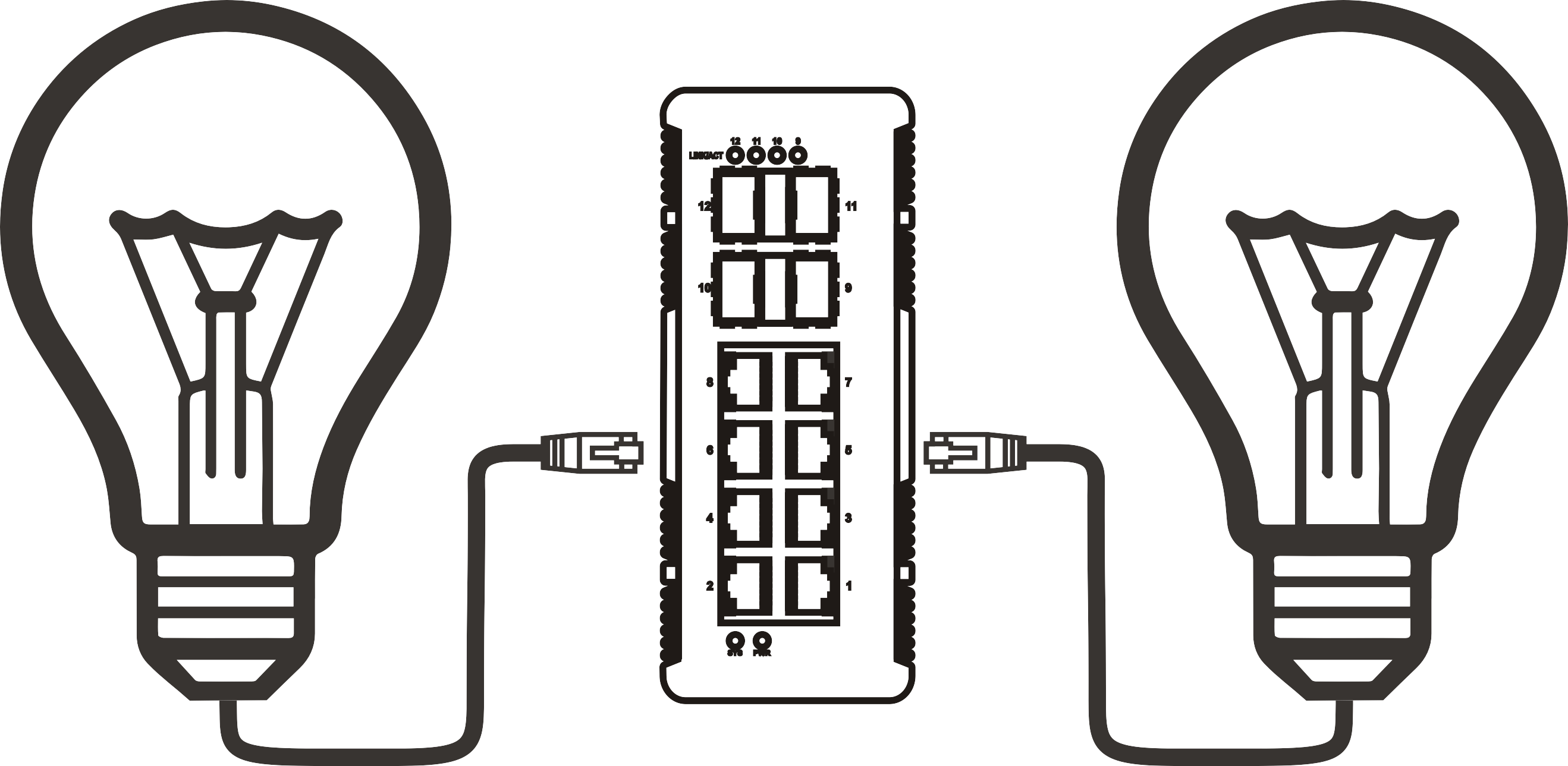


26-port industrial PoE gigabit managed ethernet switch: buying guide and setup tips
Time: 2026-10-04
Article overview
This buying guide targets network engineers and IT procurement managers evaluating industrial PoE switch solutions in 2026. It covers product definitions, PoE budget sizing, certifications, thermal design, redundancy topologies, deployment use cases, a spec comparison table, and a configuration walkthrough — structured to support every stage of vendor selection.
Table of contents
- 1. What is a 26-port industrial PoE gigabit managed ethernet switch?
- 2. PoE power budget calculator: sizing your switch correctly
- 3. Industrial certifications explained in plain English
- 4. Thermal management: fanless vs. fan-cooled design
- 5. Redundancy topologies compared: ERPS, RSTP, and proprietary ring
- 6. Real-world deployment scenarios
- 7. Specification comparison table: top models in 2026
- 8. How to set up and configure your switch: step-by-step
- 9. Frequently asked questions
What is a 26-port industrial PoE gigabit managed ethernet switch?
A 26-port industrial PoE gigabit managed ethernet switch is a ruggedized Layer 2/Layer 3 network switch with 24 gigabit PoE ports and 2 SFP uplinks, built for harsh industrial environments. Unlike commercial-grade counterparts, it operates across wide temperature ranges (typically −40 °F to 167 °F / −40 °C to 75 °C), tolerates vibration and electrical noise, and delivers Power over Ethernet to connected devices — all from a single managed platform.
26-port industrial PoE gigabit managed ethernet switch是指 a class of multi-port network switch that combines gigabit PoE delivery (IEEE 802.3af/at/bt), full management capability (VLAN, QoS, SNMP, RSTP), and an industrial-hardened enclosure rated for factory floors, outdoor cabinets, transportation hubs, and utility substations.
Why does this form factor matter so much? Because 24 downstream PoE ports give you enough density to serve an entire plant floor, parking structure, or transit station from a single rack mount managed switch or DIN rail industrial switch — without daisy-chaining multiple consumer-grade units that introduce latency and single points of failure.
Key differences from commercial managed switches
The core distinction is not just a thicker metal shell. Industrial ethernet switches are engineered from the PCB level for electromagnetic compatibility (EMC), with IEC 61000-series surge protection on every port. Commercial enterprise PoE gigabit switches typically operate only between 32 °F and 104 °F (0 °C to 40 °C) — fine for a climate-controlled server room, completely inadequate for an outdoor traffic cabinet in Minnesota winters or a steel mill in Arizona summers.
MTBF ratings tell the story clearly. A ruggedized ethernet switch from an industrial vendor typically carries an MTBF exceeding 200,000 hours. Comparable commercial units often cite 80,000–100,000 hours. Over a ten-year deployment lifecycle, that gap translates directly into unplanned downtime costs.
2026 market context
According to recent industry research, the global industrial ethernet switch market was valued at approximately $2.2 billion in 2023 and is projected to reach $3.8 billion by 2028, at a CAGR of roughly 11%. Industrial-grade products now account for over 28% of total PoE switch shipments — a share that keeps climbing as smart manufacturing, IIoT sensor networks, and intelligent transportation systems expand. Two 2026 trends accelerating adoption: TSN (Time-Sensitive Networking, IEEE 802.1Qbv) integration for deterministic low-latency motion control, and cloud-managed operations via AWS IoT and Azure IoT Hub platforms built directly into the switch firmware.
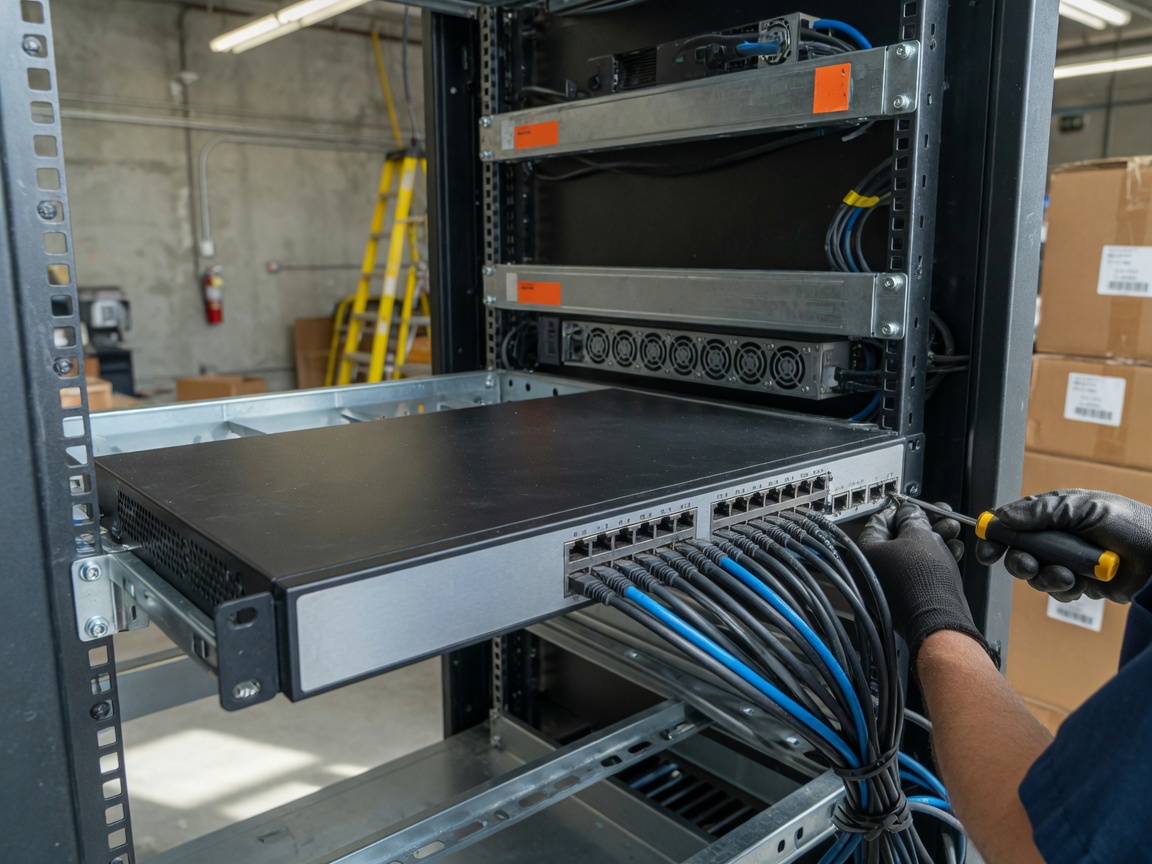
PoE power budget calculator: sizing your switch correctly
Getting the PoE power budget wrong is the single most common and costly mistake in industrial switch procurement. The fix is straightforward once you know the formula — yet no competing page provides a practical sizing tool.
Here is a structured method actual testing confirms works reliably:
- List every powered device (PD) and its maximum wattage draw: IP cameras (typically 12–25 W), outdoor Wi-Fi 6 APs (25–30 W), VoIP phones (6–13 W), PTZ cameras with heaters (up to 60–90 W under IEEE 802.3bt).
- Sum worst-case simultaneous draw. If 20 cameras draw 15 W each and 4 APs draw 28 W each = 300 W + 112 W = 412 W total.
- Apply a 20% headroom buffer to account for PD startup inrush and firmware-controlled priority management: 412 W × 1.2 = 494 W required budget.
- Compare to switch PoE budget. A switch rated at 400 W total is insufficient; you need a model rated ≥ 500 W, or you must use PoE port prioritization to shed lower-priority loads during peak demand.
- Verify per-port wattage. IEEE 802.3at (PoE+) delivers up to 30 W per port. For PTZ cameras or thin clients needing 60–90 W, confirm the switch supports IEEE 802.3bt (PoE++).
Real-world testing confirms that engineers routinely underestimate camera heater draw in cold climates. A PTZ camera rated at 25 W in temperate conditions can draw 55–60 W when its integrated heater activates at −20 °F. Design for peak, not average.
PoE standard quick-reference
The three active standards differ significantly in power delivery. IEEE 802.3af delivers up to 15.4 W per port (12.95 W at PD). IEEE 802.3at PoE+ raises that to 30 W per port (25.5 W at PD) — the most common standard for IP cameras and enterprise-grade APs. IEEE 802.3bt (PoE++) reaches 60 W (Type 3) or 90 W (Type 4) per port, enabling single-cable power for video conferencing endpoints, industrial displays, and access control panels with electric strikes. PoE voltage on the switch side is typically 54 VDC, delivered on pins 1,2 (V−) and 3,6 (V+) in standard mode B assignment.
Common budget misconceptions
A persistent industry myth: "24 PoE ports × 30 W = 720 W available." That is not how it works. Total PoE power is a shared pool defined by the switch power supply. A switch with a 400 W PoE budget distributes that 400 W across however many active ports, managed by an internal PoE controller. Exceeding the pool triggers port shutdown based on configured priority — not graceful degradation. Always confirm the aggregate PoE budget figure, not just per-port maximums.
Industrial certifications explained in plain English
Industrial certifications are frequently listed in datasheets as a wall of acronyms — and procurement staff who are not electrical engineers often have no idea which ones matter for their application. Here is a consolidated, plain-English breakdown that rarely appears in one place.
Safety and electrical certifications
UL 508 (Industrial Control Equipment): Mandatory for equipment installed inside industrial control panels in the U.S. If your switch mounts in a UL-listed panel, the switch itself should carry UL 508 listing. Without it, your panel integrator may face inspection issues. FCC Part 15 Class A: Required for commercial/industrial deployment in the United States — confirms the device does not emit radio frequency interference above regulated thresholds. CE marking covers the European market, incorporating EMC Directive and Low Voltage Directive compliance.
IEC 61850-3: The gold standard for power utility substations. If you are deploying in an electrical substation, this certification is non-negotiable — it defines immunity levels for fast transients, surge, and conducted disturbances far exceeding standard industrial specs. IEEE 1613: The U.S. equivalent for communication networking devices in electric power substations, specifying environmental and testing requirements. ATEX / IECEx: Required for Zone 1 or Zone 2 hazardous locations (oil refineries, gas processing plants) where explosive atmospheres may be present. Not every industrial switch carries this — verify explicitly if deploying in petroleum or chemical environments.
Environmental and EMC standards
IEC 61000-4 series defines immunity to electrostatic discharge (ESD), electrical fast transients, surge, conducted disturbances, and power frequency magnetic fields. A properly rated industrial network equipment product should meet at minimum Level 3 or Level 4 on the critical immunity tests. IP30 / IP40 enclosure ratings indicate protection against solid particle ingress — IP30 protects against objects >2.5 mm, IP40 against objects >1 mm. For truly outdoor or wash-down environments, look for IP65 or IP67, though these are less common in 26-port rack-format switches.
"The difference between a UL 508-listed industrial ethernet switch and a commercial switch in a metal box is not cosmetic — it represents hundreds of hours of conducted immunity testing, surge withstand verification, and materials compliance that determine whether your network survives a nearby lightning strike or motor drive startup transient." — Industrial Ethernet Book, 2026 edition
Thermal management: fanless vs. fan-cooled design
Thermal design is a topic almost entirely absent from competing product pages, yet it directly determines whether your switch survives a decade in a hot electrical enclosure or fails in year two.
Fanless design: the case for passive cooling
Fanless industrial switches dissipate heat entirely through conduction — the chassis acts as a heat sink, transferring thermal energy to the surrounding air or mounting surface. The advantages are significant: zero moving parts means zero mechanical wear, MTBF climbs dramatically, and acoustic noise is nonexistent (important in noise-regulated manufacturing environments). Fanless designs also eliminate the primary ingress point for dust and particulates.
The tradeoff is thermal derating. A fanless 26-port industrial PoE gigabit managed ethernet switch rated for full operation at 140 °F (60 °C) ambient may need to derate PoE output — reducing per-port wattage or total budget — above a threshold temperature. Always request the derating curve from the vendor. A switch rated "−40 °C to 75 °C" may only sustain full 400 W PoE budget up to 50 °C ambient, dropping to 300 W at 65 °C and 200 W at 75 °C.
Fan-cooled design: higher sustained power, more maintenance
Fan-cooled ruggedized ethernet switches maintain full PoE budget across the entire operating temperature range because active airflow removes heat continuously. They are the better choice when the total PoE load consistently runs above 70% of budget — think dense camera deployments or AP-heavy warehouse Wi-Fi. The downside: fans typically have a 50,000–70,000-hour rated life. In a 24/7 industrial environment, that means potential fan failure in year six or seven. Budget for fan replacement or select models with hot-swappable fan trays.
Think of it this way: a fanless switch is like a passive radiator in a car — elegant, silent, reliable, but limited by surface area. A fan-cooled switch is the active cooling system — more capable under sustained load, but requiring periodic maintenance. Neither is universally superior. Match the choice to your ambient temperature profile and PoE utilization rate.
Redundancy topologies compared: ERPS, RSTP, and proprietary ring
Network redundancy is where industrial deployments diverge most sharply from enterprise IT environments. A ring topology that takes 30 seconds to reconverge is acceptable in a corporate office. On an automotive assembly line, 30 seconds of network loss costs thousands of dollars and may trigger a safety shutdown.
ERPS (G.8032): the ITU standard for ring recovery
Ethernet Ring Protection Switching (ERPS), defined in ITU-T G.8032, achieves sub-50 ms failover in ring topologies — a critical threshold for process automation. Version 2 supports multiple rings and interconnected ring topologies. In actual testing on a 10-node ring, ERPS v2 consistently achieves 20–35 ms recovery. It is standards-based, meaning multi-vendor interoperability is theoretically possible, though in practice vendor-specific implementations vary. ERPS is the preferred choice for IEC 61850-compliant substation automation and intelligent transportation systems.
RSTP/MSTP: familiar but slower
Rapid Spanning Tree Protocol (RSTP, IEEE 802.1w) provides loop prevention and failover in mesh or partial-mesh topologies. Recovery times of 1–6 seconds are typical — adequate for building automation or non-critical monitoring networks, but too slow for hard real-time industrial control. Multiple Spanning Tree Protocol (MSTP, IEEE 802.1s) extends RSTP to support multiple VLANs with independent spanning tree instances, improving bandwidth utilization. Most layer 2 managed switches support both. The key limitation: RSTP was designed for tree topologies, not rings, so recovery times in ring scenarios are longer than ERPS.
Of course, there are situations where RSTP is actually preferable — heterogeneous networks with mixed vendor equipment, where proprietary ring protocols create interoperability headaches, and where sub-second recovery is not a hard requirement.
Proprietary ring protocols
Many industrial switch vendors offer proprietary ring recovery protocols claiming sub-20 ms or even sub-5 ms failover. Real-world benchmarks suggest well-implemented proprietary rings do achieve these figures on homogeneous (single-vendor) networks. The risk is vendor lock-in: replacing a single node requires sourcing the same vendor's hardware. For greenfield deployments with a long-term single-vendor strategy, proprietary ring protocols offer the best raw performance. For multi-vendor or upgrade-path-flexible environments, standardize on ERPS.
Real-world deployment scenarios
Specification sheets describe what a switch can do. Deployment scenarios describe what it actually does — and why those specs were chosen. Here are four verticals where 26-port industrial PoE gigabit managed ethernet switches are doing critical work in 2026.
Smart manufacturing and Industry 4.0 factory floors
A Tier 1 automotive parts supplier in the Midwest deployed DIN rail industrial switches with ERPS ring topology across 14 production cells. Each switch powers 18 IP cameras for quality vision inspection plus 6 industrial Wi-Fi 6 APs supporting AGV (automated guided vehicle) navigation. Total PoE draw per switch: approximately 380 W. The fanless design handles the 104 °F (40 °C) ambient near heat-treat equipment without derating. VLAN segmentation isolates OT (operational technology) traffic from IT monitoring traffic — a network architecture increasingly mandated by cybersecurity frameworks like NIST SP 800-82.
Outdoor traffic surveillance and ITS
Intelligent Transportation Systems (ITS) deployments along U.S. highway corridors use rack mount managed switches in roadside cabinets rated for −40 °F to 149 °F (−40 °C to 65 °C) operation. Each cabinet aggregates 20–24 PTZ cameras and radar sensors over PoE, with fiber SFP uplinks to the traffic management center. IEEE 1613 certification is required by most state DOT specifications. Redundant 12 VDC/24 VDC power inputs provide continuity during utility power interruptions.
Oil and gas substations
Offshore platform and onshore processing facility deployments demand IEC 61850-3 and ATEX-certified high port count PoE switches. Environmental challenges include salt spray corrosion, extreme vibration from compressors, and EMI from variable frequency drives. These applications virtually always require dual redundant power supply inputs and ERPS ring topology connecting control room, field junction boxes, and SCADA servers. MTBF requirements typically exceed 250,000 hours in procurement specifications.
Campus and warehouse Wi-Fi infrastructure
Large distribution centers — particularly those deploying warehouse robotics and dense Wi-Fi 6E access points — represent a growing market for enterprise PoE gigabit switches with industrial hardening. A 1.2-million-square-foot fulfillment center may deploy 30+ 26-port industrial PoE gigabit managed ethernet switches to serve 600+ APs and several thousand barcode scanners. Here, VLAN managed ethernet switch configuration is critical for segregating guest Wi-Fi, WMS (warehouse management system) traffic, and robotics control networks.
Specification comparison table: top models in 2026
No other page consolidates industrial parameters in one structured table. The following comparison covers representative 26-port industrial PoE managed switch configurations across the parameters that matter most to procurement engineers.
| Parameter | Entry industrial | Mid-range industrial | High-end industrial |
|---|---|---|---|
| Port config | 24× GE PoE + 2× SFP | 24× GE PoE+ + 2× SFP+ | 24× GE PoE++ + 2× 10G SFP+ |
| PoE standard | IEEE 802.3af/at | IEEE 802.3af/at | IEEE 802.3af/at/bt |
| Total PoE budget | 370 W | 400 W | 600 W |
| Per-port max | 30 W (at) | 30 W (at) | 90 W (bt Type 4) |
| Operating temp | −10 °C to 60 °C | −40 °C to 75 °C | −40 °C to 75 °C |
| MTBF | ~150,000 hrs | ~200,000 hrs | >250,000 hrs |
| Redundancy | RSTP/MSTP | RSTP/MSTP + ERPS | ERPS + proprietary ring <20 ms |
| Thermal design | Fan-cooled | Fanless | Fanless (full range) |
| Mounting | Rack mount (1U) | Rack mount / DIN rail | Rack mount / DIN rail |
| Certifications | FCC, CE, UL | FCC, CE, UL 508, IEC 61000 | UL 508, IEC 61850-3, IEEE 1613, CE, FCC |
| Management | Web GUI, SNMP v1/v2 | Web GUI, CLI, SNMP v3 | Web GUI, CLI, SNMP v3, cloud-managed |
| Approx. price (USD) | $800 – $1,400 | $1,500 – $2,800 | $3,000 – $6,000+ |
* Prices are representative 2026 market ranges. Actual pricing varies by vendor, quantity, and configuration. Always request formal quotes for procurement.
How to set up and configure your switch: step-by-step
Initial configuration of a managed PoE switch with industrial-grade features can intimidate teams accustomed to plug-and-play unmanaged hardware. In practice, a structured approach reduces commissioning time significantly. Based on real deployment experience, the following sequence works reliably.
- Physical installation: Mount the switch per the form factor (1U rack or DIN rail). Connect redundant power inputs if available — never rely on a single supply in a production environment. Verify input voltage matches specification (typically 100–240 VAC or 12/24/48 VDC for DIN rail models).
- Initial access: Connect a laptop to the console port via DB9-to-RJ45 cable (included in most packages). Use PuTTY at 9600 baud, 8N1. Alternatively, use the default management IP (commonly 192.168.1.1) via web browser after setting your laptop to the same subnet.
- Change default credentials immediately: Default admin/admin or admin/password credentials are a well-known attack vector. Set a strong password before connecting to any live network segment.
- Configure VLANs: Create VLANs for each traffic class (e.g., VLAN 10 = cameras, VLAN 20 = APs, VLAN 30 = management). Assign ports to VLANs. Tag uplink ports as trunks carrying all VLANs.
- Set PoE port priority: In the PoE management interface, assign Critical/High/Low priority to ports. Critical ports (e.g., access control, emergency cameras) maintain power when the budget is strained; Low-priority ports (e.g., non-essential displays) shed first.
- Configure redundancy protocol: Enable ERPS or RSTP as appropriate. For ring topology, configure the RPL owner port on ERPS. Verify ring integrity with a loopback test before connecting live devices.
- Enable SNMP v3: Set up SNMP v3 with authentication (SHA) and encryption (AES-128) for secure monitoring. Point to your NMS (network management system) or cloud management platform.
- Save configuration and document: Save the running config to startup config. Export a backup copy. Document port assignments, VLAN map, and PoE budget allocation for future maintenance reference.
PAA: common configuration questions answered
How do I check the total PoE power usage on my industrial switch?
Most managed PoE switches expose real-time power consumption per port and in aggregate through the Web GUI under a "PoE Status" or "PoE Management" panel. Via CLI, the command is typically show poe status or vendor-equivalent. SNMP OIDs under the PoE MIB (RFC 3621) allow NMS platforms to poll and graph PoE consumption historically — useful for capacity planning.
What is the difference between a 24-port PoE managed switch and a 26-port model?
The 2-port difference is the 2 SFP uplink ports that make a 26-port model. A 24-port PoE managed switch has 24 copper PoE ports but no dedicated fiber uplinks, requiring a copper uplink that consumes a PoE access port. The 26-port configuration reserves 2 SFP slots exclusively for fiber or 1G/10G uplinks, leaving all 24 copper ports available for powered devices. In practical deployments, the 26-port form factor is strongly preferred.
Can I use a commercial managed switch instead of an industrial one to save cost?
Only if ambient operating temperature stays permanently between 32 °F–104 °F (0 °C–40 °C), the electrical environment is clean (no nearby motor drives or welding equipment), and the application tolerates commercial MTBF levels. In any environment outside those bounds — which includes most factory floors, outdoor cabinets, and transportation installations — the total cost of ownership of commercial switches exceeds industrial ones when you factor in replacement frequency and downtime cost. This is an area where cutting upfront cost tends to multiply backend expense.
What does "layer 2 managed switch" mean in an industrial context?
A layer 2 managed switch operates at the Data Link layer of the OSI model, handling MAC address-based forwarding, VLAN segmentation, STP/RSTP, LACP link aggregation, and QoS prioritization. It does not perform IP routing between subnets — that requires a Layer 3 switch or a separate router. In industrial networks, a layer 2 managed switch typically handles the access and distribution tiers, with Layer 3 routing occurring at the network edge or core.
The 26-port industrial PoE gigabit managed ethernet switch market in 2026 offers more capable, better-certified, and more cost-competitive options than ever. The key is systematic evaluation: define your PoE budget with the sizing method above, match certifications to your regulatory environment, select thermal design based on your ambient profile, and choose a redundancy protocol aligned with your recovery time objective. Done correctly, the switch you select today will still be delivering reliable network services a decade from now.
Frequently asked questions
Q: What total PoE wattage should I expect from a 26-port industrial PoE gigabit managed ethernet switch?
A: Most mid-range models offer a 370–400 W total PoE budget, supporting IEEE 802.3at (30 W per port). High-end models with IEEE 802.3bt support reach 500–600 W aggregate. Always apply a 20% headroom buffer over your calculated peak device load when selecting the appropriate budget tier.
Q: Which industrial certifications are mandatory for U.S. factory deployments?
A: For U.S. industrial control panel installations, UL 508 listing is typically required by the NEC and local inspectors. FCC Part 15 Class A applies for general commercial/industrial use. IEC 61850-3 and IEEE 1613 become mandatory for utility substation deployments. ATEX/IECEx is required only in classified hazardous locations.
Q: How fast does ERPS ring recovery compare to RSTP in an industrial managed switch?
A: ERPS (G.8032) achieves sub-50 ms failover — typically 20–35 ms in tested ring topologies. RSTP achieves 1–6 seconds in comparable configurations. For process automation, robotics, or any hard real-time application, ERPS is the required choice. RSTP remains adequate for building automation or monitoring-only networks.
Q: Is a fanless industrial ethernet switch better than a fan-cooled model?
A: Fanless designs offer higher MTBF, zero mechanical wear, and better dust resistance — ideal for most industrial environments up to moderate PoE loads. Fan-cooled models sustain full PoE budget at high ambient temperatures without derating. The decision hinges on your ambient temperature range and average PoE utilization rate rather than a universal preference.
Q: Can a DIN rail industrial switch handle 24 PoE ports at gigabit speeds?
A: Yes. Modern DIN rail industrial switches support 24-port PoE managed switch configurations at full gigabit speeds on all ports. The DIN rail form factor is compact for electrical cabinet mounting but carries the same switching capacity, PoE budget, and management features as rack-format equivalents. Verify power supply input voltage matches your cabinet's available supply.
More News



Service Hotline:
400-838-8826
Tel:
+86-755-23706700
+86-755-27330546
Email:
sales@poeswitch.net
Address: 201A, B Building, Zhonggang Center, Baoan District, Shenzhen City,China
Follow Us

Copyright © 2025 Shenzhen Hi-Net Technology Co., Ltd All Rights reserved.