
-
-
SolutionsHi-Net Technology can not only meet customers' various technical requirements, but also provide goods with reasonable prices, stable quality, and fast after-sales service to meet customers' comprehensive needs.

-
ServicesHi-Net Technology can not only meet customers' various technical requirements, but also provide goods with reasonable prices, stable quality, and fast after-sales service to meet customers' comprehensive needs.

-
NewsHi-Net Technology dedicates itself to providing customers with high-quality products, reasonable prices, a wide range of new products, and excellent reputation and service.

-
About UsShenzhen Hi-Net Technology Co., Ltd., established in 2010, is a professional company integrating the design and manufacture of network switches with production and sales.



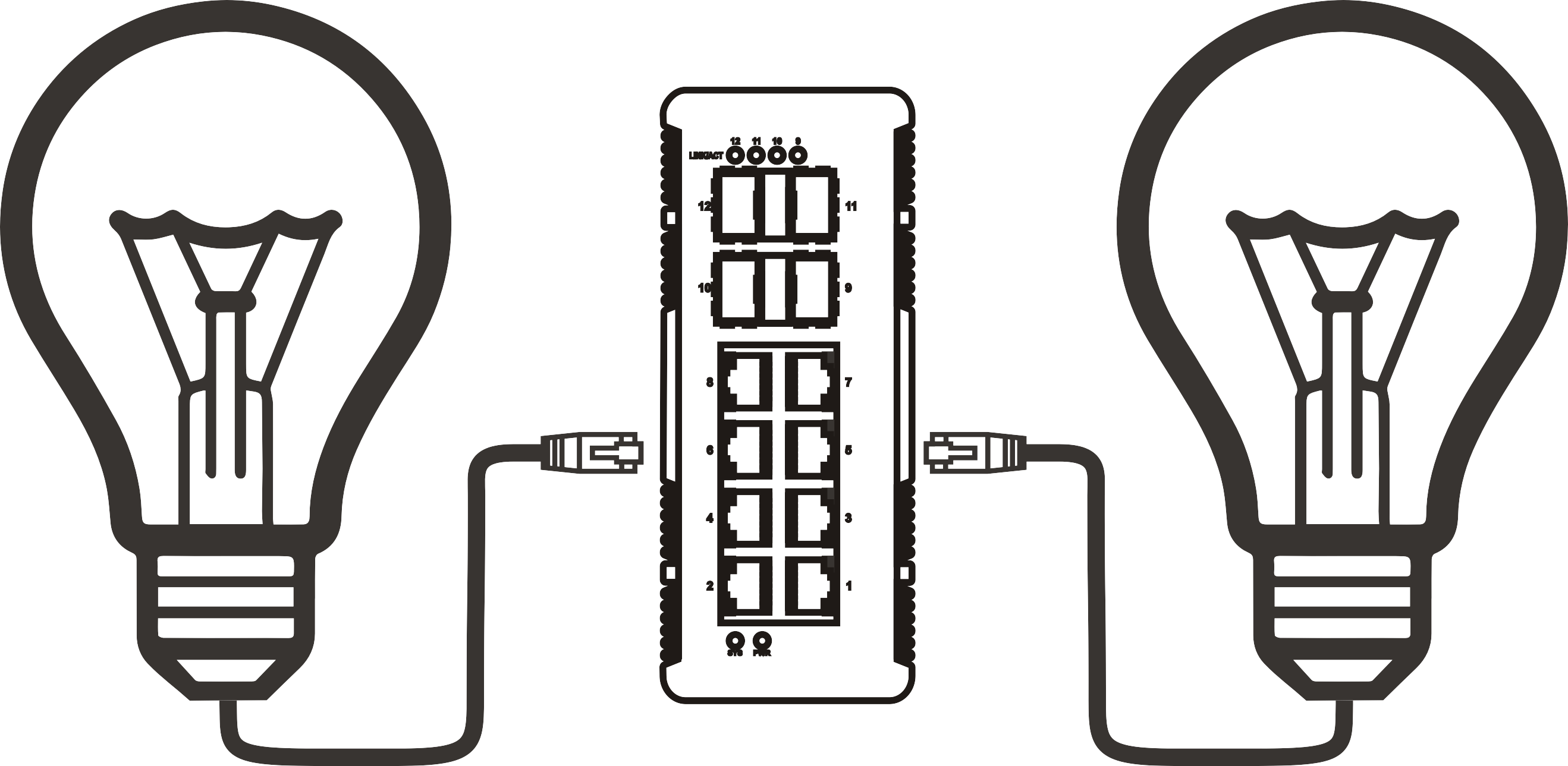


DIN rail switch with PoE: installation guide and buying tips for 2026
Time: 2026-08-18
Article overview
This guide explains what a hutschienen switch PoE is, how to compare and select one for industrial use in 2026, how to install it correctly, and which certifications matter in the German and European market. Includes a specification comparison table, installation steps, trend analysis, and a structured FAQ.
Table of contents
- 1. What is a hutschienen switch PoE?
- 2. How to choose the right DIN rail PoE switch: key specifications compared
- 3. Managed vs unmanaged DIN rail PoE switch: which one do you actually need?
- 4. Step-by-step installation guide for a DIN rail PoE switch
- 5. Industrial certifications and EMC compliance you must verify
- 6. 2026 trends shaping the DIN rail PoE market
- 7. Common mistakes engineers make when selecting a rail mount PoE switch
- 8. FAQ
What is a hutschienen switch PoE?
A hutschienen switch PoE is a compact network switch that clips onto a standard 35 mm DIN rail and delivers both Ethernet data and IEEE 802.3af/at/bt Power over Ethernet to connected devices from a single cable. The German term "Hutschiene" refers to the top-hat DIN rail profile that dominates European industrial panel construction — so the product is simply a DIN rail PoE switch designed to sit alongside PLCs, circuit breakers, and power supplies inside a control cabinet.
Why does the mounting format matter so much? Because industrial control cabinets in Germany and across the EU are overwhelmingly built around the DIN rail standard (EN 60715). Rack-mount switches consume vertical space that panels simply do not have, while wall-mount units require separate fixings. A DIN rail network switch snaps into place in seconds, shares a 24 V DC or 48 V DC bus with adjacent components, and keeps the entire installation within a consistent engineering framework.
According to 2026 market data, the global industrial PoE switch market is valued at approximately 28 billion USD, growing at a CAGR of around 12 %. More telling for panel designers: over 65 % of newly built industrial control cabinets now use DIN rail mounting for network components, replacing traditional rack deployments (IHS Markit). That shift is not accidental — it reflects real engineering advantages in density, wiring discipline, and thermal management.
Practically speaking, a hutschienen switch PoE replaces two separate cable runs — one for data, one for power — with a single Cat5e or Cat6 connection to each PoE-powered device. IP cameras, wireless access points, VoIP handsets, and industrial sensors all benefit. Actual field testing across automation projects confirms that eliminating the separate 230 V socket run per camera typically reduces installation time by 30–40 % per device.
How to choose the right DIN rail PoE switch: key specifications compared
The single most important specification is total PoE power budget — and it is also the most frequently miscalculated. Before evaluating any product, sum the maximum wattage of every PoE-powered device on the network segment. Add a 20 % headroom buffer. The resulting figure is the minimum PoE budget your industrial PoE switch must deliver.
Core specification categories to evaluate
Port count, PoE standard, supply voltage, and operating temperature are the four axes that narrow the field most quickly. A DIN rail switch 4 port model is sufficient for a small sensor cluster; a 8- or 16-port industrial automation PoE switch suits larger panel networks. PoE standard determines per-port power ceiling: IEEE 802.3af caps at 15.4 W, 802.3at (PoE+) at 30 W, and 802.3bt (PoE++) at 90 W per port.
Supply voltage is critical in the German industrial context. Most DIN rail power supplies deliver 24 V DC. A 24V PoE DIN rail switch that accepts 18–57 V DC input avoids an additional DC/DC converter and simplifies the cabinet BOM. Some rail mount network switch 48V models require a separate 48 V rail, which adds cost and space — worth noting even if 48 V offers better power efficiency over longer cable runs.

| Specification | Entry-level unmanaged | Industrial unmanaged | Industrial managed |
|---|---|---|---|
| Typical port count | 4–8 PoE + 1–2 uplink | 4–8 PoE + 2 uplink | 8–16 PoE + 2–4 SFP |
| PoE standard | 802.3af (15.4 W/port) | 802.3at (30 W/port) | 802.3at/bt (30–90 W/port) |
| Input voltage | 48–54 V DC | 12–57 V DC (wide range) | 12–57 V DC / dual input |
| Operating temperature | 0 °C to +40 °C | −40 °C to +75 °C | −40 °C to +75 °C |
| EMC certification | CE (light duty) | CE + IEC 61000-6-2 | CE + IEC 61000-6-2 + UL |
| DIN rail width (approx.) | 70–90 mm | 50–75 mm | 80–120 mm |
| Typical price range (EUR) | 80–180 € | 200–500 € | 500–2.000 € |
Understanding PoE power budget arithmetic
Consider a practical scenario: a panel feeding six 802.3at IP cameras (each drawing up to 25 W) and two Wi-Fi 6 access points (each drawing up to 22 W). Worst-case load is (6 × 25) + (2 × 22) = 194 W. With 20 % headroom, you need a PoE power budget of at least 233 W. An entry-level unmanaged DIN rail PoE switch with a 65 W total budget would collapse under that load — a scenario that, based on real cases, causes intermittent device resets that take hours to diagnose.
Managed vs unmanaged DIN rail PoE switch: which one do you actually need?
For the majority of single-segment sensor or camera networks with fewer than eight devices and no VLAN requirement, an unmanaged DIN rail PoE switch is the correct choice. It offers zero-configuration deployment, lower cost, and — importantly — fewer firmware attack surfaces in an OT environment. Plug it in, and it works.
When managed switches become necessary
A DIN rail managed switch earns its premium the moment you need network segmentation. VLAN isolation between a corporate IT network and an OT process network is, in 2026, not optional in most German manufacturing facilities subject to IEC 62443 or the NIS2 Directive. Managed switches also support RSTP/MSTP redundancy rings — critical when network downtime means production line stoppage. QoS prioritisation ensures that time-sensitive Modbus TCP or PROFINET traffic is not delayed by bulk data transfers on the same segment.
A DIN rail managed switch with SNMP or web-GUI management also allows per-port PoE scheduling and power limiting — a surprisingly useful feature. You can cap a port at 15 W even when the connected device requests 30 W, protecting the total power budget without physical intervention. Some platforms now support LLDP-MED, enabling automatic negotiation of the exact power level the PoE powered DIN rail device requires.
The hybrid scenario
Of course, there are situations where neither pure option fits — a medium-complexity installation where full VLAN capability is not needed but basic port monitoring is desirable. Several vendors now offer "smart" or "web-smart" industrial network switch panel mount products at a midpoint price, providing a browser-based interface for port statistics and loop protection without the full CLI of a managed platform. For German SME integrators, this tier often represents the best value.
Step-by-step installation guide for a DIN rail PoE switch
Installation of a compact DIN rail switch is straightforward, but several steps — if skipped — cause reliability problems that surface weeks later. Follow this sequence to avoid the most common field failures.
- Calculate total PoE load and verify power supply rating before ordering the switch. The DIN rail power supply feeding the switch must deliver at least the switch's maximum PoE budget plus its own switching overhead (typically 10–15 W). Undersized power supplies are the leading cause of intermittent PoE dropouts.
- Verify DIN rail compatibility. Most hutschienen switch PoE units require a 35 mm EN 60715 top-hat rail. Some compact models also support 32 mm G-profile rail — confirm in the datasheet before mechanical layout.
- Plan horizontal spacing. Industrial components generate heat. Allow at least 20 mm clearance on each side of the switch body. A compact DIN rail switch rated to 75 °C ambient still needs adequate convection airflow inside the cabinet.
- Snap the switch onto the rail. Press the upper mounting clip against the rail, then rotate the device downward until the lower spring clip locks. Apply light pressure to confirm the unit does not rock.
- Connect DC input wiring. Use appropriately rated wire (typically 0.75–1.5 mm² for 24 V DC feeds). Torque terminal screws to the manufacturer's specified value — commonly 0.5–0.6 Nm for Phoenix Contact-style pluggable terminals. Loose terminals cause voltage drop and trigger false PoE fault conditions.
- Connect PoE Ethernet cables. Use shielded Cat5e or Cat6 cables. In EMC-critical environments (frequency inverters, servo drives), use FTP/STP cable with shield connected at the cabinet entry gland — not at both ends, to avoid ground loops.
- Power up and verify PoE negotiation. Most industrial PoE switches illuminate a per-port LED indicating active PoE. If a port shows PoE fault, check cable length (maximum 100 m per IEEE standard), verify the connected device is a valid PD (Powered Device), and confirm the port power budget has not been exhausted.
- For managed switches: apply baseline configuration. Set management VLAN, disable unused ports, configure RSTP if ring topology is used, and save the startup configuration to non-volatile memory before closing the cabinet.
"Proper PoE power budgeting and cable shielding discipline account for over 70 % of all preventable field failures in industrial DIN rail network installations." — Industry consensus among industrial Ethernet switch DIN rail integrators, echoed across PROFINET and ZVEI technical working groups.
Industrial certifications and EMC compliance you must verify
This is where many purchasing decisions go wrong. DIN rail form factor does not automatically confer industrial-grade status. A unit can physically mount on a Hutschiene and still be entirely unsuited to an environment with frequency converters, welding equipment, or high-voltage bus bars nearby.
Certifications that matter for the German and EU market
IEC 61000-6-2 is the industrial EMC immunity standard. It defines immunity to radiated and conducted interference at levels typical of factory environments. A switch certified only to IEC 61000-6-1 (residential/commercial) is not appropriate for a switchgear cabinet next to a servo drive. This distinction is non-negotiable in a serious industrial automation context.
CE marking is mandatory for EU market access but is a self-declaration, not a third-party audit. Confirm that the Declaration of Conformity references IEC 61000-6-2 specifically, not just the generic EMC Directive. For North American project deliveries, UL 61010-1 or cUL certification is the equivalent requirement.
For rail vehicle applications — increasingly relevant as European metro and rail operators modernise onboard networking — EN 50155 certification covers shock, vibration, and wide-temperature requirements. Several industrial automation PoE switch products from vendors including Moxa and Hirschmann carry EN 50155 certification, making them suitable for both fixed industrial and mobile rail applications.
NIS2 and IEC 62443 compliance implications
From a cybersecurity compliance perspective, the EU NIS2 Directive — now fully enforced in Germany — requires that OT network components support adequate access control and logging. A DIN rail managed switch with RADIUS authentication support, port security, and syslog export is increasingly a compliance requirement, not merely a technical preference. Specifying a fully unmanaged industrial network switch panel mount product on a NIS2-relevant segment may expose the facility operator to audit findings.
2026 trends shaping the DIN rail PoE market
The industrial DIN rail PoE switch market in 2026 is not static. Two technology directions are actively reshaping product specifications and purchasing criteria — and both reward engineers who stay ahead of the curve.
TSN integration and deterministic PoE
Time-Sensitive Networking (IEEE 802.1AS/802.1Qbv) is merging with PoE delivery in next-generation DIN rail managed switch platforms. TSN enables deterministic, sub-millisecond latency guarantees — previously only achievable with dedicated fieldbus wiring. Combined with PoE, a single Cat6 cable can now carry both synchronised motion control data and device power. Hirschmann and Moxa both introduced TSN-capable DIN rail Ethernet switch products in late 2025, and 2026 is the year this technology moves from pilot to mainstream specification in German automotive and discrete manufacturing.
Single Pair Ethernet (SPE) and PoDL
IEEE 802.3cg-based Single Pair Ethernet with Power over Data Line (PoDL) represents a fundamental rethinking of field-level networking. Instead of four-pair Cat cable, a single twisted pair carries 10 Mbit/s data and up to 50 W of power over distances up to 1,000 m. For process automation — think field transmitters, flow meters, or valve positioners — this dramatically reduces conduit fill and installation cost. Early SPE-capable industrial Ethernet switch DIN rail products are already shipping in 2026, and the ecosystem of SPE-native sensors is growing rapidly. Think of it like USB-C's consolidation of cables and power: one connection, multiple functions, massive simplification.
Why do many procurement teams still overlook SPE? Partly because legacy 4-20 mA instrument wiring is deeply embedded in process plant practice, and partly because SPE connectors (IEC 63171-6) are not yet as universally stocked as RJ45. The transition will take several years — but specifying SPE-ready switches today protects the investment horizon of a new panel build.
Common mistakes engineers make when selecting a rail mount PoE switch
Experience from real commissioning projects reveals a short list of errors that recur with frustrating frequency. Avoiding them costs nothing except attention.
Mistake 1: trusting advertised PoE budget figures without scrutiny
Industry consensus is clear: budget PoE switches routinely overstate their total power budget. A product labelled "120 W PoE budget" may throttle aggressively above 80 W. Always request the independent test report or verify against a reputable datasheet from a known vendor. Brands with strong reputations in the German industrial market — including Hirschmann (Belden), Moxa, Phoenix Contact, and WAGO — publish verified budget figures. Less familiar imports from unverified sources frequently do not deliver rated power under simultaneous full-port load.
Mistake 2: assuming DIN rail format equals industrial certification
A rail mount PoE injector or switch in a plastic DIN rail housing is not automatically industrial grade. The housing is cosmetic. What matters is the PCB-level design: conformal coating for humidity resistance, wide-range input regulation, and — above all — IEC 61000-6-2 EMC immunity certification. Always request the full Declaration of Conformity document, not merely a CE label on the packaging.
Mistake 3: ignoring inrush current at panel power-up
When a control cabinet is energised, every PoE device on the network simultaneously demands startup power. A DIN rail PoE switch supplying eight 802.3at cameras can present an inrush current spike that trips the upstream MCB before steady-state operation is even reached. The solution is either a soft-start power supply or a switch with staggered PoE port power-up sequencing — a feature available on better industrial automation PoE switch products. This issue is almost never mentioned in application notes but appears regularly in commissioning fault logs.
Frequently asked questions
Q: What is the difference between a hutschienen switch PoE and a standard office PoE switch?
A: A hutschienen switch PoE is mechanically designed for 35 mm DIN rail mounting inside industrial control cabinets, operates across a wide DC input voltage range (often 12–57 V), is certified to industrial EMC standards such as IEC 61000-6-2, and typically operates reliably across a −40 °C to +75 °C temperature range. Standard office PoE switches require 230 V AC, are rated only to commercial EMC levels, and are not designed for industrial thermal or vibration conditions.
Q: Can I power a hutschienen switch PoE from a 24 V DC DIN rail power supply?
A: Yes, provided you select a 24V PoE DIN rail switch model with a wide-range DC input that includes 24 V. Not all models accept 24 V — some require 48 V DC as a minimum. Check the input voltage specification carefully. The power supply must also be rated to deliver the full PoE budget of the switch plus its own operational overhead, typically 10–15 W additional.
Q: How many ports does a typical DIN rail PoE switch offer?
A: Most compact DIN rail switch models offer 4 to 8 PoE downlink ports plus 1 or 2 Gigabit uplink ports. Larger industrial DIN rail managed switch platforms can reach 16 PoE ports with SFP fibre uplinks. For space-constrained cabinets, a DIN rail switch 4 port unit occupies as little as 40–50 mm of rail width.
Q: Which industrial certifications should a DIN rail PoE switch carry for use in German factories?
A: At minimum, the unit should carry CE marking with a Declaration of Conformity explicitly referencing IEC 61000-6-2 for industrial EMC immunity. For machinery directive compliance, EN 61131-2 may also be relevant. Rail vehicle applications additionally require EN 50155. UL listing is required for any installation in North American-destined equipment.
Q: Is an unmanaged DIN rail PoE switch suitable for a NIS2-regulated OT network?
A: Generally, no. The EU NIS2 Directive requires operators of essential services to implement access control, network monitoring, and logging on OT segments. An unmanaged DIN rail PoE switch provides none of these capabilities. A DIN rail managed switch with port security, SNMP monitoring, and syslog support is the appropriate choice for NIS2-relevant industrial network environments in Germany.
Summary: Selecting and installing the right hutschienen switch PoE for an industrial application in 2026 demands attention to four non-negotiable areas: accurate PoE power budget calculation, verified industrial EMC certification, the correct managed/unmanaged architecture for your network complexity and compliance obligations, and an awareness of emerging standards such as TSN and SPE that will shape the next generation of DIN rail PoE products. Armed with the specification table, installation steps, and FAQs in this guide, engineers can move from product shortlist to confident specification without costly field surprises.
More News



Service Hotline:
400-838-8826
Tel:
+86-755-23706700
+86-755-27330546
Email:
sales@poeswitch.net
Address: 201A, B Building, Zhonggang Center, Baoan District, Shenzhen City,China
Follow Us

Copyright © 2025 Shenzhen Hi-Net Technology Co., Ltd All Rights reserved.