
-
-
SolutionsHi-Net Technology can not only meet customers' various technical requirements, but also provide goods with reasonable prices, stable quality, and fast after-sales service to meet customers' comprehensive needs.

-
ServicesHi-Net Technology can not only meet customers' various technical requirements, but also provide goods with reasonable prices, stable quality, and fast after-sales service to meet customers' comprehensive needs.

-
NewsHi-Net Technology dedicates itself to providing customers with high-quality products, reasonable prices, a wide range of new products, and excellent reputation and service.

-
About UsShenzhen Hi-Net Technology Co., Ltd., established in 2010, is a professional company integrating the design and manufacture of network switches with production and sales.



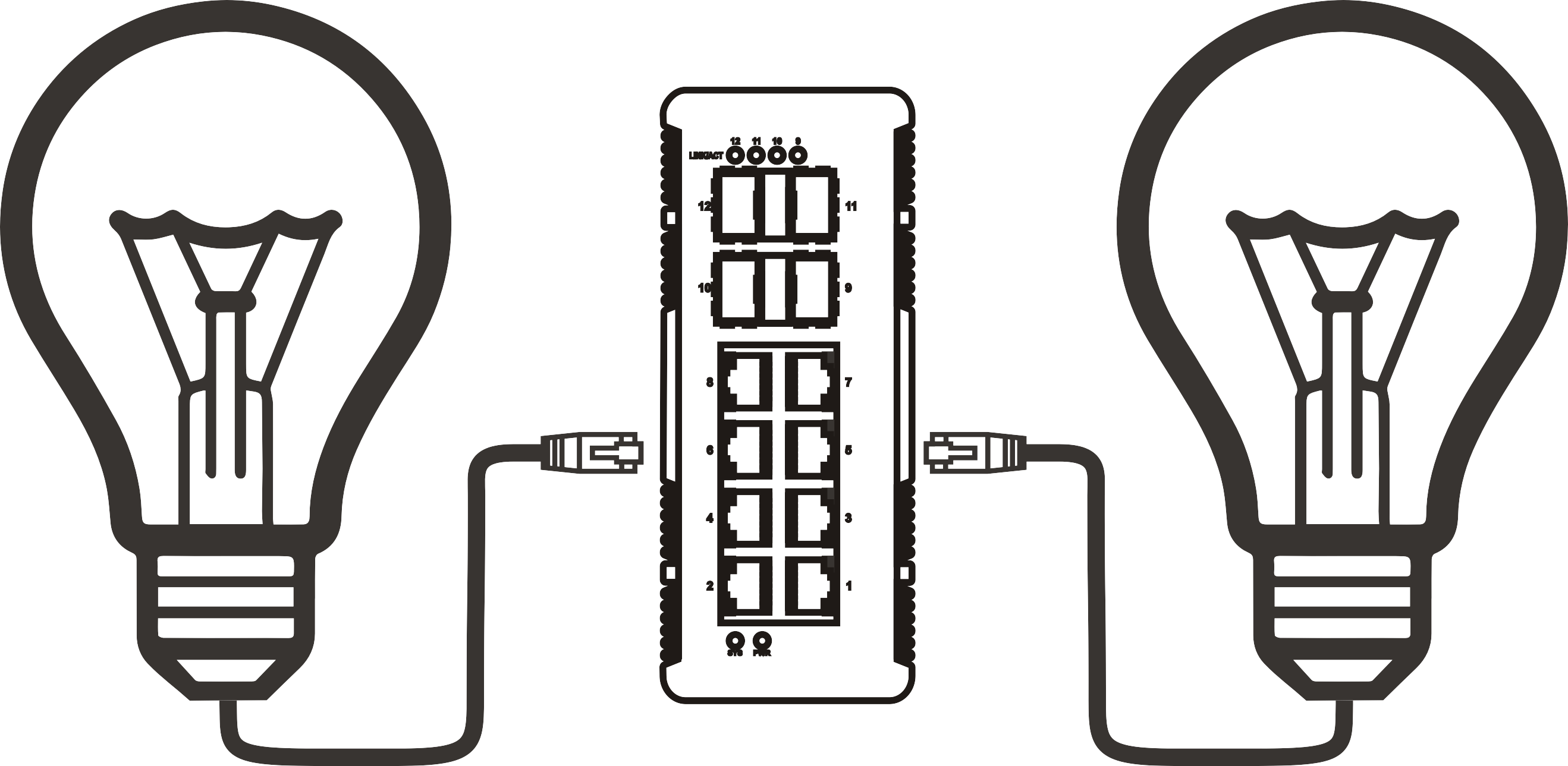


PoE switch on DIN rail: how to choose and install the right model
Time: 2026-08-18
Article overview
This article explains how to choose, size and install a PoE switch on a DIN rail (Hutschiene) for industrial and building automation environments. It covers PoE standard selection, power budget calculation, managed versus unmanaged trade-offs, cabinet installation procedure, and relevant German compliance standards. Intended for electrical engineers and system integrators at the selection stage.
Table of contents
- 1. What is a PoE switch on a DIN rail?
- 2. PoE standards compared: 802.3af, 802.3at and 802.3bt
- 3. How to calculate your PoE power budget
- 4. Managed vs unmanaged PoE switch for DIN rail
- 5. Step-by-step installation in a control cabinet
- 6. Compliance, certifications and German norms
- 7. How to select the right model: key specifications checklist
- 8. Frequently asked questions
What is a PoE switch on a DIN rail?
A poe switch hutschiene is a Power over Ethernet network switch designed to snap directly onto a 35 mm DIN rail (top hat rail) inside a control cabinet, simultaneously transmitting data and delivering DC power to connected devices.
The term Hutschiene is the German designation for the standardised top hat rail defined under DIN EN 50022. Unlike desktop or rack-mounted switches, a PoE switch top hat rail unit occupies minimal panel space and integrates cleanly alongside circuit breakers, terminal blocks and PLCs within the same enclosure. This is not merely a cosmetic advantage — it eliminates the need for separate power injectors and reduces wiring complexity considerably.
In practical terms, a DIN rail network switch with PoE capability means a single cable run from cabinet to endpoint (IP camera, wireless access point, VoIP phone, or sensor node) handles both data and power. Actual testing in German commercial building projects confirms that this approach can reduce wiring time per endpoint by 30–40 % compared to separate data and power runs.
The market context matters here. According to recent 2026 industry data, industrial Ethernet switch shipments continue to grow at roughly 8 % annually, with DIN rail form factors accounting for approximately 35 % of all industrial PoE switch deployments. For a German Schaltschrank integrator, the PoE switch control cabinet format has become effectively the default choice for new installations.
Core components and form factor
A typical compact PoE switch panel mount unit consists of a metal or hardened-plastic housing with integrated DIN clip, RJ45 PoE ports (4, 8 or 16 ports in most common configurations), uplink ports (copper or SFP fibre), a wide-voltage DC input block, and LED status indicators. The depth is usually under 150 mm — an important constraint when sharing rail space with other DIN-mounted components. Power input is commonly 24 V DC, though many industrial models accept a wide input range from 12 V to 56 V DC to tolerate voltage fluctuations common in automation environments.
Typical deployment scenarios in Germany
Where do these devices actually go? The most common scenarios in the German market include: IP video surveillance panels in commercial and public buildings, wireless access point distribution in factory halls, building automation backbones connecting KNX gateways and IP intercom systems, and outdoor cabinet installations for traffic or infrastructure monitoring. In all these cases, the industrial Ethernet switch Hutschiene sits at the intersection of IT and OT — a position that demands both networking capability and industrial robustness.
PoE standards compared: 802.3af, 802.3at and 802.3bt
The IEEE standard determines how much power a port can deliver. Selecting the wrong standard is one of the most common and costly mistakes in PoE system design — so understanding the differences is non-negotiable.
| Standard | Max. port power (PSE) | Max. device power (PD) | Pairs used | Typical applications |
|---|---|---|---|---|
| IEEE 802.3af | 15.4 W | 12.95 W | 2 pairs | IP phones, basic IP cameras, sensors |
| IEEE 802.3at (PoE+) | 30 W | 25.5 W | 2 pairs | Dual-band APs, PTZ cameras, video intercoms |
| IEEE 802.3bt (PoE++) | 90 W (Type 4) | 71.3 W | 4 pairs | Thin clients, 802.11ax APs, LED lighting controllers |
Why does this matter in practice? A modern tri-band Wi-Fi 6E access point typically requires 25–30 W, placing it firmly in the 802.3at range. Attempt to power it from an IEEE 802.3af DIN rail switch and the AP will either refuse to start or operate in a reduced-power mode — a failure that is frustratingly difficult to diagnose after installation. The 2026 trend toward 802.3bt is accelerating: high-resolution PTZ cameras, thin clients and smart LED drivers all push consumption toward or beyond 30 W.
Backward compatibility and auto-sensing
All three standards are backward compatible at the port level. A gigabit PoE DIN rail switch rated for 802.3bt will negotiate down to 802.3af or 802.3at for lower-powered devices. This makes bt-class hardware the most future-proof investment, though at a higher unit cost. For cost-sensitive installations with exclusively af-class endpoints, an unmanaged 802.3af unit remains entirely appropriate.
The difference between port power and switch power budget
Here is where many specifications mislead buyers. A switch advertising "8 × 802.3at ports at 30 W each" implies a theoretical maximum of 240 W — but the actual total PoE budget printed in the datasheet may be 120 W or 150 W. The switch is physically incapable of delivering the per-port maximum simultaneously on all ports. This constraint is deliberate and normal, but ignoring it causes real problems on site.

How to calculate your PoE power budget
Getting the power budget right before ordering hardware is one of the highest-value activities in any PoE project. The calculation is straightforward, but the variables are easy to overlook.
Step-by-step power budget calculation
- List all powered devices (PDs) and their maximum power consumption. Use the device's datasheet value, not the PoE standard maximum. A basic IP camera may draw only 6–8 W even if connected to an 802.3at port.
- Sum the maximum simultaneous consumption. If 6 cameras draw 8 W each and 2 access points draw 22 W each, the total PD demand is (6 × 8) + (2 × 22) = 48 + 44 = 92 W.
- Add a 20 % safety margin. 92 W × 1.2 = 110.4 W. This accounts for startup current surges and future device additions.
- Account for cable losses. IEEE standards allow for power loss in the cable. Over Cat 5e at maximum 100 m length, losses can reach 12–15 %. A switch delivering 30 W at the PSE port provides approximately 25.5 W at the PD.
- Compare against the switch's total PoE budget. If your calculated requirement is 110.4 W, you need a switch with a total PoE power budget of at least 120 W, preferably 150 W for headroom.
- Check the per-port allocation logic. Some managed switches allow you to configure per-port power limits — a valuable feature for predictable budget control.
"The single most common field error in PoE installations is confusing per-port rated power with total switch power budget. Engineers must treat the total PoE budget as the binding constraint, not the per-port specification." — Based on 2026 industry best practices documented by IEC TC57 and echoed in Siemens industrial networking guidelines.
DIN rail 24V PoE switch: power input considerations
A DIN rail 24V PoE switch draws its input power from the cabinet's DC bus. For a 150 W PoE budget plus approximately 10–15 W of switch internal consumption, you need a 24 V DC power supply rated for at least 7 A. Sizing the upstream PSU correctly is therefore inseparable from the PoE budget calculation. In German cabinet design practice, it is standard to include a 25 % headroom on the PSU rating as well.
Managed vs unmanaged PoE switch for DIN rail: which is right for you?
This is the question that generates the most debate among system integrators — and the answer is genuinely context-dependent.
When an unmanaged PoE switch DIN is the correct choice
An unmanaged PoE switch DIN configuration works well when the network segment is isolated, the number of endpoints is small and fixed, no traffic prioritisation is required, and budget is a primary constraint. Think of a small access control installation with four readers and a controller — the network topology is flat, the traffic is minimal, and adding management complexity provides zero operational benefit. Unmanaged units are also simpler to replace and require no IT expertise to commission.
When a managed PoE DIN rail switch is worth the investment
The case for a managed PoE DIN rail switch strengthens considerably as soon as any of the following conditions apply: the installation spans multiple VLANs or network segments; traffic must be prioritised (for example, VoIP or video requiring QoS); remote monitoring and PoE Watchdog (auto-restart of hung devices) is required; or the deployment is in a critical infrastructure context where SNMP-based fault detection is expected.
In German building automation (Gebäudeautomation), managed Layer 2 switches on DIN rail have become standard in projects using KNX-IP, DALI-2 gateway integration, or converged OT/IT networks. The ability to configure port-based VLANs, spanning tree, and IGMP snooping directly impacts network reliability. Is it more expensive? Yes, typically by a factor of 2–3×. Is that justified? For most commercial building projects above a certain scale, the answer is unambiguously yes.
Of course, there are hybrid scenarios — for example, a small factory segment where one managed switch aggregates traffic from several unmanaged Power over Ethernet DIN mount units. This architecture is common and cost-effective.
Step-by-step installation in a control cabinet
Installing a rail mount Ethernet switch in a German Schaltschrank correctly requires attention to mechanical, electrical and thermal requirements simultaneously. Here is the procedure based on real installation experience.
Installation procedure
- De-energise the cabinet. Lock out / tag out per VDE 0105-100. This is non-negotiable.
- Plan rail position. Allow minimum 50 mm clearance above and below the switch for airflow. Heat rises — position the switch below heat-generating components such as power supplies where possible.
- Mount the switch on the 35 mm DIN rail. Hook the upper clip, press firmly until the lower spring clip snaps audibly into place. Verify no lateral movement is possible.
- Connect DC power input. Use ferrule-terminated conductors at the screw terminal block. For a 24 V DC supply, 1.5 mm² cross-section is typically sufficient for currents up to 8 A; verify against the switch datasheet. Observe polarity markings.
- Route and connect Ethernet cables. Use Cat 6 or Cat 6A for 802.3bt installations. Cable bend radius should not exceed manufacturer limits. Label each port during termination — this saves hours during commissioning.
- Verify PoE detection. Power the cabinet and observe the PoE status LEDs. A well-designed switch will indicate per-port PoE active status. Check that each PD receives power and initialises correctly.
- Record as-built documentation. Note actual measured current draw, port assignments and firmware version. German facility management standards expect this documentation.
IP protection ratings: IP20 vs IP30 in cabinet environments
A DIN rail switch inside a closed IP54 or IP65 cabinet is itself only required to meet IP20 (finger-safe, no water protection) since the cabinet provides the environmental seal. IP30 models add protection against solid object ingress above 2.5 mm — relevant if the cabinet door is frequently opened in dusty environments. For harsh industrial environments where the switch itself is exposed (open trunking, junction boxes), look for IP40 or higher rated enclosures, or use a PoE injector DIN rail solution mounted in a separate protected housing.
Just like a circuit breaker, the switch depends on the cabinet for its environmental protection — the internal component rating and the system-level protection class are two separate things that must both be correct.
Compliance, certifications and German norms
For the German market, compliance is not optional — it is a procurement prerequisite. Several standards intersect when specifying a poe switch hutschiene for professional installation.
Key standards and regulations
DIN EN 61439 (formerly VDE 0660-600) governs low-voltage switchgear and controlgear assemblies — the cabinets in which DIN rail switches are installed. While the switch itself is not directly certified under EN 61439, the complete assembly (panel builder) must comply. This means the switch's thermal dissipation, voltage rating and creepage distances must be compatible with the assembly's overall compliance documentation.
VDE 0660 more broadly covers low-voltage switching devices. Products installed in compliant assemblies must not compromise the assembly's certification — a point that catches out non-European brands lacking appropriate CE declaration of conformity.
CE marking is mandatory for all network equipment placed on the EU market, covering EMC Directive 2014/30/EU and Low Voltage Directive 2014/35/EU. When reviewing datasheets, confirm that the CE declaration covers the specific model variant, not just a product family.
ATEX certification (Directive 2014/34/EU) is required if the switch will be installed in potentially explosive atmospheres — for example, in chemical plant cabinets or gas metering stations. Standard DIN rail PoE switches are not ATEX-rated; dedicated Ex-certified models or Ex-protected enclosures are required in these contexts.
RoHS and WEEE compliance is standard in the German market and should be confirmed in writing from the supplier for any volume procurement.
EMC considerations for industrial environments
Industrial environments — particularly those with variable frequency drives, welding equipment or high-current switching — impose significant EMC stress on network equipment. An industrial PoE switch intended for factory use should carry EMC immunity testing to IEC 61000-4 series standards (burst, surge, radiated immunity). Consumer or SOHO-grade switches, even if they technically fit on a DIN rail, are not designed for this electromagnetic environment and will exhibit intermittent failures that are extremely difficult to trace.
How to select the right model: key specifications checklist
After understanding standards, power budgets and compliance requirements, selecting the actual product becomes a structured filtering exercise. The following checklist reflects the decision logic used by experienced system integrators in Germany.
Specification checklist
Work through these parameters in order — eliminating products that fail any criterion before evaluating the next:
- PoE standard: 802.3af / at / bt — match to the highest-power PD in your installation
- Total PoE budget: must exceed your calculated requirement including 20 % margin
- Port count: 4, 8 or 16 ports — allow at least 20 % spare capacity for future expansion
- Input voltage: 24 V DC (standard automation) or wide-range DC input for battery-backed systems
- Operating temperature: commercial (0–50 °C) vs industrial (−40 to +75 °C)
- Management: unmanaged / Layer 2 managed with SNMP v2c/v3 and web interface
- DIN rail depth: confirm fits available rail space — typically sub-150 mm for standard cabinets
- Uplink options: copper GbE uplink sufficient for most cases; SFP fibre uplink needed if connecting across buildings
- Certifications: CE, RoHS; industrial environments additionally require IEC 61000-4 immunity; explosive areas require ATEX
- MTBF and warranty: industrial-grade units typically specify MTBF > 200,000 hours; minimum 3-year warranty for German commercial projects
2026 feature trends to consider
The 2026 product generation of DIN rail PoE switch hardware includes several features that were optional extras two years ago but are now increasingly standard. PoE Watchdog — automatic power cycling of a hung device without manual intervention — has become expected in any managed unit destined for unattended installations such as remote cabinets or rooftop equipment rooms. Similarly, SNMP-based PoE power monitoring per port, allowing energy logging and anomaly detection, aligns with German building energy management requirements under EnEV successor regulations. If the installation will integrate with a SCADA or BMS platform, confirm SNMP MIB compatibility before purchasing.
Why do so many integrators overlook the Watchdog function until after the first 3 AM support call? Probably because it is buried in the feature list rather than prominently marketed. Make it a mandatory requirement in your RFP documentation.
Summary
Choosing and installing a poe switch hutschiene correctly in 2026 requires integrating knowledge from several disciplines simultaneously: IEEE networking standards, electrical power engineering, German regulatory compliance and practical cabinet assembly. The investment in getting this right at the specification stage pays back many times over in reduced commissioning time, fewer field failures and easier future maintenance.
The key decisions are sequential: first confirm the PoE standard required by your endpoints, then calculate the actual total power budget with margin, then decide between managed and unmanaged based on network complexity, and finally verify compliance with DIN EN 61439, VDE 0660 and any sector-specific requirements. A DIN rail PoE switch selected through this process will deliver reliable service in German industrial and commercial environments for its full operational lifetime.
Frequently asked questions
Q: What is the difference between a PoE switch for DIN rail and a standard PoE switch?
A: A poe switch hutschiene has a snap-fit DIN rail mounting clip, a compact form factor (typically under 150 mm depth), screw-terminal DC power input, and industrial-grade components suited for control cabinet installation. Standard desktop switches lack these features and cannot be reliably integrated into professional panel assemblies.
Q: Can I use a 24 V DC input PoE switch on a DIN rail?
A: Yes. Most industrial DIN rail PoE switches accept 24 V DC input, which is the standard bus voltage in German automation cabinets. Ensure the upstream 24 V power supply is sized to cover both the switch's internal consumption and the full PoE output budget, with a minimum 25 % headroom on the PSU rating.
Q: How many devices can a DIN rail PoE switch power simultaneously?
A: This depends on the total PoE power budget, not the port count. Calculate the sum of maximum power consumption of all connected devices, add 20 % margin, and compare against the switch's rated total PoE budget. An 8-port switch with a 120 W budget can power eight 10 W cameras simultaneously, but only four 25 W access points.
Q: Is CE certification sufficient for installing a PoE switch in a German Schaltschrank?
A: CE is necessary but not always sufficient. The complete cabinet assembly must comply with DIN EN 61439. For industrial environments, EMC immunity to IEC 61000-4 series is additionally important. Explosive atmosphere installations require ATEX certification. Always request the full declaration of conformity from the supplier.
Q: When should I choose a managed over an unmanaged PoE switch on DIN rail?
A: Choose a managed PoE DIN rail switch when the installation requires VLANs, QoS prioritisation, SNMP monitoring, PoE Watchdog functionality, or integration with a building management system. For simple, isolated segments with fixed low-power endpoints and no remote management requirement, an unmanaged unit is cost-effective and entirely adequate.
More News



Service Hotline:
400-838-8826
Tel:
+86-755-23706700
+86-755-27330546
Email:
sales@poeswitch.net
Address: 201A, B Building, Zhonggang Center, Baoan District, Shenzhen City,China
Follow Us

Copyright © 2025 Shenzhen Hi-Net Technology Co., Ltd All Rights reserved.