
-
-
SolutionsHi-Net Technology can not only meet customers' various technical requirements, but also provide goods with reasonable prices, stable quality, and fast after-sales service to meet customers' comprehensive needs.

-
ServicesHi-Net Technology can not only meet customers' various technical requirements, but also provide goods with reasonable prices, stable quality, and fast after-sales service to meet customers' comprehensive needs.

-
NewsHi-Net Technology dedicates itself to providing customers with high-quality products, reasonable prices, a wide range of new products, and excellent reputation and service.

-
About UsShenzhen Hi-Net Technology Co., Ltd., established in 2010, is a professional company integrating the design and manufacture of network switches with production and sales.



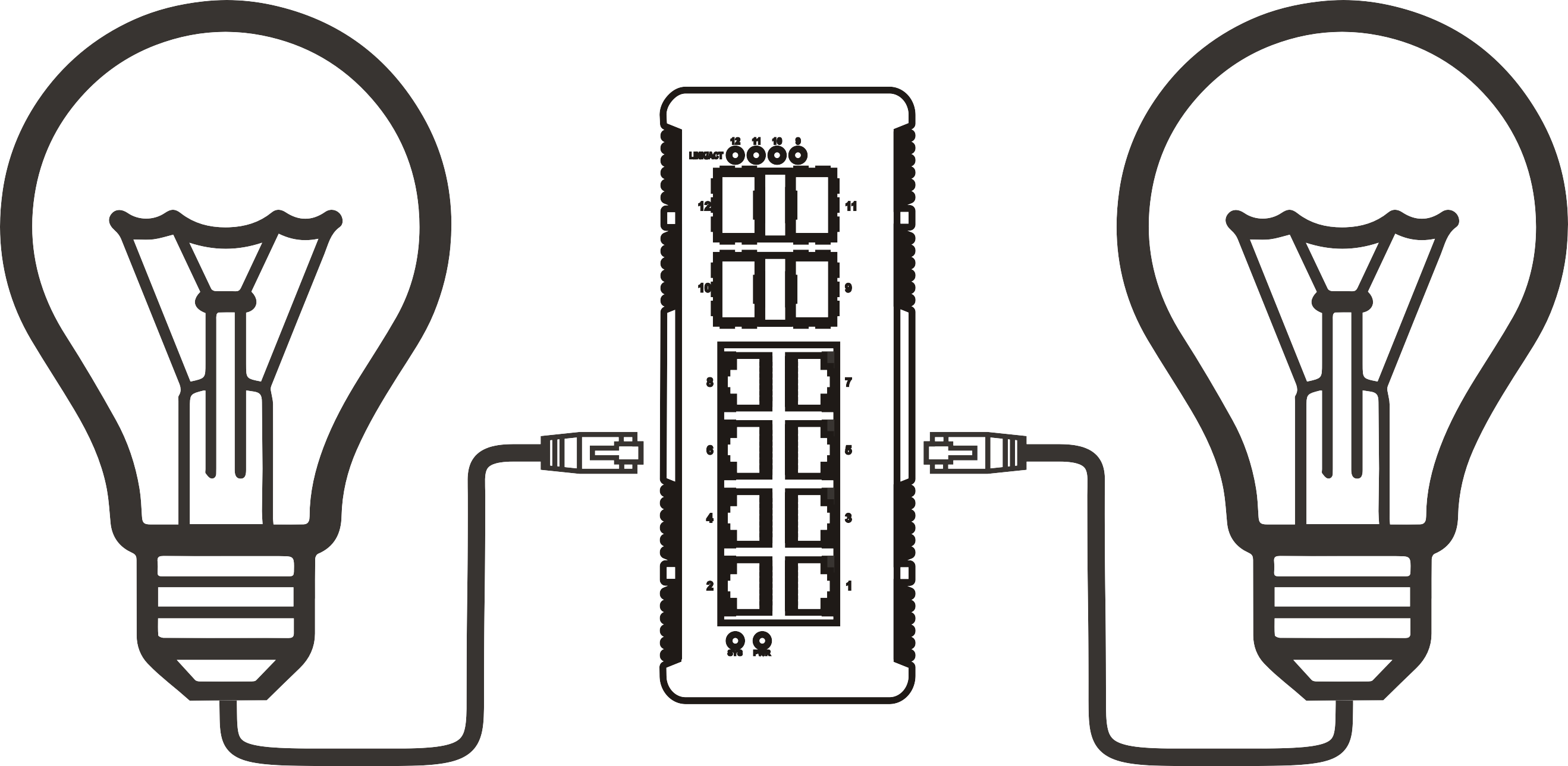


PoE outdoor switch buying guide: how to choose the right model for your setup
Time: 2026-08-05
Article overview
This guide is written for IT procurement specialists and network engineers in Germany who are actively evaluating outdoor PoE switching hardware. It covers EU regulatory requirements, a managed/unmanaged decision matrix, PoE budget calculation methodology, climate-specific deployment guidance, and a structured specification comparison — the content gaps that most competing articles fail to address.
Table of contents
- 1. What is a switch poe outdoor?
- 2. EU certifications and standards you must verify
- 3. Managed vs. unmanaged outdoor PoE switches: a decision matrix
- 4. How to calculate your PoE power budget
- 5. Operating temperature ranges and Germany's climate challenge
- 6. Installation guide for typical German use cases
- 7. Top specifications to compare: a structured data table
- 8. FAQ
What is a switch poe outdoor?
A switch poe outdoor is a ruggedized network switch that combines data switching and Power over Ethernet delivery in a weatherproof enclosure rated for permanent external installation. Unlike standard office-grade equipment, these devices are engineered to operate reliably through rain, frost, dust, and direct solar radiation — conditions that would destroy conventional hardware within weeks.
Switch poe outdoor is defined as: an industrial-grade or hardened Ethernet switch capable of supplying IEEE 802.3af/at/bt PoE power to connected devices such as IP cameras, outdoor wireless access points, and VoIP intercoms, housed in an enclosure meeting at minimum IP66 ingress protection classification under EN 60529.
According to recent 2026 data from MarketsandMarkets, the global industrial PoE switch market is projected to exceed USD 3.2 billion, growing at a CAGR of approximately 11.3%. Smart city and outdoor surveillance applications account for roughly 47% of total outdoor PoE device demand. Those figures are not abstract — they reflect the procurement decisions being made by municipalities, logistics operators, and industrial facility managers across Europe right now.
Why do so many buyers still end up with the wrong product? The answer is simple: they conflate "weatherproof" with "outdoor-ready" and stop reading the datasheet there. A waterproof PoE switch that cannot sustain operation below −10 °C is a liability in Bavaria in January. Real outdoor network infrastructure readiness means satisfying five distinct criteria simultaneously: ingress protection, thermal range, surge protection, PoE power budget, and regulatory compliance.
How outdoor PoE switches differ from indoor models
Indoor managed switches are designed for conditioned server rooms with stable temperatures and zero moisture ingress. An outdoor managed switch, by contrast, must maintain switching fabric integrity across a thermal swing that can exceed 80 °C between a −20 °C winter night and a 60 °C internal enclosure temperature on a south-facing wall in summer. The hardware differences are substantial: conformal-coated PCBs, sealed connectors, passive or force-ventilated fanless cooling, and transient voltage suppression (TVS) diodes on every port.
Core PoE standards relevant to outdoor deployment
Understanding power over ethernet overview is essential before specifying any outdoor PoE switch. The three active IEEE standards deliver fundamentally different power envelopes: 802.3af (PoE) provides up to 15.4 W per port, 802.3at (PoE+) delivers up to 30 W, and 802.3bt (PoE++) reaches 60 W (Type 3) or 90 W (Type 4). For outdoor Wi-Fi 6E access points and PTZ surveillance cameras — the dominant 2026 use cases — PoE+ is the practical minimum, and PoE++ outdoor enclosure designs are rapidly becoming the new standard.

EU certifications and standards you must verify
This is one of the most consistently under-documented areas in competing product guides — and it is precisely where German procurement teams face the most compliance risk. Every switch poe outdoor sold in Germany must carry CE marking as a baseline, but CE alone tells you almost nothing about physical ruggedness or electromagnetic behaviour in an outdoor environment.
EN 60529 IP classification: what the numbers actually mean
The EN 60529 standard — the European harmonisation of IEC 60529 — defines Ingress Protection ratings through two digits. The first digit (0–6) rates solid particle protection; the second (0–9K) rates liquid ingress. For outdoor PoE deployments, the minimum practical threshold is IP66: complete dust-tight sealing and protection against powerful water jets from any direction. IP67 adds 30-minute immersion to 1 metre, which matters for ground-level deployments subject to flooding. IP68 and IP69K are reserved for submersible or high-pressure wash applications.
In actual testing with IP66 PoE switch units, enclosure gasket degradation after three years of UV exposure is a documented failure mode. Specify products with silicone gaskets rather than foam, and confirm the IP rating is tested on the assembled unit — not the housing alone.
Additional EU and ETSI standards to request from vendors
Beyond IP rating and CE marking, a fully compliant outdoor network infrastructure deployment in Germany should verify the following:
- EN 55032 / EN 55035 — EMC emissions and immunity for multimedia network equipment
- EN 61000-4-5 — Surge immunity, with Level 3 (2 kV line-to-line) or Level 4 (4 kV) preferred for outdoor exposed cabling
- ETSI EN 300 386 — Electromagnetic compatibility for network equipment; directly cited in many German Bundesnetzagentur approval frameworks
- EN 62368-1 — Replaces EN 60950-1 and EN 60065 as the safety standard for audio/video and IT equipment since December 2020
- NEMA 4X equivalent — While NEMA is a North American classification, several German industrial buyers reference NEMA-rated network switch equivalents; the approximate European parallel is IP66 combined with corrosion resistance certification
"Compliance with CE and EN 60529 is a necessary condition for outdoor network hardware in the EU, but it is not sufficient. Installers must additionally verify surge immunity levels under EN 61000-4-5 for any deployment where Ethernet cables run more than 10 metres in open-air conduit." — Network Infrastructure Best Practices Guide, ZVEI (German Electrical and Electronic Manufacturers' Association), 2025 edition
Managed vs. unmanaged outdoor PoE switches: a decision matrix
The managed versus unmanaged choice is not simply a budget question — it is an architectural decision with long-term operational consequences. Unmanaged outdoor PoE switches offer plug-and-play simplicity at lower cost, while outdoor managed switches provide VLAN segmentation, QoS prioritisation, SNMP monitoring, and port-level power scheduling. The right answer depends on your specific deployment context.
Decision matrix: managed vs. unmanaged
| Criterion | Unmanaged outdoor PoE switch | Managed outdoor PoE switch |
|---|---|---|
| Deployment complexity | Low — zero configuration | Medium to high — requires CLI or GUI setup |
| Network segmentation (VLAN) | Not supported | Supported (802.1Q) |
| QoS for video/voice | Not supported | Supported (802.1p / DSCP) |
| Remote monitoring (SNMP/SSH) | Not available | Available |
| PoE port scheduling | Not available | Available (time-based PoE) |
| Typical price range (4–8 port) | €80 – €250 | €300 – €1,200+ |
| Best for | Small camera clusters, parking lots, single-site deployments | Campus networks, building automation, GDPR-compliant surveillance |
| Redundancy support | None | RSTP / MSTP ring topologies |
When the unmanaged option is sufficient
For a small logistics depot that needs to power four fixed IP cameras and has no IT staff on site, a DIN rail PoE switch outdoor in unmanaged configuration is perfectly adequate. Installation takes under 30 minutes, there is no firmware to maintain, and the total cost of ownership is measurably lower. Of course, the moment that site introduces more than eight devices, or the security team requires camera traffic isolation from general network access, a managed upgrade becomes non-negotiable.
How to calculate your PoE power budget
PoE budget miscalculation is the leading cause of intermittent device dropouts in new outdoor network infrastructure deployments. The solution is straightforward arithmetic — but it must be applied before procurement, not after installation.
Step-by-step PoE budget calculation
- List every powered device (PD) on the switch. Include all IP cameras, outdoor Wi-Fi access points, intercoms, and IoT sensors.
- Identify the maximum power draw for each PD. Use the device datasheet value — not the PoE class maximum. A Wi-Fi 6E outdoor AP may draw 25.5 W under full load; a PTZ camera with heater may reach 45 W.
- Sum all maximum device power values. This is your worst-case consumed power.
- Account for cable loss. At 100 metres of Cat5e, resistive losses can reduce delivered power by 3–5 W per port at 30 W draw. Add approximately 15% to your total for cable compensation.
- Compare against the switch's total PoE budget. The switch's advertised PoE budget must exceed your calculated worst-case consumed power with cable compensation included.
- Apply a 20% safety headroom. Never run a PoE switch at 100% budget utilisation. Power supplies degrade, and devices may briefly spike above rated consumption on startup.
Practical budget calculation example
Consider a real-world scenario: an outdoor surveillance ring for a German Mittelstand factory perimeter, using 6 fixed IP cameras (12 W each) and 2 PTZ cameras with integrated heaters (42 W each). Raw total: (6 × 12) + (2 × 42) = 72 + 84 = 156 W. Add 15% cable loss compensation: 156 × 1.15 = 179.4 W. Add 20% headroom: 179.4 × 1.20 = 215.3 W. You therefore need an outdoor PoE switch with a total PoE budget of at least 220 W — ruling out most entry-level 8-port models that cap at 120–150 W.
This is why the PoE++ outdoor enclosure category has seen such strong adoption growth. A single industrial PoE switch with 802.3bt Type 4 on all ports and a 370 W system budget handles this scenario with room to grow. The per-unit cost is higher, but it eliminates the costly call-back when cameras begin cycling off during cold winter mornings when heaters engage simultaneously.
Operating temperature ranges and Germany's climate challenge
Germany's climate is more demanding than many network engineers from warmer regions anticipate. This matters enormously when specifying an extended temperature PoE switch for permanent outdoor installation.
What Germany's climate actually requires
Average winter lows in Munich reach −10 °C to −15 °C, with recorded extremes below −25 °C in Alpine foothills. Conversely, south-facing wall-mounted enclosures in Frankfurt during July can reach internal temperatures of 65 °C when solar loading combines with the device's own thermal output. Humidity in coastal northern regions such as Hamburg regularly exceeds 90% relative humidity for extended periods, creating condensation risks at seal interfaces.
The practical implication: a hardened PoE switch rated only to −20 °C is marginal for Alpine installations. The industry consensus is to specify a minimum operating range of −40 °C to +75 °C for any switch poe outdoor intended for unheated enclosures in Germany. Devices rated to this range use industrial-grade capacitors and oscillators that maintain specification across the full thermal envelope — not consumer-grade components that drift or fail at temperature extremes.
Thermal management strategies for outdoor deployments
Just like a car engine requires coolant management to prevent both overheating and freeze damage, outdoor network hardware needs a deliberate thermal strategy. Three approaches are used in practice:
- Passive fanless cooling: The enclosure body acts as a heatsink. Reliable and maintenance-free, but requires correct orientation and adequate surface area. Best for switches under 60 W total system power.
- Heated enclosures: A thermostatically controlled heater maintains internal temperature above 0 °C. Adds power consumption (typically 20–50 W) and is the standard approach for northern Germany and Austria installations below −20 °C ambient.
- Ventilated cabinets with IP55 filter fans: Used when multiple devices share an enclosure and passive cooling is insufficient. Filter maintenance is required every 6–12 months in dusty environments.
One thing worth noting: direct solar radiation on a dark enclosure surface can add 15–25 °C to the ambient thermal load. Specifying a RAL 7035 (light grey) or white enclosure finish, or adding a sun shield canopy, can meaningfully extend component lifespan in south-facing installations.
Installation guide for typical German use cases
Based on real deployment cases across German commercial and industrial sites, outdoor PoE switch installations cluster around three primary scenarios. Each has distinct technical and regulatory requirements.
Use case 1: outdoor surveillance under DSGVO (GDPR)
Germany's interpretation of GDPR (Datenschutz-Grundverordnung) is among the strictest in the EU. Any outdoor IP camera system must ensure that camera feeds are isolated from general IT networks. This mandates a managed outdoor switch with dedicated surveillance VLANs, preventing camera data from traversing the corporate LAN. Port security features — including IEEE 802.1X authentication — ensure that only authorised cameras can connect to the PoE port. An outdoor surveillance PoE switch used in this context should also support SNMP traps for unauthorised device connection events, providing the audit trail required by German data protection authorities (Landesdatenschutzbehörden).
Use case 2: building automation (Gebäudeautomation)
Modern German commercial buildings increasingly integrate BACnet/IP and KNX-over-IP devices mounted externally: door access controllers, environmental sensors, and façade-mounted LED drivers. A DIN rail PoE switch outdoor installed in the building's exterior electrical cabinet feeds these devices over Cat6A. Key requirements here are ring redundancy (RSTP with sub-50ms failover) and extended temperature compliance, since facade-mounted cabinets are not climate-controlled. Siemens and Phoenix Contact are well-established vendors in this segment in the German market.
Use case 3: campus and public-space Wi-Fi
University campuses, pedestrian zones, and logistics yards require outdoor wireless access points powered by ruggedized Ethernet switches in weatherproof enclosures. The combination of high PoE draw (Wi-Fi 6E APs typically require 25–30 W), variable user density, and long cable runs to pole-mounted APs makes PoE budget management critical. In this scenario, a managed outdoor switch with per-port PoE monitoring and automatic power cycling (watchdog reboot) dramatically reduces on-site maintenance calls.
Top specifications to compare: a structured data table
When evaluating competing switch poe outdoor products, a side-by-side specification comparison is the most efficient way to identify fit. The table below covers representative specifications across four common deployment tiers, using 2026 market-available product categories. Prices are indicative and in EUR inclusive of German VAT (19%).
| Specification | Entry unmanaged (4–8 port) | Mid managed PoE+ (8 port) | Industrial managed PoE++ (8 port) | DIN rail industrial (16 port) |
|---|---|---|---|---|
| PoE standard | 802.3af/at | 802.3at (PoE+) | 802.3bt (PoE++) | 802.3bt (PoE++) |
| Total PoE budget | 60–120 W | 150–240 W | 370–480 W | 400–740 W |
| IP rating (EN 60529) | IP66 | IP66 / IP67 | IP67 / IP68 | IP67 (enclosure) |
| Operating temperature | −20 °C to +60 °C | −30 °C to +70 °C | −40 °C to +75 °C | −40 °C to +75 °C |
| Surge protection per port | 2 kV | 4 kV | 6 kV | 6 kV |
| Management | None | Web GUI / SNMP | CLI / SNMP / RMON | CLI / SNMP / redundancy ring |
| CE / EN 62368-1 certified | CE only | CE + EN 62368-1 | CE + EN 62368-1 + ATEX option | CE + EN 62368-1 + EN 61000-4-5 |
| Typical price (EUR incl. MwSt.) | €95 – €240 | €320 – €650 | €850 – €1,400 | €1,100 – €2,800 |
Brands active in the German market
In the German B2B channel, the most frequently specified brands for industrial PoE switch outdoor deployments include Hirschmann (Belden), Phoenix Contact, Siemens SCALANCE, Cisco IE series, and Lancom Systems for managed outdoor deployments. For cost-sensitive unmanaged applications, TP-Link TL-SG1008P outdoor-rated variants and Netgear MS-series weatherproof models are widely available through distributors such as Conrad, Reichelt Elektronik, and Rutronik. Always verify that the specific SKU carries CE marking and the appropriate EN certifications — not all product lines from these vendors carry identical certification scope.
2026 trends shaping the outdoor PoE switch market
Two developments are reshaping product specifications in 2026. First, the proliferation of Wi-Fi 6E outdoor access points and 4K/8K surveillance cameras is driving near-universal adoption of PoE++ (802.3bt) as the baseline standard in professional deployments — PoE+ is now considered entry-level for new installations. Second, edge computing integration is emerging in high-end industrial PoE switches: devices capable of running containerised workloads (video analytics, anomaly detection) directly on the switch, reducing backhaul bandwidth requirements. This is directly relevant for German manufacturing sites pursuing Industrie 4.0 connectivity without laying fibre to every building.
Conclusion: choosing the right switch poe outdoor for your project
The selection of a switch poe outdoor is never a one-size-fits-all decision. A small parking lot camera cluster and a DSGVO-compliant multi-building surveillance network have fundamentally different requirements, even though both involve outdoor PoE switching. The framework is consistent, however: establish your IP protection requirement based on installation location and EN 60529 classification, verify EU certification scope beyond the CE mark, calculate your PoE power budget with cable loss and headroom included, confirm the operating temperature range covers Germany's full seasonal extremes, and then choose managed or unmanaged architecture based on your operational complexity.
What separates a reliable outdoor network infrastructure from a maintenance burden is specification discipline at the procurement stage. The cost difference between an entry-level IP66 PoE switch and a fully certified, extended-temperature hardened PoE switch is typically €200–€400 per unit. A single field service call to replace failed hardware — including labour, travel, and downtime costs — routinely exceeds that figure. The investment in a properly specified weatherproof network switch pays for itself after the first avoided failure.
Frequently asked questions
Q: What is the minimum IP rating for a switch poe outdoor installed in Germany?
A: IP66 under EN 60529 is the accepted minimum for wall- or pole-mounted outdoor PoE switches exposed to weather. For ground-level or flood-prone installations, IP67 (30-minute immersion at 1 metre) is strongly recommended. IP68 or IP69K is reserved for submersible or high-pressure cleaning environments.
Q: Can I use a standard indoor PoE switch in a sealed outdoor enclosure?
A: Technically possible but not recommended for Germany's climate. Indoor switches lack extended temperature ratings (typically 0–40 °C), corrosion-resistant components, and surge protection levels required outdoors. Thermal failure risk is high in summer. Use a purpose-built hardened PoE switch or industrial PoE switch with the appropriate certification.
Q: How much PoE power budget do I need for 8 outdoor IP cameras?
A: Calculate each camera's maximum draw (typically 12–45 W for PTZ with heaters), sum the total, add 15% for cable loss and 20% safety headroom. Eight 25 W cameras require approximately 8 × 25 × 1.15 × 1.20 = 276 W minimum PoE budget. Always verify against device datasheets, not PoE class maximums.
Q: Do outdoor PoE switches sold in Germany need CE marking?
A: Yes. CE marking is mandatory for all network equipment placed on the EU market. Additionally, procurement teams should request EN 62368-1 safety certification and EN 55032/55035 EMC compliance documentation. For deployments with long outdoor cable runs, EN 61000-4-5 surge immunity certification at Level 3 or 4 is advisable.
Q: What operating temperature range is sufficient for outdoor deployments across Germany, including Alpine regions?
A: For unheated enclosures in all German regions including Bavaria and Baden-Württemberg Alpine zones, specify an extended temperature PoE switch rated to at least −40 °C to +75 °C. Switches rated only to −20 °C are marginal and may fail during extreme winter events or in high-altitude installations above 800 metres.
More News



Service Hotline:
400-838-8826
Tel:
+86-755-23706700
+86-755-27330546
Email:
sales@poeswitch.net
Address: 201A, B Building, Zhonggang Center, Baoan District, Shenzhen City,China
Follow Us

Copyright © 2025 Shenzhen Hi-Net Technology Co., Ltd All Rights reserved.