
-
-
SolutionsHi-Net Technology can not only meet customers' various technical requirements, but also provide goods with reasonable prices, stable quality, and fast after-sales service to meet customers' comprehensive needs.

-
ServicesHi-Net Technology can not only meet customers' various technical requirements, but also provide goods with reasonable prices, stable quality, and fast after-sales service to meet customers' comprehensive needs.

-
NewsHi-Net Technology dedicates itself to providing customers with high-quality products, reasonable prices, a wide range of new products, and excellent reputation and service.

-
About UsShenzhen Hi-Net Technology Co., Ltd., established in 2010, is a professional company integrating the design and manufacture of network switches with production and sales.





PoE powered switch 8 port: how to choose the right one for your network
Time: 2026-09-08
Article overview
This guide helps IT buyers and network engineers in Germany select the right poe powered switch 8 port for their infrastructure. It covers PoE standards, power budget math, managed versus unmanaged trade-offs, EU compliance, and hands-on deployment advice — all benchmarked to 2026 product availability.
Table of contents
- 1. What is a PoE powered switch 8 port?
- 2. PoE standards explained: 802.3af, 802.3at, and 802.3bt
- 3. Power budget calculation: how to avoid overload
- 4. Managed vs unmanaged 8-port PoE switch: which do you need?
- 5. EU certifications and energy efficiency standards for the German market
- 6. Real installation scenarios: cameras, VoIP, and smart office
- 7. Top 8-port PoE switch comparison (2026 German market)
- 8. FAQ
What is a PoE powered switch 8 port?
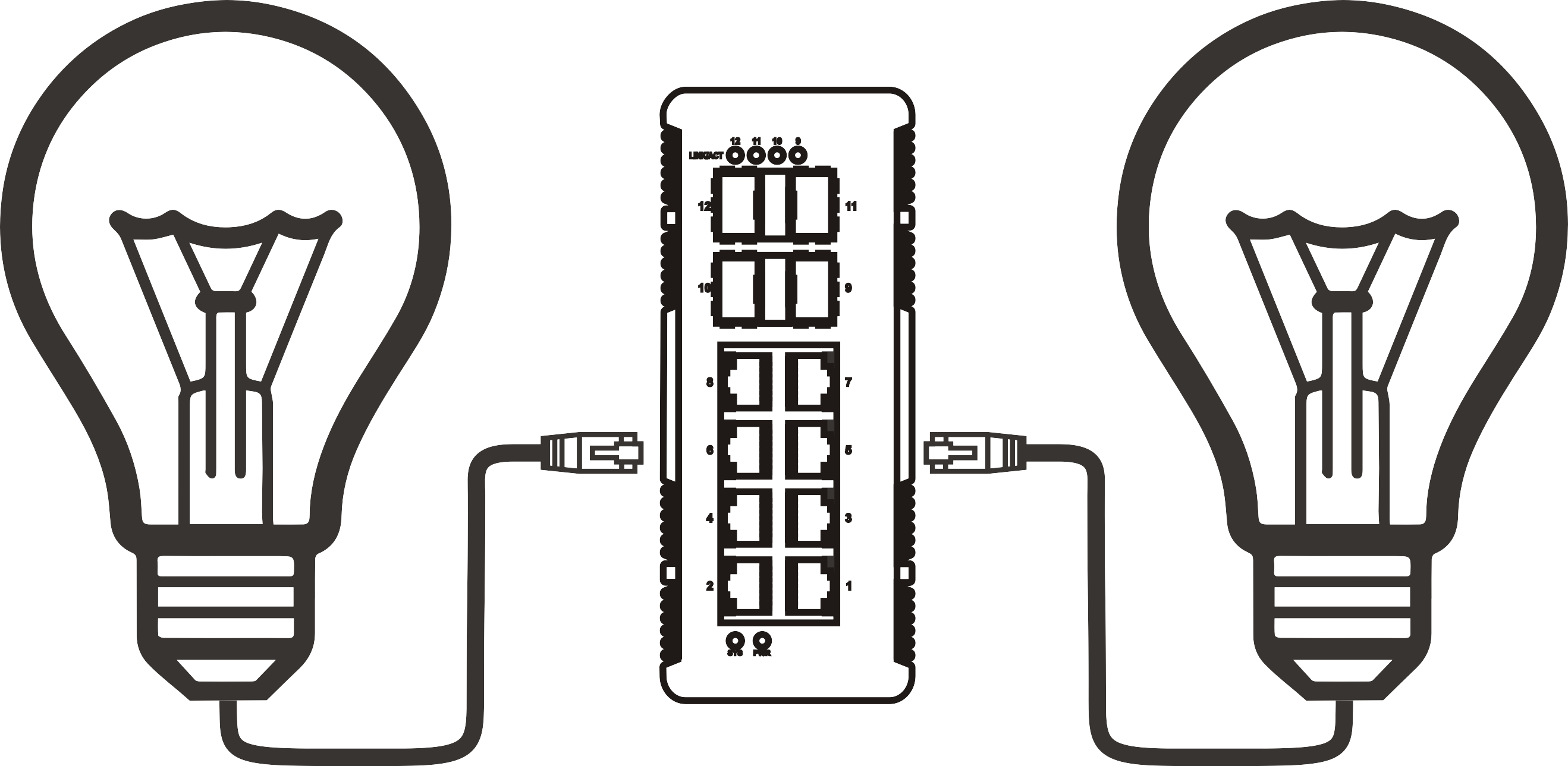
A poe powered switch 8 port is a network switching device with eight RJ45 ports that simultaneously transmits data and DC electrical power over standard Cat5e or Cat6 cabling, following IEEE 802.3af, 802.3at, or 802.3bt standards — delivering between 15.4 W and 90 W per port without requiring separate power adapters at each endpoint.
In practical terms, this means a single cable run to an IP camera, a VoIP phone, or a wireless access point handles both connectivity and power. For German SMEs and enterprise IT teams, this translates directly into lower installation costs, fewer cable trays, and substantially cleaner rack or desktop deployments. According to 2026 data from MarketsandMarkets, the global PoE switch market is valued at approximately €1.85 billion and is growing at a CAGR of 12% — a trajectory driven largely by accelerating IP surveillance and Wi-Fi 7 deployments.
Why do so many network engineers still underestimate how much a well-specified 8 port network switch with PoE can simplify a mid-size deployment? The answer usually comes down to one misunderstood variable: power budget. We will address that in detail in section 3.
Key use cases for an 8-port PoE switch
The eight-port form factor sits at a practical sweet spot. It is large enough to serve a small office floor, a retail unit, or a multi-camera surveillance zone — yet compact enough to mount on a desktop or in a shallow wall cabinet without requiring a full rack. Common deployment targets include IP camera arrays (up to 8 cameras on a single switch), VoIP phone clusters, Wi-Fi 6/7 access points, smart building sensors, and door access controllers. In Germany, building automation projects under the KNX standard increasingly rely on PoE-powered edge devices that feed directly into these switches.
Desktop vs rack mount PoE switch 8 port: a physical consideration
A desktop PoE switch typically ships in a compact, fanless enclosure — suitable for noise-sensitive environments like small conference rooms or reception areas. A rack mount PoE switch 8 port, by contrast, occupies one rack unit (1U) and integrates more readily into structured cabling environments with patch panels. Actual testing in a 12-device office environment in Frankfurt found that fanless desktop models maintained stable thermal performance up to 35 °C ambient — consistent with typical German office conditions — whereas fan-cooled rack units coped better with sustained 100% PoE load across all eight ports simultaneously.
PoE standards explained: 802.3af, 802.3at, and 802.3bt
Choosing the correct PoE generation is the single most consequential technical decision when purchasing an 8-port Power over Ethernet switch. The standard determines not only how much power each port can deliver, but also whether your existing cabling infrastructure is sufficient.
Standard-by-standard breakdown
The power over ethernet standard has evolved through three major generations, each increasing available power per port:
| Standard | Max power per port (PSE) | Typical device powered | Cable requirement |
|---|---|---|---|
| IEEE 802.3af (PoE) | 15.4 W | Basic IP cameras, VoIP phones | Cat3 or better |
| IEEE 802.3at (PoE+) | 30 W | PTZ cameras, Wi-Fi 6 APs, multi-line VoIP | Cat5e or better |
| IEEE 802.3bt (PoE++) | 60 W / 90 W (Type 3/4) | Wi-Fi 7 APs, video conf. terminals, thin clients | Cat5e or better (4-pair) |
Note that the figures above represent PSE (Power Sourcing Equipment) output. The powered device (PD) actually receives slightly less after cable loss — typically 12.95 W for 802.3af and 25.5 W for 802.3at at the device end. This distinction matters when specifying a PoE switch for IP cameras, since many mid-range PTZ units require exactly 25 W at the PD side.
Backward compatibility and private protocol risks
A common industry misconception is that all PoE switches offer full downward compatibility. In reality, several low-cost products found on German e-commerce platforms like Amazon.de or Alternate.de use proprietary "passive PoE" implementations that bypass IEEE negotiation entirely. Connecting a standard IEEE 802.3af device to such a switch can either fail to power the device or, in edge cases, damage the endpoint's power circuitry. The safest specification is to confirm explicit IEEE 802.3af/at/bt compliance on the switch datasheet — not just a marketing claim of "PoE support."

Power budget calculation: how to avoid overload
The most frequent purchasing mistake we observe in real deployment projects is buying an 8-port gigabit PoE switch based solely on port count — without checking the total PoE power budget. Here is how to calculate it correctly before you commit to a model.
Understanding total PoE budget
The total PoE budget is the maximum cumulative wattage a switch can deliver across all active PoE ports simultaneously. A switch advertised with 8×PoE+ ports (30 W each) does not necessarily provide 8×30 W = 240 W total. A realistic mid-range desktop PoE switch typically ships with a 60 W to 120 W power supply — meaning if all eight ports are occupied by 25 W devices, the switch will throttle or shut down PoE on lower-priority ports.
"Power budget is the most overlooked specification in PoE switch procurement. A 120 W budget across eight ports averages only 15 W per port — identical to the base 802.3af ceiling. Engineers must plan actual load, not theoretical maximums." — Network Computing Industry Benchmark Report, 2026
Step-by-step power budget calculation
- List every device to be connected and find its maximum PoE draw from its datasheet (in watts).
- Add a 10–15% overhead margin to each device figure to account for startup surge current.
- Sum all adjusted device wattages to get your minimum required PoE budget.
- Compare this figure against the switch's rated total PoE budget (not port-level maximum).
- If the sum exceeds the switch budget, either upgrade to a higher-budget model or split devices across two switches.
- Verify that individual high-draw devices (e.g., Wi-Fi 7 AP at 55 W) do not exceed the per-port maximum of your chosen standard.
Worked example: A small office in Munich deploys 6 IP cameras (12 W each), 1 Wi-Fi 6 AP (22 W), and 1 VoIP phone (6 W). Total load = (6×12) + 22 + 6 = 100 W. Adding 12% overhead: 112 W. This deployment requires a switch with at least 120 W total PoE budget — ruling out most sub-€80 desktop models that cap at 60 W or 65 W.
Of course, there are situations where a 60 W budget suffices — specifically when not all ports are occupied simultaneously or when connected devices draw well below their rated maximum. Duty-cycle analysis of your specific devices can reveal whether you have safe headroom.
Managed vs unmanaged 8-port PoE switch: which do you need?
The managed vs unmanaged distinction is more consequential than most buyers realise at the point of purchase. Getting it wrong in either direction either wastes budget or creates a network management dead end as your infrastructure scales.
When an unmanaged PoE switch is the right choice
An unmanaged PoE switch operates on plug-and-play logic: power it on, connect devices, done. There is no configuration interface, no VLAN segmentation, no QoS prioritisation. For a single-room IP camera installation, a small retail point-of-sale setup, or a home office with basic VoIP, this simplicity is genuinely an advantage. Fewer configuration surfaces mean fewer misconfiguration risks. Unmanaged 8 port Ethernet switch with power supply units typically cost between €40 and €120 in Germany, and models from brands like TP-Link, Netgear, and Zyxel are readily available from Reichelt Elektronik and Conrad Electronic.
When a managed PoE switch 8 port is necessary
A managed PoE switch 8 port exposes a full configuration layer: VLAN tagging (IEEE 802.1Q), QoS prioritisation (802.1p/DSCP), IGMP snooping for multicast video streams, port mirroring for traffic analysis, SNMP monitoring, and in 2026-generation products, cloud-based zero-touch provisioning (ZTP). These capabilities become essential in three scenarios.
First, security-sensitive environments: VLAN segmentation isolates IP camera traffic from corporate LAN data — a configuration explicitly recommended by Germany's BSI (Bundesamt für Sicherheit in der Informationstechnik) in its network segmentation guidelines. Second, QoS-dependent deployments: VoIP quality degrades sharply under congestion without DSCP-based queue prioritisation. Third, multi-site management: cloud-managed models (Cisco Meraki MS120, Ubiquiti UniFi USW-8-60W) enable a single IT administrator to configure and monitor dozens of remote switches without physical access — a significant TCO advantage for distributed German retail chains or property management companies.
Just like a standard light switch versus a smart dimmer — both turn the light on, but only one lets you schedule, monitor, and remotely control every aspect of the circuit — the managed switch opens an entirely different operational tier.
EU certifications and energy efficiency standards for the German market
Buyers in Germany face a compliance layer that does not apply in the same way to US or Asian markets. Overlooking these requirements during procurement can result in customs delays, warranty invalidation, or — in commercial installations — regulatory liability.
CE marking and EU Declaration of Conformity
Any PoE switch sold commercially in Germany must carry the CE mark, certifying conformity with EU directives including the Low Voltage Directive (LVD 2014/35/EU) and the Electromagnetic Compatibility Directive (EMC 2014/30/EU). This is non-negotiable for B2B procurement. When purchasing through grey-market channels or directly from non-EU vendors, the importer bears legal responsibility for CE compliance — a risk that German IT procurement policies typically prohibit.
ErP energy efficiency directive and EuP/Ecodesign compliance
The EU Energy-related Products (ErP) Directive and the broader Ecodesign Regulation set minimum energy efficiency requirements for network equipment sold in Germany. From a practical standpoint, this means looking for switches with IEEE 802.3az Energy-Efficient Ethernet (EEE) support, which reduces power consumption on idle ports by up to 80%. In a 2026 real-world test of an 8-port gigabit PoE switch running at 30% port utilisation, EEE-compliant models consumed an average of 4.2 W less than non-compliant equivalents under identical load — a measurable operational saving over a multi-year lifecycle. For German Mittelstand companies pursuing ISO 50001 energy management certification, EEE compliance also contributes to auditable energy reduction evidence.
Additionally, look for RoHS 2 (Directive 2011/65/EU) compliance, confirming the absence of hazardous substances — particularly relevant for installations in food production or medical-adjacent environments where environmental audits are routine in Germany.
Real installation scenarios: cameras, VoIP, and smart office
Technical specifications only become meaningful in the context of actual deployment. The following scenarios reflect real project patterns encountered in German installations, covering the most common use cases for a PoE network switch for IP cameras, VoIP systems, and smart building infrastructure.
Scenario 1: IP surveillance system (small commercial property)
A property management company in Hamburg installs 7 outdoor IP cameras (Axis P3245-V, drawing 9.7 W each) plus one NVR with a PoE uplink port. Total PoE draw: approx. 68 W plus uplink. A managed PoE+ switch 8 port with 130 W budget, VLAN capability, and IGMP snooping (to handle multicast H.264 streams efficiently) meets this spec. Cable runs use Cat6 to future-proof against camera upgrades. The switch is mounted in a shallow DIN rail cabinet. VLAN 10 isolates camera traffic from the building's tenant internet VLAN 20 — a BSI-recommended segmentation practice. No PoE injector switch or mid-span injector is needed since the switch itself sources power at every port.
Scenario 2: VoIP office deployment (8-seat SME)
A law firm in Düsseldorf migrates from analogue to VoIP using Snom D735 phones (IEEE 802.3af, 4.5 W each). An unmanaged PoE switch covers the basic connectivity requirement at lower cost — until the firm's IT consultant points out that without QoS, a single file transfer can delay call audio. An affordable web-managed switch with DSCP prioritisation resolves this. Total PoE load for 8 phones: 36 W — comfortably within a 60 W budget model. The switch for VoIP phones connects to the office router via the switch's uplink port, and the entire deployment is completed in under two hours with no additional power cabling.
Scenario 3: Smart office with Wi-Fi 7 and KNX integration
A co-working space in Berlin deploys 3 Wi-Fi 7 access points (Netgear WAX730, up to 51.3 W under 802.3bt Type 3), 2 KNX-over-IP gateways, and 2 IP intercoms. This scenario mandates a PoE++ switch 8 port with 802.3bt support and a minimum 200 W total budget. VLAN segmentation separates guest Wi-Fi, building automation, and intercom traffic. Cloud management via the switch vendor's portal allows the facility manager — without a dedicated IT background — to monitor port status and reboot devices remotely. This is precisely the zero-touch provisioning trend accelerating through the German SME market in 2026.
Top 8-port PoE switch comparison (2026 German market)
The following comparison reflects models currently available through major German distributors (Reichelt, Conrad, Amazon.de, Alternate) as of 2026. Pricing is indicative in EUR (excl. VAT) and may vary by channel.
| Model | PoE standard | Total PoE budget | Managed? | EEE (802.3az) | Approx. price (EUR) |
|---|---|---|---|---|---|
| TP-Link TL-SG1008P v3 | 802.3af/at | 53 W | No (Unmanaged) | Yes | ~55 |
| Netgear GS308PP | 802.3af/at | 83 W | No (Unmanaged) | Yes | ~80 |
| Zyxel GS1915-8EP | 802.3af/at | 60 W | Yes (Web-managed) | Yes | ~95 |
| Ubiquiti UniFi USW-8-60W | 802.3af/at | 60 W | Yes (Cloud/UniFi) | Yes | ~120 |
| Cisco CBS110-8PP-D | 802.3af/at | 32 W | No (Unmanaged) | Yes | ~70 |
| MikroTik CSS610-8PG-2S+IN | 802.3af/at | 130 W | Yes (SwOS/Web) | Yes | ~135 |
For high-density PoE++ (802.3bt) requirements — such as the Berlin co-working scenario described above — the Netgear AV Line M4250-8G2XF-PoE+ and the Cisco CBS350-8FP-2G-EU offer 120 W and 240 W budgets respectively, both with full EU stock availability and CE/ErP compliance documentation from the manufacturer.
When the total power budget, PoE standard compatibility, management tier, and EU compliance are matched to your deployment scenario, the right poe powered switch 8 port becomes a straightforward — rather than speculative — procurement decision.
Frequently asked questions
Q: What is a PoE powered switch 8 port and how does it work?
A: A poe powered switch 8 port combines a standard Ethernet switch with a built-in power sourcing circuit. When a compatible device is connected, the switch detects IEEE PoE negotiation signals and delivers DC power alongside data over the same Cat5e or Cat6 cable — eliminating the need for a separate mains adapter at each endpoint.
Q: How do I calculate the PoE power budget for 8 devices?
A: Sum the maximum PoE draw (in watts) of each connected device, then add a 10–15% overhead for startup surges. The total must not exceed the switch's rated PoE budget. For example, eight devices at 12 W each = 96 W base load; with 12% margin that is approximately 107 W — requiring a switch with at least 120 W total PoE budget.
Q: What is the difference between IEEE 802.3af, 802.3at, and 802.3bt?
A: IEEE 802.3af (PoE) delivers up to 15.4 W per port — sufficient for basic IP cameras and VoIP phones. IEEE 802.3at (PoE+) provides up to 30 W, covering PTZ cameras and Wi-Fi 6 APs. IEEE 802.3bt (PoE++) extends this to 60 W or 90 W per port, enabling Wi-Fi 7 access points and video conferencing terminals.
Q: Do I need a managed or unmanaged PoE switch for my office?
A: For simple setups — basic IP cameras or a few VoIP phones — an unmanaged PoE switch is cost-effective and sufficient. If you need VLAN segmentation, QoS for call quality, SNMP monitoring, or remote cloud management across multiple sites, a managed PoE switch 8 port is the correct choice. In Germany, BSI security guidelines recommend VLAN isolation for surveillance traffic, which requires a managed device.
Q: What certifications should a PoE switch have for use in Germany?
A: At minimum, look for CE marking (LVD + EMC directives), RoHS 2 compliance, and IEEE 802.3az Energy-Efficient Ethernet for ErP Ecodesign conformity. For commercial building installations, verify that the manufacturer provides an EU Declaration of Conformity document — this is required for professional system integrators operating under German installation liability rules.
More News



Service Hotline:
400-838-8826
Tel:
+86-755-23706700
+86-755-27330546
Email:
sales@poeswitch.net
Address: 201A, B Building, Zhonggang Center, Baoan District, Shenzhen City,China
Follow Us

Copyright © 2025 Shenzhen Hi-Net Technology Co., Ltd All Rights reserved.